
Why I Think America’s Debt Crisis is Driving People into Crypto in 2025?

I Think America’s Debt Crisis Is Driving People Into Crypto

Right now in 2025, the United States owes $36.22 trillion — yes, trillion with a “T.” To put that into perspective, if every single person in the U.S. gave the government $100,000 today, we still wouldn’t have enough to pay it off.

That’s not even the scariest part.

Just a few days ago, on May 16, credit rating agency Moody’s dropped the U.S. government’s rating from Aaa to Aa1. And when big names like Ray Dalio (billionaire investor and founder of Bridgewater Associates) warn that the U.S. could hit $50 trillion in debt by 2035, it’s hard not to take it seriously.

“Sell America” — What Does That Even Mean?

I saw the phrase “Sell America” trending on social media. I wasn’t sure what it meant at first, but here’s what it comes down to: Investors – especially big global ones – are pulling money out of U.S. assets. They’re selling off U.S. stocks and bonds. They’re avoiding the dollar. They’re looking elsewhere.

Here’s why – The government adds $1 trillion of new debt every 3 months. Interest payments alone are exploding. In 2021, only 9% of federal revenue went to paying interest. In 2024, it doubled to 18%. By 2035, it could hit 30% of revenue. A new tax cut passed this May under President Trump is expected to add another $2 trillion to the debt over the next 10 years.

On top of that, the U.S. slapped new tariffs on European imports starting July, which could hurt trade and make things even messier. All this is pushing investors to look for safer alternatives — and crypto is one of them.

Also Read – The Very First Post You Should Read to Learn Cryptocurrency


How This Debt Mess is Making Crypto Look Like a Safe Bet?

1. Bitcoin is Becoming the “Digital Gold” Everyone Talks About

Gold has always been a safe haven. But now? People are calling Bitcoin the new gold. It’s not controlled by any government. There’s a limited supply. It’s global. It’s fast. And in times like this, those things matter. On May 21, Bitcoin hit a new all-time high – $109,000. That jump came just days after Moody’s downgraded the U.S. credit rating.

According to Binance and Coinbase, more users are buying Bitcoin and Ethereum since the downgrade. U.S. Bitcoin ETFs (like IBIT) saw $40 billion in new money in just one month. That’s not a fluke. That’s a shift.

2. The U.S. Dollar is Weakening — And That’s Pushing People Toward Crypto

A strong dollar usually keeps crypto in check. But guess what? After the credit downgrade, the dollar lost ground, and Treasury bond yields shot up — meaning the U.S. has to pay more to borrow money. This makes traditional investments less attractive. And crypto? It starts to look like a smarter alternative. Analysts are already saying Bitcoin could hit $120,000 or higher before the year ends.

3. Volatility is High — But So is Interest

Let’s be real: crypto is still volatile. After Moody’s downgrade, the S&P 500 and Dow Jones dropped sharply, and crypto bounced around too. When investors panic, they sell everything — including Bitcoin. But here’s what surprised me: Even with the volatility, crypto is attracting more attention, not less. People are talking about it, buying small amounts, exploring apps like Coinbase and Gemini, and learning how ETFs work.

4. Decentralized Finance (DeFi) is Quietly Booming

Another thing I found while digging — DeFi is back in the spotlight. People are losing faith in traditional banks and governments. They want systems that aren’t controlled by politics or bad spending decisions. In 2025: DeFi total value locked (TVL) crossed $150 billion. Platforms like Uniswap, Aave, and Curve are seeing more users. A Trump-linked firm, World Liberty Financial, invested $12 million in Ethereum, Chainlink, and Aave in late 2024, signaling even big players are jumping in.


So… Is Crypto Really the Answer?

Honestly? That depends on who you ask.

But here’s what I’ve come to believe:

Crypto is no longer just “the future” – it’s part of the present.

And moments like this – when trust in the U.S. economy starts to crack – are when crypto shines.

People want control. They want protection. They want options.

And crypto, for all its risks, checks those boxes in a way few other things do.


Quick Recap

What’s HappeningWhy It Matters
U.S. debt hits $36.22 trillionTrust in government finances is dropping
Credit rating downgraded by Moody’sMakes U.S. less attractive for global investors
“Sell America” trendInvestors pulling out of U.S. assets
Bitcoin hits $109KSeen as a hedge against debt + inflation
DeFi platforms gaining tractionPeople exploring decentralized alternatives
ETFs like IBIT seeing record inflowsMainstream adoption of crypto-based products

Also Read – The Race Is On – Solana and XRP Eye the ETF Prize

Final Thought

I’m not here to tell you to buy Bitcoin or jump on the crypto bandwagon.

I just wanted to understand what was happening — and what I found honestly surprised me.

The U.S. economy is at a turning point. And whether you’re into crypto or not, you can’t ignore the shift that’s happening.

Important Differences between Centralized Exchange and Decentralized Exchange

When you want to buy, sell, or trade cryptocurrencies, you need to use an exchange.

Think of it like a marketplace where people come together to trade digital money. There are two main types of these marketplaces, and they work very differently from each other.

What are Centralized Exchanges?

Centralized exchanges work like traditional banks or stock markets. A company runs the whole operation. When you want to trade, you send your money to this company, and they hold it for you. They match buyers with sellers and handle all the complicated stuff behind the scenes.

Some well-known centralized exchanges are Binance, Coinbase, and Kraken. These platforms make trading feel familiar because they work similar to online banking or shopping websites that most people already know how to use.

The good news is that these exchanges usually have lots of people trading, which means you can buy or sell quickly. They also move fast because the company handles everything on their own computers instead of waiting for the blockchain network.

However, there’s a catch. You have to trust this company completely. They hold your money, they know who you are, and if something goes wrong with their business, your money could be at risk.

What Are Decentralized Exchanges?

Decentralized exchanges are completely different. Nobody owns or controls them. Instead, they use smart computer programs (called smart contracts) that run automatically on the blockchain. It’s like having a robot marketplace that works without any human bosses.

Popular decentralized exchanges include Uniswap, PancakeSwap, and SushiSwap. When you use these platforms, your money never leaves your own wallet. You connect your wallet to the exchange, make your trade directly with another person, and the smart contract makes sure everything happens correctly.

This means you stay in control of your money at all times. You also don’t need to tell anyone who you are or provide personal documents. The downside is that these exchanges can be harder to use, especially if you’re new to crypto. There might also be fewer people trading, which can make it harder to find good prices.

Key Differences Between the Two Types

AspectCentralized Exchange (CEX)Decentralized Exchange (DEX)
ControlManaged by a central authority or company.No central authority; operates via smart contracts.
Custody of FundsFunds held in platform-controlled custodial wallets.Users retain control of funds in their own wallets.
SecurityVulnerable to hacks, mismanagement, or regulatory actions.Lower risk of platform hacks; relies on blockchain security.
PrivacyRequires KYC/AML compliance; collects user data.Typically no KYC; offers greater anonymity.
LiquidityHigh liquidity due to large user base and order books.Often lower liquidity, especially for less popular tokens.
Transaction SpeedFaster due to centralized servers and off-chain processing.Slower, dependent on blockchain network speed.
User ExperienceUser-friendly with intuitive interfaces and support.May be complex for beginners; requires wallet management.
FeesHigher fees (trading, withdrawal, etc.).Lower fees, but may include gas fees on blockchain.
Trading OptionsSupports fiat-to-crypto, advanced trading (e.g., margin).Mostly crypto-to-crypto; limited advanced features.
RegulationSubject to government regulations and oversight.Less regulated; operates in a decentralized ecosystem.
AccessibilityRestricted in some regions due to regulatory compliance.Globally accessible, provided users have a wallet.

Who’s in charge? Centralized exchanges have a company making all the decisions. Decentralized exchanges run themselves through computer code with no boss.

Where is your money? With centralized exchanges, the company holds your money in their accounts. With decentralized exchanges, your money stays in your own wallet the whole time.

Safety concerns Centralized exchanges can be hacked, go out of business, or be shut down by governments. Your money could disappear. Decentralized exchanges are harder to attack because there’s no central target, but if you make a mistake with your wallet, nobody can help you get your money back.

Privacy Centralized exchanges want to know everything about you – your name, address, and other personal information. This is because governments require it. Decentralized exchanges usually don’t ask for any personal information.

How easy is it to trade? Centralized exchanges typically have more people trading, so you can buy and sell faster and at better prices. Decentralized exchanges might have fewer traders, especially for less popular cryptocurrencies.

Speed Centralized exchanges are usually faster because they handle trades on their own computers. Decentralized exchanges have to wait for the blockchain network to process everything, which takes more time.

Cost Both types charge fees, but in different ways. Centralized exchanges might charge you for trading and for moving your money out. Decentralized exchanges usually have lower trading fees, but you pay blockchain fees (called gas fees) for each transaction.

What you can trade Centralized exchanges often let you use regular money (like dollars or euros) to buy crypto. They also offer advanced trading tools. Decentralized exchanges mainly let you swap one cryptocurrency for another, and they have fewer fancy features.

Rules and regulations Governments can easily control centralized exchanges because they’re run by companies. Decentralized exchanges are harder for governments to control, but this also means less protection if something goes wrong.

Which One Should You Choose?

Your choice depends on what matters most to you.

If you’re new to cryptocurrency and want something that feels familiar and easy to use, a centralized exchange is probably better. They’re faster, have more trading options, and provide customer support when you need help. Just remember that you’re trusting a company with your money.

If you really care about privacy and want to keep complete control of your money, a decentralized exchange might be worth the extra complexity. You’ll need to learn how to manage your own wallet properly, and trading might be slower and more expensive, but nobody can freeze your account or steal your information.

Many experienced crypto users actually use both types. They might use a centralized exchange when they need to convert regular money to crypto or when they want to trade quickly. Then they move their long-term savings to their own wallets and use decentralized exchanges for privacy-focused trading.

The crypto world is still changing rapidly, so what works best today might be different in a few years. Start with whichever type feels more comfortable to you, and you can always try the other one later as you learn more.

What is a Crypto ETF? – A Beginner Friendly Guide

What does ETF mean in cryptocurrency?

Crypto ETFs are gradually becoming a topic of discussion among people. Many new cryptocurrency ETFs are being launched. Also, some of the crypto ETFs bring news for cryptocurrency enthusiasts. In this article, we will understand the concept of crypto ETFs very well so that the next time we come across crypto ETF-related information, we don’t have to scratch our heads.

ETF in cryptocurrency stands for Exchange-Traded Fund. Also known as a crypto ETF, it is a simple way to invest in cryptocurrencies like Bitcoin or Ethereum—without actually owning them. Just like buying a stock on the share market, you can buy a crypto ETF through a regular stock exchange. This makes it easier and safer for people to invest in crypto without worrying about digital wallets, private keys, or complex crypto platforms.

But before understanding crypto ETFs, let’s quickly understand what an ETF is.


What is an ETF in Simple Words?

An ETF is basically like a basket that holds a bunch of different investments.

An ETF is a type of investment fund that follows the performance of one or more assets. These assets could be anything—stocks, gold, oil, or even cryptocurrencies. ETFs are traded on stock exchanges, just like shares. That means you can buy or sell an ETF any time during the trading day.

ETFs are popular because they-

  1. Are easy to buy and sell
  2. Offer diversification (your money is spread across different assets)
  3. Have lower fees than mutual funds

For example, instead of buying Bitcoin from a crypto exchange and managing a digital wallet, you can simply buy a Bitcoin ETF through your regular stock trading account.


What Makes Crypto ETFs Different?

Crypto ETFs are made to track the price of one or more cryptocurrencies. They help people invest in crypto without handling the complicated tech stuff. No digital wallets, no worrying about losing your private keys, no dealing with sketchy exchanges. You just buy the ETF through your regular brokerage account like you would any other stock.

Benefits of Cryptocurrency ETFs

Here’s why crypto ETFs are special:

Regulation and Safety

Most crypto ETFs are approved and regulated by authorities like the U.S. SEC (Securities and Exchange Commission). So, they’re considered safer than directly investing in crypto from random websites or apps.

No Need to Own Crypto

When you buy a crypto ETF, you don’t actually own the crypto. You just own shares in a fund that reflects its price. So, you can’t use the crypto to make payments or earn interest by staking, but you also avoid risks like getting hacked or losing your password.

Some Fees Involved

These ETFs charge a small fee for managing the fund. It’s usually lower than mutual funds but may be a bit higher than buying crypto directly.

Easy to Buy and Sell

Since they are listed on stock exchanges, you can buy or sell them quickly whenever the market is open.


Types of Crypto ETFs

Crypto ETFs are of different types depending on what they invest in:

Spot based ETFs

Single-Crypto ETFs

These track the price of one cryptocurrency, like Bitcoin or Ethereum.
Example, BITO – A Bitcoin futures ETF & IBIT – A spot Bitcoin ETF

These became huge news when the SEC finally approved spot Bitcoin ETFs in early 2024. Companies like BlackRock jumped in, and we’re talking billions of dollars flowing into these things.

Multi-Crypto ETFs

spread your money across different cryptocurrencies. The idea is that if one coin falls, maybe another one will do well and balance the loss. It’s basic diversification, but in the crypto world.

Futures-Based Crypto ETFs

These don’t hold crypto directly. Instead, they invest in futures contracts – basically agreements to buy or sell crypto at a future date.
They were approved earlier because regulators are more familiar with futures markets.

Crypto company ETFs

These don’t invest in coins but in companies related to crypto—like crypto exchanges, mining firms, or blockchain companies.
Example: Bitwise DeFi ETF (invests in DeFi companies).

You’re not buying crypto directly, but you’re betting on the companies that make the crypto world work.

Also Read – The Race Is On – Solana and XRP Eye the ETF Prize


Why were ETFs created in the first place?

ETFs were designed to make investing easier, safer, and cheaper.

Here’s why they became popular-

  1. Easier access: You can invest in assets like crypto using a regular stockbroker, without technical knowledge.
  2. Diversification: You’re not putting all your money into one asset. If one performs badly, others may do well.
  3. Lower costs: ETFs usually have fewer charges compared to mutual funds or buying crypto directly.
  4. Less risky: With ETFs, you avoid risks like hacked crypto wallets or scams.
  5. Fulfills demand: As more people wanted to invest in crypto safely, ETFs became a way to meet that demand.

Why Crypto ETFs are Important?

Crypto ETFs are helping to make cryptocurrency investing more mainstream.

For example, after spot Bitcoin ETFs were approved in the U.S. in 2024, big firms like BlackRock and Fidelity saw billions of dollars invested in their funds.

These ETFs attracted both small (retail) and large (institutional) investors.

But it’s not all perfect. Some things to keep in mind:

  • You pay management fees.
  • ETFs may not track the crypto price perfectly.
  • You don’t actually “own” the crypto.
  • Crypto is still very volatile, so prices can go up or down quickly.

The Bottom Line

Crypto ETFs are a smart way to invest in cryptocurrencies without dealing with all the risks and complications. They offer a regulated, easy, and safer way to take part in the crypto world.

Whether you want to invest in Bitcoin, a bunch of different coins, or companies related to crypto, there’s probably a crypto ETF for your strategy. As the crypto world keeps growing, crypto ETFs will likely play a bigger role in how people invest their money.

The Race Is On – Solana and XRP Eye the ETF Prize

XRP ETF VS SOLANA ETF

Bitcoin opened the floodgates. Ethereum followed through. Now every crypto investor wants to know-which altcoin gets an ETF next?

On May 22, 2025, VolatilityShares launched the first-ever 1x XRP futures ETF in the U.S. with the ticker XRPI. This is the first ETF that gives single-exposure to XRP futures, showing a major step forward for XRP in the investment world.

Just last month, Teucrium had introduced a 2x Long XRP ETF, and now with the CME also listing XRP futures, it’s clear that big institutions are starting to take XRP derivatives seriously.

ProShares has also announced that it plans to launch its own set of leveraged and inverse XRP futures ETFs, which means even more options for investors who want to trade XRP-based products.

Over in the Solana ecosystem, Canary Capital has made a move too. It has filed to rename its upcoming Spot Solana ETF to the Canary Marinade Solana ETF. This new name reflects a collaboration with Marinade Finance, as the fund plans to include SOL staking. However, it’s still waiting for approval from the SEC.

All of these updates show that altcoin ETFs like XRP and SOL are gaining serious momentum as the rules and market conditions continue to shift in their favor.

Smart money is betting on Solana and XRP, and for good reason. The SEC is drowning in 72 crypto ETF applications, but these two keep rising to the top of many analyst’s shortlist. If they get approved, it could change everything for how Americans invest in crypto.

Growing Interest in Crypto ETFs

As of May 22, 2025, several ETFs (Exchange-Traded Funds) focused on XRP and Solana (SOL) have been either launched or filed for approval in the United States.

On the XRP side, Teucrium and ProShares have already launched futures-based ETFs, while big names like Bitwise, 21Shares, and Grayscale have filed for spot XRP ETFs, which are still waiting for SEC approval.

Similarly, Solana has seen ETF launches by Volatility Shares, offering both regular and 2x leveraged versions. Companies like VanEck, 21Shares, Grayscale, and Franklin Templeton have also filed to launch spot Solana ETFs.

These ETFs aim to give investors easy access to crypto assets without directly buying the coins, making it safer and more regulated for regular investors.

Why This Matters

Remember when Bitcoin ETFs launched in January 2024? They sucked up three-quarters of all new Bitcoin investment almost overnight. That kind of institutional firepower pushed Bitcoin past $50,000 in just four weeks. Ethereum spot ETFs launched in July 2024, with inflows reaching approximately $2.5 billion by May 2025.

Now imagine that same energy focused on Solana and XRP. JPMorgan thinks Solana could pull in $6 billion in year one. XRP might grab $4-8 billion. Those aren’t just numbers—that’s the kind of money that sends prices to the moon.

Solana’s Strengths Are Hard to Ignore

Solana has quietly become the blockchain world’s scrappy number two. While Ethereum still rules, Solana’s got $7 billion locked up in DeFi apps and developers who actually enjoy working on it. Speed and cheap fees will do that.

Wall Street is already paying attention. ARK Invest just bought nearly 240,000 shares of a Canadian Solana ETF for their main funds. It’s roundabout exposure, but it’s a start.

Sure, the SEC pushed Grayscale’s Solana ETF decision back to October. But here’s the thing—they did the exact same dance with Bitcoin and Ethereum before approving them. Plus, Solana futures are now trading on the CME, which usually means ETF approval isn’t far behind.

Word on the street is that BlackRock and Fidelity are quietly exploring their own Solana ETF plans. These giants don’t move without serious conviction. Solana’s numbers back up the hype too—75 million monthly active wallets and DeFi volume up 300% year-over-year.

If a Solana ETF gets the green light, some analysts think SOL could break $200. That’s not wishful thinking—it’s what happens when institutional money meets limited supply.

XRP’s Legal Clarity Changes the Game

XRP’s journey has been messier, but that might be ending. The big breakthrough came when a federal judge ruled that XRP isn’t a security when sold to regular investors. The SEC dropping their appeal this year basically sealed the deal.

The momentum is building fast. XRP futures launched on the CME in May, and trading volume jumped 124% right out of the gate. The Teucrium 2x Long XRP ETF has already grabbed $106 million in assets since April—not bad for a leveraged product.

But the real action is in spot ETF applications. Franklin Templeton, Bitwise, and WisdomTree all have proposals under review. Franklin’s decision comes June 17, and Nasdaq submitted paperwork to list Franklin Templeton’s XRP ETF.

Betting markets are feeling bullish—Polymarket users are giving XRP ETFs an 83-85% chance of approval this year. Whale wallets have been accumulating hard since April, suggesting the smart money sees something coming.

If XRP gets its ETF, a run toward its all-time high of $3.55 isn’t crazy talk. Especially if Ripple finally settles their remaining SEC issues.

Also Read – What it will take for XRP to become the next Bitcoin?

The Flip Side

Nothing’s guaranteed here. The SEC moves slow for a reason—they’re worried about volatility and protecting retail investors. Fair enough, considering crypto’s reputation for wild swings.

Also remember that futures-based ETFs (like that Teucrium XRP fund) don’t actually hold the underlying crypto. They track it through derivatives, which can create tracking errors when markets get choppy.

What’s Next

Paul Atkins is taking over as SEC Chair, and 2025 is shaping up to be make-or-break time for crypto ETFs. The July 2 deadline for multi-coin ETFs is coming fast, followed by single-asset decisions in October and November.

For regular investors, ETF approval would be huge. No more fumbling with crypto wallets or sketchy exchanges—just buy and hold like any other stock. It’s the bridge between traditional investing and crypto that millions of Americans have been waiting for.

The stars seem to be aligning for Solana and XRP. Legal clarity is improving, institutional interest is growing, and the regulatory winds are shifting. Whether that translates to actual approvals is the multi-billion dollar question.

But if history is any guide, when this much money and attention focuses on something, it usually finds a way to happen.

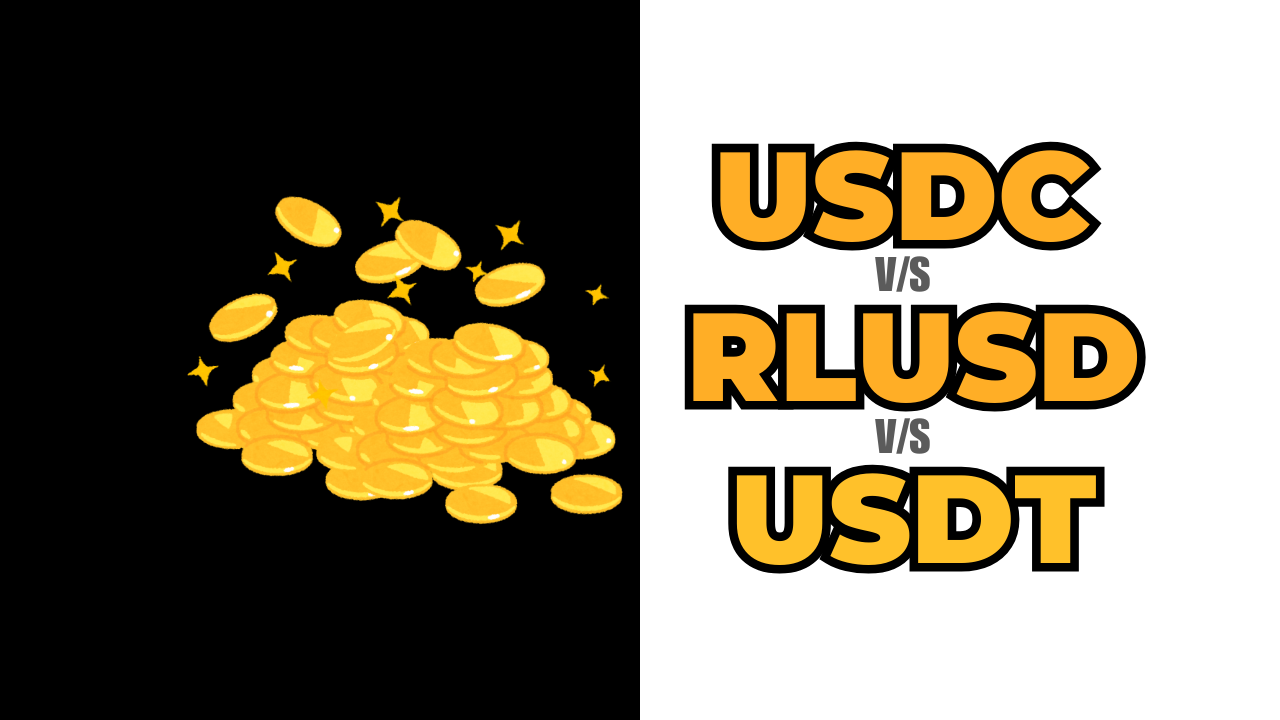
Also Read – USDC vs. RLUSD vs. USDT – Key Differences and Why They Matter

USDC vs. RLUSD vs. USDT – Key Differences and Why They Matter

we have explained the key differences between RLUSD, USDC, and USDT.

Stablecoins are booming in May 2025, with Circle’s USDC at $61 billion, Ripple’s RLUSD at $317 million, and Tether’s USDT dominating at $141 billion.

On May 20, 2025, the U.S. Senate passed the GENIUS Act, setting new rules for stablecoins and boosting confidence in USDC, RLUSD, and USDT. For global investors, understanding these trends and differences is crucial. ‘

GENIUS Act Passes: A Stablecoin Game-Changer

On May 20, 2025, the U.S. Senate advanced the Guiding and Establishing National Innovation for U.S. Stablecoins (GENIUS) Act with a 66-32 procedural vote, surpassing the 60-vote threshold needed to move toward final passage.

Introduced by Senators Hagerty, Scott, Gillibrand, and Lummis, the bill mandates 1:1 backing with cash or Treasuries. It bans Big Tech issuance, and allows state regulation for smaller issuers (under $10 billion).

This law aims to protect consumers and keep the U.S. dollar dominant, giving stablecoins like USDC, RLUSD, and USDT a clearer legal path.

Also Read – $764.9 Million Worth of Bitcoin Just Purchased

USDC’s Strong Growth in 2025
USDC, launched by Circle and Coinbase in 2018, holds the second-largest stablecoin spot. Its market cap grew 38.6% from $44 billion in January to $61 billion by April 2025, driven by institutional trust and Circle’s IPO filing.

USDC’s price stayed stable with a 0.083% fluctuation in March, and it operates on 19 blockchains, making it ideal for trading and payments.

RLUSD’s Tough Start
Ripple’s RLUSD, launched in December 2024 on XRP Ledger and Ethereum, struggles with a $317 million market cap. Trading volume dropped 31% by May 14, 2025, showing slow adoption. Ripple’s $25 million RLUSD donation to U.S. schools and a Gemini listing haven’t gained traction, with no new tokens minted in early May.

The GENIUS Act could help RLUSD by favoring U.S.-based stablecoins, but its “clawback” feature, allowing Ripple to reclaim tokens, worries investors on X.

Please note that RLUSD and XRP are not the same. They are distinct digital assets created by Ripple, with different purposes, characteristics, and use cases. RLUSD is a U.S. dollar-backed stablecoin launched by Ripple in December 2024 on XRP Ledger and Ethereum. Its value is pegged 1:1 to the USD, designed for stability. XRP is Ripple’s native cryptocurrency, launched in 2012 on the XRP Ledger. It’s not pegged to any currency, so its price fluctuates

USDT’s Market Dominance
Tether’s USDT, launched in 2014, leads with an approx $141.7 billion market capitalization. Despite a 21% market cap drop from $83 billion to $65 billion in 2022 after the FTX collapse, USDT remains the top choice for traders due to its high liquidity and presence on exchanges like Binance. However, Tether’s transparency issues, including a 2021 $41 million fine for misleading reserve claims, raise concerns.

The GENIUS Act may pressure Tether to improve audits to maintain its edge.

USDC vs. RLUSD vs. USDT: Key Differences

In this table, we have explained the key differences between RLUSD, USDC, and USDT.

FeatureUSDCRLUSDUSDT
IssuerCircle (with Coinbase, 2018)Ripple (2024)Tether Limited (2014)
Market Cap$61B (April 2025)$317M (May 2025)$141.7B (Feb 2025)
Blockchains19 (Ethereum, Solana, Algorand, etc.)XRP Ledger, EthereumEthereum, Tron, Solana, Omni, etc.
TransparencyHigh (monthly audits, MiCA-compliant)High (real-time audits, NYDFS-approved)Low (attestations, not full audits)
RegulationStrong (U.S., EU MiCA)Strong (U.S., GENIUS Act, NYDFS)Weak (faced fines, scrutiny)
Use CaseTrading, payments, DeFiCross-border paymentsTrading, store of value, DeFi
RisksBanking crises (e.g., SVB 2023)Clawback feature, low adoptionTransparency issues, regulatory fines

Also Read – What it will take for XRP to become the next Bitcoin?

USDC leads in transparency and regulatory compliance, with its $61 billion market cap and MiCA approval making it a safe choice for institutions.

RLUSD, at $317 million, is a new player with potential boosted by the GENIUS Act, but its clawback feature and slow adoption limit its reach.

USDT dominates with $141.7 billion and unmatched liquidity, but its transparency issues persist.

The GENIUS Act, passed today, strengthens all three by enforcing 1:1 backing, though USDC and RLUSD benefit more due to their compliance focus. USDC suits global traders, RLUSD targets Ripple’s payment network, and USDT remains the go-to for high-volume trading despite risks

The Bottom Line

USDC, RLUSD, and USDT shape the 2025 stablecoin market, with USDC’s trust, RLUSD’s potential, and USDT’s liquidity. The GENIUS Act’s passage today boosts confidence but favors compliant coins like USDC and RLUSD.

Stay updated with our daily crypto news—subscribe to the notifications now!

3 Important Differences Between Cryptography and Blockchain

Cryptography and blockchain are integral to modern digital systems, yet they differ significantly. Cryptography is a technique that employs methods like encryption, decryption, and end-to-end encryption to secure data. Blockchain is a system that leverages cryptography to create a transparent, tamper-resistant ledger.

Cryptography and blockchain are terms you often hear when people talk about online security or things like Bitcoin. They’re related but not the same. Cryptography is a technique—a collection of methods, such as encryption, designed to secure information. Blockchain is a system—a structured framework that employs cryptography to maintain a shared, tamper-resistant record.

In this article, we’ll explain 3 main differences between them in easy-to-understand language, perfect for anyone curious about how these technologies work.

What is cryptography in simple words?

How do you explain cryptography to a child?

Cryptography is a technique that safeguards information by transforming it into a secure, unreadable format. It relies on mathematical methods to ensure data remains confidential, unaltered, and authentic.

If we have to explain cryptography to a child, then we will do it like this: Imagine you want to send a secret note to your best friend in class, but you don’t want anyone else to read it. Cryptography is like a magic trick that scrambles your note so it looks like a bunch of nonsense. Only your friend, who knows the secret to unscramble it, can read the real message.

Cryptography’s primary components include:

  • Encryption: Converting data into a coded format accessible only with a specific key.
  • Decryption: Using the key to restore coded data to its original form.
  • End-to-End Encryption: Ensuring only the sender and recipient can access the data, preventing intermediaries, such as service providers, from viewing it. This is common in secure messaging applications like WhatsApp.
  • Additional Methods: Cryptography includes hashing, which generates a unique identifier to verify data integrity, and digital signatures, which confirm the authenticity of messages or transactions.

Cryptography is essential to numerous applications, including online banking, secure communications, and device protection, safeguarding sensitive information in daily digital interactions.

What is blockchain technology in simple words?

Blockchain is a system that functions as a distributed digital ledger, recording information across a network of computers. It organizes data into “blocks” that are chronologically linked, forming a chain highly resistant to modification. This design promotes transparency and trust without requiring a central authority.

Widely recognized for powering Bitcoin, where it tracks digital currency transactions, blockchain has broader applications, such as supply chain management, secure voting systems, and automated contracts. By integrating cryptography with a decentralized network, blockchain establishes a reliable and transparent record-keeping system.

How does Cryptography work in Blockchain?

Cryptography is a foundational element of blockchain’s functionality.

The techniques of cryptography—like encryption, hashing, and digital signatures act like locks to protect blockchain data. These methods ensure that only authorized users can add information and they stop anyone from messing with what’s already there, so that existing records remain unaltered.

Cryptography supplies the essential tools, while blockchain builds a robust system with their help to enable secure, decentralized operations.

Also Read – The Very First Post You Should Read to Learn Cryptocurrency

3 Important Differences Between Cryptography and Blockchain

The following are the three most critical differences between cryptography and blockchain, selected for their importance in understanding these concepts:

1. Technique vs. System

  • Cryptography: A technique comprising methods like encryption, decryption, and end-to-end encryption to secure data. It functions as a toolset for protecting information.
  • Blockchain: A system that integrates cryptography with a distributed network and consensus protocols to create a secure, shared ledger. It is a comprehensive framework for managing and verifying data.

2. Purpose and Objective

  • Cryptography: Focuses on ensuring data confidentiality, integrity and authenticity. Its primary goal is to protect information from unauthorized access or alteration.
  • Blockchain: Seeks to establish a transparent, tamper-resistant record that multiple parties can trust. It emphasizes shared accountability and verifiability across a network.

3. Independence vs. Dependence

  • Cryptography: Operates independently and has been employed for centuries, from ancient coded messages to modern digital security. It requires no specific system to function.
  • Blockchain: Relies on cryptography to ensure its security and integrity. Without cryptographic techniques, blockchain’s ability to maintain a trustworthy ledger would be compromised.

Cryptography has a long history, dating back to ancient methods like coded messages for military or diplomatic use. It remains a fundamental, often understated component of technology. Blockchain is a relatively new innovation, introduced with Bitcoin in 2009. It has garnered significant attention for its potential to transform industries like finance and logistics.

Let’s Sum Up Blockchain and Cryptography for Bitcoin

In a Bitcoin transaction, cryptography and blockchain collaborate seamlessly.

Picture a Bitcoin transaction: you send some digital cash to a friend. Cryptography is the secret agent making it happen safely—it encrypts your transaction details, uses digital signatures to prove it’s you, and hashes data to keep things secure. Blockchain is the public accountant, recording that transaction in a shared ledger everyone can check, so no one can lie about who owns what. Together, they make Bitcoin work: cryptography locks the deal, and blockchain keeps the record honest!

Cryptography provides the security foundation, while blockchain ensures a verifiable and decentralized record, enabling Bitcoin to operate as a trusted digital currency.

Also Read – What it will take for XRP to become the next Bitcoin?

The Bottom Line

Cryptography and blockchain are integral to modern digital systems, yet they differ significantly. Cryptography is a technique that employs methods like encryption, decryption, and end-to-end encryption to secure data. Blockchain is a system that leverages cryptography to create a transparent, tamper-resistant ledger. Understanding these key differences helps readers see how cryptography and blockchain work together to improve security and trust, particularly in innovations like Bitcoin.

$764.9 Million Worth of Bitcoin Just Purchased

The U.S. House just passed the "One Big Beautiful Bill Act," a massive tax package backed by President-elect Trump.

A company that’s extremely confident in Bitcoin’s potential just invested $764.9 million to quickly buy 7,390 Bitcoin, showing strong belief in its future value.

Strategy, closely linked to Michael Saylor, a prominent Bitcoin proponent, is a major corporate holder of the cryptocurrency. Saylor has consistently advocated for Bitcoin as a superior store of value compared to traditional assets like gold or bonds, citing its fixed supply of 21 million coins and decentralized nature. Strategy’s acquisition of 7,390 BTC at $103,498 per coin brings its total holdings to 576,230 BTC, valued at $40.18 billion. With an average acquisition cost of $69,726 per coin, Strategy’s portfolio reflects significant unrealized gains, supported by a 16.3% year-to-date yield.

MicroStrategy Incorporated, founded in 1989 and headquartered in Tysons Corner, Virginia, is a global provider of enterprise analytics and mobility software. The company specializes in business intelligence, offering platforms for data visualization, reporting, and advanced analytics to help organizations make data-driven decisions. Led by CEO Michael Saylor, MicroStrategy has gained prominence in the cryptocurrency space since 2020, adopting Bitcoin as a primary treasury reserve asset. Listed on NASDAQ (MSTR), MicroStrategy serves thousands of clients across industries worldwide.

This move aligns with a broader trend of institutional buying, with firms like BlackRock and Twenty One Capital also making hefty Bitcoin purchases recently.

The Trump administration’s pro-cryptocurrency policies, alongside initiatives like American Bitcoin and World Liberty Financial, have bolstered market sentiment. Ethereum (above $2,600), Dogecoin (above $0.23), and Pi Coin (up 50% on ecosystem updates) reflect broader market strength, though Bitcoin retains over 50% of the market share.

With 19.7 million of Bitcoin’s 21 million total supply already mined, significant buys reduce available circulating supply, which can exert upward pressure on prices when demand remains strong.

Also Read – Why the sudden dump after a quick pump in Bitcoin?

Broader Cryptocurrency Trends

The purchase reflects several macro trends shaping the cryptocurrency market in 2025:

  • Global Adoption: Political and economic developments, such as Pakistan’s agreement with World Liberty Financial and Trump-backed crypto initiatives, indicate increasing mainstream acceptance.
  • Technological Advancements: Innovations like Ethereum’s scaling solutions and Bitcoin’s Lightning Network are enhancing transaction efficiency, supporting broader use cases.
  • Diversification: Altcoins are gaining traction, with Ethereum, Dogecoin, and others posting gains, though Bitcoin’s dominance persists due to its perceived stability and brand recognition.

Strategy’s acquisition positions Bitcoin as a corporate reserve asset, akin to gold for central banks, particularly in an era of rising global debt and fiat currency concerns.

Why the sudden dump after a quick pump in Bitcoin?

bitcoin crash latest news

After consolidating for almost eight days straight, Bitcoin jumped to $107,000 on Sunday, May 18. But as soon as it touched $107,108, it crashed 4,000 points down to $103,000.

The reasons for this crash may not be linked to any major fundamental factor. After such a rally, Bitcoin needed a pullback, or we can say it had to come to a discount territory.

Market moves smartly. It does not let weak hands who are inexperienced in the market stay in the rally. So it broke out above resistance to trigger short positions and lure bulls into longs. That is exactly where smart money starts booking profit with high efficiency. The area above the previous resistance zone becomes an extreme liquidity zone for big bears. Hence, it crashed to $103,000 with strong volume.

Could BTC/USD fall further? Where might it find support before it rises again?

Based on my personal chart technique, BTC may drop to $97,000 again before continuing its journey upwards. That is supposedly the best discount zone for big bulls.

Please note that this is just speculation. There is no guarantee Bitcoin will follow the same price action.

Also Read – What it will take for XRP to become the next Bitcoin?

Recent Developments in Fundamental Factors of Bitcoin

Big firms like BlackRock and MicroStrategy are buying Bitcoin as a shield against rising prices. ETF inflows are now much higher than the amount of new Bitcoin mined.

The April 2024 halving cut miner rewards to 3.125 BTC per block. By May 2025, the Bitcoin network’s computing power has grown a lot, showing more miners are joining. But with lower rewards, miners are using more efficient machines like Bitmain’s S21+ and finding cheaper electricity in places such as Oman and the UAE.

Large banks are planning to offer Bitcoin storage services if rules change. The EU’s new MiCA law in 2025 and clearer US regulations are making it safer for more investors to join. A new SEC chair, Paul Atkins, is also showing a friendlier stance toward digital assets.

Bitcoin (BTC) has seen significant price action in recent months, reaching an all-time high (ATH) of $109,114.88 on January 20, 2025. This milestone followed a strong rally, with BTC surpassing $100,000 for the first time on December 5, 2024, amid optimism from the U.S. election of a crypto-friendly administration.

The Crypto Chip Maker Nvidia Is Thinking of Investing in PsiQuantum

Nvidia May Invest in PsiQuantum

Nvidia (NVDA), the leading producer of graphics processing units (GPUs) critical for cryptocurrency mining, is reportedly in advanced talks to invest in PsiQuantum, a quantum computing startup valued at $6 billion pre-money, according to Reuters. This strategic move, as Nvidia prepares to announce its Q1 earnings on May 28, 2025—with expected earnings of $0.89 per share and revenue of $43.07 billion—could redefine its role in the tech landscape

PsiQuantum, backed by a $750 million funding round led by BlackRock (BLK), which closed Friday at $989.71 (–0.79%), is pioneering photonic quantum computing. Unlike traditional quantum systems, PsiQuantum’s approach uses photons and standard semiconductor manufacturing, enabling scalable production of its Omega chipset. The company aims to deliver a commercially viable quantum computer by 2029, with partnerships including GlobalFoundries, DARPA, and government projects in Chicago and Brisbane.

Quantum computing leverages quantum mechanics—superposition, entanglement, and interference—to perform calculations far beyond the capabilities of classical computers, including Nvidia’s GPU-powered AI systems. For cryptocurrency, quantum computers could break current cryptographic algorithms, threatening blockchain security. A 2023 study suggested quantum attacks could compromise Bitcoin within a decade, urging the development of quantum-resistant encryption.

Nvidia’s GPUs dominate crypto mining and AI, but quantum computing could unlock new applications in cybersecurity, drug discovery, and financial modeling. PsiQuantum’s scalable technology aligns with Nvidia’s recent quantum initiatives, including its Boston research center and “Quantum Day” event. This investment could position Nvidia to address quantum threats to crypto while diversifying its portfolio.

As quantum technology advances, its impact on cryptography and digital finance grows. Nvidia’s potential stake in PsiQuantum signals a bold step toward shaping the future of computing and securing cryptocurrency’s foundation.


Also Read – What it will take for XRP to become the next Bitcoin?

PsiQuantum Stock Information

  • Company Overview: Founded in 2016, PsiQuantum is a Palo Alto–based private quantum computing startup focused on photonic quantum computing. Using photons as qubits and semiconductor manufacturing, it aims to build a million-qubit system by 2029. In 2025, it raised $750 million at a $6 billion pre-money valuation, led by BlackRock (BLK, $989.71).
  • Stock Status: PsiQuantum is not publicly traded and has no ticker symbol (PSIQ belongs to another entity). Pre-IPO shares trade on platforms like Hiive, with December 2024 prices at $13–$15 per share. No IPO filing exists yet, but its funding and partnerships suggest a future listing is possible.
  • Investment Context: PsiQuantum’s Omega chipset, a $10.8 million Air Force contract, and Nvidia’s investment talks highlight its potential. However, pre-IPO investing is high risk, limited to accredited investors, and speculative due to quantum computing’s early stage.

For cryptocurrency, quantum computing poses a dual-edged sword.

Explaining Quantum Computing
Quantum computing harnesses quantum mechanics to process information in ways classical computers cannot. Unlike classical bits (0 or 1), quantum bits (qubits) exist in superposition, representing 0 and 1 simultaneously. Qubits can also be entangled, linking their states across distances, and use interference to amplify correct solutions. These properties enable quantum computers to tackle complex problems—like factoring large numbers or simulating molecules—exponentially faster than classical systems, including Nvidia’s GPU-powered AI.

For cryptocurrency, quantum computing poses a dual-edged sword. It could break widely used cryptographic algorithms (e.g., RSA, ECC), potentially compromising blockchain security. For instance, Shor’s algorithm on a large-scale quantum computer could crack Bitcoin’s encryption, exposing wallets. However, quantum computing also offers solutions, like quantum-resistant cryptography, to secure future blockchains. Beyond crypto, it promises breakthroughs in cybersecurity, drug discovery, and optimization, making investments like Nvidia’s in PsiQuantum critical for technological leadership.

What it will take for XRP to become the next Bitcoin?

Is Xrp the next bitcoin?

Bitcoin and XRP are two of the biggest names in the world of cryptocurrency.

Bitcoin is often called “digital gold” because people buy it to hold and protect their money.

XRP is designed to move money quickly and cheaply across borders.

Both have their advantages and disadvantages.

But will XRP ever be able to match or overtake Bitcoin? In this article, we will explore what it would take for XRP to become the next Bitcoin.


Understanding Bitcoin’s Rise

  1. Bitcoin was created in 2009 by a person or group known as Satoshi Nakamoto. It introduced a new way to send and store money without needing any banks or governments.
  2. In 2010, someone used 10,000 Bitcoins to buy two pizzas. This was the first real-world Bitcoin transaction and proved that Bitcoin could be used like regular money.
  3. By the year 2013, Bitcoin’s price crossed $1,000 for the first time as more people began to understand and invest in it.
  4. In 2017, the price of Bitcoin went up to almost $20,000. This happened because many new people started buying it and the media gave it a lot of attention.
  5. Between 2020 and 2021, big companies like Tesla bought large amounts of Bitcoin. This made the price go over $60,000 and gave Bitcoin more respect as a valuable digital asset.
  6. In 2024, Bitcoin reached a price of $100,000. This showed that people now see it as a very strong and trustworthy store of value because of its limited supply and high security.

The Story of XRP

  1. Ripple Labs launched XRP in 2012 with the goal of helping banks and companies move money across countries quickly and cheaply.
  2. Over the next few years, Ripple made deals with many banks. This allowed XRP to be used in real money transfers and increased its practical value.
  3. In the 2018 crypto boom, XRP’s price jumped to about $3.84. This showed that many people were interested in using XRP for real financial tasks.
  4. In 2020, the U.S. Securities and Exchange Commission (SEC) sued Ripple. They claimed XRP was a type of investment that was not registered properly. This caused its price to swing up and down a lot.
  5. In 2023, Ripple got a partial win in court. This gave XRP some legal clarity and helped bring back investor trust.
  6. By January 2025, XRP reached a market value of $195 billion. This was its highest ever, but it was still far smaller than Bitcoin.

Also Read – The Very First Post You Should Read to Learn Cryptocurrency

Big Hurdles for XRP to Match Bitcoin

  1. XRP would need to be worth around ten times more than its best market value of $195 billion to reach Bitcoin’s market cap of $1.743 trillion. This means the price of one XRP would need to rise to about $35.
  2. People mostly see XRP as a payment tool right now. To grow like Bitcoin, XRP must expand into other areas like decentralized finance (DeFi) and asset tokenization.
  3. XRP needs full approval from governments and regulators around the world. Legal problems have kept big financial firms from investing in it.
  4. Ripple, the company behind XRP, holds a large share of the tokens. To gain more trust, XRP needs to become more decentralized and spread out its control.
  5. The XRP community must grow larger. Developers, new projects, and regular users need to get more involved in building on the XRP Ledger.
  6. Global events like high inflation or demand for fast and cheap money transfers could help XRP become more valuable if it meets those needs.

Why Hitting $100,000 per XRP Is Unrealistic?

If XRP ever reached a price of $100,000 per coin with 58.6 billion coins in circulation, the total value of all XRP would be $5.86 quadrillion. This is more than the value of all the stock markets in the world combined. A more realistic goal for XRP would be to reach Bitcoin’s current market value of around $2 trillion. For that to happen, one XRP would need to be worth about $34.


The Different Goals of Cryptocurrencies

  1. Bitcoin and Litecoin are mainly built to act like digital gold. People use them to store value safely over time.
  2. XRP, Stellar, and Bitcoin Cash are made to allow fast and low-cost money transfers.
  3. Ethereum and Cardano are platforms that let people build apps and smart contracts that don’t need any middlemen.
  4. Monero and Zcash are focused on privacy. They let people send money in a way that hides their identity and transaction details.

Conclusion

XRP has many strengths like fast transactions, low fees, and partnerships with banks. But Bitcoin has a longer history, strong security, and a much larger community. For XRP to become the next Bitcoin, it must grow a lot in market value, offer more services, gain full legal approval, reduce Ripple’s control, and build a larger network of users and developers. Even if it never becomes bigger than Bitcoin, XRP can still play an important role in the future of digital money.

Also Read – Bitcoin Has a Limit, the Dollar Doesn’t — Why This Difference Matters for the Future of Money?