
Gift Nifty Timings Changed – Check Latest Trading Timings in India (2026)

GIFT NIFTY NEW TIMINGS (2026)

Gift Nifty – traded at NSE IFSC (NSE International Exchange) located at GIFT City, Gandhinagar, Gujarat – is the international version of India’s flagship Nifty 50 index futures. It was formerly known as SGX Nifty, traded on the Singapore Exchange (SGX), before migrating to GIFT City in 2023 under the NSE IFSC-SGX Connect framework.

Gift Nifty is widely watched by traders across India and globally because it provides early signals for how the domestic Nifty 50 index may open on the NSE. Since it trades almost round the clock, it acts as a live barometer of global market sentiment towards Indian equities.


Why Have Gift Nifty Timings Changed?

As per the official circular, NSE IFSC has revised trading session timings.

The key objective of this revision is to reduce the gap between Session 1 and Session 2, allowing for a smoother transition between market sessions and better alignment with global markets.

The most significant changes are in the Session 2 Pre-Open timings and the Trade Modification End Times across all instrument categories.


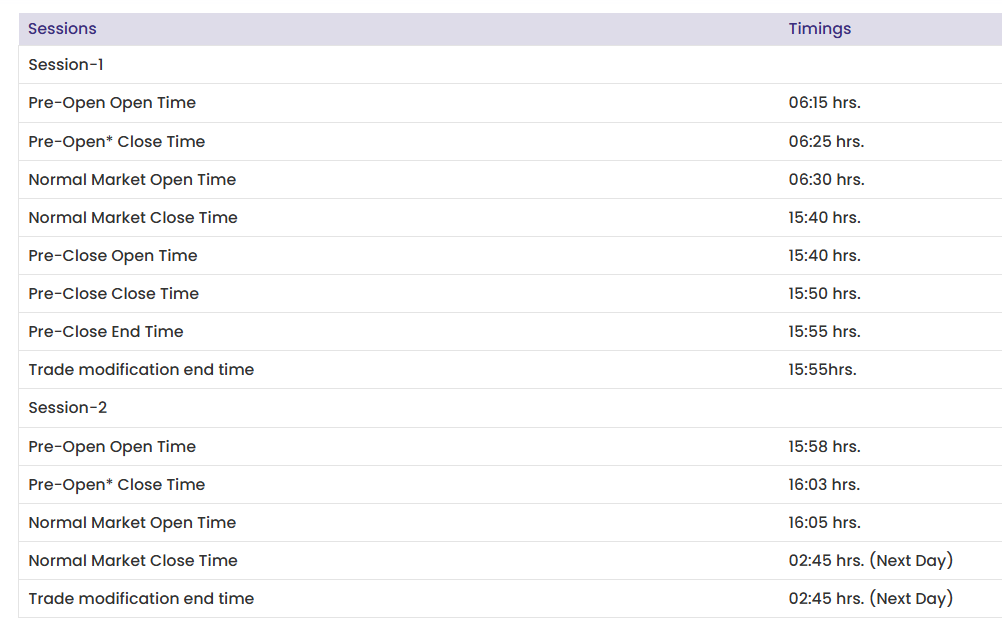
Latest Gift Nifty Timings in India 2026 (Revised)

Session 1

SessionTrading Hours (IST)
Pre-Open Open Time06:15 hrs
Pre-Open Close Time06:25 hrs
Normal Market Open Time06:30 hrs
Normal Market Close Time15:40 hrs
Pre-Close Open Time15:40 hrs
Pre-Close Close Time15:50 hrs
Pre-Close End Time15:55 hrs
Trade Modification End Time15:55 hrs

Session 2

SessionTrading Hours (IST)
Pre-Open Open Time15:58 hrs
Pre-Open Close Time16:03 hrs
Normal Market Open Time16:05 hrs
Normal Market Close Time02:45 hrs (Next Day)
Trade Modification End Time02:45 hrs (Next Day)

Session 2 now begins approximately 30 minutes earlier.

The Pre-Open for Session 2 starts at 15:58 hrs (previously 16:25 hrs) and normal market trading kicks off at 16:05 hrs (previously 16:35 hrs). This significantly reduces the gap between the two sessions.

Also Read – 5 Reasons GIFT Nifty May Not Be Moving


What Has Changed in Gift Nifty Timings?

Here is a bird’s eye view of the most important changes:

ChangeOld TimingNew Timing
Index Futures Session 2 Pre-Open16:25 hrs15:58 hrs
Index Futures Session 2 Normal Open16:35 hrs16:05 hrs

What Time Does Gift Nifty Open in India?

Gift Nifty opens at 6:30 AM IST for Session 1, with Pre-Open beginning at 6:15 AM IST.

What Time Does Gift Nifty Session 2 Open?

After the revised timings, Gift Nifty Session 2 opens at 16:05 hrs (4:05 PM IST) – a full 30 minutes earlier than before (previously 16:35 hrs).


Gift Nifty Break Time – When Is the Gap Between Sessions?

After the revision, the break between sessions is significantly narrowed:

  • Session 1 ends (Index Futures Pre-Close End): 15:55 hrs
  • 15:40pm
  • Session 2 Pre-Open begins: 15:58 hrs
  • Session 2 Normal Market opens: 16:05 hrs

In practice, there is now only a ~3 minute gap between Session 1 Pre-Close and Session 2 Pre-Open for Index Futures – a dramatic improvement from the previous ~30-minute gap.


Is Gift Nifty Open on Weekends? – Saturday and Sunday Timings

Gift Nifty does NOT operate on Saturdays and Sundays. Like the domestic NSE, NSE IFSC observes weekends as non-trading days. Trading resumes Monday morning from 6:15 AM IST (Pre-Open).

However, there are exceptions based on NSE IFSC’s holiday calendar.

Always check the official holiday list at www.nseix.com before assuming markets are open.


Does Gift Nifty Operate 24 Hours? Is It Open All the Time?

No, Gift Nifty does not operate 24/7. Trading happens across two sessions:

  • Session 1: ~6:30 AM to ~3:55 PM IST (varies by segment)
  • Session 2: ~4:05 PM to ~2:45 AM IST (next day)

While Session 2 runs deep into the night, there is a short gap between the two sessions.

The combined trading window covers 20 hours and 35 minutes per day, making Gift Nifty one of the longest-running index futures markets globally – but it is not a round-the-clock 24/7 market.


Can We Trade in Gift Nifty?- Who Trades in Gift Nifty?

Retail investors in India generally cannot directly trade in Gift Nifty on NSE IFSC.

The exchange is located in the GIFT City International Financial Services Centre (IFSC), which is a special economic zone.

Direct participation is limited to:

  • Registered broker-dealers and remote trading participants on NSE IFSC
  • Foreign Portfolio Investors (FPIs)
  • Non-Resident Indians (NRIs) through IFSC-registered brokers
  • Domestic institutions via specific connect frameworks

Why Does Gift Nifty Open Early (at 6:30 AM IST)?

Gift Nifty opens early to align with Asian and European market hours. Since it trades in US dollars and is positioned as an international platform, the early opening helps global investors hedge or build positions in Indian index futures while other Asian markets (Japan, China, Hong Kong, Singapore) are also active.

This early session also gives Indian traders and institutions a vital pre-market signal well before the NSE opens at 9:15 AM IST.


Does Gift Nifty Affect Nifty 50?

Yes, absolutely. Gift Nifty is one of the most closely tracked indicators for predicting the Nifty 50’s opening direction. Here is how:

  • Gift Nifty reflects overnight and early morning global sentiment towards Indian markets
  • A rising Gift Nifty typically suggests a positive (gap-up) opening for Nifty 50 on NSE
  • A falling Gift Nifty suggests a negative (gap-down) opening
  • Institutional traders and analysts quote Gift Nifty levels every morning before 9:15 AM IST to gauge market mood

While not a perfect predictor (events can shift rapidly between 6:30 AM and 9:15 AM), Gift Nifty is considered the single best pre-market indicator for Nifty 50 in India.


Is Gift Nifty a Good Indicator? How Accurate Is It?

Gift Nifty is a strong directional indicator but not always an exact predictor of the Nifty 50 opening level. Its accuracy depends on:

  • Overnight global cues: US markets (Dow Jones, S&P 500, Nasdaq), European markets
  • Macro events: RBI policy, Fed decisions, geopolitical news
  • FII/DII activity: Foreign institutional flow heavily influences both Gift Nifty and Nifty 50
  • SGX Connect volumes: Liquidity levels impact price discovery

Traders generally use Gift Nifty in combination with US futures and Asian market movements for a holistic pre-market view. It is a good indicator, but should not be used in isolation.


How Is Gift Nifty Calculated?

Gift Nifty futures are priced based on the Nifty 50 index, using standard futures pricing methodology:

Futures Price ≈ Spot Price × [1 + (Risk-Free Rate – Dividend Yield) × (Time to Expiry/365)]

Since it is USD-denominated, the exchange rate between INR and USD also plays a role in the absolute price levels.

Also Read – FII Selling Because the Rupee is Falling, or the Rupee Falling Because FIIs Are Selling?


Who Handles Gift Nifty?- Who Is Behind It?

Gift Nifty is managed by NSE IFSC Ltd. (NSE IX) – a subsidiary of the National Stock Exchange of India (NSE) – operating under the regulatory framework of the International Financial Services Centres Authority (IFSCA) at GIFT City, Gandhinagar, Gujarat.

The exchange works in collaboration with Singapore Exchange (SGX) under the NSE IFSC–SGX Connect framework for certain products including Negotiated Large Trading (NLT).

Unlike domestic Indian exchanges regulated by SEBI, the exchange hosting Gift Nifty operates under the regulatory framework of the IFSCA.


What Are the Benefits of Gift Nifty?

Gift Nifty offers several advantages for eligible market participants:

  1. Extended trading hours: Near round-the-clock access to Nifty 50 exposure across two sessions
  2. USD denomination: Useful for foreign investors without INR currency risk on futures
  3. Global reach: International traders can access Indian index futures from GIFT City IFSC
  4. Price discovery: Acts as a continuous price discovery mechanism for Nifty 50 during NSE off-hours
  5. Lower taxes: GIFT City IFSC offers significant tax and regulatory concessions under IFSCA rules
  6. Pre-market signal: Invaluable tool for Indian retail traders to gauge market opening direction

How Many Companies Are in Gift Nifty?

Gift Nifty is a derivative based on the underlying Nifty 50 index, which comprises 50 of India’s largest and most liquid companies listed on NSE across key sectors including banking, IT, oil & gas, FMCG, pharma, and auto.

So technically, Gift Nifty does not contain any companies. It just mirrors or, one could say, acts like the Nifty 50.


Does Gift Nifty work 24 hours?

No, it operates across two sessions covering more than 20 hours per day, but is not a true 24/7 market.

Why does Gift Nifty fall suddenly sometimes?

Sudden drops are typically triggered by negative global cues – such as a sharp fall in US markets overnight, geopolitical events, unexpected central bank actions (Fed or RBI), or major corporate/economic news.

What time is Gift Nifty open in India?

Gift Nifty Session 1 opens at 6:30 AM IST (Pre-Open from 6:15 AM). Session 2 now opens at 4:05 PM IST after the revised timings.

What time does Gift Nifty Session 2 start?

Session 2 Normal Market opens at 16:05 hrs (4:05 PM IST) for Index Futures and Options.


5 Reasons GIFT Nifty May Not Be Moving

5 Reasons Why GIFT Nifty May Not Be Moving

Since traders across India use GIFT Nifty as an early indicator of how the market might open, a frozen chart can instantly create doubt.

You might start questioning whether your internet is acting up, whether your broker’s platform has stopped updating, or whether global markets have suddenly gone silent.

The truth is, when GIFT Nifty appears stuck, there is usually a perfectly logical reason behind it.

Before jumping to conclusions, it helps to understand how GIFT Nifty actually trades, when it pauses, and what external factors influence its movement.


What Is GIFT Nifty and Why Do Traders Watch It?

GIFT Nifty is the international futures contract based on the Nifty 50, traded on the NSE International Exchange located in GIFT City (Gujarat International Finance Tec-City), Gujarat.

It was previously known as SGX Nifty before trading migrated from Singapore to India.

Unlike the regular NSE cash market, which operates only from 9:15 AM to 3:30 PM IST, GIFT Nifty trades for 20 hours and 35 minutes daily across two sessions.

Also Read – Gift Nifty Timings Changed – Check Latest Trading Timings in India (2026)

Because of this extended trading window, it captures overnight movements from Asian, European, and US markets – making it one of the most closely watched indicators for Indian traders.

But despite these long trading hours, there are several periods when GIFT Nifty may appear completely inactive.

Let’s understand why.


1. You May Be Looking During the Scheduled Session Break

One of the biggest surprises for newer traders is discovering that GIFT Nifty does not trade continuously without interruption.

There is a scheduled break between its two daily sessions.

gift nifty timings

As per the latest official timings, trading typically pauses between 3:40 PM and 4:05 PM IST, allowing the exchange to complete settlement and transition into the next session. During this 25-minute period, no trades occur, which means prices remain unchanged.

Note: You may find outdated information online suggesting a longer 55-minute break. However, according to the current official trading hours, the gap has been standardized to this shorter 25-minute window to provide more active trading time.

While the “Normal Market” for the second session officially resumes at 4:05 PM, the exchange begins a brief Pre-Open period at 3:58 PM. If you check your charts during this window and see no movement, the market is not broken – it is simply in its official transition gap.

This “dead zone” often tricks traders into thinking their charting platform has frozen, when in reality, the exchange itself is temporarily paused.


2. The Overnight Market Closure May Be in Effect

Although GIFT Nifty trades for nearly 21 hours, it does not operate 24 hours a day.

Its second session usually ends exactly at 2:45 AM IST, and the next trading day begins at around 6:30 AM IST. During this 3-hour and 45-minute gap, there is no live trading activity.

If you are checking your charts at 3 AM, 4 AM, or even 5 AM, the price you see is simply the last traded price from the previous session.

Nothing is wrong. The market is closed. Many early-morning traders misinterpret this quiet period as a lack of volatility, when in reality, the trading engine has simply shut down until the next session begins.


3. Global Markets May Be Quiet

This is probably one of the most important reasons that you should know and learn about.

Sometimes GIFT Nifty is technically open, but the chart remains completely flat and shows almost no price action.

This usually happens when global markets enter a catalyst vacuum, typically from 1:30 AM IST onwards.

Note: It is important to remember that GIFT Nifty’s correlation with global markets shifts slightly during Daylight Saving Time (DST). When the US and Europe move their clocks forward or backward, the “catalyst vacuum” or peak volatility periods may shift by one hour for Indian traders. For instance, while the US market usually closes at 2:30 AM IST, this changes to 1:30 AM IST during the summer months. Always keep an eye on international clock changes to accurately predict when GIFT Nifty price action might slow down.

GIFT Nifty gets much of its momentum from global triggers, especially from the US stock market, European indices, central bank commentary, economic data, earnings announcements, oil prices, and geopolitical headlines.

Once Wall Street closes, if no major economic events or breaking news emerge, trading activity often drops sharply. You can witness this after 1:30 AM IST as the US markets close.

Without a fresh trigger, buyers and sellers may both step back, causing GIFT Nifty to move in an extremely narrow range or just STOP.

To a trader staring at the chart, this can look like the market has completely stopped.

In reality, the market is open – but waiting for its next reason to move.


4. It Could Be a Market Holiday

The first and most common reason GIFT Nifty is not moving is simple – the exchange may be closed.

GIFT Nifty trades on the NSE International Exchange, and this exchange follows its own trading calendar.

Many traders assume that if India’s domestic market is open, GIFT Nifty must also be trading. That assumption can create confusion because the international exchange may observe a different holiday schedule depending on exchange regulations or settlement requirements.

Since it is based in GIFT City (an IFSC – International Financial Services Centre), it sometimes remains open on domestic Indian holidays if international markets are active.

If the exchange is closed, prices will remain frozen until the next trading session officially begins.

You should always check the exchange calendar before assuming something is wrong with the market.


5. The Problem Might Be Your Platform, Not the Market

Sometimes the market is moving – but your screen is not.

This happens more often than traders realize.

Broker terminals, third-party trading apps, and even popular charting platforms like TradingView occasionally experience data feed delays, symbol mapping errors, or refresh glitches.

Trader communities have also reported cases where GIFT Nifty values appeared different across brokers, charting platforms, and data providers due to session resets or delayed feeds.

So if your chart looks frozen, the safest move is to verify the price from the official exchange source rather than relying on a single platform.

A frozen chart does not always mean a frozen market.

Sometimes it simply means your data feed is lagging behind reality.


Where Should You Check the Real GIFT Nifty Price?

The best place to verify live prices is the official exchange website. Since the NSE International Exchange is the primary exchange where GIFT Nifty trades, it is the most reliable source for real-time data.


FII Selling Because the Rupee is Falling, or the Rupee Falling Because FIIs Are Selling?

Are Foreign Institutional Investors (FIIs) selling Indian stocks because the rupee is falling? Or is the rupee falling because FIIs are selling?

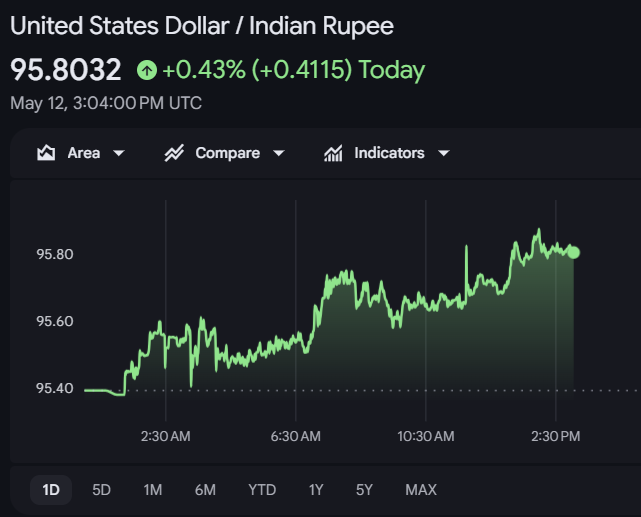
The Indian Rupee has hit a fresh all-time low. As of today, USD/INR is trading around 95.70–95.80.

usdinr chart

Markets are unsettled, Prime Minister Modi is asking 1.4 billion citizens to skip gold purchases and postpone foreign holidays, and the financial press is in a predictable frenzy.

But beneath the noise lies a question that actually matters- what is driving what?

Are Foreign Institutional Investors (FIIs) selling Indian assets because the rupee is falling? Or is the rupee falling because FIIs are selling?

The honest answer – both – turns out to be the beginning of a much more interesting story.


The Fire and the Fuel

Every currency crisis has an ignition point and an accelerant. In 2026, India got both delivered simultaneously.

Geopolitical tensions around Iran pushed Brent crude above $100 per barrel. For a country that imports roughly 85% of its oil, this is not a headline – it is a balance-sheet event.

Every $10 rise in crude adds billions of dollars to India’s import bill, widening the current account deficit and putting structural pressure on the rupee long before any investor touches a sell button.

A Current Account Deficit (CAD) occurs when a country’s total expenditures on foreign goods, services, and transfers exceed the total revenue it earns from its own exports and receipts.

Importers and oil marketing companies moved first. They rushed to buy dollars, flooding the forex market with rupees and amplifying USD demand. The exchange rate began to slip – and that is when FIIs entered the picture.


The Self-Reinforcing Loop

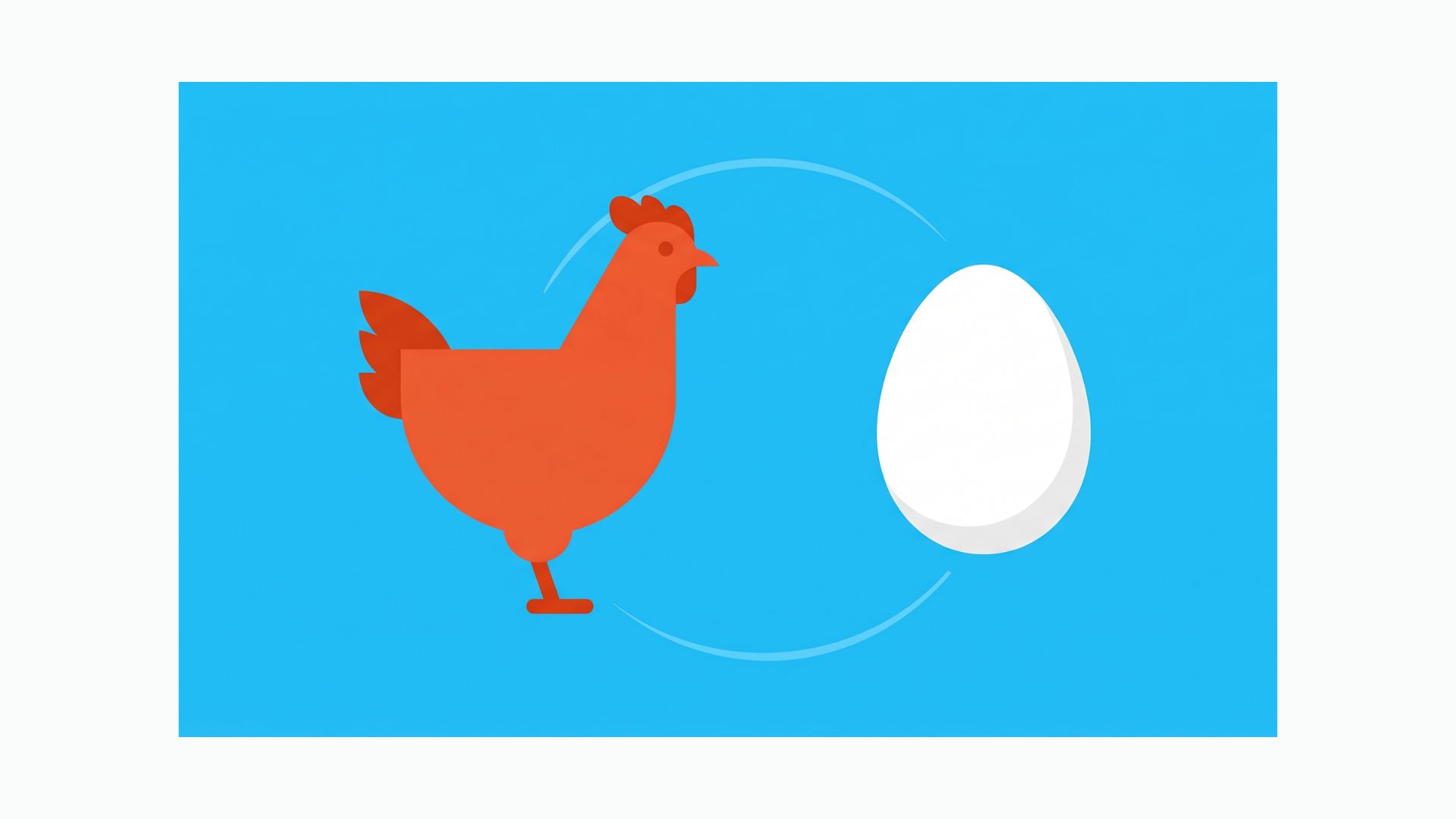
This is where the chicken-and-egg dynamic becomes genuinely reflexive – in the Soros sense of the word.

This is where the chicken-and-egg dynamic becomes genuinely reflexive.

George Soros used “reflexivity” to describe markets where perceptions alter fundamentals, which in turn alter perceptions, in a self-reinforcing cycle. The 2026 rupee story is textbook.

Here is how the cycle compounded, step by step:

Step 1 – Oil shock: Brent above $100. India’s import bill surges, the current account deficit widens, and structural dollar demand rises immediately.

Step 2 – Rupee slips: Importers buy dollars en masse. USD/INR drifts higher. Sentiment turns cautious across markets.

Step 3 – FII calculus shifts: Rupee losses erode dollar-equivalent returns on Indian assets. Inflation risk rises. A global risk-off mood compounds domestic pressure. FIIs begin selling equities and bonds.

Step 4 – Amplification: FII selling converts more rupees into dollars. The rupee falls further. More investors see the trend and sell more. The cycle feeds itself.

Step 5 – Record pace: In just the first four months of 2026, FIIs pulled out over ₹1.9–2 lakh crore (~$20–25 billion) from Indian equities a historic outflow rate with no near-term sign of reversal.

Notice that the loop has no clean starting point. Oil lit the match, but the reflexive dynamics took over quickly. It is rarely pure one-way causation in forex markets – it is a system responding to itself.

Also Read – 8 Indian Stocks That Quietly Profit From Every Mom’s Daily Decisions


How Forex Actually Works?

The foreign exchange market is the largest financial market in the world, with trillions traded daily. Unlike stock exchanges, there is no single venue – it is a decentralised, over-the-counter market where price is purely a function of supply and demand between currencies.

USD/INR rises (rupee weakens) when demand for dollars exceeds supply.

The key sources of dollar demand in India in 2026:

  • Oil imports – Oil marketing companies buy dollars to pay for crude. With Brent above $100, this is the single largest pressure point.
  • Gold imports – Physical gold requires dollar settlement. India’s appetite for gold remains structurally large regardless of price.
  • FII repatriation – Every exit by a foreign investor involves selling rupees and buying dollars. At record outflow pace, this is significant.
  • Foreign debt repayments – Corporate USD-denominated loans come due regardless of where the exchange rate sits.
  • Education and travel – Outward remittances for overseas study, tourism, and destination weddings. This is the segment PM Modi targeted with his public appeal.

Technically, most of this flows through the interbank market – large banks and corporates trading in spot (immediate settlement) and forwards markets. There is also a significant NDF (Non-Deliverable Forward) market offshore, particularly in Singapore and Dubai, where speculative positioning can amplify onshore moves in ways the RBI cannot directly control.

A Non-Deliverable Forward (NDF) is basically a bet on currency exchange rates without actually exchanging the money. It’s a currency protection contract where only the profit or loss is paid, not the actual currency.

The Reserve Bank of India operates a managed float regime. It does not fix the rupee, but it intervenes – selling dollars from reserves – to prevent disorderly, sharp moves. India’s forex reserves currently stand at approximately $690–698 billion, providing meaningful firepower. But the RBI cannot and should not fight a fundamental trend indefinitely. Reserve drawdowns have their own costs.


PM Modi’s Unusual Intervention

In May 2026, Prime Minister Modi made a direct, televised appeal to Indian citizens – an unusual move that signalled the government’s seriousness about the forex situation without deploying blunt administrative controls or capital restrictions.

Prime Minister Narendra Modi has made a direct appeal to Indians: postpone all non-essential foreign travel - including overseas vacations, destination weddings, and leisure trips - for at least one year.

His requests: avoid buying gold for at least a year, postpone non-essential foreign trips and destination weddings abroad, work from home where possible, use public transport or EVs, and carpool to reduce fuel consumption.

Why these specific asks?

The logic is precise.

Gold and oil are two of India’s largest import drains.

Gold imports alone can absorb tens of billions of dollars annually. Reducing discretionary dollar outflows – even marginally, across 1.4 billion people – narrows the current account deficit without forcing the RBI into heavy-handed intervention or the government into politically costly capital controls.

Also Read – Does money go to the company when you buy shares from the stock exchange?


What Could Break the Loop?

Self-reinforcing cycles do not run forever. They break when an external shock reverses the momentum – or when the feedback loop overshoots and creates its own correction opportunity.

In India’s case, the most credible circuit-breakers are-

  • A meaningful decline in crude prices, most likely through geopolitical de-escalation around Iran
  • A pivot or softening in the US Dollar’s global strength
  • Strong domestic macroeconomic data – GDP, inflation, or CAD numbers – that re-attracts long-term institutional capital
  • A decisive RBI rate or liquidity action that restores confidence in the currency outlook

It is also worth noting that a weaker rupee, once the volatility subsides, is not entirely without merit. Export competitiveness improves. India becomes a cheaper destination for foreign capital in real terms. Long-term investors who understand the fundamentals may actually find current valuations attractive – in dollar terms, Indian equities are meaningfully cheaper than they were a year ago.


This Odisha-based fertilizer giant just posted a ₹996 Cr annual profit and a fresh dividend.

This Odisha-based chemical powerhouse rewards shareholders as profit nears the ₹1,000 Cr mark.

An established force in the Indian agricultural landscape, headquartered in Bhubaneswar, Odisha, has just released its audited financial results for the quarter and full year ended March 31, 2026.

This company operates within the Fertilizers and Other Trading Materials sector, managing large-scale operations that include the production and distribution of various crop nutrients. Having listed its shares on the BSE and NSE in 2022, the entity has grown its footprint significantly, recently completing a major merger to consolidate its position in the industry. The company in question is Paradeep Phosphates Limited.

As we look into the latest filings, we find a year marked by substantial corporate restructuring and a notable increase in its top-line performance.

We note that the company underwent a significant transformation during the 2025-26 fiscal period. A Composite Scheme of Arrangement between Paradeep Phosphates Limited (the Transferee) and Mangalore Chemicals & Fertilizers Limited (the Transferor) was approved by the National Company Law Tribunal (NCLT) in September 2025. Although the legal filings were completed in October 2025, the company has given effect to this merger from a retrospective “appointed date” of April 1, 2024.

Consequently, the financial figures for the previous year (FY 2024-25) have been restated to include the results of the merged entity, ensuring a like-for-like comparison.

Additionally, on September 30, 2025, the company completed the acquisition of a part of the business of Zuari Agro Chemicals Limited, specifically a granulated single super phosphate plant in Mahad, Maharashtra, on a slump sale basis.

Standalone Financial Performance for Q4 FY26

In the final quarter of the 2025-26 fiscal year, the company reported a Revenue from Operations of ₹4,701.97 crore. When we compare this to the preceding quarter (Q3 FY26), which saw revenues of ₹5,748.67 crore, there is a Quarter-on-Quarter (QoQ) absolute decrease of ₹1,046.70 crore, representing a 18.21% decline.

However, on a Year-on-Year (YoY) basis, the revenue grew from ₹4,193.96 crore in Q4 FY25 to the current ₹4,701.97 crore. This is an absolute increase of ₹508.01 crore, or 12.11%.

The Net Profit for the quarter ended March 31, 2026, stood at ₹155.60 crore. This reflects a QoQ decrease of ₹26.45 crore (14.53%) from the ₹182.05 crore recorded in the December 2025 quarter. Compared to the restated profit of ₹172.19 crore in the same quarter last year, the YoY profit decreased by ₹16.59 crore (9.63%).

Also Read – This agrochemical giant has just declared a 300% dividend

Full Year Comparison: FY 2025-26 vs FY 2024-25

Looking at the full-year performance, the scale of the merged operations becomes evident. For the financial year ended March 31, 2026, the company achieved a total Revenue from Operations of ₹21,826.34 crore. Compared to the restated revenue of ₹16,958.65 crore for the previous financial year, this marks an absolute increase of ₹4,867.69 crore, a growth of 28.70%.

The Profit After Tax (PAT) for the full year reached ₹996.84 crore, up from ₹662.85 crore in the prior year. This represents an absolute increase of ₹333.99 crore, or a 50.39% growth in annual earnings.

Metric (Standalone)FY 2025-26 (Audited)FY 2024-25 (Restated)% Change
Revenue from Operations₹21,826.34 crore₹16,958.65 crore+28.70%
Total Expenses₹20,605.05 crore₹16,195.10 crore+27.23%
Profit Before Tax₹1,328.45 crore₹911.59 crore+45.73%
Profit After Tax₹996.84 crore₹662.85 crore+50.39%

Understanding the Balance Sheet and Cash Flows

The company’s total assets climbed to ₹17,935.92 crore as of March 31, 2026, compared to ₹14,268.77 crore at the end of the previous year. A significant portion of this growth is attributed to Inventories, which rose to ₹4,626.70 crore, and Trade Receivables (money owed to the company by customers), which stood at ₹4,790.49 crore.

On the liabilities side, Total Borrowings (both current and non-current) increased to approximately ₹6,872.33 crore. The company reported a net cash used in operating activities of ₹1,011.86 crore, largely influenced by the increase in working capital requirements like inventories and receivables.

Dividend Declaration and Board Decisions

During the meeting held on May 11, 2026, the Board of Directors of Paradeep Phosphates Limited recommended a dividend of ₹1.50 per equity share of face value ₹10 each for the financial year 2025-26. This dividend is subject to the approval of shareholders at the upcoming Annual General Meeting.

Furthermore, the Board approved the re-appointment of Mrs. Rita Menon as an Independent Director for a second term of three years, effective from June 27, 2026.

Also Read – This Tata-owned hospitality stock just closed the year with its highest-ever consolidated profit. announced a 325% dividend

Consolidated Performance and Associate Interests

On a consolidated basis – which includes the company’s share in its associate, Zuari Yoma Agri Solutions Limited – the annual Revenue from Operations was ₹21,826.14 crore. The consolidated Profit After Tax for the year was ₹996.35 crore, slightly adjusted for a share of loss from the associate amounting to ₹0.49 crore. The consolidated Earnings Per Share (EPS) for the full year stood at ₹9.60 (Basic).

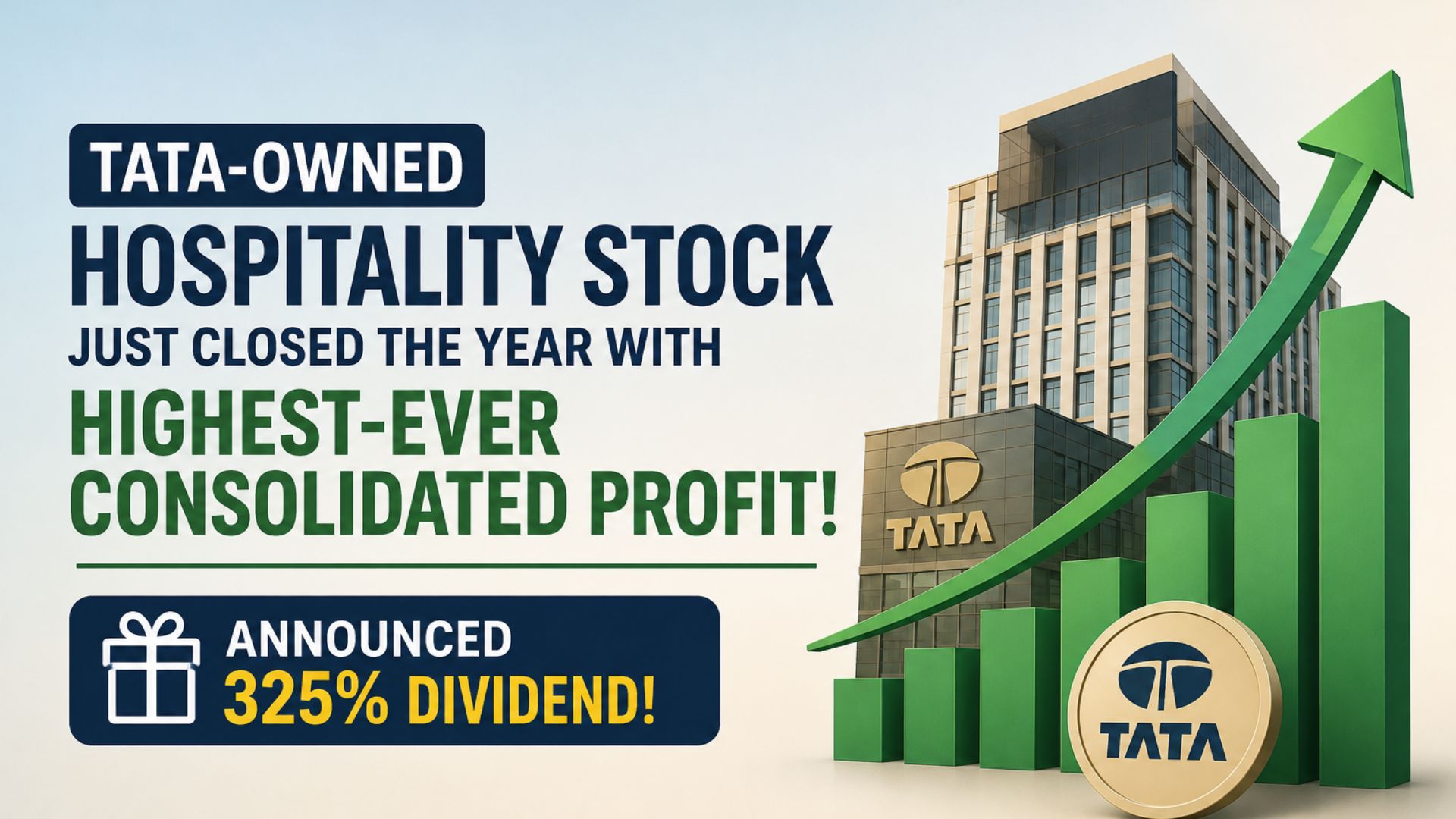
This Tata-Owned Hospitality Stock Just Announced a 325% Dividend

This ₹1 lakh crore market cap Tata enterprise just reported its strongest-ever annual results. - IHCL

We are looking at a hospitality giant that has long been a cornerstone of the Indian travel and tourism landscape. This company, a prominent part of the Tata Group, operates a sprawling network of luxury hotels, resorts, and jungle safaris, alongside air catering and wellness brands.

With a history stretching back over a century, the firm was incorporated in 1902 and is listed on both the BSE and NSE.

Today, we delve into the audited financial results of The Indian Hotels Company Limited (IHCL) for the quarter and financial year ended March 31, 2026. The company manages an extensive portfolio that includes brands like Taj, Vivanta, Ginger, and SeleQtions, with a global scale of operations spanning multiple continents.

Dividend Recommendation for Shareholders

The Board of Directors has recommended a dividend for the financial year. A dividend is a portion of a company’s earnings distributed to its shareholders.

We see that the board has proposed ₹3.25 per equity share of face value ₹1 each. This is a 325% dividend payout, an increase from the ₹2.25 per share (225%) paid in the previous year.

The payment is subject to shareholder approval at the upcoming Annual General Meeting.

Also Read – This agrochemical giant has just declared a 300% dividend

Consolidated Financial Performance for FY 2025-26

Looking at the full-year figures, IHCL reported a total income of ₹9,971.43 crore, compared to ₹8,565.00 crore in the previous financial year. This represents a YoY (Year-on-Year) increase of ₹1,406.43 crore, or 16.42%.

The consolidated net profit for the year stood at ₹2,247.25 crore, rising from ₹2,038.09 crore in FY 2024-25. This reflects an absolute increase of ₹209.16 crore, a growth of 10.26%. Total expenses for the year were recorded at ₹7,321.08 crore, up from ₹6,291.75 crore in the prior year.

Consolidated MetricsFY 2025-26 (₹ in Cr)FY 2024-25 (₹ in Cr)Absolute Change (₹ in Cr)% Change
Total Income9,971.438,565.00+1,406.4316.42%
Net Profit2,247.252,038.09+209.1610.26%

Quarterly Analysis: Q4 FY 2025-26

In the final quarter (January to March 2026), the company’s consolidated total income was ₹2,844.78 crore. Compared to the same quarter last year (Q4 FY 2024-25), which saw an income of ₹2,486.78 crore, this is a YoY increase of ₹358 crore (14.40%). On a QoQ (Quarter-on-Quarter) basis – comparing Q4 to the preceding Q3 FY 2025-26 income of ₹2,900.23 crore -there was a slight absolute decrease of ₹55.45 crore (1.91%).

Consolidated net profit for Q4 FY 2025-26 was ₹645.43 crore. This is a YoY increase of ₹82.77 crore (14.71%) from ₹562.66 crore in Q4 FY 2024-25. However, on a QoQ basis, the profit decreased by ₹308.81 crore (32.36%) from the ₹954.24 crore reported in Q3.

Consolidated Q4 ComparisonQ4 FY 26 (₹ in Cr)Q3 FY 26 (₹ in Cr)Q4 FY 25 (₹ in Cr)QoQ Change (%)YoY Change (%)
Total Income2,844.782,900.232,486.78-1.91%+14.40%
Net Profit645.43954.24562.66-32.36%+14.71%

Also Read – Why Modi Wants You to Stay Away from International Trips?

Standalone Results and Exceptional Items

On a standalone basis, which reflects the performance of the parent entity only, the total income for the full year was ₹5,640.16 crore. The standalone net profit for the year reached ₹2,011.94 crore, a significant increase from ₹1,413.23 crore in the previous year.

In corporate accounting, exceptional items are significant gains or losses that do not arise from ordinary day-to-day operations.

For IHCL, this included a gain of ₹550.12 crore from the sale of its stake in Taj GVK Hotels & Resorts Limited. Conversely, the company accounted for expenses related to new Labour Codes totaling ₹43.51 crore and provisions for impairment in a subsidiary.

Segment-Wise Insights

The company operates primarily in two segments: Hotel Services and Air and Institutional Catering.

  • Hotel Services: Revenue for this segment grew to ₹8,486.63 crore for the full year, up from ₹7,623.24 crore.
  • Air and Institutional Catering: This segment saw a jump to ₹1,210.12 crore from ₹716.41 crore, following a business combination completed in July 2024.

Strategic Acquisitions

During the year, IHCL expanded its portfolio through its subsidiary, Roots Corporation Limited. It acquired a 51% stake in ANK Hotels Private Limited and Pride Hospitality Private Limited for a combined ₹190.47 crore. Additionally, the company acquired a 51% stake in Sparsh Infratech Private Limited for ₹232.21 crore, which brought the ‘Atmantan’ health and wellness resort into its fold.

This agrochemical giant has just declared a 300% dividend

We have examined the official financial filings of UPL Limited for the quarter and year ended March 31, 2026. If you are tracking this company, we have compiled a straightforward, factual breakdown of their latest numbers, including the recently announced dividend, exactly as reported to the stock exchanges.

The 300% Dividend Recommendation

The filing states that the Board of Directors has recommended a dividend of 300% for the financial year ending March 31, 2026.

To explain this corporate concept simply, a dividend is a distribution of a portion of a company’s earnings directly back to its shareholders.

Because the face value of one UPL equity share is ₹2, a 300% dividend equates to a payout of ₹6 per share.

This recommendation requires shareholder approval at the upcoming Annual General Meeting (AGM). Once approved, the company notes that the dividend will be paid within 30 days of the AGM.

Also Read – Why Modi Wants You to Stay Away from International Trips?

Quarterly Financial Performance (Q4 FY26)

For the fourth quarter (Q4) of FY26, UPL reported total revenue from operations of ₹18,335 crores.

  • Quarter-on-Quarter (QoQ): Compared to the immediate previous quarter (Q3 FY26) revenue of ₹12,269 crores, we see an absolute increase of ₹6,066 crores, representing a 49.44% change.
  • Year-on-Year (YoY): Compared to the same quarter last year (Q4 FY25) revenue of ₹15,573 crores, this is an absolute growth of ₹2,762 crores, marking a 17.74% change.

Next, we reviewed Profit After Tax (PAT), which is the actual profit remaining after all operating expenses and taxes are paid. The company posted a PAT of ₹1,294 crores in Q4 FY26.

  • QoQ Change: This is an absolute increase of ₹804 crores (164.08%) from the ₹490 crores reported in Q3 FY26.
  • YoY Change: This represents an absolute increase of ₹215 crores (19.93%) from the ₹1,079 crores reported in Q4 FY25.

Full-Year Financial Performance (FY26)

When we analyzed the full-year (FY-to-FY) data, the total consolidated revenue for the 12 months of FY26 was ₹51,839 crores. Compared to the ₹46,637 crores reported in FY25, this reflects an absolute increase of ₹5,202 crores, or an 11.15% change.

The annual PAT for FY26 stood at ₹2,220 crores. Compared to the FY25 PAT of ₹820 crores, this shows an absolute profit growth of ₹1,400 crores, which translates to a 170.73% increase for the year.

Balance Sheet and Asset Status

A balance sheet provides a snapshot of a company’s assets (what it owns) and liabilities (what it owes) at a specific point in time.

As of March 31, 2026, the auditor’s report highlighted the total assets of the group’s subsidiaries before consolidation adjustments:

  • The company’s 169 audited subsidiaries hold massive total assets amounting to ₹283,443 crores.
  • An additional 16 unaudited subsidiaries hold total assets of ₹3,693 crores.

Furthermore, the company’s balance sheet was strengthened during the year through a Rights Issue.

UPL successfully raised ₹1,700 crores via second (final) call money and first call reminder notices on previously issued partly paid-up shares.

Cash Flow Status

Cash flow represents the net amount of cash and cash equivalents moving into and out of a business. It is a vital indicator of a company’s liquidity.

Based on the auditor’s review of the group’s subsidiaries for the year ended March 31, 2026 (before consolidation adjustments):

  • The 169 audited subsidiaries reported a combined net cash outflow of ₹2,557 crores.
  • The 16 unaudited subsidiaries reported a combined net cash inflow of ₹3 crores.

Exceptional Items and Corporate Updates

Our review of the financial notes identified several “exceptional items.” In corporate accounting, these are unusual, one-time events that fall outside regular daily business operations:

  • Restructuring Costs: The company recorded a restructuring cost of ₹131 crores for the year. This includes a one-time cost of ₹98 crores related to the closure of its Bassen manufacturing facility, which covers employee severance and asset impairment.
  • International Tax Rulings: In Brazil, a Supreme Court ruling regarding state VAT allowed UPL Brasil to reverse a previously recorded tax provision. This resulted in a one-time gain of ₹251 crores for the current year.
  • New Labour Codes: The company has made financial provisions for incremental gratuity related to the Indian government’s newly notified consolidation of labor laws.
  • Rights Issue Adjustments: Shares on which call money remained unpaid were canceled. As a result, 27 lakhs was transferred to Retained Earnings, while 42 lakhs was received toward interest on arrears.
  • Proposed Reorganization: The Board has approved a scheme to amalgamate UPL Sustainable Agri Solutions Limited into UPL Limited and to demerge the India Crop Protection business. The filing notes that this scheme is pending regulatory and shareholder approvals and is not yet reflected in these financial statements.

Company Background and Scale of Operations

UPL Ltd

Incorporated in 1985, UPL Limited operates globally in the agricultural and chemical sectors. We observed three main business divisions in their segment reporting: Crop Protection (manufacturing conventional agrochemicals), Seeds & Post Harvest, and a Non-Agro segment (focusing on industrial chemicals).

Why Modi Wants You to Stay Away from International Trips?

Prime Minister Narendra Modi has made a direct appeal to Indians: postpone all non-essential foreign travel - including overseas vacations, destination weddings, and leisure trips - for at least one year.

Prime Minister Narendra Modi has made a clear request to the people of India. He has asked citizens to postpone all non-essential foreign travel for at least one year. This includes overseas holidays, destination weddings, and leisure trips that are not necessary.

He made this appeal while speaking at a public meeting in Secunderabad, where he also inaugurated development projects worth more than ₹9,400 crore.

In his speech, he said these steps are important because of growing global economic pressure. He described them as actions of economic responsibility.

Why Foreign Travel Affects the Economy?

Foreign travel is not just personal spending. It also affects the country’s foreign exchange reserves. When Indians travel abroad, they spend money in foreign currency on flights, hotels, shopping, food, and transport.

1. Direct Saving of Foreign Currency

When millions of people travel internationally, the total spending becomes very large. This leads to a significant outflow of dollars from India. Reducing this demand helps stabilize the country’s foreign exchange reserves.

2. Impact of Rising Oil Prices

India imports more than 85% of its crude oil. Because of the West Asia conflict, oil prices have increased. Foreign travel adds to fuel usage, especially aviation fuel and transport fuel. Reducing unnecessary international travel helps lower this pressure indirectly.

3. Strengthening the Indian Rupee

When fewer dollars leave the country, the demand for foreign currency decreases. This helps stabilize the value of the Indian rupee. A stable rupee is important because it keeps import costs under control. It also helps manage inflation, especially for essential goods like fuel, electronics, medicines, and fertilizers.

A stable rupee keeps the cost of all imports (oil, electronics, fertilisers, medicines) in check and controls inflation.

4. Boosting the Local Economy

Money spent within India stays in the Indian economy. When people choose domestic tourism instead of foreign trips, local businesses benefit. Hotels, transport services, guides, and small shops in tourist areas get more customers. This supports jobs and helps regional economies grow.

Also Read – Mother’s Day Special – 8 Indian Stocks That Quietly Profit From Every Mom’s Daily Decisions

Key Appeals Made by the Prime Minister

Avoiding Non-Essential Gold Purchases

Modi requested people to avoid buying gold for non-essential purposes for one year. He especially mentioned weddings and large family functions. The idea is to reduce extra spending on imported goods and ease pressure on foreign currency usage.

Reducing Fuel Consumption

He also asked citizens to use fuel carefully. This includes petrol, diesel, and gas. He encouraged people to use public transport such as metros and buses, share cars through carpooling, and adopt electric vehicles when possible. He also suggested increasing Work From Home arrangements and using virtual meetings to reduce travel.

Promoting Indian Products

Modi encouraged people to buy products made in India instead of imported goods. He also mentioned reducing dependence on imported items such as edible oils. This step is meant to support Indian industries and reduce imports.

Encouraging Domestic Tourism

Instead of traveling abroad, citizens were encouraged to explore tourist destinations within India. States like Kashmir, Rajasthan, Kerala, the Northeast, and the Himalayan regions were mentioned as places that can benefit from increased domestic tourism.

Supporting Sustainable Farming

The Prime Minister also spoke about agriculture. He encouraged farmers to adopt natural farming methods and reduce the use of chemical fertilizers. This was presented as a step toward long-term sustainability.

Using Railways for Transport

He suggested increasing the use of railways for transporting goods. This helps reduce diesel consumption and lowers overall transportation costs.

2 Indian Stocks Closely Tied to Motherhood in 2026

MOTHERS DAY SPECIAL STOCKS

In the Indian economy of 2026, the “Mom Economy” has moved well beyond simple grocery runs. Today’s Indian mother is a discerning, digitally empowered consumer driving demand in premium healthcare, specialized retail, natural beauty, and branded nutrition. She researches before she buys. She reads labels. She compares. And brands that earn her trust tend to keep it for years.

For investors, this creates a compelling lens for stock selection. The following companies are among the primary beneficiaries of this shift in family spending – companies that don’t just sell products but manage the “trust equity” that mothers invest in them.


1. Dabur India

If Mamaearth is the brand the millennial mother discovers online, Dabur is the brand her mother and grandmother already trusted. From Dabur Lal Tail – the iconic baby massage oil used in households for generations – to Chyawanprash for family immunity and Dabur Honey in the kitchen, Dabur is deeply embedded in both the traditional and modern health choices of Indian mothers.

Dabur’s dual strength lies in its rural distribution depth and its urban health-conscious revival. A renewed focus on the rural “Mom Economy” – where Ayurvedic home remedies drive consistent repeat purchases – combined with a resurgence in urban demand for immunity and wellness products gives Dabur a uniquely balanced growth profile. It is one of the few FMCG stocks that competes effectively across both worlds without brand dissonance.

While growth is strong, the company is currently navigating ~10% inflation, which may require further price hikes to protect margins.

Also Read – Mother’s Day Special – 8 Indian Stocks That Quietly Profit From Every Mom’s Daily Decisions

2. LT Foods (Daawat)

Mothers are the ultimate gatekeepers of what the family eats – and LT Foods has understood this better than most staples brands. Its flagship Daawat brand has moved beyond commodity rice to craft a “premium Basmati experience,” positioning itself as a marker of quality and discernment in the Indian kitchen.

In a significant brand-building move in late April 2026, LT Foods partnered with KidZania India – the country’s largest indoor edutainment park – to launch an immersive “Basmati Factory” experience for children. The strategy is elegant: engage the child, earn the mother’s loyalty.

Meanwhile, the broader tailwind is substantial – India’s food processing sector is projected to reach US$535 billion by the end of FY26, according to IBEF, driven by rising consumption, export demand, and government initiatives under Make in India.

One should keep an eye on international trade policies, as the company’s global footprint makes it sensitive to tariff changes or export quotas.


In 2026, the spending decisions of Indian mothers are no longer shaped by television commercials alone. They are shaped by trust networks – paediatricians on Instagram, parenting communities on WhatsApp, and honest product reviews on YouTube. Brands that partner with authentic “momfluencers” and consistently deliver on their promises of safety, quality, and transparency are the ones winning sustained wallet share.

The common thread: people do not stop spending on babies and family health during economic downturns.

Mother’s Day Special – 8 Indian Stocks That Quietly Profit From Every Mom’s Daily Decisions

mOTHERS DAY SPECIAL STOCKS

Mother’s Day is more than flowers and breakfast in bed. It is a celebration of the person who effectively serves as the Chief Procurement Officer of the Indian household.

From the milk in the morning tea to the baby wipes in the diaper bag, a mother’s daily decisions drive an enormous portion of the Indian consumer economy.

For investors, these “mom-approved” brands represent some of the most resilient and fundamentally sound companies trading on the National Stock Exchange (NSE).

As we look at the market in 2026, here are eight Indian stocks that are quietly compounding alongside the modern Indian mother – and why they deserve a closer look.


1. Hindustan Unilever Ltd (HUL) – The Household Essential

If a mother is cleaning the house, washing clothes, or ensuring the kids are bathed, there is a high probability she is reaching for an HUL product. With brands like Surf Excel, Dove, and Horlicks, HUL maintains a commanding presence in Indian households — urban and rural alike.

Why it earns the “Mom Stock” label: HUL’s distribution network is arguably its greatest moat. It ensures that even in Tier-3 towns and rural India, a mother can find the brands she has trusted for decades. The company’s Lifestyle Nutrition segment – anchored by Horlicks and Boost – delivered high-single-digit growth in late 2025, reflecting sustained demand for family nutrition products.

Also Read – Is NSE a Government Company? – The Surprising Truth Behind India’s Biggest IPO Hype


2. Nestlé India – The Kitchen Governor

From the two-minute Maggi noodles that rescue a hectic weeknight dinner to Cerelac for infants, Nestlé is the silent partner in millions of Indian kitchens. The company dominates two of the most loyalty-driven segments in consumer goods: infant nutrition and convenience food.

Why it earns the “Mom Stock” label: Once a mother finds a formula, a cereal, or a quick-meal brand that her family accepts, switching costs are extraordinarily high – particularly in the infant segment where nutritional trust is non-negotiable. This brand stickiness is reflected in Nestlé India’s consistently high Return on Equity, which has historically remained above 70%, among the strongest in Indian FMCG.


3. Titan Company – The Celebration Specialist

Whether gifting herself a piece of jewellery or buying a smartwatch for her teenager from Fastrack, Titan is a brand that Indian mothers return to repeatedly. Through Tanishq, Titan captures a dominant share of the Indian wedding and festive jewellery market – purchase decisions that are overwhelmingly influenced or made by women.

Why it earns the “Mom Stock” label: Titan’s strategic diversification into the women’s ethnic wear category through Taneira – its saree and kurta brand — reflects a deliberate bet on the modern Indian woman’s lifestyle. Taneira has achieved a CAGR of approximately 65% over the past three years and is targeting over 125 stores by FY27, with the brand expanding from a 2% to an 8–10% market share ambition in the organised ethnic wear segment.

Beyond jewellery, Titan is also the world’s fifth-largest watch manufacturer and India’s largest branded jewellery maker by value – with more than 80% of total revenue coming from the jewellery segment.


4. Honasa Consumer (Mamaearth) – The New-Age “Conscious” Mom

The rise of the informed, label-reading mother has propelled Mamaearth to the forefront of India’s beauty and personal care (BPC) market. These mothers scrutinise ingredient lists for toxins, parabens, and sulphates — and they expect brands to be honest with them.

Why it earns the “Mom Stock” label: As India’s largest digital-first BPC company by revenue in FY24, Honasa has captured the millennial and Gen Z mother who shops on her phone, reads reviews before buying, and values sustainability. The company has since expanded well beyond Mamaearth into brands like The Derma Co., Aqualogica, and BBlunt — building a portfolio across skincare, haircare, and salon services.


5. BrainBees Solutions (FirstCry) – The Parenting Partner

FirstCry is often the first app a new mother downloads. As India’s largest multi-channel retail platform for mothers, babies, and children, it tracks a family’s journey from pregnancy through the primary school years — building a relationship that spans nearly a decade of purchases.

Why it earns the “Mom Stock” label: FirstCry is an ecosystem, not simply a store. By offering everything from diapers and formula to school supplies and children’s apparel — across both online and offline channels — it achieves a customer lifetime value that few Indian retailers can match. The platform’s data on parenting purchase behaviour is itself a significant strategic asset.


6. Trent Ltd (Zudio & Westside) – The Family Fashionista

Owned by the Tata Group, Trent has mastered the art of “value fashion” at scale. Mothers frequently lead family weekend trips to Zudio or Westside, balancing household budgets while keeping the entire family looking current.

Why it earns the “Mom Stock” label: Trent’s vertically integrated supply chain allows it to deliver high-fashion aesthetics at price points that resonate deeply with budget-conscious Indian families. Zudio, in particular, has become a phenomenon in Tier-1 and Tier-2 cities — driven by rapid store additions and sharp visual merchandising that punches well above its price.


7. Apollo Hospitals – The Family Guardian

When a child falls ill, a parent needs a procedure, or an elderly grandparent requires a specialist, the mother is almost always the primary caregiver coordinating the response. Apollo’s integrated healthcare network — hospitals, diagnostics, and its ubiquitous Apollo Pharmacy retail chain — positions it squarely at the centre of India’s family health economy.

Why it earns the “Mom Stock” label: Healthcare is the definition of a non-discretionary expense. Indian mothers place an exceptionally high premium on brand trust when it comes to their family’s health — and Apollo, as one of India’s oldest and most recognisable private healthcare brands, benefits enormously from that trust premium.


8. Varun Beverages (VBL) – The Occasion Booster

As the largest franchisee of PepsiCo in the world outside the United States, VBL profits every time a mother stocks up on Tropicana juices for her child’s lunchbox or picks up a case of Aquafina for a school picnic. The company bottles and distributes over 90% of PepsiCo’s beverage volume in India — a position of remarkable structural strength.

Why it earns the “Mom Stock” label: VBL’s portfolio is steadily evolving. While carbonated soft drinks remain the core (~75% of volume), the company has made tangible moves into healthier beverage categories — juices, hydration drinks, and dairy-based beverages — aligning itself with the preferences of health-aware modern mothers. CreamBell dairy beverages and Tropicana’s fruit juice range are particularly relevant here.


The “Mom-Index” Philosophy

In India, the “Mom-Index” is particularly powerful for three structural reasons.

Brand loyalty runs deep. Once a mother trusts a brand for her child – whether it is a nutrition drink, a pharmacy, or a diaper brand – the switching cost is both emotional and practical. These companies benefit from repeat purchase cycles that most businesses can only dream of.

Recession resistance. Even during periods of high inflation, the everyday decisions that mothers make – buying milk, soap, medicines, and basic clothing – are among the last expenditures to be cut. These companies have demonstrated resilience across multiple economic cycles in India.

The working woman tailwind. As more Indian women enter the formal workforce, their purchasing power is rising alongside their demand for convenience-oriented products and trusted brands. This structural shift is accelerating in 2026 and is likely to compound for the next decade.


UP-Based Financial Institution Announces Full-Year Audited Results – Major Leadership Reshuffle Confirmed

Utkarsh Small Finance Bank has officially released its Audited Financial Results

The Varanasi-headquartered Utkarsh Small Finance Bank has officially released its Audited Financial Results for the fiscal year ended March 31, 2026.

The board meeting, held on May 9, 2026, concluded with significant disclosures regarding the bank’s annual performance and a sweeping overhaul of its senior management team.


Annual Financial Performance: A Year of Transition

The audited reports reveal a challenging fiscal year for the lender. The bank reported a net loss of ₹1,150.98 crore for FY26, a sharp contrast to the net profit of ₹23.70 crore recorded in the previous financial year.

Utkarsh Small Finance Bank reported a net loss of ₹1,150.98 crore for FY26

Key Financial Highlights:

  • Total Income: The bank earned ₹3,809.75 crore in total income for the year, compared to the previous year’s ₹4,364.76 crore.
  • Asset Quality: Gross NPA stood at 7.71%, showing a recovery trend from the previous year’s 9.43%. Net NPA also improved to 3.29% compared to 4.84% in FY25.
  • Capital Adequacy: The bank remains well-capitalized with a CRAR of 17.71%, well above regulatory requirements.
  • Net Worth: The bank’s net worth stood at ₹2,247.18 crore as of March 31, 2026.

Also Read – Is NSE a Government Company? – The Surprising Truth Behind India’s Biggest IPO Hype


Major Leadership Reshuffle

In a move aimed at strengthening its internal controls and driving future growth, the Board of Directors approved the appointment of three heavyweight industry veterans to the Senior Management Personnel (SMP) cadre:

  1. Chief Human Resources Officer (CHRO): Ms. Dhara Vyas, bringing over 25 years of experience from institutions like HDFC Bank and ANZ Grindlays, joins to lead the bank’s people strategy and digital HR transformation.
  2. Head of Assets: Mr. Abhay Kataria, an expert in BFSI assets with a 25-year track record at Ujjivan SFB and ICICI Bank, will oversee the bank’s lending portfolio.
  3. Chief Credit Officer: Mr. Anindya Mitra, a founding member of Bandhan Bank’s retail asset vertical, has been appointed to steer the credit risk and policy framework.

Additionally, the bank has recommended the re-appointment of Mr. Parveen Kumar Gupta (former MD of State Bank of India) as an Independent Director for a second term.


Strategic Developments and Amalgamation Update

The bank also provided a critical update on the proposed amalgamation with its promoter company, Utkarsh CoreInvest Limited (UCL).

  • The bank raised ₹949.08 crore through a Rights Issue during the year to bolster its capital base.
  • The second motion petition for the merger was filed with the NCLT on April 5, 2026.
  • The management is currently awaiting the final hearing to conclude the merger, which is expected to simplify the corporate structure.

Provisions and Write-offs

A significant factor in the year’s bottom line was the aggressive management of stressed assets. The bank noted a write-off of non-performing advances amounting to ₹1,089.60 crore and transferred a substantial pool of stressed loans to an Asset Reconstruction Company (ARC) to clean up the balance sheet, receiving Security Receipts (SRs) worth ₹102.92 crore as part of the consideration.


Note to Investors: While the headline loss of ₹1,150.98 crore is significant, the improvement in Gross and Net NPA ratios suggests that the bank is aggressively “cleaning the slate” to enter the new fiscal year with a healthier asset base and a revamped leadership team.