
Marathon Digital Holdings Stock Price Prediction, Forecast & Target for 2025, 2030, 2040 and 2050

Marathon Digital Holdings Stock Price Prediction, Forecast & Target

Marathon Digital Holdings, Inc. (MARA) is one of the biggest names in the world of Bitcoin mining. Thanks to the rising popularity of cryptocurrencies and the company’s strategic moves, it has caught the attention of many investors.

In this article, we’ll look at Marathon’s basics, how its sector is doing, what drives its stock, and also try to guess where its stock might be in 2025, 2030, 2040, and 2050. This will help investors make better sense of a company that operates in a very unpredictable industry.

1. Company Overview

Marathon Digital Holdings is well-known in the Bitcoin mining space. It has a very high hash rate and holds a large number of Bitcoins.

Here’s a quick look at the company’s key details:

Company NameMarathon Digital Holdings, Inc.
SectorFinancials
IndustryCapital Markets / Cryptocurrency Mining
IPO Year2012
Stock Exchange ListedNASDAQ
Founded ByMerrick Okamoto
Established In2010
SpecializationBitcoin Mining and Building Digital Asset Infrastructure

Related – The Very First Post You Should Read to Learn Cryptocurrency

Started in 2010 and located in Fort Lauderdale, Florida, Marathon Digital Holdings (MARA) is a major player in Bitcoin mining. It has been listed on the NASDAQ since 2012. As of April 2025, the company holds 48,237 Bitcoins, making it the second-largest holder among public companies. Under CEO Fred Thiel, Marathon follows a “full HODL” approach, meaning it keeps all the Bitcoins it mines. It has also made smart moves like buying a wind farm in Texas to use clean energy. This shows its focus on sustainability and strong infrastructure, making it a key part of the crypto world.

2. The Stock Market: What Moves It

Stock prices donโ€™t just move randomly. They change based on a lot of things like how the company is doing, what the government is doing, and whatโ€™s happening in the world. For MARA, some key points include:

  • In Q1 2025, Marathon made $213.9 million in revenue but had a loss of $533.4 million. This was mainly because of how Bitcoinโ€™s value is recorded in accounting.
  • U.S. government policies can help or hurt Bitcoin mining. New rules can change everything.
  • Global issues like trade tensions can also make crypto markets go up or down.
  • Other things like interest rates, inflation, and new technologies in blockchain all play a role.

A good example: in April 2025, Bitcoin reached $90,000 and MARA’s stock jumped 16% in the same month. Thatโ€™s how closely its stock follows Bitcoin.

3. Sector Overview: Financials

Understanding the Sector

Marathon is part of the Financials sector. This includes banks, investment firms, and businesses related to cryptocurrency. This sector helps move money around the world. Digital assets like Bitcoin are becoming a bigger part of this system, and Marathon is right in the middle of this change.

Key Sector Factors

  • Bitcoin Prices: When Bitcoin goes up, mining becomes more profitable.
  • Regulations: Governments can either support or limit crypto activities.
  • Technology: Better machines and blockchain updates help companies compete.

Recent Growth

With the rise of cryptocurrencies, the financial sector has changed a lot. Bitcoin hit $112,000 in May 2025, and crypto stocks like MARA went up. Its stock increased 16.3% in April 2025 alone. Expectations of pro-Bitcoin policies in the U.S. and lower trade tensions with China have made investors more hopeful about the future.

4. Industry Overview: Cryptocurrency Mining

About the Industry

Cryptocurrency mining means using powerful computers to solve puzzles and earn Bitcoin. This industry needs a lot of money and energy. MARA is one of the biggest players, competing with companies like Riot Platforms and CleanSpark.

Key Industry Factors

  • Bitcoin Halving: In 2024, mining rewards were cut in half. This makes mining less profitable.
  • Energy Costs: It cost $43,808 to mine one Bitcoin in Q1 2025. Thatโ€™s a lot.
  • Competition: MARA’s hash rate is now 57.3 EH/s, one of the highest in the world.

Recent Changes

After the halving in 2024, MARA mined 19% fewer Bitcoins in Q1 2025, ending with 2,286 BTC. But the company raised $2 billion in March 2025 to buy more Bitcoins and expand operations. Buying a wind farm in Texas is part of their plan to lower energy costs. The industry is also looking into new ways to make money, like AI and high-performance computing (HPC) hosting.

5. Stock Growth and What Affects It
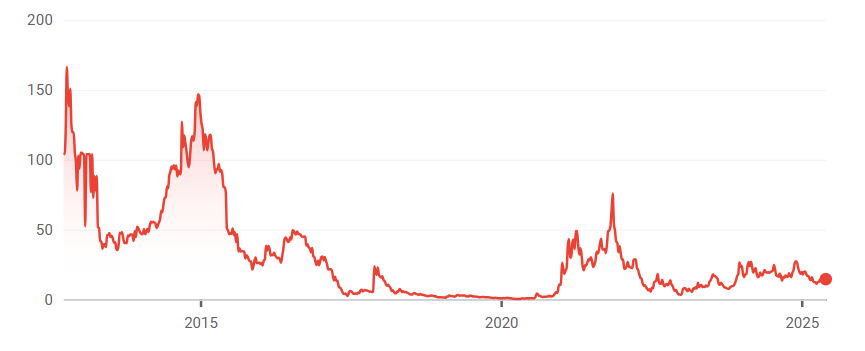
Marathon Digital Holdings Stock

MARA’s stock moves a lot with Bitcoin. When Bitcoin hit $90,000 in April 2025, MARAโ€™s stock jumped 16.3%. The value of their Bitcoin holdings grew to $4.55 billion. Theyโ€™ve also made efforts to cut costs, especially by using clean energy. Even though the company missed its earnings goals in Q1 2025, it increased its hash rate by 5.5%. But there are risks too, like higher energy prices, tougher rules, and fewer rewards after halving. All this makes MARA a risky but exciting stock.

6. Speculative Targets: Guessing the Future

As of May 30, 2025, MARA’s stock price is about $14.61. Letโ€™s look at some guesses based on charts and trends:

  • Moving Averages: The 50-day and 200-day moving averages crossed in May 2025, which is a good sign.
  • Support & Resistance: The stock seems to have support at $22 and resistance at $27.
  • RSI: The Relative Strength Index is around 65. This shows the stock has momentum but is not overbought yet.

Price Predictions

2025: With Bitcoin at $112,000 and MARAโ€™s expansions, the stock could reach $18, ranging from $15 (5% growth) to $21 (15% growth) by year-end, reflecting short-term optimism.

2030: A 10% annual growth rate projects $29, with a range of $23 (5%) to $36 (15%), assuming stable Bitcoin prices and operational growth.

2040: Continued 10% growth suggests $76, ranging from $47 (5%) to $145 (15%), contingent on sustained crypto adoption.

2050: A 10% growth rate forecasts $199, with a range of $80 (5%) to $580 (15%), reflecting significant long-term uncertainty in the crypto market.

These are just guesses. A lot depends on Bitcoin prices, energy costs, and new rules.

7. Long-Term Growth Prospects

Marathon has a lot of potential, but the road is bumpy. It holds 48,237 Bitcoins, worth $4.55 billion. Its high hash rate and smart moves like buying wind farms and raising $2 billion show strong planning. But challenges like less income after halving, high energy bills, and tough competition are real. If MARA can expand into areas like AI and HPC and get help from pro-Bitcoin government policies, it could grow a lot. Still, the risks are just as big as the rewards.

8. Conclusion

Marathon Digital Holdings (MARA) is a powerful name in crypto mining. Its huge Bitcoin holdings, strong hash rate, and move toward clean energy make it a company with real potential. The stock could hit $30 in 2025, $40 in 2030, $105 in 2040, and even $275 in 2050. But these are just possibilities, not guarantees. The world of crypto changes fast, and MARA’s future will depend on many things. For investors, this is a high-risk, high-reward stock that requires careful thinking and a solid understanding of what drives it.

Related – 7 Surprising Facts You Must Know About Tether (USDT) in 2025

What is the difference between ICT and SMC?

In trading circles, you'll often come across two terms that cause quite a bit of confusion โ€“ Smart Money Concept (SMC) and ICT-SMC. Many traders wonder if these are the same thing or if there's actually a difference between them.

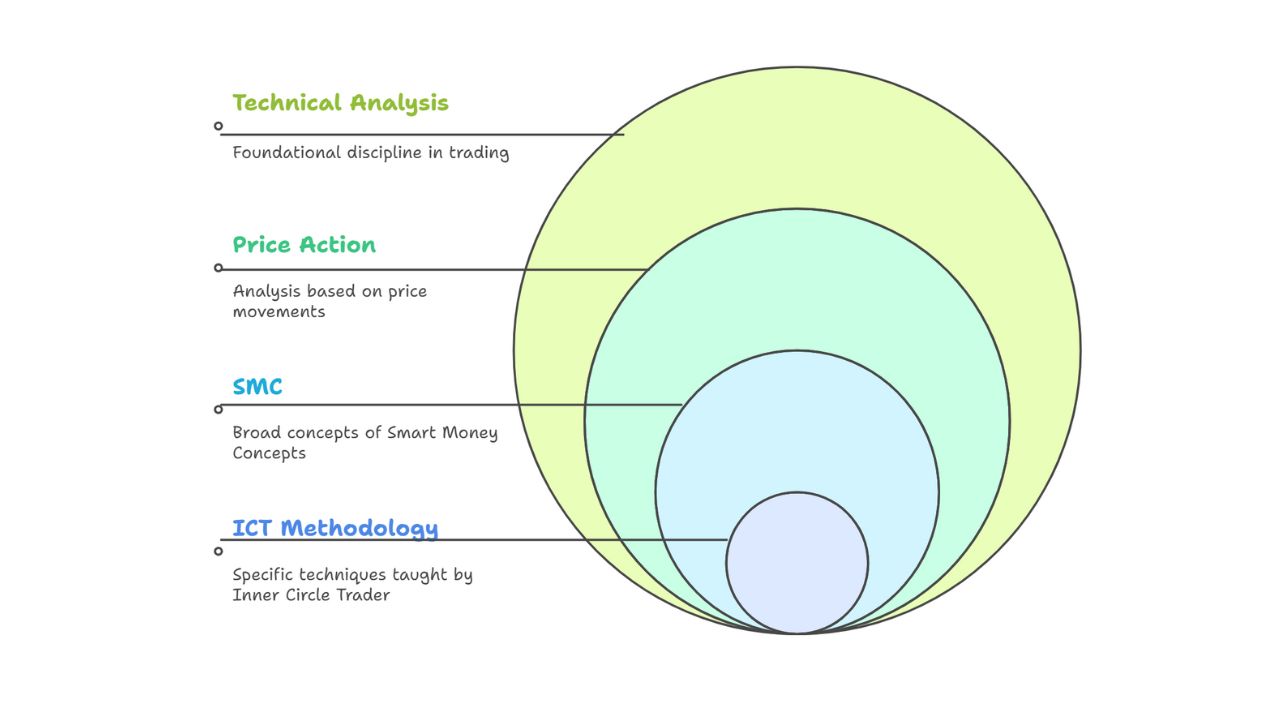
Technical Analysis is the foundation of trading analysis. It mainly includes two types of methods:

  • Price action analysis
  • Indicator-based analysis.

When we talk about price action, there are many styles and strategies. One popular concept is called SMC.

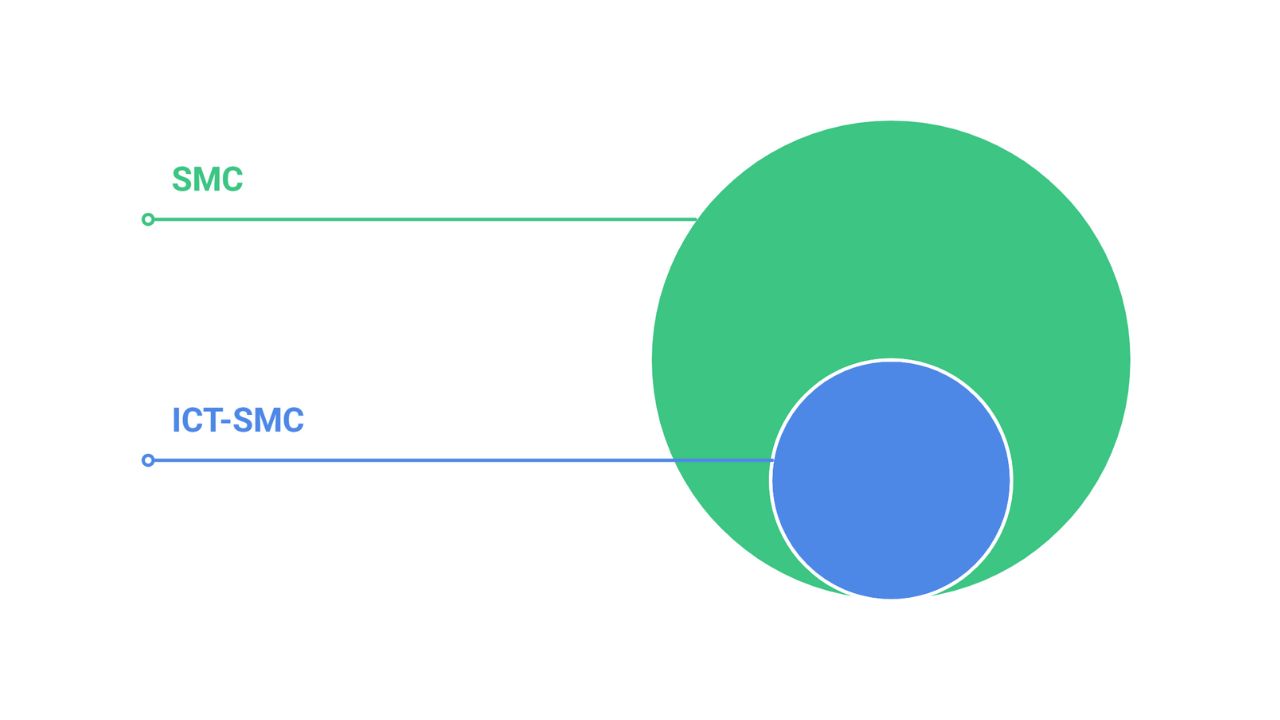
Now, SMC is a broad concept that includes many different methods. One of the most well-known styles within SMC is taught by Michael J. Huddleston, and itโ€™s commonly referred to as ICT-SMC.

What is SMC?

SMC stands for Smart Money Concept.

It is a style of trading that focuses on how big players like banks, hedge funds, and institutions trade in the market. These big players are called smart money because they have more money, more information, and better tools than regular traders.

Technical analysis, the core discipline of studying price charts, can broadly be divided into two categories: indicator-based methods and price action analysis.

Within price action, trading approaches can be further classified into two distinct but complementary perspectives: macro and micro.

Macro price action refers to the traditional, big-picture view. It focuses on well-known elements like support and resistance zones, trend lines, and classic candlestick patterns.

On the other hand, micro price action explores the finer, more detailed movements of the market-whatโ€™s happening ‘under the hood.’ This is where advanced methods like Smart Money Concepts (SMC) come into play. This is the more advanced layer of analysis that seeks to understand the ‘why’ behind the market’s movements. It’s about looking beyond surface-level patterns to uncover the institutional logic driving price behavior.

Core concepts in this micro view include identifying liquidity pools, market structure shifts (MSS), and order blocks. A trader using this perspective understands that a resistance zone isnโ€™t just a ceiling – itโ€™s often a liquidity pool where retail traders have clustered their stop-losses and sell orders. Smart money is incentivized to ‘sweep’ this liquidity before initiating the true directional move.

For example, instead of reversing immediately from resistance, price may first move slightly above that level to trigger stop-losses – this action, known as a liquidity sweep, often precedes a sharp reversal. This confirms institutional intent and shows how smart money exploits retail positioning.

By combining a macro understanding of market direction with a micro view of institutional behavior, traders can build stronger strategies that align with the flow of smart money.

What is ICT?

ICT is the acronym for the YouTube channel of Michael J. Huddleston, who has been a trading mentor for many years.

The full name of the channel is The Inner Circle Trader.

He created and taught his own smart money concepts that are popular today. His detailed teachings are called ICT-SMC because they are his version of the Smart Money Concept.

He teaches through YouTube, mentorships, and free content. Many advanced traders follow his strategies, and some other educators even teach his concepts under different names.

However, when people say ‘ICT,’ theyโ€™re usually referring to Michael J. Huddleston himself rather than just his YouTube channel. For example, if someone says ‘ICT has uploaded a new video,’ they simply mean that Michael J. Huddleston has posted a new video on his YouTube channel called The Inner Circle Trader.

Also Read – ICT (Michael J. Huddleston)-Biography, Net Worth, YouTube Channel, Family & Trading Success

ICT vs SMC – The Difference Every Trader Should Know

Think of SMC as the entire “fruits” category, while ICT-SMC is like “mangoes” โ€“ a specific type within that bigger group.

Just like a mango is definitely a fruit, but you wouldn’t call every fruit a mango, ICT-SMC falls under the broader SMC umbrella, but SMC may include much more than just SMC by ICT.


Here’s the thing โ€“ although the idea is somewhat controversial, the Smart Money Concept existed long before ICT (Inner Circle Trader) came along.

Traders have been studying institutional behavior, market structure, and how ‘smart money’ moves for decades. They’ve analyzed things like accumulation zones, distribution patterns, and how big players manipulate retail traders.

ICT took these foundational ideas and built a unique framework around them. He identified specific components within the chart and named themโ€”such as order blocks, fair value gaps, liquidity grabs, Judas swings, and market structure shifts. Over time, his detailed approach became widely followed. In fact, it became so popular that many people started referring to his entire method as ‘SMC.’ However, thatโ€™s not entirely accurate, as SMC is a broader concept, and ICTโ€™s style is just one interpretation within it.

So when someone says they trade “SMC,” they might mean ICT’s specific approach, or they could be using any number of smart money strategies.

It’s like saying you eat “fruit” โ€“ you could mean mangoes, but you could also mean apples, oranges, or anything else in that category.

The Bottom Line

PointSMC (Smart Money Concept)ICT-SMC (SMC by The Inner Circle Trader)
What it isA trading concept or methodA style of SMC taught by Michael J. Huddleston
CreatorNot specific โ€“ used by many educatorsMichael J. Huddleston (ICT)
Depth of LearningGeneral idea of smart money behaviorMore detailed with logic, rules, and framework
Learning StyleSimple and easy to learnDetailed, long-term learning approach

JD Vance Pushes Crypto, But Key Questions Still Unanswered

At the Bitcoin 2025 Conference in Las Vegas on May 28, 2025, Vice President JD Vance delivered a bullish endorsement of cryptocurrency, declaring, โ€œWe want our fellow Americans to know that crypto and digital assets, particularly Bitcoin, are part of the mainstream economy and are here to stay."

JD Vance took the stage at the Bitcoin 2025 Conference in Las Vegas yesterday with a message that couldn’t be clearer: America is going all-in on crypto. “We want our fellow Americans to know that crypto and digital assets, particularly Bitcoin, are part of the mainstream economy and are here to stay,” the Vice President told the crowd.

The Trump administration isn’t just talking about crypto anymoreโ€”they’re betting big on it. There was that private dinner for people who bought Trump’s $TRUMP meme coin, and just recently the Labor Department quietly pulled back guidance that warned against putting cryptocurrency in 401(k) plans.

But here’s what’s keeping some people up at night: What happens if someone steals America’s Bitcoin?

The Big Bitcoin Bet

The administration wants to create what they’re calling a U.S. Bitcoin reserve. We’re talking about potentially billions of dollars in digital currency that would belong to American taxpayers. Trump Media is already planning to raise $2.5 billion just to buy Bitcoin, showing how serious they are about this.

Vance spent most of his speech talking about how crypto could change everythingโ€”protecting people from inflation, giving them financial freedom, stopping banks from cutting off customers for political reasons. He called it a “once-in-a-generation opportunity” and compared Bitcoin to digital gold.

The problem? Bitcoin hit $108,000 during the conference, but it was down to $17,000 just three years ago. That’s not exactly the stability you’d expect from something that’s supposed to anchor part of America’s financial system.

Also Read – The Very First Post You Should Read to Learn Cryptocurrency

Is Bitcoin Actually Worth Anything?

This gets to the heart of what makes crypto so controversial. Regular money is backed by governments. Gold has industrial uses and thousands of years of history as valuable. Bitcoin? It’s backed by… well, that’s where things get complicated.

Bitcoin supporters say its value comes from scarcityโ€”there will only ever be 21 million coinsโ€”and its usefulness for transactions that can’t be controlled by banks or governments. Vance and others call it “digital gold” and argue it protects against inflation or “de-banking,” where financial institutions cut people off for their political views.

But critics look at Bitcoin’s wild price swings and see pure speculation. They argue that without any physical backing or government guarantee, Bitcoin’s value is basically “nothing but belief and hot air.” When the price can swing from $17,000 to $108,000 in three years, is that really a stable store of value, or just gambling?

The question matters a lot more when we’re talking about putting taxpayer money into it.

When Digital Money Disappears

Here’s where things get scary. Remember Mt. Gox? Back in 2014, hackers made off with 850,000 Bitcoinsโ€”worth about $450 million at the time. Most people never got their money back. Just this year, someone stole $1.4 billion worth of Ethereum from Bybit.

The thing about crypto theft is that it’s not like robbing a bank. When physical money gets stolen, there’s usually some way to track it down. With cryptocurrency, once it’s gone, it’s often gone for good. The whole system is designed to be anonymous and decentralized, which makes it nearly impossible to trace.

So what happens if hackers target a national Bitcoin reserve? Who pays when billions in taxpayer money vanishes into the digital void?

Vance didn’t address this in his speech. In fact, none of the crypto boosters seem to want to talk about it.

The Wild West Problem

Right now, crypto operates in what experts call a regulatory gray zone. Unlike stocks or traditional investments, there’s no real oversight. Last year alone, people lost $3.7 billion to crypto scamsโ€”everything from fake coins to “rug pulls,” where developers create a cryptocurrency, get people to invest, then disappear with the money.

Vance promised to fire regulators who’ve been trying to crack down on crypto, calling their efforts “Operation Choke Point 2.0.” But he didn’t explain how the government plans to protect investors from fraud without any regulation.

About 17% of American adults have tried crypto, according to Pew Research, mostly young men. The administration wants that number to grow by making it easier to put crypto in retirement accounts. But without better protections, more people could end up losing their savings.

The Real Questions Nobody’s Answering

Vance owns between $250,000 and $500,000 worth of Bitcoin himself, according to his 2024 financial disclosure. So he’s got skin in the game. The question is whether his enthusiasm is clouding his judgment about the risks.

There are ways to make crypto safer. You can use something called multisignature wallets that require multiple people to approve transactions. You can keep most of the money in “cold storage”โ€”basically offline where hackers can’t reach it. You can do regular security audits.

But all of that requires the kind of coordination and oversight that goes against everything crypto was supposed to represent. And it still doesn’t solve the fundamental problem: if someone figures out how to steal government Bitcoin, there’s no FDIC insurance, no bank guarantee, no way to get it back.

What This Means for You?

The crypto industry is celebrating right now. The Trump administration is rolling back rules, embracing digital currencies, and promising to make America the “crypto capital of the planet.” Wall Street is taking notice, and Bitcoin prices are soaring.

But if you’re a taxpayer, you might want to ask some questions. Like: How exactly is the government planning to secure billions of dollars in Bitcoin? What happens if it gets stolen? And who’s going to be on the hook when things go wrong?

Crypto enthusiasts will tell you that digital currencies represent the future of moneyโ€”freedom from government control, protection from inflation, access to a global financial system. They might be right.

But they might also be wrong. And if they are, it could cost all of us a lot more than we bargained for.

MicroStrategy’s Bitcoin Bet – MSTR Stock Outlook and Price Predictions for June 2025

MicroStrategy stock price forecast June 2025

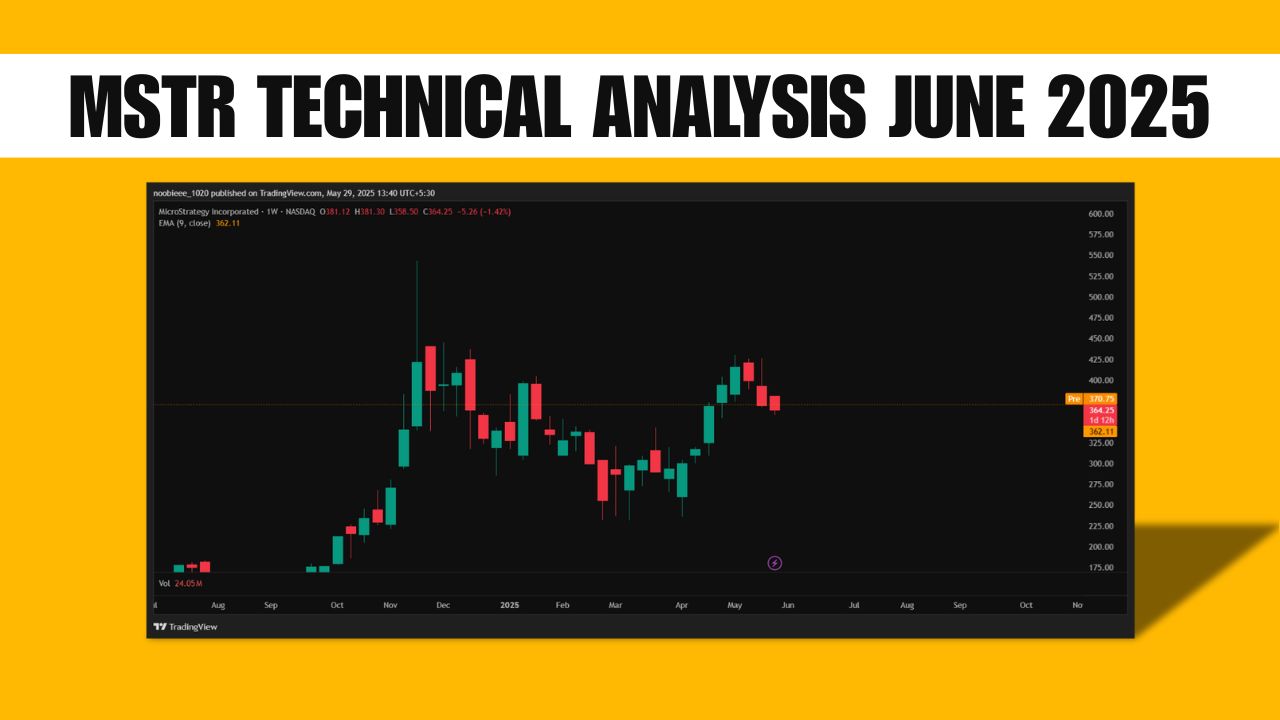
In this article, we will conduct chart analysis for MSTR for the month of June 2025. We will also discuss the top 10 latest news stories related to MSTR that may act as catalysts for MicroStrategy’s stock momentum in June.

Before we proceed further, please note that the content here is purely speculative in nature and does not guarantee the exact movement of the stock. The content posted here about MSTR stock price prediction for June 2025 represents the author’s opinion only and discusses possibilities and scenarios that may or may not occur.

Please do not consider this a buying or selling recommendation. We have no such intention whatsoever.

So let’s begin.

First, let’s talk about the top 10 latest news stories about MicroStrategy that may contribute to investor sentiment and market action.

Top 10 Latest Updates on Strategy (MSTR)

Here are the top 10 latest news items related to MicroStrategy (MSTR) stock analysis for June 2025:

  1. MicroStrategy Boosts Bitcoin Holdings with $427M Purchase: On May 27, 2025, MicroStrategy acquired 4,020 BTC for $427.1 million, increasing its total Bitcoin holdings to 580,250 BTC, valued at approximately $40.6 billion, reinforcing its Bitcoin treasury strategy.
  2. MSTR Stock Declines Amid Market Volatility: On May 24, 2025, MSTR shares fell 7.5% to close at $369.51, marking a third consecutive day of losses, driven by rising U.S. Treasury yields and tariff uncertainties impacting investor sentiment.
  3. Class Action Lawsuit Filed Against MicroStrategy: On May 19, 2025, a class action lawsuit was filed against MicroStrategy and its executives, alleging misleading statements about its Bitcoin strategy and a $5.91 billion unrealized Q1 loss, with a lead plaintiff deadline of July 15, 2025.
  4. MicroStrategy Outperforms Bitcoin and Major Indices: On May 27, 2025, reports noted that MSTR stock outperformed Bitcoin by 63% over the past three months, surpassing major market indices and the Magnificent 7 stockselderly population, adding to MSTRโ€™s appeal as a Bitcoin proxy.
  5. Analyst Predicts S&P 500 Eligibility for MicroStrategy: On May 11, 2025, analyst Jeff Walton suggested that MicroStrategyโ€™s strong Q2 earnings could qualify it for S&P 500 inclusion, potentially driving significant capital inflows into MSTR and Bitcoin.
  6. MicroStrategyโ€™s $2B Bitcoin Acquisition Pushes Stock to 24-Year High: On May 20, 2025, MicroStrategyโ€™s purchase of 27,200 BTC for $2.03 billion drove its stock to a 24-year high, reflecting strong market support for its Bitcoin-focused strategy.
  7. MicroStrategy Acquires 7,390 BTC for $765M: On May 19, 2025, MicroStrategy added 7,390 BTC to its holdings, valued at nearly $765 million, amid Bitcoinโ€™s rally above $100,000, though the purchase coincided with news of a class-action lawsuit.
  8. Michael Saylorโ€™s Bold Bitcoin Prediction: On May 15, 2025, Michael Saylor, Strategyโ€™s chairman, predicted Bitcoin could reach $13 million by 2045, with MSTR potentially becoming a $10 trillion company, highlighting its long-term vision.
  9. MicroStrategyโ€™s AI-Driven Stock Offerings: On May 7, 2025, Michael Saylor revealed that AI was used to design the companyโ€™s 10% Series A Perpetual Strife Preferred Stock (STRF) and 8% Series A Perpetual Strike Preferred Stock (STRK), showcasing innovative financial strategies.
  10. MicroStrategyโ€™s $1.34B Bitcoin Purchase: On May 13, 2025, MicroStrategy acquired 13,390 BTC for $1.34 billion, bringing its total holdings to 568,840 BTC, with its stock surging amid bullish crypto sentiment and a U.S.-China trade deal announcement.

Also Read – The Very First Post You Should Read to Learn Cryptocurrency

MSTR Chart Analysis for June 2025

Now let us move straight to the technical analysis of the MSTR chart and discuss price predictions for June 2025. Along with that, we will also discuss key support and resistance zones for MSTR stock that may act as significant points of interest for MicroStrategy’s stock momentum.

MSTR technical analysis June 2025

As they say, a picture is worth a thousand words, so here is the chart of MSTR sourced from TradingView. As you can see, some lines and zones are drawn with geometric analysis. What is most important are the FTC magical zones, which serve as our secret sauce for technical analysis.

We will also discuss price action related to other technical analysis tools.

Also Read – MicroStrategy (MSTR) Stock Price Prediction, Forecast, Target for 2025, 2030, 2040 & 2050

Important Company Details

Founded1989
HeadquartersTysons Corner, Virginia, USA
CEO/ChairmanMichael J. Saylor (Chairman), Phong Le (President & CEO)
IndustryBusiness Intelligence Software, Bitcoin Treasury
Stock TickerMSTR (Nasdaq)
Market Capitalization~$101 billion (as of May, 2025)
Bitcoin Holdings580,250 BTC (~$40.6 billion, May 2025)
Key Products/ServicesEnterprise analytics software, Bitcoin treasury management
Shares OutstandingIncludes 847,000 Class A Common Shares, 678,970 STRK Shares, 104,423 STRF Shares (specific total unavailable)

Will GameStop (GME) Keep Going Down Now? – Technical Analysis for June 2025

GameStop GME chart analysis June 2025

On May 28, 2025, GameStop (GME) stunned markets in two very different ways.

First, the company announced that it had purchased 4,710 Bitcoins at an average price of $108,837 each, committing $512.6 million to its first major cryptocurrency investment.

Then, in an almost immediate reversal of sentiment, GME shares plunged 9%.

The stock opened that day at $35.785, climbed as high as $37.405, then tumbled to $30.77. A $6.63 swing in one trading session is huge for any company, but it’s especially wild for GameStop. With its roughly $12.75 billion market cap, the stock has become a magnet for meme-stock activity.

This fresh episode of volatility shows how retail-driven momentum often matters more than traditional financial metrics when it comes to GameStop’s stock price.

GameStopโ€™s Current Situation

GameStopโ€™s core retail business has been under pressure for years. Revenue dropped to $3.8 billion in early 2025 from $9.47 billion in 2010, and the company closed 960 stores in 2024 alone, with more closures expected this year.

Against this backdrop, jumping into Bitcoin looks like a bold play to stay relevant. It mirrors what MicroStrategy has done under Michael Saylor, and word is that CEO Ryan Cohen has been in talks with Saylor himself. Those conversations may have inspired GameStopโ€™s crypto play, adding a new layer of excitement for investors who follow both stocks and crypto.

Also Read – $764.9 Million Worth of Bitcoin Just Purchased

GameStop (GME) Technical Analysis for June 2025

Now we will predict the price of GameStop for June 2025. But before making the price prediction, please be mindful that these price targets are speculative in nature.

Also, the technical analysis done here is only for educational and informational purposes. It is not meant to induce anyone to take a trade based on this chart analysis.

This price forecast for GME is simply the author’s personal opinion and speculation based on available technical analysis tools. So take it only for reference.

Always do your own research or consult a qualified advisor before making investment decisions.

Also Read – GameStop (GME) Stock Price Prediction, Forecast, Target for 2025, 2030, 2040 & 2050

Let us begin now.

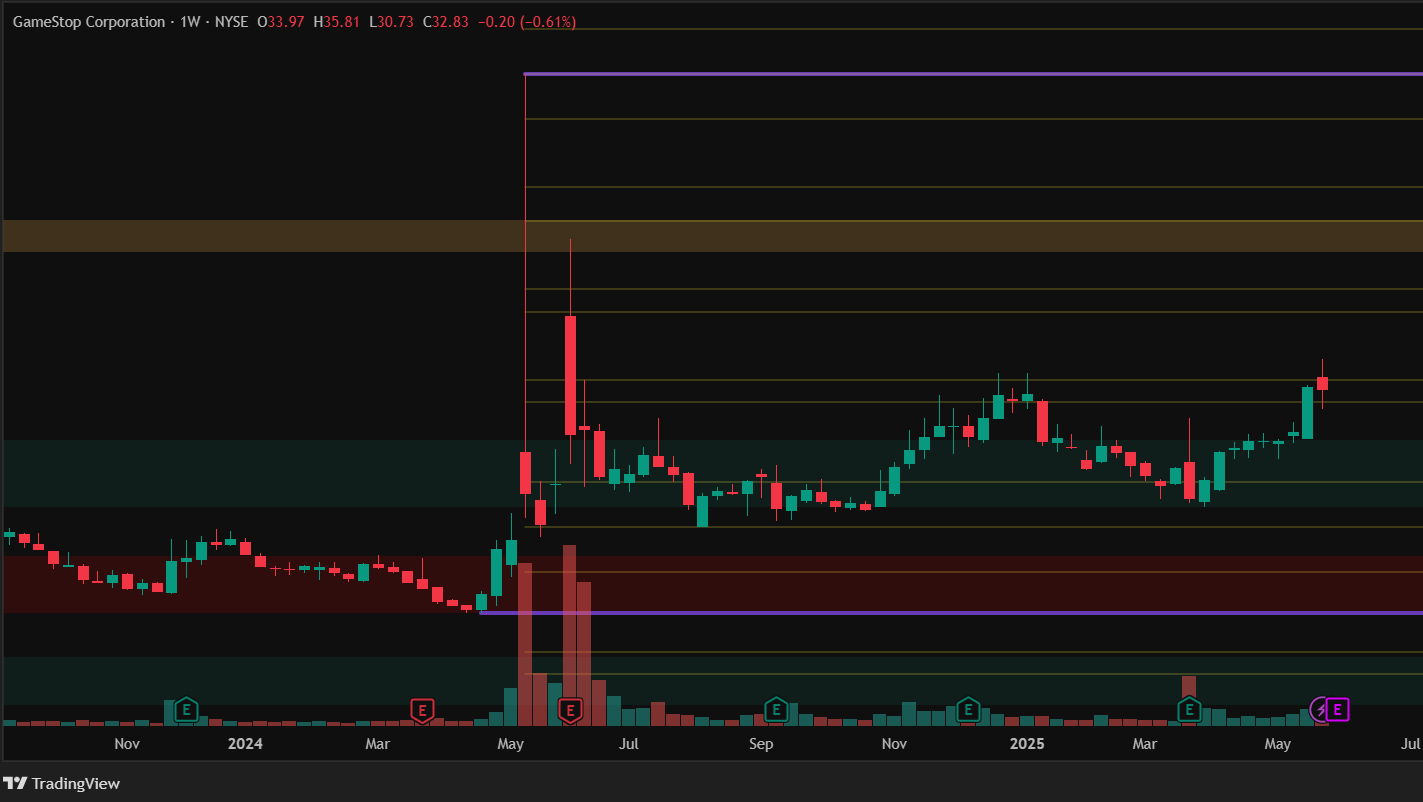
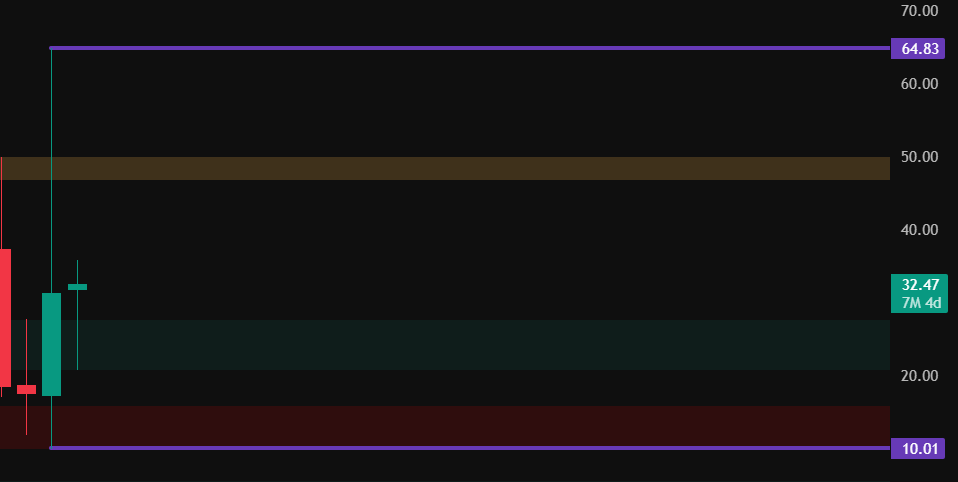
GME GameStop yearly chart analysis

If we look at the yearly chart of GME, the price in 2025 is still within last year’s trading range. The stock is currently trading between a high of $64.83 and a low of $10.01.

The Bottom Line

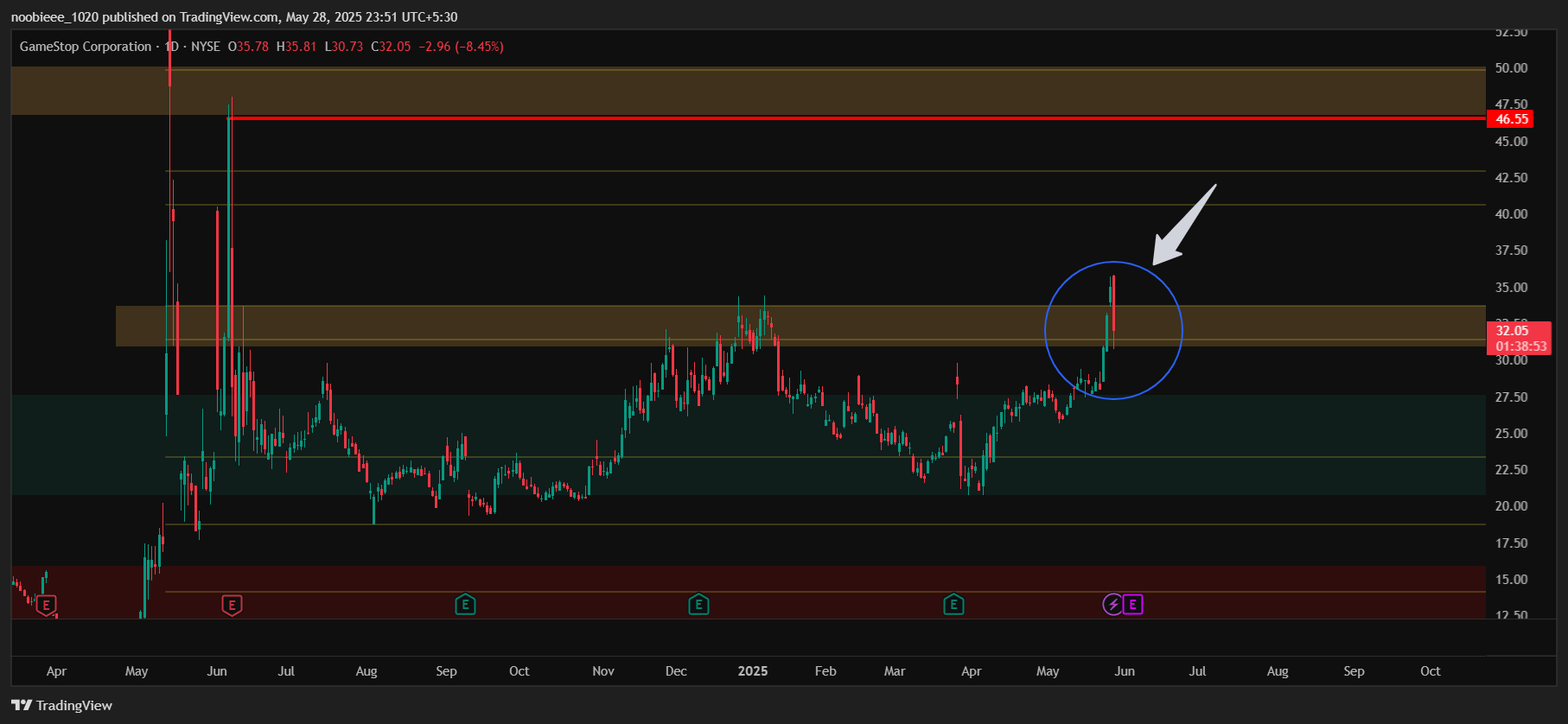
ameStop stock support and resistance levels for June 2025

In June 2025, we may see GME stock touching the $46.50 mark with some decent pullbacks.

But overall, the verdict by FeelTheCandlesticks is bullish for the month of June 2025.

The 9% drop on May 28 seems to be a correction despite the bullish news, as the stock had already rallied in earlier trading sessions.

The price has also tested the 9-day EMA, and it has already pulled back to the FTC special SR zone (the golden zone in the picture). So there seems to be a very high probability that the price might rally upward in the coming days. The GME stock may continue to follow positive fundamental news.

Also Read – 7 Surprising Facts You Must Know About Tether (USDT) in 2025
TD Easy Trade FHSA Promo Code 2025

TD Easy Trade FHSA Promo Code

Buying your first home in Canada is a big dream, but saving for a down payment is probably one of the bigger financial challenges you’ll face. The First Home Savings Account (FHSA) was designed specifically to help with this problem.

Introduced in 2023, the FHSA is designed to help first-time home buyers save money in a smart and tax-efficient way. It lets you contribute up to $8,000 per year, with a lifetime limit of $40,000โ€”and the best part? Your investments can grow tax-free just like they do in a TFSA or RRSP.

Now, if you’re looking for an even better head start, there’s some good news.

TD Easy Trade is offering a $100 bonus when you open an FHSA and use the promo code STARTSAVE in 2025.

In this article, weโ€™ll break down everything you need to know about this offer, how to qualify, and why it’s a solid choice if youโ€™re planning to buy your first home.


How the STARTSAVE Code Works?

As of May 27, 2025, TD Easy Trade is offering a limited-time promo just for first-time home buyers. Use the promo code STARTSAVE, deposit $3,000 or more into your new FHSA, and youโ€™ll get a $100 cash bonus.

The details are:

  • Promo Code: STARTSAVE
  • Deposit Deadline: May 31, 2025
  • Minimum Deposit: $3,000
  • Maintain Balance Until: February 28, 2026
  • Bonus Payment: Within 60 days after the end of the qualifying period
  • Whoโ€™s Eligible: Canadian residents between 19 and 71 who are first-time home buyers

Benefits of the TD Easy Trade FHSA

TD Easy Trade’s FHSA works like a hybrid between an RRSP and TFSA. You get the tax deduction when you contribute (like an RRSP), but withdrawals for your home purchase are tax-free (like a TFSA).

They don’t charge fees on TD ETF trades, which helps your investments grow without getting eaten up by commissions.

You also get 50 free stock trades per year if you want to pick individual companies.

Choosing to open your FHSA with TD Easy Trade comes with a bunch of useful features that make saving and investing for your first home simpler:

TD Easy Trade doesnโ€™t charge you to keep your FHSA open, which is a big plus compared to other providers.

These features make it an attractive choice for first-time buyers who want to save and invest wisely with as little hassle and cost as possible.


Step-by-Step Guide: How to Open an FHSA and Apply the STARTSAVE Promo Code

Getting the $100 bonus is fairly straightforward.

Download the TD Easy Trade app and open an FHSA account.

During setup, enter STARTSAVE as your promo code.

You’ll need to deposit at least $3,000 by May 31, 2025, and keep that balance until February 28, 2026.

TD will add the $100 to your account within 60 days after that.


Also Read – The Best TD Easy Trade Promo Codes for 2025 You Can Use Right Now

Eligibility Criteria for the TD Easy Trade FHSA Promo

To make sure you qualify for the bonus, youโ€™ll need to meet these basic requirements:

  • You Must Live in Canada: Only Canadian residents are eligible.
  • First-Time Home Buyer: You must not have owned a home as your primary residence in the current or previous four years. This rule also applies to your spouse or common-law partner.
  • Age Between 19 and 71: You need to be at least 19 years old, and your FHSA must be closed either 15 years after opening it or by age 71โ€”whichever comes first.
  • Open a New FHSA with TD Easy Trade: If youโ€™re already a TD client, you can still qualify if you donโ€™t have an FHSA yet.

You should also check the official terms on TDโ€™s website because there might be more specific conditions based on your personal situation.


TD Easy Trade FHSA vs. Wealthsimple FHSA

FeatureTD Easy Trade FHSAWealthsimple FHSA
Cash Bonus$100 bonus with promo code STARTSAVENo cash bonus
Promo DeadlineMay 31, 2025 (deposit $3,000 or more)Not applicable
Minimum Deposit for Bonus$3,000No deposit requirement
Commission-Free ETF TradesUnlimited free TD ETFsFree ETFs from all providers
Free Stock Trades50 free stock trades per yearAll stock trades are free
Trading Fees After Limit$9.99 per trade after 50 free tradesStill free
Platform TypeApp-only (mobile access only)App and web-based platform
Account FeesNo account feesNo account fees
Investment OptionsTD ETFs, stocks, mutual funds, bondsETFs, stocks, crypto, and managed portfolios
Ease of UseBeginner-friendly mobile appVery user-friendly interface across devices
Robo-Advisor OptionNot availableAvailable

Which One Is Better?

If your goal is to get a quick savings boost, TD Easy Trade is a great pick thanks to the $100 bonus. Itโ€™s especially helpful for people who are just starting out and want to keep things simple.

However, if you plan to trade frequently or want more flexibility, Wealthsimple might be a better fit. It offers free trades across all investments and even gives you access to a robo-advisor, which can manage your portfolio for you.


The Bottom Line

The TD Easy Trade FHSA promo code STARTSAVE is a great chance to earn a little extra while saving for your first home. With the $100 bonus, tax-free investment growth, and a platform designed for beginners, it’s a solid choice for anyone just beginning their home-buying journey.

The promotion runs until May 31, 2025. If you’re already planning to open an FHSA and the timing works out, the extra $100 is a decent bonus to start with.

Frequently Asked Questions

1. Who qualifies as a first-time home buyer?
You qualify if you (and your spouse or partner) havenโ€™t owned a home as your main residence in the current or past four calendar years.

2. When will I receive the $100 bonus?
If you meet the conditions, TD will deposit your bonus within 60 days after February 28, 2026.

3. Can I combine STARTSAVE with other TD offers?
It might be possible. For example, TD often runs promotions for chequing accounts too. But check the terms to see if they can be combined.

4. What can I invest in through an FHSA?
You can invest in stocks, ETFs, bonds, and mutual funds. TD Easy Trade gives you free access to TD ETFs and 50 free stock trades each year.

Hut 8 Mining Corp. (HUT) Stock Price Prediction, Forecast & Target for 2025, 2030, 2040 & 2050

Hut 8 Mining Corp. (HUT) is a dynamic force in the Cryptocurrency Mining industry, balancing Bitcoin mining with HPC innovation.

Hut 8 Mining Corp. (HUT) is one of the top companies in the Bitcoin mining space. Itโ€™s also making strong moves in high-performance computing and energy infrastructure. This article takes a close look at HUTโ€™s key fundamentals, how its sector and industry are doing, and what the future might hold for the companyโ€™s stock in the years 2025, 2030, 2040, and 2050. Since Bitcoin crossed the $100,000 mark in May 2025, interest in HUTโ€™s stock has gone up a lot. But because the crypto world is unpredictable, these long-term forecasts are mostly guesses and should be taken with a pinch of caution.


1. Company Overview

Hut 8 Mining Corp. is well-known in the cryptocurrency world, mainly focusing on mining Bitcoin. Recently, the company has also expanded into data center services. Here’s a quick look at its key information, followed by a short summary of its business.

DetailInformation
Company NameHut 8 Mining Corp.
SectorFinancials
IndustryCryptocurrency Mining / Capital Markets
IPO Year2018 (TSX), later NASDAQ
Stock Exchange ListedNASDAQ (HUT), TSX (HUT:CA)
Founded ByBill Tai, Andrew Kiguel
Established In2011
SpecializationBitcoin Mining, High-Performance Computing, Data Centers

Hut 8 was founded in 2011 by Bill Tai and Andrew Kiguel. It’s based in Miami, Florida, and runs 19 sites across North America. These sites use 1,020 megawatts of power for mining Bitcoin and offering computing services. The company was listed on the Toronto Stock Exchange (TSX) in 2018 and later on NASDAQ. As of March 2025, it holds 10,264 Bitcoins, worth around $847.2 million. It recently launched American Bitcoin Corp., with backing from Eric and Donald Trump Jr., to make mining operations more efficient. By moving into high-performance computing, Hut 8 is reducing its dependence on Bitcoin alone. The combination of mining and computing makes it a strong player in todayโ€™s fast-changing financial world.


2. The Stock Market: Driven by Fundamentals

Stock prices usually move based on core factors like a companyโ€™s earnings, overall market conditions, and whatโ€™s going on in its industry. For Hut 8, hereโ€™s what matters:

  • Revenue and Earnings: In Q1 2025, the company earned $21.8 million in revenue, which was lower than expected. It also reported a $134.3 million net loss, mostly due to Bitcoinโ€™s price changes and the cost of upgrading its systems.
  • Crypto Market Trends: When Bitcoin crossed $100,000 in May 2025, Hut 8โ€™s stock price jumped by 11.93%, reaching $14.17.
  • Regulatory Environment: U.S. policies in 2025 have been friendly toward crypto mining, but thereโ€™s always a chance of rule changes that could affect operations.

These elements explain why Hut 8โ€™s stock swings so much. Thatโ€™s why itโ€™s important to understand both its sector and its industry.


3. Sector Overview: Financials

Understanding the Sector
Hut 8 belongs to the Financials sector. This includes banks, fintech companies, and cryptocurrency firms. The goal of this sector is to keep money flowing through the economy, and itโ€™s now becoming more open to digital currencies. Hut 8 plays a unique role by connecting traditional finance with the new digital economy.

Fundamental Factors Affecting the Sector

  • Regulation: The U.S. has made it easier for crypto firms to operate in 2025. But changes in global rules can still affect the business.
  • Economic Conditions: Low interest rates make investors more willing to take risks on stocks like HUT. On the flip side, inflation can push up the cost of electricity.
  • Technology: Progress in blockchain and mining equipment is pushing the sector forward.

Growth and Development in Recent Years
The Financials sector has seen fast growth in its crypto arm. U.S. miners, including Hut 8, have benefitted since Chinaโ€™s crackdown in 2021. Hut 8 increased its hashrate by 79%, and the launch of American Bitcoin Corp. fits into the larger trend of businesses using crypto and branching out into high-performance computing. Bitcoinโ€™s 2025 rally has made people even more optimistic about this sector.


4. Industry Analysis: Cryptocurrency Mining

Exploring the Industry
Hut 8 is part of the Cryptocurrency Mining industry, where companies earn Bitcoin by validating transactions on the blockchain. This business uses a lot of energy, and the biggest playersโ€”like Marathon Digital and Core Scientificโ€”win by being more efficient and operating on a larger scale.

Fundamental Factors Impacting the Industry

  • Bitcoin Prices: Bitcoin hitting $100,000 in May 2025 boosted profits, but sharp price changes (like those seen in Q1 2025) can hurt earnings.
  • Energy Costs: Hut 8 uses cheap electricity in places like Texas, where it pays just 2.5 cents per kilowatt-hour. This helps lower its costs.
  • Bitcoin Halving: In April 2024, the reward for mining Bitcoin was cut in half. This made things harder for miners, as reported by Yahoo Finance.

Recent Growth and Developments
The U.S. has become a top location for crypto mining. Hut 8 has improved its efficiency by 37% and expanded into data centers to handle high-performance computing. Posts on X show that retail investors are excited about crypto stocks, especially after Bitcoinโ€™s recent rally. Still, experts warn that the reward cuts from halving could create future challenges. Luckily, Hut 8โ€™s move into data centers helps reduce its dependence on mining alone.


Also Read – The Very First Post You Should Read to Learn Cryptocurrency

5. Stock Growth and Fundamental Factors

Hut 8โ€™s stock hit $14.17 in May 2025, thanks to the Bitcoin surge and smart decisions like starting American Bitcoin Corp. However, the $134.3 million loss in Q1 shows that things arenโ€™t always smoothโ€”crypto prices and rising costs can hit hard. On the bright side, its hashrate went up by 79%, and the companyโ€™s shift into high-performance computing fits well with industry trends. Going forward, Hut 8โ€™s growth will depend on keeping energy costs low, growing its data center business, and adapting to new rules in a crypto-friendly U.S. market.


6. Speculative Targets: Technical Analysis Insights

Technical analysis can help predict short-term stock moves, but itโ€™s not great for long-term forecasting. As of May 27, 2025, with Hut 8 trading at $14.17, hereโ€™s what the charts say:

  • Moving Averages: A recent crossover between the 50-day and 200-day averages suggests the stock could keep rising.
  • Support/Resistance Levels: The stock has support at $12.50 and faces resistance at $16.50.
  • RSI (Relative Strength Index): Currently around 65, meaning the stock has strong momentum but isnโ€™t overbought yet.

Speculative Price Targets
If we assume a 10% yearly growth rate, based on general market trends (with a range from 5% to 15%):

YearPrice TargetRange
2025$16$13โ€“$18
2030$26$20โ€“$33
2040$68$42โ€“$130
2050$178$71โ€“$520

These targets count on Bitcoin doing well and Hut 8 keeping its operations efficient. But none of these are sure things.


7. Long-Term Growth Prospects

Hut 8 is in a strong position for long-term growth. It holds 10,264 Bitcoins, operates with 1,020 MW of energy, and is expanding into high-performance computing. Its American Bitcoin Corp. project aims to lead in global mining, according to company updates. Still, Bitcoinโ€™s price swings, rising energy costs, and possible global regulations could get in the way. If Hut 8 manages these challenges well and takes advantage of U.S. crypto-friendly policies, the stock could do wellโ€”but expect a bumpy ride.


8. Conclusion

Hut 8 Mining Corp. (HUT) stands out in the Cryptocurrency Mining industry. It combines Bitcoin mining with cutting-edge computing services. At $14.17 in May 2025, the stock reflects both Bitcoinโ€™s surge and the companyโ€™s recent efforts to grow. Price targetsโ€”$16 in 2025, $26 in 2030, $68 in 2040, and $178 in 2050โ€”show whatโ€™s possible but come with lots of uncertainty. For regular investors, HUT offers both opportunity and risk. Itโ€™s important to do deep research and think long-term before investing.

7 Surprising Facts You Must Know About Tether (USDT) in 2025
Tether (USDT) does not have a fixed maximum supply of tokens that can be minted. Unlike cryptocurrencies like Bitcoin, which has a hard cap of 21 million coins, Tetherโ€™s supply is dynamic and adjusts based on market demand and the reserves held by Tether Limited.

A few weeks back, Tether (USDT) kept showing up on my feed.

I used to think of it as just another stablecoin. Kind of boring. Just sits there at $1, right? But the more I scrolled, the weirder and more interesting things got.

NameTether (USDT)
TypeStablecoin, pegged 1:1 to the U.S. dollar (~$0.99โ€“$1.01 during volatility)
Launch DateJuly 2014 (originally launched as Realcoin)
IssuerTether Limited, a subsidiary of iFinex Inc. (based in Hong Kong)
Market Cap~$152.78 billion
Circulating Supply~152.73 billion USDT
Maximum SupplyNo fixed cap; minted/burned based on demand and reserves
Reserve Backing~84% U.S. Treasury bills, ~16% in cash, secured loans, and other investments (Q1 2025 attestation: $120B reserves vs. $118B USDT in circulation)
Blockchains SupportedEthereum, Tron, Solana, Polygon, Avalanche, Arbitrum, Optimism, Omni, and more

So I grabbed a coffee, opened way too many tabs (again), and went down the rabbit hole.
And wow โ€” what I found actually blew my mind.

Here are the 7 things you need to know about Tether – especially with how wild things are getting in May 2025.


1. Tether Doesnโ€™t Move Much โ€” And Thatโ€™s the Point

Tether (USDT) isnโ€™t trying to hit $100K like Bitcoin. Itโ€™s a stablecoin, built to stay around $1 USD.
Most of the time, it does that job really well.

It wobbles between $0.99 to $1.01 in high-volatility moments, but for the most part, it stays still.
Thatโ€™s why traders use it โ€” itโ€™s like putting your money in park while the rest of the market goes nuts.

And with the U.S. economy getting shakier in 2025, stablecoins like Tether are becoming even more important.


2. Itโ€™s the Most Traded Crypto in the World โ€” Even More Than Bitcoin

No joke โ€” Tether sees more trading volume than any other crypto.

On busy days, $90 to $100 billion worth of USDT changes hands, according to CoinGecko. Thatโ€™s more than Bitcoin and Ethereum combined.

Why? Because Tether is the default pair on almost every crypto exchange.
If youโ€™re buying or selling tokens on Binance, OKX, or Bitfinex, chances are youโ€™re using USDT in between.


3. Tetherโ€™s Market Cap Just Crossed $150 Billion โ€” And Thatโ€™s a Huge Deal

This one is breaking news.

As of May 27, 2025, Tether now has a market cap over $150 billion and holds 61% of the entire stablecoin market, according to CoinMarketCap. Thatโ€™s massive.

The buzz on X right now is crazy-

A $1 billion USDT mint just happened on the Tron blockchain.

People are speculating that Tether is โ€œbuying the dipโ€ or prepping for a major market pump.

There are even rumors (not confirmed yet) that Tether might integrate with Bitcoinโ€™s Lightning Network โ€” which could make sending USDT almost instant and dirt cheap.

And hereโ€™s the kicker-
People are claiming Tether has now processed more transactions than Visa, and holds more U.S. Treasury bills than Germany.

That second one isnโ€™t confirmed officially, but the idea alone is wild.


4. It Claims to Be Backed 1:1 โ€” And Itโ€™s Showing Receipts (Kind Of)

Tether says that every USDT is backed by real-world assets โ€” mostly U.S. Treasury Bills, plus some cash and other stuff.

In the past, this wasnโ€™t exactly true.
In 2021, regulators found that a chunk of their reserves were in riskier assets like commercial paper. It caused a lot of backlash.

But in 2025, things are different.
According to their Q1 2025 attestation, Tether holds $120 billion in total reserves, with 84% of that in ultra-safe U.S. Treasury bills.

Theyโ€™re definitely trying to be more transparent now โ€” but the crypto crowd on X still watches their every move with a magnifying glass.


5. Itโ€™s Centralized โ€” And Thatโ€™s a Red Flag for Some

Tether is run by a private company called Tether Limited, which is part of iFinex Inc. based in Hong Kong.
They also run Bitfinex, a major crypto exchange.

So yeah, one company controls the most-used stablecoin in the world.

That goes against the โ€œdecentralizedโ€ spirit of crypto, and itโ€™s why some people constantly bring up transparency issues, power dynamics, and โ€œwhat ifโ€ scenarios.

It doesnโ€™t help that Tetherโ€™s legal drama isnโ€™t ancient history.


6. Yep, Tetherโ€™s Been Fined Before

Back in 2021, the New York Attorney Generalโ€™s office called out Tether for misleading the public about what backed USDT.

They paid an $18.5 million fine and agreed to publish regular reports. Since then, theyโ€™ve been releasing quarterly updates, and their numbers seem to add up โ€” at least on paper.

Still, with new rules like the EUโ€™s MiCA regulation tightening how stablecoins are allowed to operate, Tether is under constant pressure to stay compliant globally.


7. Itโ€™s Not Just a Crypto Tool – Itโ€™s a Real-World Lifeline

This was the part that changed how I saw Tether completely.

In countries like Argentina, Nigeria, Venezuela, and Turkey, where inflation eats up savings like wildfire, people are using Tether as digital dollars.

No banks. No waiting. No crazy fees.

Just USDT sent from one wallet to another.

And itโ€™s not just anecdotes – a 2024 Chainalysis report said Tether powers 70% of all stablecoin activity in emerging markets. Thatโ€™s not a niche use case. Thatโ€™s real impact.


Also Read – Why I Think Americaโ€™s Debt Crisis is Driving People into Crypto in 2025?

Final Thoughts

Before I looked into Tether, I thought it was just a โ€œparking coinโ€ – useful but boring.
Now? I see it as one of the most important players in crypto, even if it doesnโ€™t grab headlines like Bitcoin.

Itโ€™s massive. Itโ€™s global. Itโ€™s useful. And itโ€™s complicated.

Yes, there are legit concerns about transparency and centralization. But thereโ€™s also no denying how deeply Tether is woven into both the crypto world and real economies across the globe.

Why I Think Americaโ€™s Debt Crisis is Driving People into Crypto in 2025?

I Think Americaโ€™s Debt Crisis Is Driving People Into Crypto

Right now in 2025, the United States owes $36.22 trillion โ€” yes, trillion with a โ€œT.โ€ To put that into perspective, if every single person in the U.S. gave the government $100,000 today, we still wouldnโ€™t have enough to pay it off.

Thatโ€™s not even the scariest part.

Just a few days ago, on May 16, credit rating agency Moodyโ€™s dropped the U.S. governmentโ€™s rating from Aaa to Aa1. And when big names like Ray Dalio (billionaire investor and founder of Bridgewater Associates) warn that the U.S. could hit $50 trillion in debt by 2035, itโ€™s hard not to take it seriously.

โ€œSell Americaโ€ โ€” What Does That Even Mean?

I saw the phrase โ€œSell Americaโ€ trending on social media. I wasnโ€™t sure what it meant at first, but hereโ€™s what it comes down to: Investors – especially big global ones – are pulling money out of U.S. assets. Theyโ€™re selling off U.S. stocks and bonds. Theyโ€™re avoiding the dollar. Theyโ€™re looking elsewhere.

Hereโ€™s why – The government adds $1 trillion of new debt every 3 months. Interest payments alone are exploding. In 2021, only 9% of federal revenue went to paying interest. In 2024, it doubled to 18%. By 2035, it could hit 30% of revenue. A new tax cut passed this May under President Trump is expected to add another $2 trillion to the debt over the next 10 years.

On top of that, the U.S. slapped new tariffs on European imports starting July, which could hurt trade and make things even messier. All this is pushing investors to look for safer alternatives โ€” and crypto is one of them.

Also Read – The Very First Post You Should Read to Learn Cryptocurrency


How This Debt Mess is Making Crypto Look Like a Safe Bet?

1. Bitcoin is Becoming the โ€œDigital Goldโ€ Everyone Talks About

Gold has always been a safe haven. But now? People are calling Bitcoin the new gold. Itโ€™s not controlled by any government. Thereโ€™s a limited supply. Itโ€™s global. Itโ€™s fast. And in times like this, those things matter. On May 21, Bitcoin hit a new all-time high – $109,000. That jump came just days after Moodyโ€™s downgraded the U.S. credit rating.

According to Binance and Coinbase, more users are buying Bitcoin and Ethereum since the downgrade. U.S. Bitcoin ETFs (like IBIT) saw $40 billion in new money in just one month. Thatโ€™s not a fluke. Thatโ€™s a shift.

2. The U.S. Dollar is Weakening โ€” And Thatโ€™s Pushing People Toward Crypto

A strong dollar usually keeps crypto in check. But guess what? After the credit downgrade, the dollar lost ground, and Treasury bond yields shot up โ€” meaning the U.S. has to pay more to borrow money. This makes traditional investments less attractive. And crypto? It starts to look like a smarter alternative. Analysts are already saying Bitcoin could hit $120,000 or higher before the year ends.

3. Volatility is High โ€” But So is Interest

Letโ€™s be real: crypto is still volatile. After Moodyโ€™s downgrade, the S&P 500 and Dow Jones dropped sharply, and crypto bounced around too. When investors panic, they sell everything โ€” including Bitcoin. But hereโ€™s what surprised me: Even with the volatility, crypto is attracting more attention, not less. People are talking about it, buying small amounts, exploring apps like Coinbase and Gemini, and learning how ETFs work.

4. Decentralized Finance (DeFi) is Quietly Booming

Another thing I found while digging โ€” DeFi is back in the spotlight. People are losing faith in traditional banks and governments. They want systems that arenโ€™t controlled by politics or bad spending decisions. In 2025: DeFi total value locked (TVL) crossed $150 billion. Platforms like Uniswap, Aave, and Curve are seeing more users. A Trump-linked firm, World Liberty Financial, invested $12 million in Ethereum, Chainlink, and Aave in late 2024, signaling even big players are jumping in.


Soโ€ฆ Is Crypto Really the Answer?

Honestly? That depends on who you ask.

But hereโ€™s what Iโ€™ve come to believe:

Crypto is no longer just โ€œthe futureโ€ – itโ€™s part of the present.

And moments like this – when trust in the U.S. economy starts to crack – are when crypto shines.

People want control. They want protection. They want options.

And crypto, for all its risks, checks those boxes in a way few other things do.


Quick Recap

Whatโ€™s HappeningWhy It Matters
U.S. debt hits $36.22 trillionTrust in government finances is dropping
Credit rating downgraded by Moodyโ€™sMakes U.S. less attractive for global investors
โ€œSell Americaโ€ trendInvestors pulling out of U.S. assets
Bitcoin hits $109KSeen as a hedge against debt + inflation
DeFi platforms gaining tractionPeople exploring decentralized alternatives
ETFs like IBIT seeing record inflowsMainstream adoption of crypto-based products

Also Read – The Race Is On โ€“ Solana and XRP Eye the ETF Prize

Final Thought

Iโ€™m not here to tell you to buy Bitcoin or jump on the crypto bandwagon.

I just wanted to understand what was happening โ€” and what I found honestly surprised me.

The U.S. economy is at a turning point. And whether youโ€™re into crypto or not, you canโ€™t ignore the shift thatโ€™s happening.

Bitfarms Ltd. (BITF) Stock Price Prediction, Forecast & Target for 2025, 2030, 2040 & 2050

Bitfarms Ltd. (BITF) is a dynamic player in the Cryptocurrency Mining industry, leveraging sustainable energy and strategic expansions to strengthen its position within the Financials sector.

Bitfarms Ltd. (BITF) has carved out a strong position in the Bitcoin mining world, thanks to its eco-friendly approach and end-to-end control over its operations.

This article offers a full-picture view of BITF by diving into the companyโ€™s background, the key factors driving the stock, its place in the sector and industry, how its performance stacks up against its fundamentals, and bold price predictions for the futureโ€”covering 2025, 2030, 2040, and 2050. While these projections are built on current data and trends, theyโ€™re still speculative and not guaranteed outcomes.


1. Company Overview

Bitfarms Ltd. is a global player in Bitcoin mining, with a big focus on sustainability and efficiency. The table below highlights its key facts, followed by a short summary of what the company does.

Company NameBitfarms Ltd.
SectorFinancials
IndustryCryptocurrency Mining / Blockchain Infrastructure
IPO Year2019 (TSX), 2021 (NASDAQ)
Stock Exchange ListedNASDAQ, TSX
Founded ByAndrรฉs Finkielsztain, Emiliano Grodzki
Established In2017
SpecializationBitcoin Mining, High-Performance Computing (HPC), AI Infrastructure

Bitfarms was founded in 2017 and is headquartered in Toronto, Canada. It runs Bitcoin mining operations in Canada, the U.S., Paraguay, and Argentina. After going public on the TSX in 2019 and NASDAQ in 2021, the company was recognized with awards like the TSX Venture 50 in the tech category. What really sets Bitfarms apart is its use of green energyโ€”more than 75% of its data centers run on hydro power. The company has also made smart moves like acquiring Stronghold Digital Mining in March 2025. These steps, along with its push into high-performance computing (HPC) and artificial intelligence (AI), make Bitfarms a forward-thinking force in the crypto space.


2. The Stock Market: Driven by Core Fundamentals

Stock prices generally move based on economic data, company performance, and broader events. For Bitfarms, the key drivers include:

  • Earnings and Revenue: Bitfarms posted $56 million in revenue in Q4 2024, a 21% rise compared to last year, even though its mining margin dropped to 47% from 57%.
  • Bitcoin Price Fluctuations: Since Bitfarms earns through Bitcoin, its income is tied to BTC prices. Bitcoin touched $109,302 in May 2025, giving a boost to miners.
  • Regulation: New crypto laws, like a bill reintroduced in the U.S. Senate in May 2025, can affect how the company operates and what it costs.
  • Energy Costs: Cheap and renewable energy remains a must. Bitfarms cut its power costs by 10% through well-timed asset sales.

These points, along with investor mood and tech progress, play a big part in how the stock performs. Thatโ€™s why itโ€™s important to look at the bigger picture, including its sector and industry.


3. Sector Overview: Financials

Where Bitfarms Fits In

Bitfarms is part of the Financials sector, which includes traditional institutions like banks, as well as newer players like crypto companies. This sector is all about managing money and pushing financial innovation forward. Bitcoin mining, where Bitfarms shines, sits right between old-school finance and the digital future.

Key Sector Factors

  • Regulations: New laws around digital currencies can shift the playing field quickly.
  • Economy: Changes in inflation and interest rates affect how much risk investors are willing to take.
  • Tech Growth: Advances in blockchain and AI open up new ways for companies to grow.

Recent Trends

Fintech and crypto have become star performers within the Financials sector. Bitfarms has smartly shifted focus to North Americaโ€”now 80% of its assets are in the U.S. This fits with rising demand for crypto by big institutions. As Bitcoin becomes more mainstream and rules get clearer, companies like Bitfarms are finding more opportunities to grow.


4. Industry Analysis: Cryptocurrency Mining / Blockchain Infrastructure

Industry Snapshot

Bitfarms operates in the fast-moving world of crypto mining and blockchain infrastructure. This industry is all about confirming blockchain transactions and building the power to do it. Bitfarms goes head-to-head with names like Hut 8, Riot Platforms, and CleanSparkโ€”but stands out because of its green energy push.

What Drives the Industry

  • Bitcoin Price & Mining Difficulty: Higher Bitcoin prices mean higher revenue, but mining also gets harder, which can cut into profits.
  • Energy & Sustainability: Low-cost and clean energy is a must. Bitfarms uses hydroelectric power for most of its operations.
  • Rules & Compliance: Government rules about energy and crypto can impact costs.
  • Tech Efficiency: Better mining gear, like the Bitmain T21, can increase speed and lower energy use.

Recent Changes

Crypto mining is growing fast. Bitcoin’s climb to over $109,000 in May 2025 sparked new interest. Bitfarms expanded its hashrate to 19.5 EH/s and cut energy use to 19 watts per terahash in April 2025. It also sold its Paraguay-based Yguazu data center for $85 million. These moves lowered capital expenses and helped the company expand into HPC and AI, strengthening its position.


5. Stock Performance and Its Links to Fundamentals

Bitfarmsโ€™ stock has been riding high on solid fundamentals. In 2023, BITF was the top-performing stock on the TSX, jumping 382% year-to-date thanks to Bitcoinโ€™s surge and expansion moves. As of May 2025, the stock is priced at $1.15 with a market cap of $586.9 million. However, the company posted a net loss of $0.07 per share in Q1 2025, highlighting how Bitcoinโ€™s price swings and mining margins can affect performance.

But Bitfarms isnโ€™t sitting still. It secured a $300 million debt facility for its Panther Creek project and boosted its capacity by 90% to 461 MW. Its steady focus on clean energy and branching out into HPC and AI could keep driving growthโ€”if it manages regulatory and market challenges well.


Also Read – The Very First Post You Should Read to Learn Cryptocurrency

6. Speculative Targets: What the Charts Say

Technical analysis helps us guess where a stock might go by looking at trends and indicators. As of May 16, 2025, BITF trades at $1.15. Hereโ€™s what the numbers suggest:

  • Moving Averages: The 50-day moving average is above the 200-day, a bullish sign that came after the Stronghold deal.
  • Support/Resistance: The stock has support at $1.00 and faces resistance at $1.50.
  • RSI (Relative Strength Index): With an RSI around 65, thereโ€™s still room to rise before the stock looks overbought.

Speculative Price Forecasts

These estimates are based on how markets usually grow over timeโ€”10% annually for the base case, 5% for a conservative view, and 15% for an optimistic one. Hereโ€™s what BITF might be worth down the line:

YearConservative (5%)Base (10%)Optimistic (15%)
2025$1.20$1.40$1.60
2030$1.80$2.30$3.00
2040$3.70$6.00$11.50
2050$6.30$15.80$46.00

These predictions depend on a lot going rightโ€”Bitcoin holding strong, Bitfarms staying efficient, and no major disruptions. Thereโ€™s real potential, but also high risk.


7. Looking Ahead: Growth Potential Over Time

Bitfarms has a bright future, but itโ€™ll need to keep adapting. Its heavy use of hydro power (over 75%) aligns with growing demand for eco-friendly mining. Buying Stronghold and getting $300 million in funding for its AI and HPC work shows itโ€™s not just about Bitcoin anymore. The company now has a 1.4 GW energy pipeline, mostly in the U.S., and a massive 19.5 EH/s hashrate.

Still, it faces challenges like Bitcoin price swings, changing rules, and stiff competition from players like Riot Platforms. But if it keeps its efficiency edge and keeps branching out, it could be a long-term winner.


8. Conclusion

Bitfarms Ltd. (BITF) is a strong and forward-thinking name in crypto mining. Itโ€™s focused on clean energy and has made smart moves to grow its tech and energy infrastructure. Thanks to its strong fundamentalsโ€”big hashrate gains, green power, and new ventures into AIโ€”it has a solid foundation. However, the stock still reacts sharply to changes in Bitcoin prices and regulation. Future price targets like $1.40 (2025), $2.30 (2030), $6.00 (2040), and $15.80 (2050) show the potential upside, but also remind us that nothing is certain. Anyone interested in BITF should do their homework and consider both the promise and the risk before jumping in.