
Why Modi Wants You to Stay Away from International Trips?

Prime Minister Narendra Modi has made a direct appeal to Indians: postpone all non-essential foreign travel - including overseas vacations, destination weddings, and leisure trips - for at least one year.

Prime Minister Narendra Modi has made a clear request to the people of India. He has asked citizens to postpone all non-essential foreign travel for at least one year. This includes overseas holidays, destination weddings, and leisure trips that are not necessary.

He made this appeal while speaking at a public meeting in Secunderabad, where he also inaugurated development projects worth more than ₹9,400 crore.

In his speech, he said these steps are important because of growing global economic pressure. He described them as actions of economic responsibility.

Why Foreign Travel Affects the Economy?

Foreign travel is not just personal spending. It also affects the country’s foreign exchange reserves. When Indians travel abroad, they spend money in foreign currency on flights, hotels, shopping, food, and transport.

1. Direct Saving of Foreign Currency

When millions of people travel internationally, the total spending becomes very large. This leads to a significant outflow of dollars from India. Reducing this demand helps stabilize the country’s foreign exchange reserves.

2. Impact of Rising Oil Prices

India imports more than 85% of its crude oil. Because of the West Asia conflict, oil prices have increased. Foreign travel adds to fuel usage, especially aviation fuel and transport fuel. Reducing unnecessary international travel helps lower this pressure indirectly.

3. Strengthening the Indian Rupee

When fewer dollars leave the country, the demand for foreign currency decreases. This helps stabilize the value of the Indian rupee. A stable rupee is important because it keeps import costs under control. It also helps manage inflation, especially for essential goods like fuel, electronics, medicines, and fertilizers.

A stable rupee keeps the cost of all imports (oil, electronics, fertilisers, medicines) in check and controls inflation.

4. Boosting the Local Economy

Money spent within India stays in the Indian economy. When people choose domestic tourism instead of foreign trips, local businesses benefit. Hotels, transport services, guides, and small shops in tourist areas get more customers. This supports jobs and helps regional economies grow.

Also Read – Mother’s Day Special – 8 Indian Stocks That Quietly Profit From Every Mom’s Daily Decisions

Key Appeals Made by the Prime Minister

Avoiding Non-Essential Gold Purchases

Modi requested people to avoid buying gold for non-essential purposes for one year. He especially mentioned weddings and large family functions. The idea is to reduce extra spending on imported goods and ease pressure on foreign currency usage.

Reducing Fuel Consumption

He also asked citizens to use fuel carefully. This includes petrol, diesel, and gas. He encouraged people to use public transport such as metros and buses, share cars through carpooling, and adopt electric vehicles when possible. He also suggested increasing Work From Home arrangements and using virtual meetings to reduce travel.

Promoting Indian Products

Modi encouraged people to buy products made in India instead of imported goods. He also mentioned reducing dependence on imported items such as edible oils. This step is meant to support Indian industries and reduce imports.

Encouraging Domestic Tourism

Instead of traveling abroad, citizens were encouraged to explore tourist destinations within India. States like Kashmir, Rajasthan, Kerala, the Northeast, and the Himalayan regions were mentioned as places that can benefit from increased domestic tourism.

Supporting Sustainable Farming

The Prime Minister also spoke about agriculture. He encouraged farmers to adopt natural farming methods and reduce the use of chemical fertilizers. This was presented as a step toward long-term sustainability.

Using Railways for Transport

He suggested increasing the use of railways for transporting goods. This helps reduce diesel consumption and lowers overall transportation costs.

Multi Commodity Exchange Announces q4 FY 2026 Results

MCX Financial Results 2026: Key Highlights, Dividend, and Profit Growth Analysis

The Board of Directors of Multi Commodity Exchange of India Limited met on Friday, May 08, 2026, to approve the audited financial results for the quarter and the full financial year that ended on March 31, 2026.

During this meeting, the board recommended a final dividend of ₹8 per equity share, which has a face value of ₹2 each. This dividend proposal is now awaiting the final approval of the shareholders at the upcoming 24th Annual General Meeting of the company.

Also Read – State Bank of India Declares Massive 1735% Dividend for Shareholders

The specific dates for the meeting and the dividend payment will be shared by the company at a later time.

Consolidated Revenue and Profit Performance

The consolidated financial performance of the company showed growth across major metrics for the full financial year. For the year ended March 31, 2026, the total income reached ₹2,429.05 crores, which is an increase of ₹1,220.19 crores or 100.94% compared to the ₹1,208.86 crores reported in the previous fiscal year.

The net profit for the full year stood at ₹1,331.55 crores, representing a rise of ₹771.51 crores or 137.76% from the ₹560.04 crores earned in the prior year.

Looking at the quarterly performance, the total income for the quarter ended March 31, 2026, was ₹925.33 crores. This is an increase of ₹228.22 crores or 32.74% from the ₹697.11 crores recorded in the preceding quarter ended December 31, 2025.

When compared to the same quarter in the previous year, where income was ₹320.49 crores, the total income rose by ₹604.84 crores or 188.72%. Net profit for the final quarter was ₹529.77 crores, which is an increase of ₹128.65 crores or 32.07% over the ₹401.12 crores reported in the December quarter.

On a year-on-year basis, the net profit grew by ₹394.31 crores or 291.10% from the ₹135.46 crores recorded in the quarter ended March 31, 2025.

Operational Expenses and Statutory Contributions

The company reported total expenses of ₹733.82 crores for the full year ended March 31, 2026, compared to ₹511.55 crores in the previous year.

For the final quarter of the year, expenses were ₹242.10 crores, reflecting an increase from the ₹192.40 crores spent in the previous quarter and the ₹152.96 crores spent in the same quarter of the previous year. A portion of these costs includes employee benefits, which amounted to ₹180.11 crores for the full year. The company also accounted for an expense of ₹0.10 crore related to increased obligations for gratuity and leave encashment following the notification of new Labour Codes by the Government of India.

In terms of regulatory and statutory requirements, the company provided ₹40.56 crores as an exchange contribution to the Core Settlement Guarantee Fund during the final quarter. The total Core Settlement Guarantee Fund corpus as of March 31, 2026, stood at ₹1,367.29 crores.

Additionally, a subsidiary of the company contributed ₹1.00 crore to the Settlement Guarantee Fund as a financial disincentive due to market disruptions that occurred on December 23, 2025, and January 28, 2026, as mandated by the Securities and Exchange Board of India.

Corporate Governance and Internal Audit

The board also approved the re-appointment of M/s. Mittal & Associates as the internal auditors for the company for the 2026-27 financial year. This firm, which was established in 1977, specializes in internal audits for capital market entities.

In financial terminology, an internal audit is an independent process used to review a company’s internal controls and operations to ensure accuracy and compliance. The company continues to operate within a single business segment, which is the commodity exchange business, meaning all its financial reporting is consolidated under this one area of operation.

Company Background

Multi Commodity Exchange of India Limited operates in the financial services sector within the commodity exchange industry. It provides a platform for the nationwide online trading of commodity derivatives, facilitating price discovery and risk management. The company was listed on the stock exchanges in 2012 and operates on a large scale as a key infrastructure provider in the Indian financial markets, supported by its subsidiary, the Multi Commodity Exchange Clearing Corporation Limited.

BKT Tires Hits ₹10,800 Crore Milestone: Balkrishna Industries Announces Final Dividend and Massive ₹2,000 Crore Expansion Plan

Balkrishna Industries Limited – stock latest audited financial results news

Balkrishna Industries Limited held a meeting of its Board of Directors on Friday, May 8, 2026, to approve the audited financial results for the quarter and the full financial year ended March 31, 2026. The company reported a consolidated revenue from operations of ₹10,823.08 crore for the full fiscal year, compared to ₹10,446.95 crore in the previous year.

Alongside these results, the Board recommended a final dividend of ₹4 per equity share, which is 200% on the face value of ₹2 per share. This recommendation is subject to the approval of shareholders at the upcoming 64th Annual General Meeting.

Quarterly Performance and Comparative Analysis

In the fourth quarter ended March 31, 2026, the company achieved a consolidated revenue from operations of ₹2,932.82 crore. When compared to the previous quarter ended December 31, 2025, which saw revenues of ₹2,736.79 crore, this represents an absolute Quarter-on-Quarter increase of ₹196.03 crore, or 7.16%. On a Year-on-Year basis, the revenue of ₹2,932.82 crore rose by ₹180.44 crore from the ₹2,752.38 crore reported in the same quarter of the previous year, marking a 6.56% increase.

The consolidated profit for the period in the fourth quarter stood at ₹299.46 crore. This is a decrease of ₹82.69 crore, or 21.64%, from the ₹382.15 crore earned in the preceding quarter. Compared to the ₹368.55 crore profit in the quarter ended March 31, 2025, the current profit shows a Year-on-Year decline of ₹69.09 crore, or 18.75%.

Also Read – State Bank of India Declares Massive 1735% Dividend for Shareholders

Full Year Financial Review

For the entire financial year ended March 31, 2026, Balkrishna Industries reported a consolidated profit of ₹1,243.10 crore. This represents a decrease of ₹411.86 crore, or 24.89%, compared to the ₹1,654.96 crore profit recorded in the previous financial year. The total income for the year was ₹10,985.74 crore, a slight decrease of ₹89.17 crore from the ₹11,074.91 crore reported in the prior fiscal year, representing a decline of 0.81%. Total expenses for the year were ₹8,798.35 crore, down from ₹9,431.23 crore in the previous year, an absolute decrease of ₹632.88 crore or 6.71%.

Operational Updates and Capacity Expansion

The company provided updates on its ongoing capital projects, noting that its carbon black capacity expansion is expected to reach completion in the first quarter of the 2026-27 financial year. Projects involving Passenger Car Radial Tyres and additional Off-Highway Tyres facilities are currently progressing according to their original schedules. To further support infrastructure development and capacity across On-Road and Off-Road tyre categories, as well as AI-enabled automation and sustainability initiatives, the Board has approved an additional capital expenditure of ₹2,000 crore.

Board Decisions and Corporate Governance

The Board approved the re-appointment of Vipul Shah as a Whole Time Director, designated as Director and Company Secretary, for a five-year term starting February 11, 2027. Additionally, the Board approved the appointment of Deloitte Haskins & Sells LLP as a Joint Statutory Auditor for a period of five consecutive years, beginning from the conclusion of the 64th Annual General Meeting. During the final quarter of the year, the company issued 75,000 listed unsecured non-convertible debentures with a face value of ₹1 lakh each, aggregating to ₹750 crore on a private placement basis.

Company Background

Balkrishna Industries Limited, widely known by its brand BKT, operates in the tyre industry within the auto components sector. Established in 1961, the company specializes in the manufacture of Off-Highway Tyres used in segments such as agriculture, industry, mining, and earthmoving. Balkrishna Industries Limited is a large-scale global player with its equity shares listed on the BSE Limited and the National Stock Exchange of India Limited.

State Bank of India Declares Massive 1735% Dividend for Shareholders

MCX Financial Results 2026: Key Highlights, Dividend, and Profit Growth Analysis

The Central Board of the State Bank of India, during its meeting held on Friday, May 8, 2026, has declared a dividend of ₹17.35 per equity share for the financial year ended March 31, 2026. This dividend payout represents 1735% of the face value of each fully paid-up equity share, which stands at ₹1.

Record Date and Eligibility for Shareholders

To determine which shareholders are eligible to receive this payment, the bank has established Saturday, May 16, 2026, as the official record date.

A record date is a specific date set by a company to finalize the list of shareholders who are documented on its books as owners of the stock, thereby qualifying them to receive the declared dividend. Only those investors who hold the bank’s shares by the close of business on this date will be entitled to the payout.

Also Read – SBI Earned ₹80,032 Crore in FY26 – But 3 Numbers in Its Results Should Make Investors Nervous

Details of Book Closure and Payment Timeline

Following the record date, the State Bank of India will initiate a book closure period starting from Sunday, May 17, 2026, through Tuesday, May 19, 2026. Both the start and end dates are included in this period.

Book closure is a process where a company temporarily suspends the transfer of shares in its records to facilitate the accurate processing of dividend payments to the identified eligible members.

The bank has scheduled the actual dividend payment date for Thursday, June 4, 2026.

About State Bank of India

State Bank of India is a prominent entity in the banking and financial services sector, operating as a public sector bank. Headquartered in Mumbai, it manages a vast scale of operations both within India and internationally. As a central pillar of the Indian financial industry, it provides a wide range of banking products and services to retail, corporate, and institutional clients.

Shipping Corporation of India Reports Financial Results for Fiscal Year 2025-26

The Shipping Corporation of India Limited – stock latest AUDITED FINANCIAL RESULTS news

The Shipping Corporation of India Limited has officially announced its audited financial results for the quarter and the full financial year ended March 31, 2026.

Following a meeting of the Board of Directors held on May 8, 2026, the company reported a significant increase in its annual performance. For the full financial year 2025-26, the company achieved a standalone profit after tax of ₹1,326.25 crore, which represents a 62.91% increase compared to the ₹814.10 crore profit recorded in the previous financial year.

Shipping Corporation of India Dividend q4 2026

The Board has also recommended a final dividend of ₹1 per equity share of face value of ₹10 each, amounting to a 10% dividend payout, which is subject to shareholder approval at the upcoming Annual General Meeting.

Quarterly Performance and Sequential Growth

During the fourth quarter of the financial year, the company recorded a standalone profit after tax of ₹413.76 crore. When compared to the preceding quarter ended December 31, 2025, where the profit was ₹393.37 crore, this represents a quarter-on-quarter increase of ₹20.39 crore, or 5.18%.

The total income for the quarter stood at ₹1,657.30 crore, showing a slight decrease of ₹8.84 crore, or 0.53%, from the ₹1,666.14 crore reported in the third quarter.

Revenue from operations for the period was ₹1,512.73 crore, while other income saw a substantial rise to ₹144.57 crore from ₹54.92 crore in the previous quarter.

Also Read –Netripples Software Limited Announces Financial Results for Quarter and Year Ended March 31, 2026

Year-on-Year Comparisons and Annual Totals

On a year-on-year basis, the fourth-quarter profit of ₹413.76 crore shows a significant rise of 140.32% over the ₹172.17 crore profit reported in the same quarter of the previous year.

Total income for the quarter also grew by ₹257.82 crore, an 18.42% increase from the ₹1,399.48 crore earned in the quarter ended March 31, 2025.

For the entire financial year 2025-26, the total income reached ₹6,218.36 crore, marking a 7.48% growth over the ₹5,785.37 crore recorded in the 2024-25 fiscal year. The earnings per equity share for the full year improved to ₹28.47 from ₹17.48 in the prior year.

Segment Wise Revenue and Operations

The company operates through four primary segments: Liner, Bulk Carrier, Tanker, and Technical and Offshore. The Tanker segment remained the largest contributor to the revenue, generating ₹1,074.46 crore during the final quarter and ₹3,942.23 crore for the full year. The Bulk Carrier segment contributed ₹217.83 crore to the quarterly revenue, while the Liner and Technical and Offshore segments accounted for ₹164.67 crore and ₹72.37 crore, respectively.

In terms of segment results, the Tanker division reported a profit of ₹362.71 crore before tax and interest for the quarter, while the Bulk Carrier segment turned around from a loss in the previous quarter to a profit of ₹19.25 crore.

Consolidated Financial Overview

On a consolidated basis, which includes the performance of subsidiaries like Inland and Coastal Shipping Limited and SCI Bharat IFSC Limited, as well as joint ventures, the company reported an annual profit after tax of ₹1,422.81 crore for the fiscal year 2025-26. This is a substantial increase from the ₹843.58 crore reported in the previous year.

The consolidated total income for the year was ₹6,226.78 crore. For the quarter ended March 31, 2026, the consolidated profit after tax was ₹404.60 crore, compared to ₹185.14 crore in the corresponding quarter of the previous year.

Geopolitical and Administrative Updates

The company provided updates regarding maritime disruptions in the Middle East that occurred in February 2026.

Four vessels—Desh Garima, Desh Suraksha, Desh Vibhor, and Desh Vaibhav—faced restricted movement through the Strait of Hormuz due to heightened security risks. While one vessel, Desh Garima, reached Mumbai in April 2026, the others awaited clearance as of the reporting date. Management noted that freight revenue for these vessels has been recognized based on the percentage of voyage completion and stated that the disruption does not have a material impact on the financial statements.

Additionally, the company noted that the strategic disinvestment process initiated by the Government of India remains in progress.

Also Read – Does money go to the company when you buy shares from the stock exchange?

Company Background

The Shipping Corporation of India Limited is a Government of India Enterprise and a Navratna company. It operates in the shipping sector, providing a wide range of services including the transportation of goods and passengers. Established in 1950 and listed on the major Indian stock exchanges, the company manages a diverse fleet of tankers, bulk carriers, and container vessels. As a significant player in the Indian maritime industry, it maintains a large scale of operations both domestically and internationally, catering to various energy and trade requirements.

Netripples Software Limited Announces Financial Results for Quarter and Year Ended March 31, 2026

Balkrishna Industries Limited – stock latest audited financial results news

Netripples Software Limited has released its standalone unaudited financial results for the fourth quarter and the full financial year ending March 31, 2026.

The company’s Board of Directors approved the results during a meeting held on May 8, 2026. The figures highlight an increase in annual revenue and a growth in annual net profit, despite a loss recorded in the final quarter.

Quarterly Revenue and Income Performance

For the quarter ended March 31, 2026, Netripples Software Limited reported total revenue from operations of ₹2.02 crore. This represents a Quarter-on-Quarter (QoQ) absolute increase of ₹0.44 crore compared to the preceding quarter ended December 31, 2025, which saw revenue of ₹1.58 crore. This change indicates a growth of 27.85%.

On a Year-on-Year (YoY) basis, revenue saw a marginal absolute decrease of ₹0.01 crore from the ₹2.03 crore reported in the quarter ended March 31, 2025, reflecting a decline of 0.49%.

Total income for the quarter remained at ₹2.02 crore as no other income was reported.

Review of Quarterly Expenses and Profitability

Total expenses for the quarter ended March 31, 2026, amounted to ₹2.09 crore. This total includes employee benefits of ₹4.25 lakhs, depreciation and amortization of ₹3.50 lakhs, and other expenses of ₹2.01 crore.

The company recorded a net loss of ₹7.20 lakhs for the quarter.

This is a shift from the preceding quarter ended December 31, 2025, which had a net profit of ₹3.92 lakhs, resulting in a QoQ absolute decrease in profit of ₹11.12 lakhs or 283.67%.

Compared to the net loss of ₹0.84 lakhs in the same quarter of the previous year, the loss widened by an absolute ₹6.36 lakhs, a YoY increase in loss of 757.14%.

Full Year Financial Performance Comparison

For the full financial year ended March 31, 2026, Netripples Software Limited reported total revenue of ₹7.18 crore.

When compared to the ₹6.27 crore recorded in the previous financial year ended March 31, 2025, the company achieved an absolute Year-to-Year (FY-to-FY) increase of ₹0.91 crore, or a growth of 14.51%. Total annual expenses were ₹7.15 crore, up from ₹6.25 crore in the prior year.

The net profit for the full year 2026 stood at ₹2.72 lakhs, compared to ₹2.10 lakhs in the previous year. This reflects an absolute annual profit increase of ₹0.62 lakhs, representing a growth of 29.52%.

Assets, Liabilities, and Cash Flow Position

The company reported total assets of ₹10.23 crore as of March 31, 2026. Current assets made up ₹10.10 crore of this amount, with inventories valued at ₹9.80 crore.

Non-current assets, consisting of property, plant, and equipment, were reported at ₹12.80 lakhs.

Total liabilities stood at ₹3.41 crore, and the paid-up equity share capital was unchanged at ₹6.82 crore.

According to the cash flow statement, net cash flows from operating activities were ₹2.72 lakhs, with cash and cash equivalents ending the period at ₹7.49 lakhs.

Explaining Financial Concepts

In financial reporting, revenue from operations is the total amount of money a company receives from its primary business activities.

Net profit or loss is the final amount remaining after all operating costs, interest, and taxes have been paid.

A Year-on-Year (YoY) comparison looks at the same quarter across different years, while a Quarter-on-Quarter (QoQ) comparison looks at consecutive periods within the same or adjacent years.

Company Background and Scale

Netripples Software Limited is an information technology company that specializes in software development, particularly for the healthcare and medical sectors. Headquartered in Hyderabad, the company has been active since 1993. It operates as a small-to-medium scale enterprise providing various technology and software solutions to its clients.

How to do Paper Trading in Upstox? – A Complete Guide for Beginners (2026)

With platforms like Upstox and Sensibull, it becomes easy to practice trading in segments such as Nifty and Bank Nifty options, stock futures and options, currency derivatives like USDINR, and commodities including gold, silver, and crude oil.

Paper trading is one of the best ways to learn trading without risking real money. It allows traders to test strategies in real market conditions and understand how trades behave before using actual capital.

With platforms like Upstox, it is possible to forward test strategies across multiple segments including Nifty, Bank Nifty, and stock futures and options.

How to do Paper Trading in Upstox? – Step-by-Step Tutorial


Can You Do Paper Trading on Upstox on your Computer?

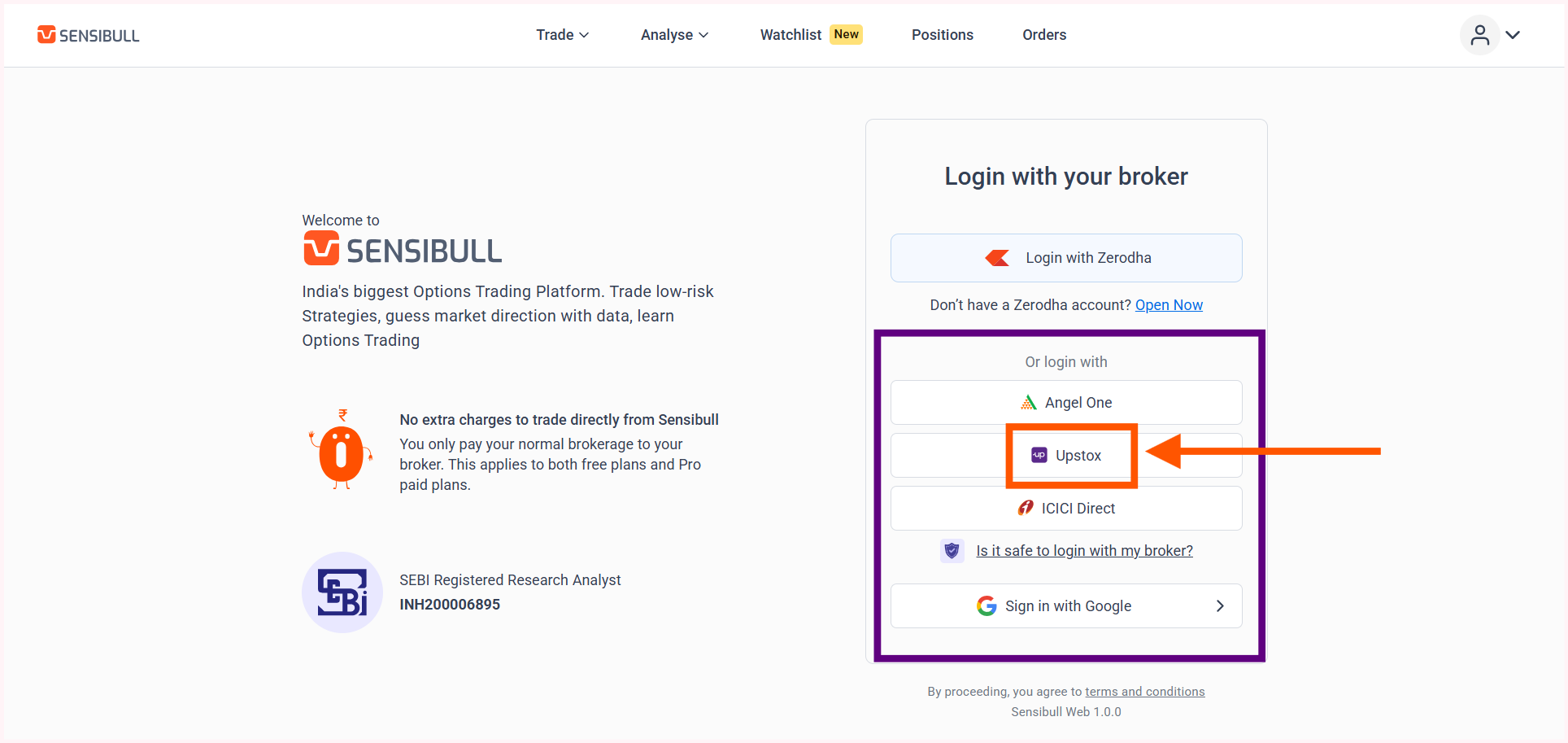
Open the Sensibull website and proceed to login using Upstox credentials.
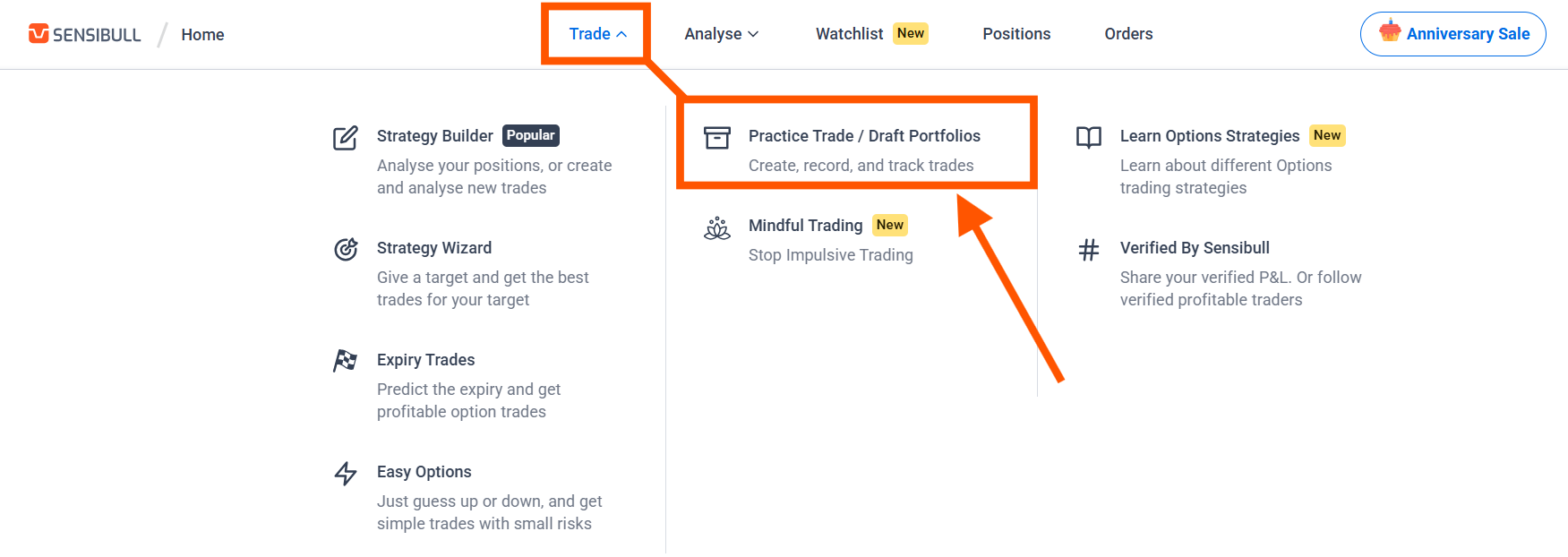
  • After logging in, go to the Trade section in the upper menu.
  • Locate the Practice Trade/Draft Portfolios option and open it.
Feel The Candlesticks
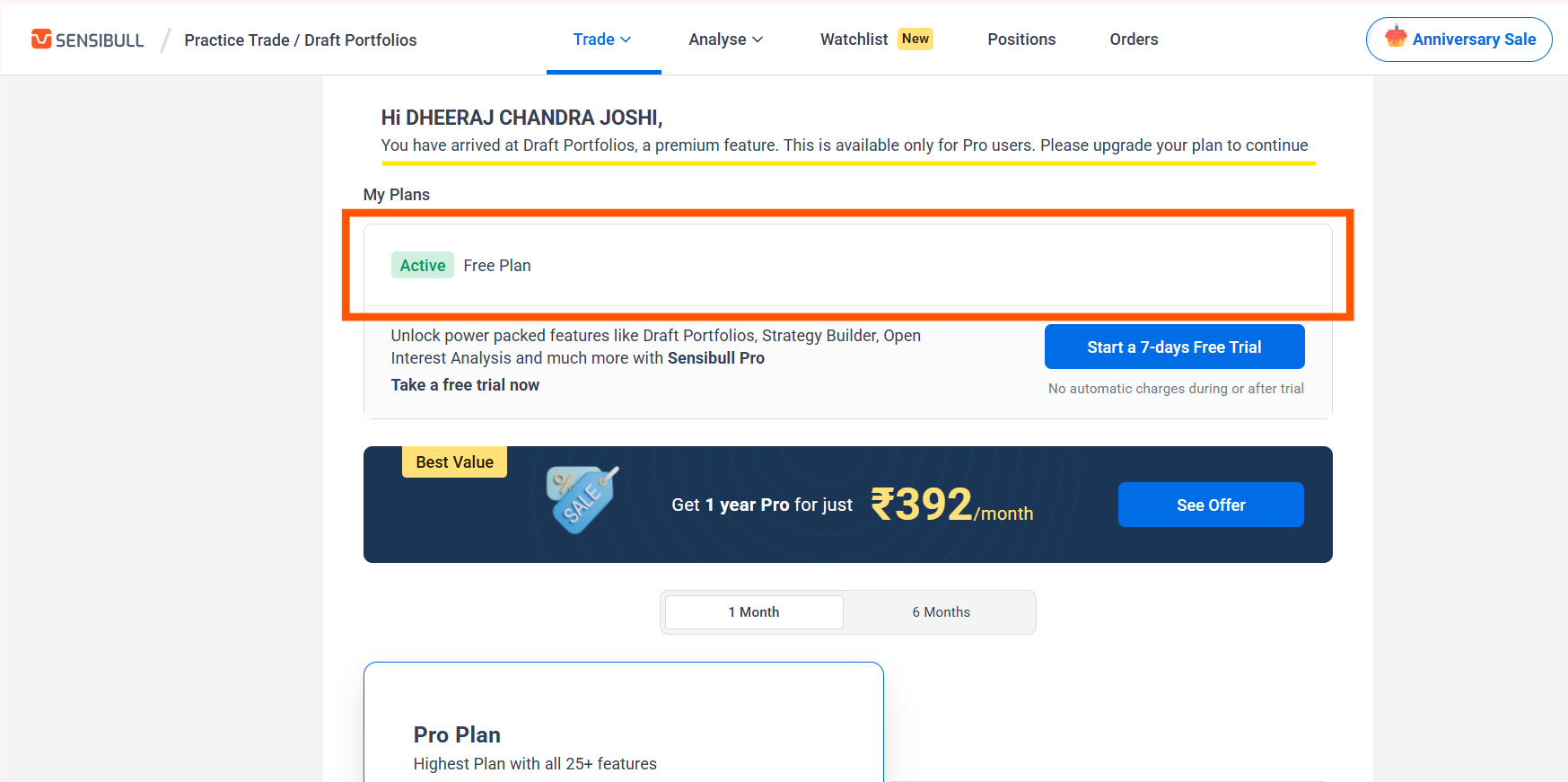
  • Once opened, it will say that you can’t do paper trading because you have a free plan.
Feel The Candlesticks

In conclusion, no.

Unlike Zerodha, Upstox offers only a free plan that won’t let you do paper trading on a PC.


How to Do Paper Trading on Upstox on your Mobile?

However, Upstox allows you to do paper trading on the Sensibull mobile app – even with a free plan – as long as you log in using your Upstox account.

  • Go to the Play Store or App Store and download the Upstox application.
  • Open the app and create a demat account if it is not already created.
  • After the account becomes active, go back to the Play Store or App Store.
  • Search for Sensibull and download the application.
  • Open the Sensibull app and login using Upstox credentials.
  • After logging in, you will be in the ‘Home’ section.
  • Click on Practice Trade/Draft Portfolios option and start practicing.

Paper trading does not require any real money. The platform provides virtual capital for practice, and all trades are simulated but based on real market data. This helps in understanding market behavior without financial risk.

After setting up, trading can be practiced in segments like Nifty, Bank Nifty, stock options, and futures. Traders can execute trades, such as buying calls and puts or selling options.

It is also possible to test different strategies like straddles and iron condors, observe how option premiums move, and improve risk management and position sizing skills.


Important Considerations

Paper trading does not involve real emotions like fear or greed, so real trading can feel very different. The focus should be on consistency and learning rather than just profits.

It is also important to practice risk management right from the start.


Does Upstox allow paper trading?

No, Upstox does not support paper trading directly. However, you can do paper trading indirectly via Sensibull on your mobile if you have an active Demat account with Upstox.

How do I switch to paper trading with Upstox?

To practice paper trading with Upstox in the Indian financial markets, you must have a Demat account with them. Once your account is active, log in to Sensibull using your Upstox credentials on your mobile; from there, you can practice under the ‘Virtual Trading’ option.

Powering “Quantum Space” – How EV Batteries are Solving the Moon’s Biggest Problem?

Feel The Candlesticks

We are currently witnessing the birth of Quantum Space. It’s a world defined by thousands of new satellites weaving a “quantum-safe” web around Earth and the first permanent human outposts on the Moon. But as the Artemis II crew recently reminded us, space is not just a destination; it’s a logistical nightmare.

We can build the rockets, but one question remains the ultimate “bottleneck” for human expansion: How do we keep the lights on?

In space, traditional energy fails. You can’t burn fossil fuels in a vacuum, and solar power – while iconic – is far more fragile than most people realize. The answer to the energy crisis of the Moon isn’t coming from rocket science; it’s coming from the electric car parked in your driveway.


The “Lunar Night” Problem

On Earth, we take power for granted. In space, power is life.

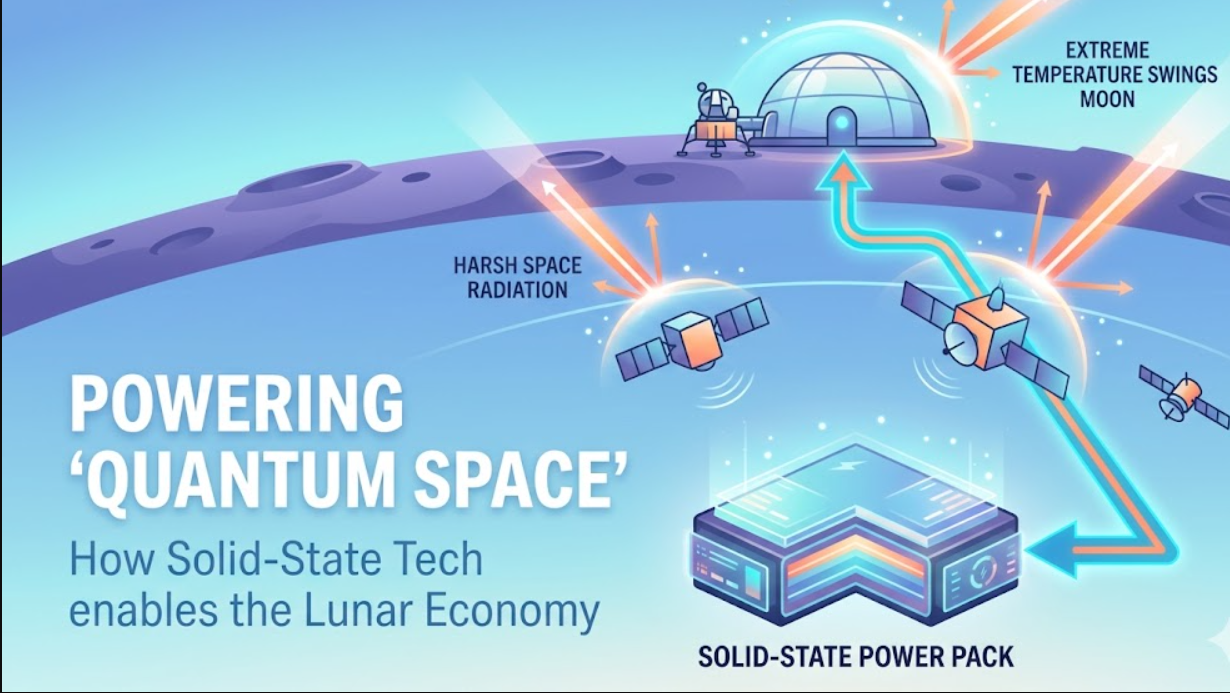
Currently, satellites and moon bases rely on massive solar arrays. But these are plagued by three “silent killers”:

  1. Radiation: Constant bombardment from solar flares degrades panels over time.
  2. The Dust Factor: On the Moon, abrasive, “electrostatic” regolith (dust) coats everything, choking solar efficiency.
  3. The Temperature Swing: In the lunar day, it hits 120°C. At night? A bone-chilling -170°C.

If your batteries fail during the 14-day lunar night, the mission ends. Period.

Why Current Batteries Aren’t Cutting It

For decades, we’ve used Lithium-ion batteries – the same ones in your phone. But these use a liquid electrolyte. In the vacuum of space, liquid is a liability. It can freeze, boil, or leak. Even worse, radiation can break down these liquids, creating a fire risk in a place where there is no “out” for the smoke.

The Solid-State Revolution: From EVs to Orbit

This is where the “Quantum” in Quantum Space becomes literal. Companies like QuantumScape and research teams at NASA (via the SABERS project) are pivoting to Solid-State Batteries (SSBs).

By replacing the liquid “insides” of a battery with a solid ceramic or polymer material, we unlock five game-changing advantages for space exploration:

1. Thermal Immunity

Unlike car batteries that lose 50% of their range in a winter storm, solid-state batteries are “thermal tanks.” Recent tests show they can operate from -60°C to +120°C without breaking a sweat. The solid material doesn’t freeze or boil, making it the only viable choice for the lunar surface.

2. Radiation Shielding by Design

Radiation destroys liquids through a process called radiolysis. Solids are inherently more stable. Recent gamma-ray testing suggests that SSBs can survive the harsh environment of “Cis-lunar” space for 15+ years – nearly double the lifespan of current satellite power packs.

3. “Weight is Wealth”

In rocketry, every kilogram costs thousands of dollars. Solid-state batteries are significantly lighter and hold more energy (higher energy density) than liquid ones. This allows us to launch smaller rockets or, more importantly, pack more food, water, and scientific tools instead of heavy battery casings.

4. Zero Fire Risk

In a vacuum, a battery fire is a death sentence. Because SSBs don’t have flammable liquids, they are virtually “fire-proof.” This safety profile is why they are the top choice for the crewed modules of future Moon bases.


Real-World Proof: It’s Already Happening

This isn’t science fiction.

  • The Japanese Milestone: A team from Japan recently conducted the first successful space test of an all-solid-state battery on the ISS, proving they work perfectly in zero-gravity and vacuum conditions.
  • The QuantumScape Pivot: Just this week, following their Q1 2026 earnings, QuantumScape signaled a massive shift toward defense and aerospace. They realize that the same tech making your car go 500 miles on a single charge is what will keep a lunar greenhouse running.

The Future: A Two-World Energy Grid

The beauty of this trend is the Inverted Innovation Loop. Usually, NASA invents something and we get it 20 years later (like Velcro or GPS). This time, the massive R&D of the global car industry is subsidizing the colonization of space.

The “B-LO Zero” projects and lunar-night battery packs of tomorrow are being built in the EV factories of today.

Final Thought

Building “Quantum Space” is about more than just the “cool factor” of rockets. It’s about building a smart, resilient energy grid that can survive the most hostile environment known to man.

The next time you see an electric car, look at the floorboard. The technology inside isn’t just helping us save our planet – it’s giving us the power to leave it.

This article is for informational purposes only and should not be considered financial advice. Investing in stocks, cryptocurrencies, or other assets involves risks, including the potential loss of principal. Always conduct your own research or consult a qualified financial advisor before making investment decisions. The author and publisher are not responsible for any financial losses incurred from actions based on this article. While efforts have been made to ensure accuracy, economic data and market conditions can change rapidly. The author and publisher do not guarantee the completeness or accuracy of the information and are not liable for any errors or omissions. Always verify data with primary sources before making decisions.

Coinbase CFO Alesia Haas Files Notice for $2 Million Stock Sale Ahead of Q1 Results

Feel The Candlesticks

Coinbase Global, Inc. Chief Financial Officer Alesia Haas has filed a notice to sell 10,020 shares of the company’s common stock, according to a recent Form 144 filing with the Securities and Exchange Commission.

The proposed transaction, dated April 16, 2026, carries an estimated aggregate market value of $2,004,000. This planned sale comes as the digital asset industry prepares for a pivotal stretch of corporate reporting and structural shifts in the crypto-economy.

The securities involved in this filing were originally acquired by Haas through equity compensation directly from Coinbase, with shares earned in May and August of 2025. In corporate finance, equity compensation is a non-cash pay category where executives receive shares or stock options. This practice is intended to align the interests of leadership with those of shareholders, as the value of the compensation rises or falls based on the company’s market performance.

Also Read – Circle Internet Group (CRCL) – Insider Activity and Outlook Ahead of Q1 Earnings

This latest filing follows a period of significant selling activity for the CFO. Over the past three months, Haas has sold a total of 384,570 shares, generating gross proceeds of approximately $59.5 million. The largest of these transactions occurred on February 6, 2026, when 364,600 shares were sold for more than $55.4 million. The sale is being conducted through a Rule 10b5-1 trading plan adopted on September 3, 2025. This specialized financial tool allows company insiders to set up a predetermined schedule for selling stocks at a time when they do not possess private, market-moving information, providing a transparent way to manage personal liquidity.

Anticipation Builds for Q1 Earnings and Crypto Market Milestones

The timing of the disclosure coincides with heightened investor interest as Coinbase prepares to report its first-quarter financial results. The company is scheduled to release its Q1 2026 earnings on April 30, 2026, following the close of market trading. These results are expected to provide a health check on the broader cryptocurrency sector, particularly regarding trading volumes and the growth of institutional services.

Beyond the earnings calendar, the digital asset landscape is navigating significant technical and regulatory updates. Market participants are closely monitoring the impact of the recent Bitcoin Halving—a recurring event that reduces the rate at which new units of the cryptocurrency are created. This process is designed to manage scarcity and has historically influenced market volatility and trading activity across exchange platforms. Additionally, the industry is tracking the expansion of spot crypto Exchange-Traded Funds (ETFs), which have increasingly integrated traditional finance with digital assets, directly impacting the custodial and transaction revenue models for firms like Coinbase.

Market Context and Regulatory Standards

The proposed sale represents a small fraction of the total 223,041,278 shares outstanding for the exchange operator. While the filing indicates an intent to sell, such notices are standard regulatory requirements under Rule 144. This rule governs the sale of “restricted” or “control” securities held by insiders, ensuring that such trades do not cause undue instability in the public marketplace.

By filing the Form 144, the executive represents that they are unaware of any material adverse information regarding the company’s operations that has not been disclosed to the public. The transaction is slated to be handled through Merrill Lynch on the Nasdaq exchange, maintaining the transparent reporting standards expected of major financial institutions.

Company Profile

Coinbase Global, Inc. operates within the financial technology sector, specifically classified under the software and services industry as a leading provider of financial infrastructure and technology for the crypto-economy. The company went public via a direct listing in 2021 and maintains its corporate headquarters in New York City. Coinbase provides a comprehensive platform that allows consumers, institutions, and developers to trade, store, and interact with various digital assets and decentralized applications. The business generates the majority of its revenue through transaction fees earned from trades executed on its platform, as well as through subscription and services revenue, which includes interest income, staking rewards, and custodial fees.

This article is for informational purposes only and should not be considered financial advice. Investing in stocks, cryptocurrencies, or other assets involves risks, including the potential loss of principal. Always conduct your own research or consult a qualified financial advisor before making investment decisions. The author and publisher are not responsible for any financial losses incurred from actions based on this article. While efforts have been made to ensure accuracy, economic data and market conditions can change rapidly. The author and publisher do not guarantee the completeness or accuracy of the information and are not liable for any errors or omissions. Always verify data with primary sources before making decisions.

Circle Internet Group (CRCL) – Insider Activity and Outlook Ahead of Q1 Earnings

Feel The Candlesticks

As Circle Internet Group, Inc. (NYSE: CRCL) prepares to pull back the curtain on its first-quarter performance for 2026, recent regulatory filings and market data suggest a company at a significant crossroads. With a pivotal earnings date set for May and notable insider selling by top leadership, investors are closely watching how the “infrastructure layer of the digital economy” will fare in an increasingly complex regulatory environment.

Insider Sales Under the Microscope

A Form 144 filing dated April 13, 2026, reveals that Heath Tarbert, President of Circle, proposed the sale of 15,000 Class A shares with an approximate market value of $1.43 million.

The sale was executed through Fidelity Brokerage Services under a pre-arranged Rule 10b5-1 trading plan adopted on August 14, 2025. This transaction follows a string of disposals by Tarbert over the last three months, totaling over 200,000 shares for proceeds exceeding $20 million. While insider selling can sometimes trigger alarm, these automated plans are often scheduled months in advance to diversify executive holdings regardless of current market sentiment.

Q1 2026 Earnings: What to Expect

Circle has officially scheduled its Q1 2026 financial results for Monday, May 11, 2026, at 8:00 a.m. ET. Analysts are looking for several key indicators:

  • USDC Adoption: Investors will gauge transaction volumes and market share for USDC to determine recurring platform revenue.
  • Arc Blockchain Milestones: Progress on the enterprise-focused Arc blockchain will be a primary focus for those looking for SaaS-style growth.
  • Earnings Growth: Consensus estimates project high growth, with annual earnings expected to rise by 69.4% as the company moves toward sustained profitability.

Stock Performance and Market Sentiment

CRCL’s performance in 2026 has been a tale of recovery. After a volatile start to the year that saw shares dip toward the $50 mark in early February, the stock has rallied significantly.

MetricValue (As of April 17, 2026)
Last Price$105.91
52-Week High$298.99
52-Week Low$49.90
Market Cap~$26.18 Billion

The stock is currently up roughly 14% year-to-date, trading well above its 50-day moving average of $90.08.

The Road Ahead

Circle’s transition from a “crypto proxy” to a critical piece of “financial infrastructure” appears to be gaining traction with institutional investors. However, the path to the $120+ level predicted by some models will likely depend on the regulatory clarity surrounding the Clarity Act and the company’s ability to maintain high margins amidst rising global operational costs.

Investors should keep a sharp eye on the May 11 call for updates on stablecoin yield legislation and new enterprise partnerships.

This article is for informational purposes only and should not be considered financial advice. Investing in stocks, cryptocurrencies, or other assets involves risks, including the potential loss of principal. Always conduct your own research or consult a qualified financial advisor before making investment decisions. The author and publisher are not responsible for any financial losses incurred from actions based on this article. While efforts have been made to ensure accuracy, economic data and market conditions can change rapidly. The author and publisher do not guarantee the completeness or accuracy of the information and are not liable for any errors or omissions. Always verify data with primary sources before making decisions.