
U.S. Fed Cuts Rates – Warns of Economic Slowdown – Inflation Remains a Concern

Following the announcement, Fed Chair Jerome Powell will hold a press conference to discuss the decision and the central bank's economic outlook.

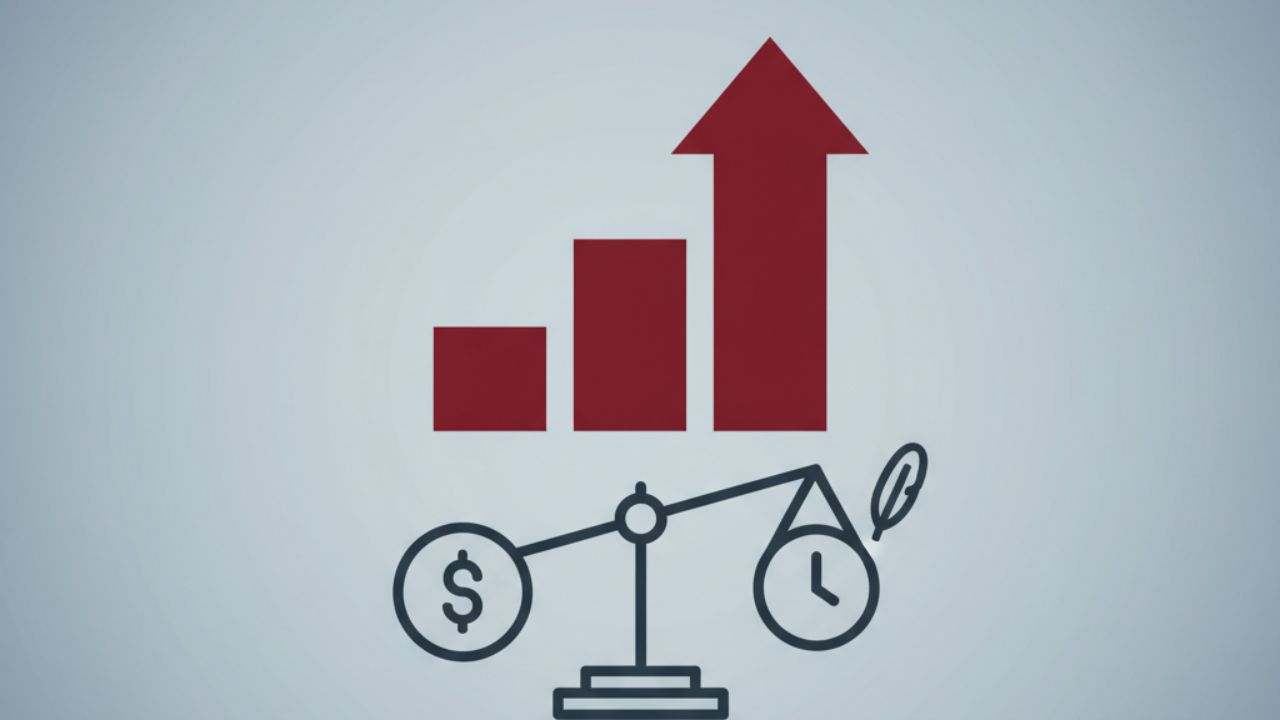
The U.S. Federal Reserve’s Federal Open Market Committee (FOMC) has lowered its target range for the federal funds rate by 25 basis points to 4.00%-4.25%, acknowledging that while inflation remains elevated, growth has cooled and labor market strength is waning. Uncertainty around the economic outlook, especially downside risks to employment, has heightened.

The Fed’s policy is guided by recent economic indicators

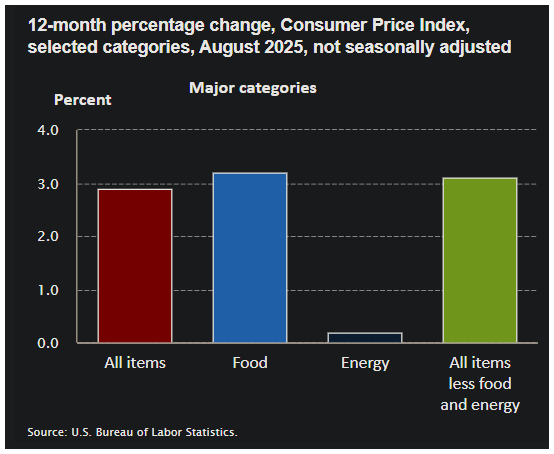
  • Consumer Prices (CPI): In August 2025, U.S. inflation (CPI) rose by 0.4% month-over-month, following a 0.2% increase in July. The year-over-year increase clocked in at 2.9%, up from 2.7% in July. Core CPI (excluding food & energy) rose 0.3% month-to-month, and 3.1% year-over-year.
  • Producer Prices (PPI): The PPI for final demand dipped 0.1% in August (seasonally adjusted), compared to a strong July. On a twelve-month basis, PPI rose about 2.6%, while “core” measures (excluding food, energy, trade services) rose ~2.8%.
  • Labor Market (NFP): Job gains slowed dramatically in August, with only 22,000 net new non-farm payroll jobs added, well below expectations. The unemployment rate edged up to 4.3%, reflecting the loosening grip of labor market tightness.

What the FOMC Statement Says?

According to the new statement: economic growth moderated in the first half of the year. Job gains have slowed, unemployment rose a bit but remains low, and inflation has persisted above target. The Fed reiterated its dual mandate: pursuing maximum employment and targeting 2% inflation over the longer run. Given the shift in balance of risks – especially the rise in downside risk to employment – it decided to cut the federal funds rate by a quarter point (0.25%) to the 4.00-4.25% range.

The Committee also said it will continue shrinking its holdings of Treasury, agency debt, and mortgage-backed securities. It remains open to further adjustments depending on incoming data, inflation pressures, labor market developments, financial conditions and international factors.

Also Read – Fed Interest Rates vs Gold Prices

Why This Matters?

The rate cut signals the Fed’s view that inflation, while still elevated, is starting to show signs of moderation, especially in wholesale prices (PPI). However, the very weak job growth and rising unemployment warn that the labor market may be cooling faster than desired. The Fed appears to be walking a tightrope: easing policy enough to avoid a sharper slowdown, but not so much as to reignite inflation.

Looking Ahead

The Fed will be closely watching upcoming data points, including next month’s CPI, PPI, and jobs reports, to gauge whether inflation continues to cool and whether the labor market’s weakening trend holds. Further rate cuts may be on the table if downside risks intensify, but persistence in inflation or unexpected strength in wages could delay more aggressive easing.

This article is for informational purposes only and should not be considered financial advice. Investing in stocks, cryptocurrencies, or other assets involves risks, including the potential loss of principal. Always conduct your own research or consult a qualified financial advisor before making investment decisions. The author and publisher are not responsible for any financial losses incurred from actions based on this article. While efforts have been made to ensure accuracy, economic data and market conditions can change rapidly. The author and publisher do not guarantee the completeness or accuracy of the information and are not liable for any errors or omissions. Always verify data with primary sources before making decisions.

When Will the Fed Decision on Interest Rates Come?

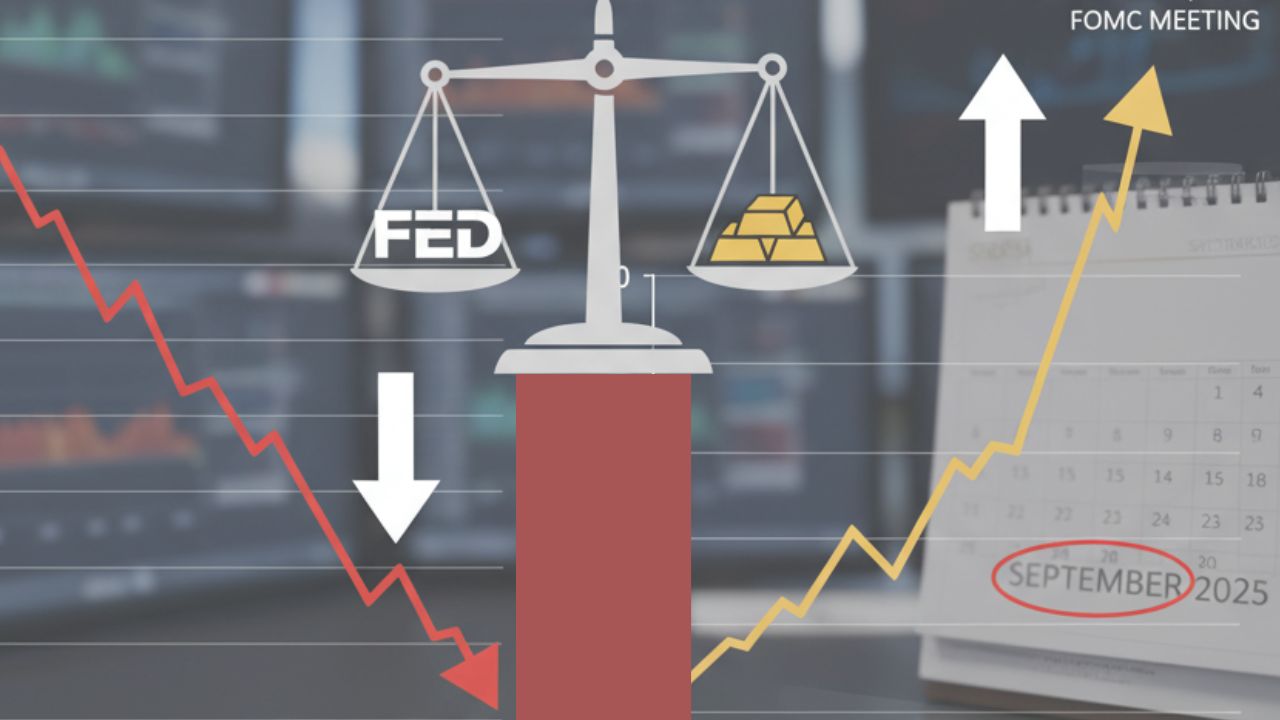
FOMC meeting september 2025

The Federal Reserve’s Federal Open Market Committee (FOMC) meeting is a pivotal event where policymakers deliberate on monetary policy, primarily focusing on setting the federal funds rate to influence economic growth, inflation, and employment.

This week, the FOMC meeting for September 2025 is underway, drawing intense scrutiny from investors, businesses, and consumers alike. Everyone is waiting for the Fed rate decision because it directly affects borrowing costs for everything from mortgages to business loans, sways stock and bond markets, and shapes the broader economy’s trajectory.

With the fed meeting today and the fed announcement on the horizon, the federal reserve’s move could either stabilize or jolt financial landscapes worldwide.

When is the Fed Meeting and Rate Decision Announced?

The Federal Reserve’s FOMC convenes eight times a year, with each meeting spanning two days to review economic data and policy options. The Fed interest rate decision is typically announced on the second day, immediately following the conclusion of deliberations.

For the September 2025 gathering, the schedule is set for Tuesday, September 16, and Wednesday, September 17. The announcement is expected at 2:00 PM ET, followed by a press conference from Fed Chair Jerome Powell at 2:30 PM ET. This timing allows markets to digest the news in real-time, often leading to immediate volatility.

Recap of Previous FOMC Meetings in 2025

The FOMC’s 2025 meetings so far have been marked by a cautious stance amid persistent inflation pressures and a resilient yet cooling labor market.

In January (January 28-29), the committee held federal reserve interest rates steady at 4.25%-4.50%, citing balanced risks to its dual mandate; markets reacted mildly positively, with the S&P 500 gaining about 1.5% in the following week as investors welcomed the pause after prior hikes.

March (March 18-19) saw another hold on fed interest rates, despite some early-year inflation upticks, with two members dissenting in favor of a cut. The fed decision triggered a brief stock dip of 0.8% but quick recovery, buoyed by strong corporate earnings.

By May (May 6-7), the fed rate remained unchanged, though projections hinted at future easing; equities surged 2.2% post-announcement, reflecting optimism over moderating wage growth.

June’s meeting (June 17-18) reaffirmed the steady fed interest rates amid mixed data, leading to a 1.1% market rally as tech sectors led gains.

Finally, in July (July 29-30), the committee maintained rates at 4.25%-4.50% for the fifth consecutive hold, with two dissents for a cut; the fed decision sparked a 0.5% S&P decline initially due to tariff-related inflation fears, but it rebounded within days on hopes for September action.

Overall, these outcomes highlight the fed’s vigilance on federal reserve interest rates, with market reactions varying from modest dips to gains based on forward guidance.

Is the Fed Going to Cut Rates in September 2025?

We overwhelmingly anticipate a fed rate cut at the September 2025 meeting, with markets pricing in a near-certain 25 basis point reduction to 4.00%-4.25%.

This expectation stems from recent economic indicators signaling a shift in risks. The latest CPI data for August showed a 0.3% monthly increase and 2.9% year-over-year, slightly above target but cooling from prior peaks, easing some inflation worries.

PPI for August edged down 0.1% monthly, with core measures up 2.8% annually, indicating producer prices are stabilizing without aggressive pass-through to consumers.

The NFP jobs report for August added just 22,000 positions – far below expectations – with downward revisions of 911,000 jobs from earlier estimates, pushing unemployment to 4.3% and underscoring labor market softness.

Fed Chair Jerome Powell’s recent comments at the Jackson Hole Symposium further fuel optimism for rate cuts. In his August 22 address, Powell noted the “shifting balance of risks” toward employment concerns over inflation, stating that “with policy in restrictive territory, the baseline outlook… may warrant adjusting our policy stance.” He emphasized tariffs’ potential as a temporary price shock rather than persistent inflation driver, opening the door to easing.

Market Impact of Fed Interest Rate Cuts

a) Stock Markets

Fed rate cuts typically boost equities by lowering borrowing costs for companies, spurring investment, and fostering growth optimism.

b) Crypto Markets

Crypto assets thrive on lower rates due to heightened risk-on sentiment, as investors chase higher yields in speculative arenas.

c) Gold Markets

Gold usually rises when the Fed cuts rates, as lower yields weaken the dollar and enhance its appeal as a non-yielding safe haven.

Also Read – Fed Interest Rates vs Gold Prices

This article is for informational purposes only and should not be considered financial advice. Investing in stocks, cryptocurrencies, or other assets involves risks, including the potential loss of principal. Always conduct your own research or consult a qualified financial advisor before making investment decisions. The author and publisher are not responsible for any financial losses incurred from actions based on this article. While efforts have been made to ensure accuracy, economic data and market conditions can change rapidly. The author and publisher do not guarantee the completeness or accuracy of the information and are not liable for any errors or omissions. Always verify data with primary sources before making decisions.

When is Gemini IPO Expected to Begin Trading on the Nasdaq?

gemini price prediction

Gemini Space Station, Inc., better known as Gemini, is set to launch its initial public offering on the Nasdaq Global Select Market, aiming to capture attention in the booming cryptocurrency market.

The company had planned to raise up to $433 million by offering approximately 17 million Class A common shares at a recently upsized price range of $24 to $26 per share. However, Bloomberg reported that Gemini Space Station ultimately priced its IPO at $28 per share late Thursday, pushing its valuation to around $3.3 billion.

Founded in 2014 by Cameron and Tyler Winklevoss, Gemini operates as a trusted cryptocurrency exchange and custodian. It currently serves more than 60 countries with services that include spot trading, staking, secure custody, its own stablecoin GUSD, and a crypto rewards credit card. Positioned firmly in the cryptocurrency sector within the broader financial technology industry, Gemini aims to ride the wave of pro-crypto sentiment in 2025 even though it continues to trail Coinbase and other competitors in terms of adoption and product breadth.

Also Read – CRCL’s USDC & FI’s FIUSD – The Stablecoin Business Model Everyone Should Understand

What Day and Time is Gemini Going Public?

Gemini’s IPO is scheduled to debut today, September 12, 2025, on the Nasdaq under the ticker GEMI.

The shares priced on the evening of September 11, following an investor roadshow that sparked significant demand with reports suggesting more than 20 times oversubscription.

Trading is expected to begin this morning in line with Nasdaq’s standard procedure, shortly after the market opens at 9:30 AM Eastern Time. While the exact moment has not been confirmed, most Nasdaq IPOs launch between 10:00 AM and 11:00 AM.

Recent Crypto IPOs: Listing Time Trends on Nasdaq and NYSE

To better understand when Gemini might actually begin trading, it is useful to look at the recent listing times of other crypto-related and fintech-adjacent companies on the Nasdaq and the New York Stock Exchange.

crypto IPOs in 2025

The 2025 crypto IPO wave has been remarkable, driven by corporate treasury strategies that include Bitcoin, Ethereum, and Solana. Companies holding these assets have often enjoyed a sharp “initial pop” in share prices before profit-taking set in. Backing from large investors such as Digital Currency Group and Galaxy Digital has also played a role in sustaining momentum.

Figure Technologies debuted on the Nasdaq on September 11, 2025, at 10:20 AM Eastern Time. The blockchain lending platform priced at $25 and immediately surged by more than 100 percent to reach a $5.3 billion valuation, reflecting strong investor appetite for tokenized assets.

Also Read – 3 Important Differences Between Cryptography and Blockchain

Earlier in May 2025, eToro, the crypto-friendly social trading platform, opened at 10:15 AM Eastern Time and jumped 43 percent to a $5.4 billion valuation. Around the same time, Galaxy Digital, which uplisted from Toronto, began trading on Nasdaq at 10:30 AM Eastern Time and saw modest early gains backed by institutional confidence.

Bullish, a direct competitor to Gemini backed by Peter Thiel, listed on the New York Stock Exchange on August 13, 2025, and opened at 10:45 AM Eastern Time. Its stock soared intraday by as much as 218 percent before closing the day up 84 percent.

Circle Internet Group, issuer of the USDC stablecoin, went public on June 5, 2025, at 10:10 AM Eastern Time and delivered a stunning first-day surge of 235 percent to an $85 billion valuation.

The average opening time across these listings is close to 10:30 AM Eastern Time. Based on this pattern, it is likely that Gemini stock will open and begin trading around 10:30 AM Eastern Time on September 12, 2025, in line with Nasdaq’s approach to capturing morning market momentum.

IPO Filing and Timeline

Gemini’s journey to the public markets began earlier this year. The company confidentially filed for a U.S. IPO with the Securities and Exchange Commission in March 2025, after first announcing its intentions in February 2025. A public S-1 filing followed on August 15, 2025, providing a detailed look into its operations, financials, and market ambitions.

After launching its roadshow on September 2, immediately after Labor Day, Gemini finalized pricing on the evening of September 11. Shares are scheduled to begin trading on September 12, 2025, on the Nasdaq Global Select Market under the ticker GEMI.

Offering Details

The offering consists of 16.67 million Class A common shares, with a mix of primary shares issued by the company and secondary shares sold by existing stockholders.

Initially, the price range was set between $17 and $19 per share when announced on September 2, which would have raised between $283 million and $317 million.

However, strong investor demand led Gemini to revise the range to $24 to $26 per share on September 9, boosting the potential proceeds to $433 million and lifting the valuation target to as high as $3.08 billion. Bloomberg reported that the company ultimately priced the IPO at $28 per share late Thursday, valuing Gemini Space Station at around $3.3 billion.

The deal also includes a standard 30-day greenshoe option, allowing underwriters to purchase an additional 2.5 million shares.

Gemini Opening Price Prediction – What to Expect?

Investors looking for a Gemini opening price prediction should recognize the factors driving demand. The IPO price range of $24 to $26 could see an immediate premium in the first trades.

Given the scale of oversubscription and enthusiasm for crypto stocks, shares may open in the $35 to $50 range. Comparisons with Bullish and Circle, which delivered enormous first-day pops of 84% and 235% respectively, support the idea that Gemini may enjoy a strong opening.

The Broader Crypto IPO Landscape

The Gemini offering comes during a year that has been transformative for crypto listings more generally. Beyond exchanges, new projects such as Worldcoin have emerged at the intersection of blockchain and artificial intelligence.

Worldcoin, backed by Sam Altman, promotes a “proof of human” model that uses iris-scanning technology to confirm digital identity while rewarding users with tokens. This concept aligns with the broader vision expressed by BlackRock’s Larry Fink, who has described digital identity as central to the future of asset tokenization. Although Worldcoin remains private for now, public markets have responded to related strategies.

On September 8, 2025, Eightco Holdings, which rebranded as ORBS, saw its stock surge by 3,800 percent after announcing a $250 million Worldcoin treasury plan. This reflects a broader trend in which Solana and Ethereum treasury strategies have recently outperformed those centered on Bitcoin, which has lagged during the latest cycle.

Also Read – I Created the Best Bitcoin Guide You’ll Ever Read

This article is for informational purposes only and should not be considered financial advice. Investing in stocks, cryptocurrencies, or other assets involves risks, including the potential loss of principal. Always conduct your own research or consult a qualified financial advisor before making investment decisions. The author and publisher are not responsible for any financial losses incurred from actions based on this article. While efforts have been made to ensure accuracy, economic data and market conditions can change rapidly. The author and publisher do not guarantee the completeness or accuracy of the information and are not liable for any errors or omissions. Always verify data with primary sources before making decisions.

U.S. Inflation Rate August 2025 – What the CPI Report Means for the Fed?

cpi release data us august 2025

The latest US CPI data for August 2025 from the Bureau of Labor Statistics shows that headline CPI, which tracks changes in the prices of a broad basket of goods and services, rose 0.4 percent in August after a 0.2 percent increase in July, bringing the year-over-year rate to 2.9 percent.

The main contributors were shelter, food, and energy, with gasoline prices seeing a notable 1.9 percent rise.

August Inflation Data Graph 2025 USA

Meanwhile, Core CPI – which excludes the more volatile food and energy components – rose 0.3 percent in August, matching July’s pace. On a yearly basis, Core CPI increased 3.1 percent, highlighting that underlying inflationary pressures, particularly from categories like airline fares, used cars, apparel, and new vehicles, remain firm even as some areas such as medical care and recreation eased.

The CPI report today shows that overall inflation pressures remain steady but slightly higher than in July.

As per the Bureau of Labor Statistics, the September 2025 CPI data release is scheduled for October 15, 2025, at 8:30 A.M. Eastern Time. Investors, traders, and policymakers will closely watch it to confirm whether inflation continues to stabilize or re-accelerates.

Also Read – August 2025 PPI Report Explained – What It Means for Inflation, CPI, and Fed Rate Cuts?


Inflation July 2025 Versus August 2025 USA

The change from July 2025 inflation versus August 2025 USA shows a clear acceleration in the monthly pace of price increases. July’s 0.2 percent rise was modest, while August doubled to 0.4 percent.

This indicates that inflation is stabilizing but remains above the Federal Reserve’s target.

CPI Variation from August 2022 to August 2025

From August 2022 to August 2025, U.S. CPI has shown significant variation, reflecting post-pandemic recovery and policy shifts.

In August 2022, headline inflation peaked near 8.3 percent amid supply chain disruptions and energy spikes. By August 2025, it moderated to 2.9 percent, a cumulative decline of about 5.4 percentage points, though still above the Fed’s target.

Core CPI eased from around 6.3 percent in 2022 to 3.1 percent in 2025, a 3.2-point drop, driven by falling energy prices and supply normalization.

Over the three-year period, inflation averaged roughly 4.5 percent annually, with 2022’s surge (9.1 percent peak) contrasting with the 2.7-2.9 percent range in 2024–2025. This cooling trend was influenced by Fed rate hikes and tariff uncertainties, while recent upticks have been tied to external factors like trade policies.


CPI Data and Federal Reserve Rate Cut Debate

Markets are now asking – Will the Fed cut rates in September 2025?

With inflation cooling compared to the highs of 2022 but still running above target, this question has become more urgent. The Federal Reserve is closely monitoring this inflation report alongside jobless claims and wage growth.

Expectations remain strong for a 25 basis-point rate cut at the September FOMC meeting. The probability of a larger 50 basis-point cut has diminished slightly after the hotter-than-expected CPI data today. Still, the broader trend – combined with weakening job data – suggests the Fed is likely to move toward easing.

Also Read – Fed Interest Rates vs Gold Prices – What to Expect Ahead of the September 2025 FOMC Meeting?


How does CPI affect gold prices?

CPI measures inflation. When inflation is higher, gold often rises because it is seen as a hedge. If the Fed cuts rates after high CPI, gold demand usually increases further.

Does CPI data affect Bitcoin price movements?

CPI affects Bitcoin prices indirectly through monetary policy. When CPI is higher than expected, the Federal Reserve may delay interest rate cuts, which can hurt crypto markets in the short term. On the other hand, when CPI is stable or lower, it increases the chances of rate cuts, making risk assets like Bitcoin more attractive and often pushing prices higher.

What is the effect of CPI on the stock market?

If CPI data is high, stocks may face pressure due to fears of delayed rate cuts. But if inflation is stable and the Fed cuts rates, equities often benefit.

How does CPI make the Fed adjust interest rates?

The Fed’s dual mandate is price stability and employment. CPI data signals whether inflation is near or above the target. Higher inflation can keep rates elevated, while stabilizing or falling inflation encourages cuts.

This article is for informational purposes only and should not be considered financial advice. Investing in stocks, cryptocurrencies, or other assets involves risks, including the potential loss of principal. Always conduct your own research or consult a qualified financial advisor before making investment decisions. The author and publisher are not responsible for any financial losses incurred from actions based on this article. While efforts have been made to ensure accuracy, economic data and market conditions can change rapidly. The author and publisher do not guarantee the completeness or accuracy of the information and are not liable for any errors or omissions. Always verify data with primary sources before making decisions.

Fed Interest Rates vs Gold Prices – What to Expect Ahead of the September 2025 FOMC Meeting?

Does gold go up when interest rates go down?

As the Federal Reserve’s September 2025 FOMC meeting approaches, the market overwhelmingly (about 91%) expects a rate cut, according to the CME FedWatch tool.

This sentiment is driven by recent inflation data, with the Producer Price Index (PPI) showing a slight decline in August and expectations of contained inflation from upcoming Consumer Price Index (CPI) reports.

Also Read – August 2025 PPI Report Explained – What It Means for Inflation, CPI, and Fed Rate Cuts?

Additionally, softer job data suggest a cooling labor market, reinforcing the narrative for monetary easing. Inflation remains modestly above the Fed’s target but shows signs of moderation, prompting speculation that the Fed will lower rates to support the economy and stabilize inflation pressures.


Why Are Gold and Fed Interest Rates Connected?

Gold and Fed interest rates are closely linked because interest rate decisions affect real returns on investments and economic risk perceptions.

The Federal Reserve’s benchmark interest rate influences the opportunity cost of holding gold, which is a non-yielding asset.

  • When rates rise, yields on bonds and savings become more attractive, often pulling capital away from gold.
  • When rates fall, the opportunity cost of holding gold reduces, making it more appealing.

Moreover, gold traditionally acts as a safe-haven during inflationary and recessionary periods, making Fed policies a key driver of gold’s appeal.


Fed Interest Rates and Gold – The Safe Haven Connection

Gold is considered a safe haven asset because it preserves value when inflation rises, recession fears increase, or monetary policy tightens.

Investors often flock to gold in uncertain economic times when traditional paper assets may lose value.

Gold also acts as:

  • A hedge against dollar depreciation.
  • A shield during geopolitical risks.

Thus, Fed policies that create economic uncertainty or affect inflation expectations strongly impact gold demand and prices.


How Does FED Interest Rate Affect Gold Prices?

(1) How Rate Increments Affect Gold Price?

When the Fed raises interest rates, it signals tighter monetary conditions.

Higher rates generally lead to –

  • Increased yields on bonds and savings accounts, making these interest-bearing assets more attractive versus gold.
  • A stronger U.S. dollar, which tends to lower gold prices since gold is priced in dollars globally.
  • Investors moving money out of non-yielding gold in favor of assets generating income.

Hence, gold prices typically go down when Fed rates go up.

This negative correlation between interest rate hikes and gold price movements is a well-observed market dynamic.

(2) How Rate Cuts Affect Gold Price?

When the Fed cuts interest rates, the environment changes:

  • Lower interest rates reduce the opportunity cost of holding gold since other investments generate less return.
  • Rate cuts often coincide with worries about economic growth or inflation, enhancing gold’s appeal as an inflation hedge.
  • Weaker dollar tendencies usually accompany rate cuts, helping lift dollar-denominated gold prices.

Therefore, gold prices generally go up when Fed rates go down, buoyed by increased investor interest and reduced real yields on bonds.

Also Read – The Very First Post You Should Read to Learn Cryptocurrency


Fed Interest Rate and Gold Price History

YearFed Interest Rate DecisionGold Price Reaction
2007-08Major rate cuts during financial crisisGold surged ~39% over following 24 months
2019Initial rate cuts amid global slowdownGold rose ~26% post-cuts
2020Pandemic emergency cuts to near zeroGold reached record highs (~$2,000+ per ounce)
2022Rapid rate hikes to combat inflationGold fell amid rising yields but recovered on easing signals

Examples:

  • During the 2008 financial crisis, aggressive rate cuts coincided with a strong gold rally as investors sought safety.
  • In 2020’s COVID-19 pandemic, emergency Fed cuts and liquidity boosts pushed gold to historic peaks.
  • The 2022 hawkish Fed tightening cycle initially pressured gold prices down before stabilizing on easing expectations.

This article is for informational purposes only and should not be considered financial advice. Investing in stocks, cryptocurrencies, or other assets involves risks, including the potential loss of principal. Always conduct your own research or consult a qualified financial advisor before making investment decisions. The author and publisher are not responsible for any financial losses incurred from actions based on this article. While efforts have been made to ensure accuracy, economic data and market conditions can change rapidly. The author and publisher do not guarantee the completeness or accuracy of the information and are not liable for any errors or omissions. Always verify data with primary sources before making decisions.

What happens to gold when inflation goes up?

Gold usually increases in price because it is viewed as a hedge against inflation, protecting purchasing power when currency values decline.

Does gold go up in price during a recession?

Yes, gold often rises during recessions because investors seek safe-haven assets amid economic uncertainty and market volatility

What makes gold prices go down?

Gold prices tend to fall when interest rates rise, the U.S. dollar strengthens, or when investor risk appetite grows, drawing money towards stocks and bonds, which provide yields.

August 2025 PPI Report Explained – What It Means for Inflation, CPI, and Fed Rate Cuts?

Producer Price Index (PPI) August 2025: Key Takeaways for Inflation and Fed Policy

The latest U.S. Producer Price Index (PPI) for August 2025 showed weaker-than-expected growth in producer prices, confirming that inflationary pressures continue to ease as the economy slows.

This surprise result comes just ahead of tomorrow’s Consumer Price Index (CPI) release and a pivotal Federal Reserve (Fed) policy meeting, putting the spotlight on potential monetary easing.

Key PPI Results and Market Reaction

The August PPI for final demand fell 0.1% month-on-month, with a 12-month increase of 2.6% – well below the 3.3% forecast.

Core PPI, which excludes food, energy, and trade services, rose 0.3% on the month and 2.8% over the year, showing signs of moderation compared to earlier peaks.

The decline was driven mainly by lower service costs, especially trade margins, while goods prices saw modest gains led by tobacco and select food items.

Markets responded positively – stock futures climbed, while Treasury yields eased as traders priced in looser monetary policy.

Also Read – Should You Go for Klarna IPO?


Implications for the Fed and Interest Rates

August 2025 PPI Weakens, CPI and Fed Rate Cut in Focus

The combination of softer inflation and a weakening economy gives the Fed strong justification to cut rates at its September 16-17 FOMC meeting.

  1. Most market participants expect a 25 basis point cut, while a smaller group sees potential for a 50 bp move.
  2. Expectations are also building for additional cuts later in 2025 as growth and inflation continue to show signs of slowing.

Also Read – Will the Fed’s Rate Cuts in 2025 Boost Stocks or Spark Inflation?

The PPI is often seen as an early signal for the CPI.

If tomorrow’s CPI data also confirms softer inflation, the case for rate cuts will be cemented, likely fueling further rallies in equities and bonds.


CPI Preview and Stock Market Outlook

Consensus forecasts for the August CPI point to a 0.3% MoM and 2.9% YoY rise, with core CPI at 3.1% YoY. While inflation remains above target, it is far from runaway.

Higher food prices may push the headline number up, even as other categories show moderation.

Traders expect heightened volatility around the CPI release and the Fed meeting, as rate expectations and risk sentiment adjust in real time.


Labor Market Weakness Adds Pressure

The U.S. labor market continues to soften, adding urgency to the Fed’s easing path:

  • August saw only 22,000 new jobs, while unemployment climbed to 4.3%, the highest in nearly four years.
  • Wage growth slowed to 3.7% YoY, a sign of reduced worker bargaining power.
  • Benchmark revisions revealed the economy created 911,000 fewer jobs in the year through March 2025 than previously reported – a historic downward adjustment.
  • Job gains are now concentrated in health care, while industries like manufacturing and business services are contracting.

Also Read – What is Nonfarm Payrolls (NFP)? – Complete Guide for Traders and Investors

The Fed is increasingly concerned that weakening labor momentum could lead to stagnation, reinforcing the case for policy easing.

This article is for informational purposes only and should not be considered financial advice. Investing in stocks, cryptocurrencies, or other assets involves risks, including the potential loss of principal. Always conduct your own research or consult a qualified financial advisor before making investment decisions. The author and publisher are not responsible for any financial losses incurred from actions based on this article. While efforts have been made to ensure accuracy, economic data and market conditions can change rapidly. The author and publisher do not guarantee the completeness or accuracy of the information and are not liable for any errors or omissions. Always verify data with primary sources before making decisions.

When is Klarna IPO Expected to Begin Trading on the NYSE?

Klarna IPO

The initial public offering (IPO) of Klarna, one of the world’s leading “buy now, pay later” (BNPL) fintechs, is set to be among the most anticipated listings of 2025.

On Tuesday, Klarna announced it has raised $1.37 billion in its U.S. IPO, after pricing 34.3 million shares at $40 each, above the initially targeted range of $35 to $37.

This pricing gives the company a valuation of about $15 billion, marking a sharp recovery from its $6.7 billion low in 2022, though still below its $45.6 billion peak in 2021.

The offering includes both new shares and stakes sold by existing investors, setting the stage for Klarna’s highly awaited U.S. market debut and potentially influencing upcoming high-growth fintech listings.

Also Read – Should You Go for Klarna IPO?

The offering, managed by Goldman Sachs, JPMorgan, and Morgan Stanley, includes both company-issued and shareholder-offered stock. Its timing reflects growing investor demand for innovative digital payment solutions as technology and fintech valuations rebound.

Founded in 2005 in Stockholm, Klarna employs over 5,000 people and operates in 45 countries, serving 111 million active users and nearly 790,000 merchants. Its BNPL model lets consumers split payments into installments or defer purchases interest-free, while merchants benefit from higher order volumes. Revenue streams include merchant commissions, late fees, financing interest, advertising, and AI-driven data licensing.

Klarna competes in the fintech sector, alongside Affirm, Afterpay, and PayPal, with additional offerings like savings accounts and debit cards.


What Time Will Klarna IPO Start Trading?

Klarna is expected to list on the New York Stock Exchange (NYSE) under the ticker “KLAR”.

Trading is projected to begin on Wednesday, September 10, 2025.

While the NYSE officially opens at 9:30 AM ET, IPOs rarely begin trading at the opening bell. Instead, a Designated Market Maker sets the opening price by balancing pre-market orders, which usually delays the first trade until 10:00-11:00 AM ET.

Also Read – August 2025 PPI Report Explained – What It Means for Inflation, CPI, and Fed Rate Cuts?

Recent notable IPOs on the NYSE in 2025 illustrate this mid-morning trading pattern:

  1. Figma (FIG): Priced on July 30, 2025, shares began trading around 10:30 AM ET on July 31, soaring over 200% on debut due to strong design software demand.
  2. Circle (CRCL): After pricing on June 4, 2025, trading started at 10:15 AM ET on June 5, with shares jumping 120% amid crypto market enthusiasm.
  3. Venture Global (VG): Listed on March 15, 2025, opening at 10:45 AM ET with a 25% gain in the energy sector.
  4. Omada Health (OMDA): Debuted on June 6, 2025, with trading starting at 10:20 AM ET after raising $150 million in digital health.
  5. Picard Medical (PMI): Began trading on September 2, 2025, around 10:35 AM ET on NYSE American, following a $17 million IPO.

Based on these examples, Klarna shares are expected to begin trading around 11:00 AM ET on September 10, 2025.


Update – Klarna began trading on the New York Stock Exchange on Wednesday, September 10, 2025, at 1:07 PM ET – later than the typical 10-11 AM ET window seen in other major IPOs such as Circle, Figma, and Bullish. The delay may have been due to shifts in trading dynamics.

Klarna’s shares opened at $52, about 30% above their IPO price of $40, and quickly climbed to an intraday high of $57.20, representing a 43% premium over the offering price.

This article is for informational purposes only and should not be considered financial advice. Investing in stocks, cryptocurrencies, or other assets involves risks, including the potential loss of principal. Always conduct your own research or consult a qualified financial advisor before making investment decisions. The author and publisher are not responsible for any financial losses incurred from actions based on this article. While efforts have been made to ensure accuracy, economic data and market conditions can change rapidly. The author and publisher do not guarantee the completeness or accuracy of the information and are not liable for any errors or omissions. Always verify data with primary sources before making decisions.

Should You Go for Klarna IPO?

Should You Go for Klarna stock?

An Initial Public Offering (IPO) is a big event for a company. It is the time when a private company sells its shares to the public for the first time on a stock exchange. This gives people like you and me the chance to invest, and it also gives the company money to expand its business.

Klarna, a well-known fintech company from Sweden that became popular with its “buy now, pay later” (BNPL) service, is now preparing for its much-awaited listing on the New York Stock Exchange (NYSE). It will trade under the ticker KLAR, and the launch could happen as early as September 10, 2025.

Klarna IPO 2025

Also Read – Klarna IPO 2025 – KLAR Stock Targets $14B Valuation on NYSE

Earlier this year, Klarna had delayed its IPO plans because of unstable markets caused by U.S. tariffs. But now, the company is back with strong demand from investors, showing that the fintech industry is regaining confidence.

At present, Klarna’s IPO subscription looks healthy, with the company guiding investors that the share price may be set at the higher end or even above the original range of $35–$37 per share. This means the company could reach a valuation close to $14 billion.


How Much Will IPO Cost?

Klarna plans to raise up to $1.27 billion by selling about 34.3 million shares in the price band of $35–$37. If the shares are sold at the midpoint price of $36, Klarna will be valued between $13–$14 billion.

For small investors, the cost will depend on how many shares your broker can give you. You will need to pay the offer price per share, plus any brokerage charges.

If you are a retail investor using platforms like Robinhood, SoFi, or Fidelity that give IPO access, the minimum number of shares you can request depends on the broker. Some may allow as little as 1 share, while others allocate in round lots (100 shares).

If the allocation is in 100 shares, then at the midpoint price of $36 ($35–$37), you’d need around $3,600 (plus brokerage fees).

Keep in mind that IPOs can be very volatile. Sometimes the price shoots up on listing day (called an IPO “pop”), but prices can also fall sharply depending on market mood.


Is Klarna IPO Worth It?

The choice to buy Klarna IPO shares or not is completely personal.

It depends on your risk-taking ability, how long you want to hold the investment, and your financial goals. You should ideally take advice from a financial advisor before investing. What we can do here is look at the pros and cons of Klarna’s IPO, whichmay give you a clearer picture of whether this IPO suits you or not.

Klarna has grown from being a simple BNPL provider into a much wider digital banking platform. However, its future success will depend on how well it handles competition and economic challenges.

Pros of Klarna IPO

Klarna has a very large user base with 111 million active users worldwide. Over the last 12 months, the company processed around $112 billion worth of transactions, helped by big partnerships with companies like Walmart and DoorDash. These deals add more people to its network and increase sales.

Klarna earned $3 billion in revenue in the same period, up from $2.3 billion in 2023. Importantly, the company became profitable again in 2024 with a $21 million net profit, after several years of losses. Klarna is also using AI for customer support and fraud detection, which could make its operations more efficient.

The company has also started offering debit cards and digital advertising, which reduces its dependence on BNPL fees alone. With more people shopping online, Klarna’s 675,000 merchant partners could help it keep growing steadily.

If you believe in the long-term future of digital payments and innovations in fintech, Klarna looks like a strong player. Its expansion into neobanking may help it capture daily spending habits, not just small impulse purchases.

Cons of Klarna IPO

On the negative side, Klarna still faces financial challenges. In Q2 2025, the company reported a $53 million net loss, mainly because of higher credit losses. When economies slow down or inflation rises, people may default on BNPL loans, which can hurt Klarna’s business.

Klarna’s valuation of $14 billion looks expensive. It is valued at around 4–5 times its revenue, which is higher than many competitors. These high expectations may not hold if interest rates stay elevated or if regulators tighten rules around BNPL. For example, in the U.S., the Consumer Financial Protection Bureau (CFPB) is already keeping a close eye on companies like Klarna.

Competition is another big risk. Klarna faces strong rivals like Affirm (valued at $28 billion), PayPal, and Apple Pay Later. Along with this, Klarna has some corporate issues such as weaknesses in internal controls and dual-class share structures. The dual-class system means that new investors will have less say in decision-making compared to insiders, which can be a governance concern.

You should avoid Klarna IPO if you are uncomfortable with risky fintech stocks or if you feel that rising consumer debt—like people financing everyday purchases such as groceries—is a dangerous trend in a slowing economy.

Also Read – What is Nonfarm Payrolls (NFP)? – Complete Guide for Traders and Investors


What Reddit Has to Say About Buying Klarna IPO?

Discussions on Reddit show a divided view, but most users are skeptical.

In subreddits like r/investing and r/stocks, many users call Klarna overvalued. They point out its high valuation multiples (65x earnings) and question its competitive advantage in the crowded BNPL market. Some even call it “overpriced hype” or a “cash-out opportunity” for early investors while leaving risks for retail buyers.

One thread on r/investing warns that retail investors could face “massive losses,” noting Klarna’s recent $50+ million quarterly loss and growing regulatory risks. In r/stocks, people compare it to Affirm’s IPO journey, where the stock fell from $100 to $10 before recovering to $50. Some users suggest waiting to buy after the IPO hype fades or even shorting the stock.

On the positive side, a few Redditors highlight Klarna’s Walmart partnership and its large user base as growth drivers. However, the overall Reddit tone is cautious. Many say Klarna is only good for short-term trading, not for long-term holding.


What X Has to Say About Buying Klarna IPO?

On X (formerly Twitter), the mood is also mixed but tilts toward caution. Users often mention Klarna’s shift from BNPL to a broader digital banking model as a big challenge. Some posts highlight the fact that the IPO is priced near the higher range ($37 or more), calling it a sign of hype. But they also warn that Klarna still needs to prove it can survive beyond its BNPL roots, especially when competing with PayPal and Apple.

One analyst wrote that Klarna’s $14 billion valuation is a “reality check” for fintech companies that use AI in payments, especially in a world already burdened with debt. Others posted jokes like “buy now, pay later for puts,” suggesting they expect the stock to fall, or even betting on Klarna going bankrupt due to defaults.

Of course, some bullish voices remain. They point out strong investor demand and partnerships with companies like DoorDash as positives. Yet most advice from X users is to wait and watch, as the stock may dip after the IPO. For many, Klarna looks like a fast-moving fintech bet rather than a stable investment.

This article is for informational purposes only and should not be considered financial advice. Investing in stocks, cryptocurrencies, or other assets involves risks, including the potential loss of principal. Always conduct your own research or consult a qualified financial advisor before making investment decisions. The author and publisher are not responsible for any financial losses incurred from actions based on this article. While efforts have been made to ensure accuracy, economic data and market conditions can change rapidly. The author and publisher do not guarantee the completeness or accuracy of the information and are not liable for any errors or omissions. Always verify data with primary sources before making decisions.

Klarna IPO 2025 – KLAR Stock Targets $14B Valuation on NYSE

Klarna IPO
Company NameKlarna Group plc
Ticker SymbolKLAR
ExchangeNew York Stock Exchange (NYSE)
Klarna IPO DateSeptember 10, 2025 (expected)
Pricing DateSeptember 9, 2025
Base Offering34,311,274 shares
Klarna New Shares5,555,556 shares
Selling Shareholders28,755,718 shares
Underwriters’ Option5,146,691 shares
Price Range$35 – $37 per share
Total Potential Raise~$1.45 billion
Klarna IPO Valuation~$14 billion
Lead UnderwritersGoldman Sachs, J.P. Morgan, Morgan Stanley

Klarna Group plc was founded in 2005 in Stockholm by Sebastian Siemiatkowski, Niklas Adalberth and Victor Jacobsson. Over the last two decades the company has grown from a local payments start-up into one of the world’s largest fintech players.

Klarna now operates across 26 countries, serving more than 111 million active users and working with over 790,000 merchant partners. Every single day more than 2.5 million transactions are processed through its platform, which resulted in a gross merchandise volume of 105 billion dollars in 2024.

The company is best known for introducing flexible “Buy Now, Pay Later” services such as its popular “Pay in 4” option. Over the years Klarna has expanded its portfolio to include virtual credit cards, personal budgeting tools and digital banking services. By partnering with leading retailers like H&M, Sephora and Zara, Klarna has positioned itself not only as a financial services provider but also as a lifestyle platform that blends shopping and finance.


Klarna IPO Details

The Klarna IPO is structured as a combination of new shares and an offer for sale by existing shareholders.

In total 34,311,274 shares are being offered to the market. Of this amount, Klarna itself is issuing 5,555,556 new shares in order to raise funds for growth and expansion into new areas such as AI-driven solutions and digital banking. The remaining 28,755,718 shares are being sold by existing investors and company insiders, including senior leadership and institutional backers.

The company has also granted underwriters a 30-day option to purchase up to 5,146,691 additional shares in order to cover over-allotments.

The price range for the IPO has been set between 35 and 37 dollars per share, which would allow Klarna to raise up to 1.45 billion dollars and secure a valuation of around 14 billion dollars.

Klarna’s shares will list on the New York Stock Exchange under the ticker symbol KLAR.

The IPO is being led by Goldman Sachs, J.P. Morgan and Morgan Stanley as joint book-running managers. They are supported by BofA Securities, Citigroup, Deutsche Bank Securities, Société Générale and UBS Investment Bank, with BNP Paribas, Nordea, Rothschild & Co, Wedbush Securities, Wolfe | Nomura Alliance and Keefe, Bruyette & Woods serving as co-managers.

Also Read – Should You Go for Klarna IPO?


Financial Performance

According to Klarna’s IPO prospectus, the company’s financial performance has shown a mix of growth and challenges.

For the six months ending June 2025, revenue grew 15% to $1.52 billion. However, the company posted a net loss of $152 million, representing a sharp 390% increase compared to the prior year.

Klarna’s costs have also escalated, with funding expenses rising 19% to $277 million and provisions for credit losses climbing 33% to $310 million.

Also Read – What is Nonfarm Payrolls (NFP)? – Complete Guide for Traders and Investors


Why Klarna’s IPO Matters?

The Klarna IPO is one of the most closely watched fintech offerings of 2025. At a valuation of 14 billion dollars it will serve as a bellwether for investor sentiment towards growth-oriented but unprofitable technology companies.

For investors, Klarna stock provides exposure to the rapidly expanding “Buy Now, Pay Later” (BNPL) market and to a company that has become a household name in digital payments. However, the limited voting rights structure and ongoing profitability challenges mean that careful consideration is required before investing.

This article is for informational purposes only and should not be considered financial advice. Investing in stocks, cryptocurrencies, or other assets involves risks, including the potential loss of principal. Always conduct your own research or consult a qualified financial advisor before making investment decisions. The author and publisher are not responsible for any financial losses incurred from actions based on this article. While efforts have been made to ensure accuracy, economic data and market conditions can change rapidly. The author and publisher do not guarantee the completeness or accuracy of the information and are not liable for any errors or omissions. Always verify data with primary sources before making decisions.

What is Nonfarm Payrolls (NFP)? – Complete Guide for Traders and Investors

Non-Farm Payrolls (NFP) is a key U.S. jobs report released monthly by the Bureau of Labor Statistics. It shows how many jobs were added or lost, excluding farm workers, government, and a few sectors.

Nonfarm Payrolls (NFP) are a monthly U.S. jobs statistic reported by the Bureau of Labor Statistics (BLS).

Think of NFP as the monthly “jobs pulse” of the U.S. economy.

The report tracks the change in the number of employees on non-farm business and government payrolls, making it one of the most watched indicators of economic momentum and labor-market health.

It is released 12 times a year, usually at 8:30 a.m. ET on the first Friday of the month.

Because of its importance, NFP often moves stocks, bonds, the U.S. dollar, gold, and even crypto, as it shapes expectations for Federal Reserve policy and overall growth.

The U.S. Nonfarm Payrolls (NFP) figure measures how many jobs were added or lost in the economy, but it excludes:

  • Agricultural employment
  • Private household workers
  • Non-profit employees
  • Self-employed or sole proprietors
  • Active-duty military personnel

NFP is part of the larger Employment Situation report, which is released every month in the U.S.

This report is built from two different surveys.

  • The first is called the establishment survey, which collects data from businesses to measure how many jobs were added or lost across different industries.
  • The second is called the household survey, which asks individuals about their employment status, such as whether they are working, unemployed, or looking for a job.

Together, these surveys give a complete picture of the job market from both the employer’s side and the worker’s side.

What Does NFP Show?

Nonfarm Payrolls (NFP) is a report that tells us about the health of the U.S. job market.

It shows the headline payroll change, which is the number of jobs added or lost in the U.S. during the month, excluding farm jobs. It counts workers in industries like manufacturing, services, and construction.

If the number is positive, more people got jobs; if negative, jobs were lost.

The report also shows the unemployment rate and average hourly earnings. The unemployment rate tells us the percentage of people who want a job but don’t have one. Average hourly earnings show how much people are earning per hour on average, and rising wages can signal that inflation may increase.


Why Do Markets Care About NFP?

The NFP report can quickly change expectations for U.S. economic growth and interest rates.

Because of this, it affects many markets around the world, including the U.S. dollar, government bond yields, stocks, and commodities.

For example, if the NFP report is weaker than expected, it can increase bets on Federal Reserve rate cuts. On the other hand, a stronger report may support rate hikes or delay cuts. Both situations can cause sharp price movements in markets during the day.


NFP and Its Impact on U.S. Sectors

Some U.S. sectors are more sensitive to NFP surprises because they are closely tied to interest rates and economic cycles.

Cyclical and rate-sensitive sectors, such as technology, consumer discretionary, and real estate, often react the most. This is because changes in interest rates affect the cost of borrowing and the discounting of future earnings, which directly impacts their valuations.

Financials also move in response to shifts in interest rate expectations and the outlook for banks’ net interest margins.

Industrials and materials tend to react to the overall economic momentum indicated by jobs data, since stronger employment can signal higher demand for goods and services.

Defensive sectors, like utilities and healthcare, usually experience steadier demand. These sectors may become more attractive when NFP data is weak, as slower growth encourages investors to seek safer investments.


Global Ripple Effects

Because NFP affects expectations for U.S. economic growth and Federal Reserve policy, it creates ripple effects in markets around the world.

Currency values often move through changes in the U.S. dollar, while bond yields can shift in other countries. Stocks and commodities also react based on global risk appetite.

International markets frequently respond in a similar way, as changes in global funding conditions and movements in the trade-weighted dollar transmit NFP impacts across different assets and regions.


Gold and NFP

Gold is very sensitive to changes in the U.S. dollar and real yields.

  • When the NFP report is strong, it usually strengthens the dollar and increases yields, which tends to push gold prices lower.
  • On the other hand, if the NFP report is weak, the dollar and yields often weaken, which can lead to higher gold prices.

Traders also pay close attention to wage growth and any revisions in previous data. Weak labor numbers or signals of a more dovish Federal Reserve policy often encourage gold buying, as investors look for a safe haven that does not yield interest.

Crypto and NFP

Cryptocurrencies tend to act like high-risk assets, meaning they react more sharply to changes in liquidity and U.S. dollar trends.

  • When NFP data is weaker than expected, it may suggest easier Fed policy, which can help crypto prices rise.
  • Conversely, a stronger-than-expected report could point to tighter monetary policy, which can make it harder for crypto prices to go up.

However, crypto reactions can be unpredictable. Even after a major payroll surprise, Bitcoin and other tokens sometimes move very little or become extremely volatile, reflecting the unique trading behavior of digital assets.


How the Fed Uses NFP for Inflation Decisions?

The Federal Reserve does not directly control inflation, but it uses interest rates to keep a balance between maximum employment and stable prices.

NFP data plays an important role in this process because it provides insights into both jobs and wages.

Wage growth, measured through average hourly earnings, is especially important.

  • When wages rise quickly, it creates more pressure on inflation, which can lead the Fed to tighten policy by raising interest rates or slowing down cuts.
  • On the other hand, when wages grow more slowly, inflation pressure eases, and the Fed has more room to lower rates or keep policy steady.

In simple terms, if the NFP report is strong, the Fed is more likely to raise rates or hold off on cuts. If the report is weak, the Fed is more likely to cut rates or leave them unchanged.

This article is for informational purposes only and should not be considered financial advice. Investing in stocks, cryptocurrencies, or other assets involves risks, including the potential loss of principal. Always conduct your own research or consult a qualified financial advisor before making investment decisions. The author and publisher are not responsible for any financial losses incurred from actions based on this article. While efforts have been made to ensure accuracy, economic data and market conditions can change rapidly. The author and publisher do not guarantee the completeness or accuracy of the information and are not liable for any errors or omissions. Always verify data with primary sources before making decisions.