
Jane Street Caught Creating an Order Block? โ€“ Smart Money Concepts Explained

orderblocks by big trading institution

There has been a serious allegation made by the National Stock Exchange of India (NSE) on a well-known global trading firm, Jane Street. According to a detailed report published by Moneycontrol, NSEโ€™s surveillance system flagged some of Jane Streetโ€™s Futures and Options (F&O) trades on the exchange platform. The concern raised by NSE revolves around a specific trading pattern โ€“ one where Jane Street first opens a position in a particular direction and then quickly reverses it. Whatโ€™s even more intriguing is that both trades โ€“ the entry and exit โ€“ were done with the same counterparty.

This kind of trade pattern raised suspicion within NSE, which led them to reach out to Jane Street’s custodian bank to get clarification. The custodian responded by stating that these trades were entirely algorithm-driven, meaning they were not executed by humans but by machines. These algorithms, according to the response, are powered by Artificial Intelligence and can operate in microseconds. They claimed that there was no malicious intent behind these trades.

While the investigation is still ongoing and no final conclusion has been reached yet, the incident has sparked fresh discussion within the trading community about algo-trading and strategies like Orderblock, which are part of the Smart Money Concept (SMC), also known as ICT-SMC developed by Michael J. Huddleston.


What is an Orderblock in Trading?

In trading, especially in the world of Smart Money Concepts, the term โ€œOrderblockโ€ plays a significant role. An orderblock refers to the last candle in the opposite direction before a big move.

  • If the market is going to move up, the last bearish (down) candle before the upward move is called a Bullish Orderblock.
  • If the market is going to move down, the last bullish (up) candle before the drop is called a Bearish Orderblock.

This idea is based on the belief that the market often creates a fake move in the opposite direction to grab liquidity before making the real move. This is also known in simple terms as stop hunting. The goal is to remove weak traders from the market by hitting their stop-loss orders.

Also Read – Forget Stocks โ€“ Warren Buffettโ€™s Life-Changing Advice from the 2025 Berkshire Hathaway Investors Meeting Will Open Your Eyes

In the Jane Street case, the pattern observed โ€” opening a position and then reversing it with the same counterparty โ€” could resemble a fake move or liquidity grab like what we see in the orderblock theory.


Algo and Derivatives Trading Boom in India

In recent years, algo and derivatives trading has seen a massive surge in India. At the same time, retail participation has also exploded. More and more young traders and investors are entering the market, especially in the F&O segment.

To tackle the rising risks and to protect retail investors, SEBI introduced a series of new rules. These included increasing the lot size of F&O contracts, raising margin requirements, and other steps designed to reduce speculation and bring down overall trading volume.

These new rules have indeed shown some impact. The F&O volume has seen a notable drop, and retail participation has cooled off to some extent. But incidents like the Jane Street probe show that algorithmic trading is still very much active and can play a large role in market movements.


Financial Growth of Jane Street – What Is a Prop Trading Firm?

Jane Street Capital, a prominent proprietary trading firm, has experienced remarkable financial growth in recent years. In 2024, the firm reported a net trading revenue of $20.5 billion, nearly doubling its previous year’s earnings of $10.6 billion. This substantial increase underscores Jane Street’s significant role in global financial markets.

Proprietary trading firms like Jane Street operate by trading financial instruments using their own capital, rather than on behalf of clients. This approach allows them to retain all profits from their trading activities. Jane Streetโ€™s success is attributed to its expertise in high-frequency trading, market-making, and the use of sophisticated algorithms and artificial intelligence to execute trades across various asset classes and global markets.

The firmโ€™s impressive financial performance reflects its strategic expansion and technological advancements, solidifying its position as a leader in the proprietary trading industry.


The Debate on Fairness and Transparency

This probe also brings back the age-old debate โ€“ is algo trading fair? Can machines really play a level field with retail traders? Machines can make decisions in microseconds. They donโ€™t feel fear, greed, or panic. They just follow code and logic.

While thereโ€™s nothing illegal about using algos, the worry is about whether these systems are being used in a way that manipulates market conditions or takes unfair advantage of retail participants. Thatโ€™s what NSE is trying to find out in this case.

The custodian has said that Jane Streetโ€™s trades had no bad intent and were fully machine-driven. But regulators want to ensure that thereโ€™s no pattern of manipulation or misuse of market structure.


Why Retail Traders Should Be Aware

Retail traders must understand that the market is not just a game of charts and indicators. There are big players, high-frequency traders, and algos operating behind the scenes. Strategies like Smart Money Concepts or Orderblocks are attempts to understand what these big players might be doing.

Understanding concepts like orderblocks can help retail traders avoid traps and fake breakouts. These theories suggest that markets are often moved by institutions to trigger retail stop-losses before the real move happens.

So when you see a sudden fake move in the market and then a quick reversal, think about whether that was just a stop hunt. These concepts arenโ€™t perfect, but they give you a different way to see the market.


Conclusion

The probe into Jane Street’s F&O trades by NSE is still underway. Until the investigation is complete, we cannot say for sure whether any rules were broken. But this situation has shed light on how sophisticated modern-day trading has become. With machines, AI, and algorithms entering the market, trading is evolving faster than ever.

Retail traders must keep learning and stay aware. Understanding advanced concepts like orderblocks and being aware of how big players operate can offer an edge in this fast-paced environment.


No More Fighting Between India and Pakistan as Trump Intervenes: A Big Relief for Investors

India vs Pakistan war 2025 Donald Trump usa

The world watched nervously as India and Pakistan almost went to war. It all began on April 22, 2025, when a deadly terrorist attack in Pahalgam, Kashmir, killed 26 people. This terrible event set off a chain reaction. India responded with Operation Sindoor, striking militant targets. That, in turn, raised fears of a full-scale conflict. Investors in both countries panicked, worried their money might vanish overnight.

Then, in an unexpected twist, former U.S. President Donald Trump brokered a ceasefire. On May 10, 2025, he announced that both nations agreed to stop fighting. For markets on edge, this can be a huge sigh of relief. In this article, weโ€™ll look at how stock markets in India and Pakistan reacted, and weโ€™ll place this event in a wider, historical context.

Indian Stock Market: Holding Steady

Surprisingly, Indiaโ€™s stock market did not crash when tensions grew. The BSE Sensex and NSE Nifty-50, Indiaโ€™s main stock indexes, stayed strong. After the Pahalgam attack on April 22, 2025, many thought investors would rush to sell. Instead, the Nifty-50 even opened higher the very next day.

Again, on May 7, 2025, after Operation Sindoor, the market closed up by 35 points. This modest gain showed that investors believed India could handle regional conflicts. Experts point to Indiaโ€™s solid economy, steady growth in GDP, and a wide mix of companies as reasons for this calm. Over the years, India has faced border skirmishes without full-blown war. Many investors remembered those times and stayed calm. When Trump announced the ceasefire on May 10, this confidence grew even stronger. The market avoided a sharp drop and continued to move up.


Pakistani Stock Market: A Steep Fall

In Pakistan, the picture was very different. The Pakistan Stock Exchange (PSX) suffered a heavy crash as tensions rose. On May 8, 2025, the KSE-100 index fell by 6.3% in one day. This drop triggered an automatic trading halt after the index lost 7%. It was the worst one-day crash since the crisis began. Actually, the trouble started right after April 22. Over the following weeks, the KSE-100 lost about 4% of its value.

On April 30 alone, it fell 3.09%. There was a small bounce back of 2.5% on May 2, but it did not last. Investors worried about Pakistanโ€™s weak economy. High inflation and low foreign currency reserves made people sell.


Trumpโ€™s Mediation: A Game Changer

Enter Donald Trump. In an unexpected move on May 10, 2025, he used his platform on X (formerly Twitter) to declare that India and Pakistan agreed to a โ€œfull and immediate ceasefire.โ€ He praised both sides for using โ€œcommon sense and great intelligence.โ€

This announcement is like a switch being flipped. Markets that had been moving wildly due to fear may now calm down. Investors might see a clear end to the risk of a full-scale war. This sense of certainty can help traders shift from panic to cautious optimism.

Also Read – Tata Motors Dividend 2025 Announced? โ€“ Record Date, Ex-Dividend Date & More


How Wars Affect Markets?

History shows that wars often cause short-term market panic, but markets tend to recover when peace returns.

For example, when World War II began in 1939, the Dow Jones Industrial Average dropped by 30% in a year.

Yet by 1945, it had climbed 50% higher than its pre-war level. War production and the promise of peace fueled that rebound.

Similarly, during the Gulf War in 1990, the S&P 500 fell 15% over six months. Once the conflict ended, the index bounced back quickly.

The pattern is clear: uncertainty causes an initial drop, but stability brings recovery. In the India-Pakistan case, Pakistanโ€™s crash matched those early war shocks. Indiaโ€™s market, however, showed stronger resilience. The quick ceasefire helped India stabilize even faster.


Global Ripple Effects

The crisis in South Asia did not stay in South Asia. Global markets felt the impact too. Some sectors actually benefited. Chinese defense stocks, for instance, went up as Pakistan used Chinese-made weapons. Investors who held those stocks saw gains. But many portfolios with exposure to emerging markets in Asia faced new risks.

A conflict in one region can shake markets on the other side of the planet.


Conclusion

In conclusion, this ceasefire may boost confidence in markets around the world. Indiaโ€™s stock market may become more secure, and investors may have the chance to plan with greater certainty. Even in the toughest times, hope can lead to new opportunities. Ultimately, peace may prove to be the strongest foundation for stable economies.

What is a Ceasefire?

Aย ceasefireย (or “cease-fire”) is a temporary or permanent halt in fighting between warring parties. It is usually agreed upon by governments, military forces, or armed groups to stop violence, allow negotiations, or facilitate humanitarian aid.

What Does “Full and Immediate Ceasefire” Mean?

A “full and immediate ceasefire” refers to a binding agreement where all parties involved in a conflict must haltย all military operations, attacks, and hostilities completely and unconditionallyย (“full”), leaving no room for exceptions. Additionally, the ceasefireย takes effect instantlyย (“immediate”), requiring forces to stop fighting without delays, phased withdrawals, or preparatory steps. Such ceasefires are often mediated by neutral third parties, such as the United Nations or the United States, to prevent further escalation of violence and lay the groundwork for diplomatic negotiations aimed at resolving the underlying causes of the conflict. This type of ceasefire is designed to create an urgent pause in fighting, reduce civilian harm, and foster conditions for lasting peace talks.

Can war resume after a ceasefire?

ย Yes. If peace talks fail, trust breaks down, or terms of the ceasefire are violated, fighting can restart. For example, India and Pakistan have hadย multiple ceasefiresย over decades, but tensions occasionally flare up again.

Does a ceasefire directly impact stock markets?

A ceasefire typicallyย boosts stock marketsย by reducing risk and encouraging investment. However, gains depend on the ceasefireโ€™s credibility, diplomatic follow-through, and absence of violations. Markets rewardย lasting peace, not just pauses in fighting.

What does ‘Custodian of a Foreign Fund’ mean?

'Custodian of a Foreign Fund' meaning

A custodian bank is like a safe-keeper for a foreign fundโ€™s money and assets. Here is how it works in simple steps:

  1. Holding the assets
    • The foreign fund buys stocks, bonds, or other investments in India.
    • The custodian bank keeps those investments in its name on behalf of the fund.
  2. Keeping records
    • It keeps track of exactly how many shares or bonds the fund owns.
    • It records every time the fund buys or sells something.
  3. Settlement of trades
    • When the fund makes a trade, the custodian makes sure money and assets move correctly.
    • It sends the payment to the seller and makes sure the shares arrive.
  4. Collecting income
    • If a company pays a dividend or a bond pays interest, the custodian bank collects that money.
    • Then it passes the money on to the foreign fund.
  5. Reporting and compliance
    • The custodian gives regular statements to the fund showing what it holds and how much it is worth.
    • It also helps meet local rules and tax requirements so the fund stays legal.

Is This How โ€˜Big Pocketsโ€™ Create Order Blocks in Trading?-The Jane Street Probe and the Algorithmic Alchemy

orderblocks by big trading institution

Order blocks are zones on price charts where big institutions place large buy or sell orders. These zones shape future price moves.

The recent investigation into Jane Streetโ€™s rapid derivatives trades shows how fast algorithms can mimic these order blocks. In this article we explain what order blocks are in simple words and how Jane Streetโ€™s microsecond trades mirror them.


Order blocks are key price zones where large players seek liquidity. Unlike the classic โ€œlast down-close candle before a rise,โ€ true institutional order blocks often begin by inducing retail sellingโ€”creating a false bearish move to capture buy stop-losses above the high of that selling candleโ€”then flipping into longs. Jane Streetโ€™s microsecond-level trades mirror this tactic: they engineer brief sell-off scenarios to trigger stops, then reverse into buy orders and profit from the ensuing rally.


What Are Order Blocks?

Order blocks originate in Smart Money Concepts, which studies how institutions manipulate price to gain better fills and control market flow. In these concepts, an order block is a zone where smart money has clustered large buy or sell orders, leaving behind a liquidity imbalance that attracts future price tests.

  • Liquidity Pools
    Smart money hunts clusters of retail stop-loss and pending orders at obvious support or resistance levels.
  • Imbalance Creation
    When big orders execute, they leave more bids or offers on one side, setting up an imbalance that price will revisit.
  • Future Price Magnets
    Price often returns to these zones to fill remaining orders or induce further reactions.

Also Read – The Inner Circle Trader: Michael J. Huddlestonโ€™s Life & Methods


The Retail Candlestick View (Classic Order Block)

Retail traders identify order blocks on candlestick charts using a simple pattern:

  1. Down-Close Candle
    A single bearish candle that closes lower, marking where selling peaked.
  2. Strong Reversal
    The next candles reverse sharply upward.
  3. Block Zone
    The high or low of that first candle becomes a key support or resistance level.
  4. Trading the Bounce
    When price revisits that zone, traders expect a bounce, believing institutions will defend it.

This works in slower markets but misses how institutions really exploit retail stops.


Stop-Loss Hunting: The Institutional Trap

Rather than waiting for a natural reversal, institutions often hunt stop-losses by creating brief false moves. This process has three steps:

  1. Induce Retail Selling
    Institutions push price down to a known support area. Retail traders sell, placing their stop-loss orders just above the high of the bearish candle.
  2. Trigger Buy Stops
    After traders commit to shorts, institutions reverse and drive price up to hit those buy stop-loss orders clustered there. This creates sudden liquidity.
  3. Flip into Long Positions
    With buy stops triggered, institutions accumulate long positions at a better average price and let the market continue upward.

This is the true โ€œorder blockโ€ behavior: create a fake bearish zone, trap shorts, then go long.


Corrected Algo Order Block: Step-by-Step

PhaseInstitutional ActionRetail Reaction
Sell-Off TrapPlace large sell orders at a support level to push price down into a known demand zone.Traders short the dip, setting stop-loss orders above the bearish candleโ€™s high.
Stop-Hunt RallyReverse: buy aggressively to lift price back above the candle high and trigger buy stops.Short-position stop-losses are triggered, adding more buy orders and fueling the upswing.
Long AccumulationUse the liquidity from triggered stops to build a significant long position at a good price.Retail traders miss the move or cover shorts too late, suffering losses.
Continuation or ExitAllow the market to drift higher or exit positions after creating a new support zone.Traders look to the former candle zone now turned supportโ€”a textbook order block bounce.

This cycle can occur in milliseconds when driven by high-frequency algorithms.


Jane Streetโ€™s Microsecond Manipulation

In early 2025 the National Stock Exchange began probing certain F&O trades by Jane Street Singapore Pte. Its surveillance system flagged a series of rapid trades where positions were opened and then reversed with the same counterparties within seconds. These reversals occurred at prices markedly above or below the prior trade price.

The NSE issued a notice in January to the custodian bank overseeing Jane Streetโ€™s trades. In their reply both the custodian and Jane Street explained these were fully automated algorithmic trades with no human intervention and asserted there was no malicious intent.

Read the News Here

Sources indicate that fast trading firms often rely on multiple AI models. Sometimes different models take opposing views on microsecond price moves, resulting in quick flip trades. Jane Street is not aloneโ€”several other foreign portfolio investors have received similar notices and are responding to the exchange.

Meanwhile Jane Streetโ€™s India business has grown rapidly. Its funds now carry large exposures in Indian derivative markets. This probe highlights how highโ€‘speed trading algorithms can produce sudden, large order flows that attract regulatory scrutiny.


Why This Matters for Retail Traders

  1. Invisible Zones
    Micro-order blocks live and die in milliseconds. Standard charting tools wonโ€™t show them.
  2. Unseen Manipulation
    Traders assume the โ€œlast down-close candleโ€ is genuine institutional activity. In fact, it may be a crafted trap.

Also Read – Forget Stocks โ€“ Warren Buffettโ€™s Life-Changing Advice from the 2025 Berkshire Hathaway Investors Meeting Will Open Your Eyes

Conclusion

True institutional order blocks are not just zones of past bulk orders. They often begin with a false bearish move designed to trigger buy stop-losses above a selling candleโ€™s high. The resulting liquidity lets smart money flip into long positions at optimal prices. Jane Streetโ€™s microsecond strategies embody this concept, highlighting how speed and intent shape modern markets.

This Popular PSU Bank Announces a โ‚น8.35 Dividend โ€“ Are You Eligible?

bank of baroda ex dividend date 2025

Imagine a bank that not only manages your money but also rewards you for trusting it. A bank that consistently performs well year after year and quietly shares its success with its loyal investors.

Well, one of Indiaโ€™s top PSU banks has done just that. It recently declared its Q4 results for FY2024-25 and announced a dividend that could make shareholders smile.

Letโ€™s first understand why this dividend announcement is so important โ€” and then weโ€™ll reveal the bank and all the details you need to know.


About the Bank

This bank is widely trusted in India, especially in rural and semi-urban areas. With a market capitalisation of around โ‚น1.15 lakh crore, it has continued to deliver steady growth and take care of its shareholders through consistent dividends.

Now letโ€™s come to the big reveal.


Bank of Baroda Declares โ‚น8.35 Dividend for FY2024-25

Yes, itโ€™s Bank of Baroda โ€” the public sector giant that has again impressed with solid profits and a rewarding dividend.

Hereโ€™s what the bank announced:

Company NameBank of Baroda (BoB)
SectorPublic Sector Bank
Dividend Declaredโ‚น8.35 per share
Face Valueโ‚น2 per share
Dividend TypeFinal Dividend
Ex-dividend Date5 June 2025
Record Date (Cut-off Date)6 June 2025
Dividend StatusAwaiting approval in AGM
AGM (Annual General Meeting)29th AGM

Only shareholders who hold shares as on 6th June 2025 will be eligible for this dividend.

Also Read – Tata Motors Dividend 2025 Announced? โ€“ Record Date, Ex-Dividend Date & More


Q4 Results Highlights (FY2024-25)

Bank of Barodaโ€™s Q4 performance shows resilience and consistency, even in a competitive banking space:

MetricQ4FY25Q4FY24Change
Net Profitโ‚น5,048 croreโ‚น4,886 crore+3.3%
Interest Incomeโ‚น30,642 croreโ‚น29,583 crore+3.6%
Net Interest Income (NII)โ‚น11,020 croreโ‚น11,793 croreโ€“6.6%

While NII dipped slightly, overall profit still improved โ€” which shows better operational efficiency and profitability.

Whatโ€™s the Difference Between Interest Income and Net Interest Income?

  • Interest Income refers to the total money a bank earns from lending activities like loans, advances, etc.
  • Net Interest Income (NII) is the difference between the interest earned from loans and the interest paid to depositors.

Bank of Baroda Dividend History (Past 5 Years)

Ex-DateDividend Amount (โ‚น/share)
28 June 2024โ‚น7.60
30 June 2023โ‚น5.50
17 June 2022โ‚น2.85
22 June 2017โ‚น1.20
16 June 2015โ‚น3.20

This clearly shows a steady rise in dividend payouts, especially in the last 3 years.


Will I Have to Pay Tax on the Dividend?

Yes. Hereโ€™s how taxation works:

  • The dividend will be added to your total income.
  • It will be taxed as per your income tax slab.
  • If total dividend income exceeds โ‚น5,000 per year, TDS at 10 percent will be deducted.

Final Thoughts

Bank of Baroda continues to prove itself as a strong and stable PSU stock. It has a combination of consistent growth, improving profits, and generous dividends.

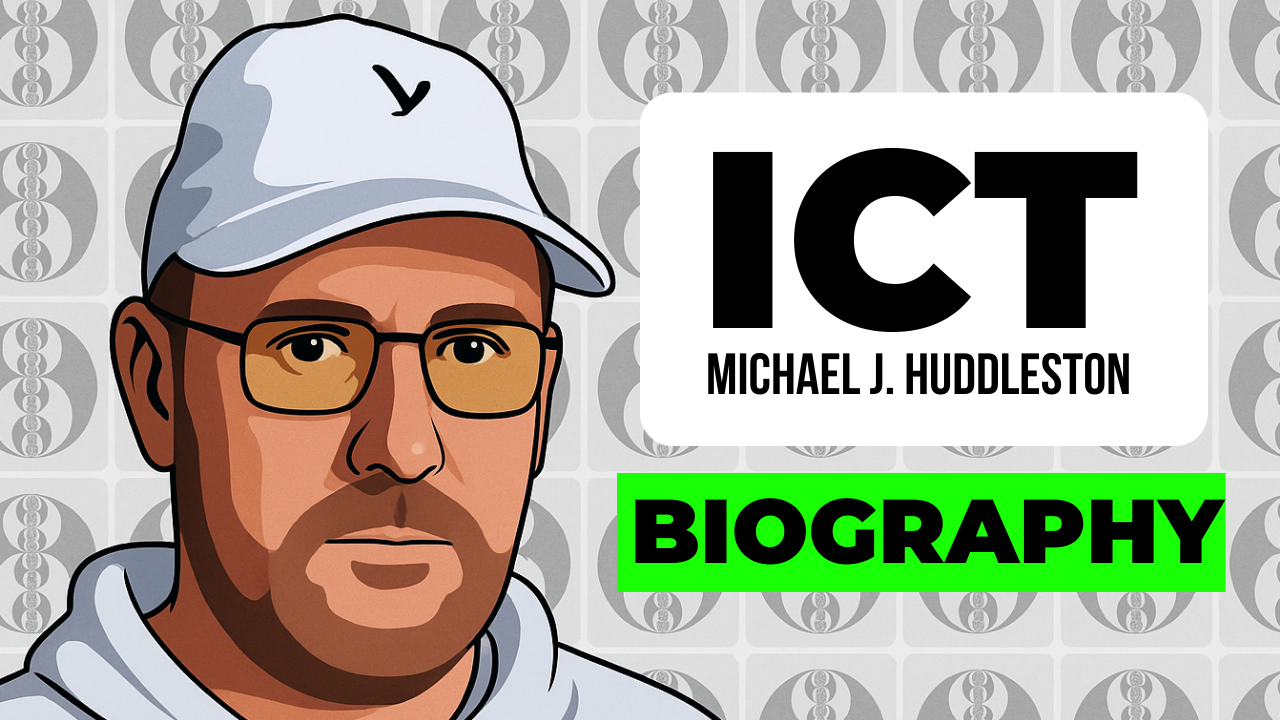
ICT (Michael J. Huddleston)-Biography, Net Worth, YouTube Channel, Family & Trading Success

ict trader biography michael j huddleston

Michael J. Huddleston is better known as The Inner Circle Trader or ICT. He calls himself mentor of mentors in forex and price action. He created the Smart Money Concepts (SMC) methods. He has over 30 years of experience. He shares free lessons on YouTube and his website. Many traders use his ideas in forex and crypto. This article covers his real name, background, SMC ideas, and how they apply to Bitcoin.

The Inner Circle Trader is a popular name in trading. His real name is Michael J. Huddleston. He teaches how to read market moves with simple rules. He calls his approach Smart Money Concepts or SMC. This helps traders see where big players act.

Also Read – What is the difference between ICT and SMC?

Who Is ICT?

Real NameMichael J. Huddleston
Age50+
Net Worthestimated to be more than 12 million
EducationCompleted high school; studied trading under Larry Williams, Richard Dennis
Early LifeGrew up in St. Joseph, Michigan
WifeNot publicly disclosed
Children1. Caleb
2. (to be updated)

Michael J. Huddleston grew up in St. Joseph, Michigan. After finishing high school, he worked various jobs, including servicing vending machines.

His uncle introduced him to futures and options trading, inspiring his first steps in finance. Intrigued by the potential to build wealth, Huddleston enrolled in trading courses taught by experts such as Larry Williams and Richard Dennis. Although he faced losses in his early trades, he persevered by studying market patterns and refining his skills.

Who invented ICT concepts?

Michael J. Huddleston developed his own unique style of reading price action. Over time, his teachings became known as ICT concepts or ICT-SMC concepts. So, without any doubt, he can be called the inventor of ICT concepts.

What is ICT’s real name?

ICT stands for Inner Circle Trader. But his real name is Michael J. Huddleston. He chose ICT as his brand name.

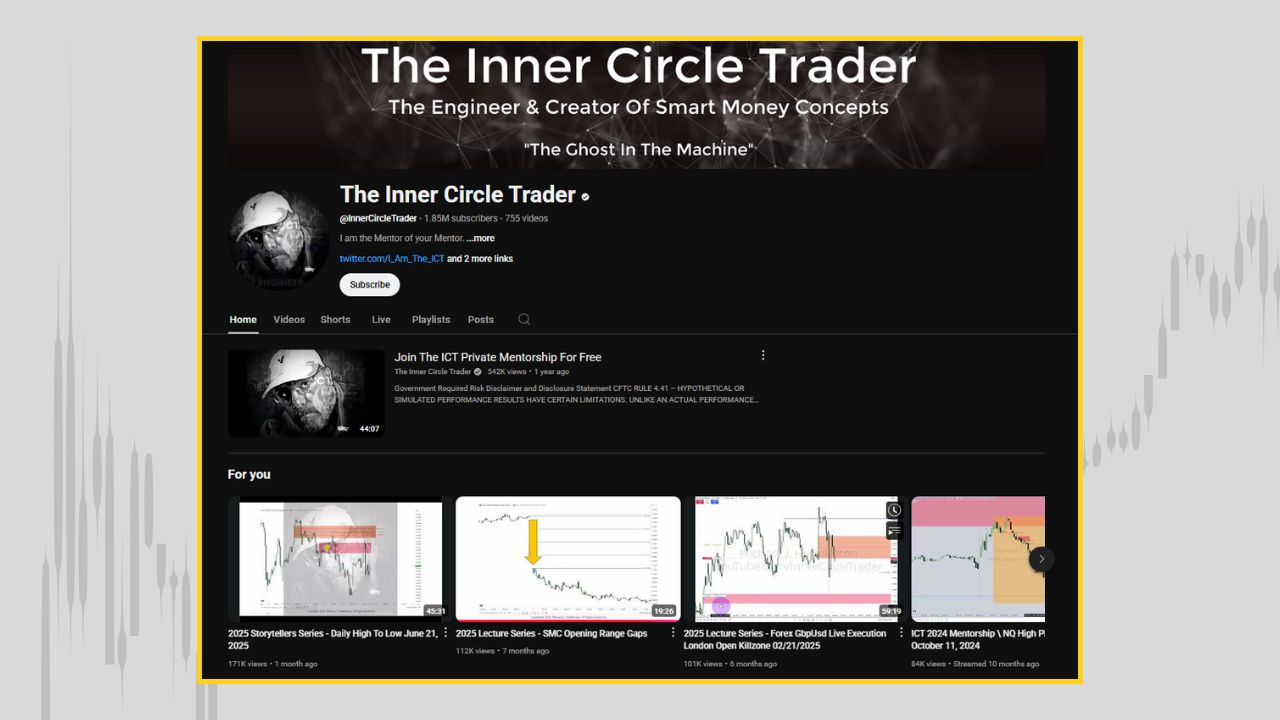
The Inner Circle Trader-YouTube Channel

ICT runs a free YouTube channel with over one million subscribers as of 2025. He shares videos on order blocks, fair value gaps, and market structure.

He often says, โ€œI am the mentor of your mentor.โ€

The Inner Circle Trader (ICT) YouTube channel, run by Michael J. Huddleston, teaches a unique trading methodology focused on "Smart Money Concepts." It aims to help retail traders understand how institutional players manipulate and move markets.

How Much Does ICT (Michael J. Huddleston) Earn from YouTube?

There is no exact information available about the YouTube earnings of ICT (Michael J. Huddleston), but we can make a rough estimate using a tool called Social Blade. Social Blade is a free online platform that gives data about YouTube channel performance, such as total views and estimated income.

According to Social Blade, ICTโ€™s channel gets around 3 million views every month, and his estimated monthly earnings range between $1,000 and $12,000. This range is based on general ad revenue estimates.

But we can try to guess a more accurate number. ICTโ€™s channel is in the finance or trading category, and channels in this niche usually earn more per 1,000 views. This rate is called RPM (Revenue Per Mille), which means how much a creator earns for every 1,000 views.

In the United States, finance-related YouTube channels can earn anywhere from $5 to $25 RPM, depending on factors like where the audience is from, how they engage with the content, and what kind of ads are shown.

If we assume a conservative RPM of $5, and multiply that by 3 million views, ICT could be earning around $15,000 per month from YouTube ads alone.

So itโ€™s fair to say that he likely earns more than $12,000 per month just from YouTube advertisements.

Smart Money Concepts (SMC)

Smart Money Concepts are a series of rules that reveal how large institutions operate in the markets. The main ideas include:

Market Structure: ICT teaches how to identify trends, consolidation, and key levels by studying swing highs and lows. Proper structure analysis helps traders align themselves with the dominant market direction.

Order Blocks: These are specific zones where banks and hedge funds place large buy or sell orders. When price returns to these zones, it often reverses or accelerates in the original direction.

Fair Value Gaps (FVGs): Also called voids, FVGs are gaps between candles on a chart. They represent areas where price moved too quickly, leaving behind unfilled orders. Traders expect price to revisit these zones before continuing.

Liquidity Pools: These are areas just above swing highs or below swing lows where many stop orders accumulate. Institutions often trigger these pools to fuel larger moves.

Does ICT-SMC Work in the Stock Market?

ICTโ€™s core principle lies in the concept of liquidity, also known as stop-loss hunting. Whether in the US stock market (Dow Jones, S&P 500, NASDAQ), Indian markets (Bank Nifty, Nifty 50 F&O), or European markets (FTSE 100), ICT-SMC applies everywhere. One needs to practice well in live markets and develop an intuition for what each candle is telling you.

By applying these tools, traders learn to enter and exit positions with greater confidence and precision.

Does ICT SMC Apply to Bitcoin?

ICT does not trade crypto himself. He is usually negative on crypto trading. Despite that, many students use his SMC ideas on Bitcoin charts.

They track Order Blocks and liquidity. Traders say the rules still work on crypto, but some think not all rules fit the volatile crypto markets.

Also Read – I Created the Best Bitcoin Guide Youโ€™ll Ever Read

Conclusion

Michael J. Huddleston, the Inner Circle Trader, transformed how retail traders view price action by revealing the hidden moves of institutional players. His Smart Money Concepts offer a step-by-step roadmap for spotting high-probability trade setups. While no method guarantees success, countless traders credit ICTโ€™s teachings for improving their confidence and results. Whether you trade forex, stocks, or Bitcoin, understanding SMC can be a powerful addition to your toolkit.

What is ICT?

ICT means Inner Circle Trader. It is Michael Huddlestonโ€™s brand.

Who is Michael J. Huddleston?

He is a trader and mentor from Michigan with over three decades of market experience.

Who owns the ICT strategy?

Michael J. Huddleston owns ICT and the SMC methods

This article is for informational purposes only and should not be considered financial advice. Investing in stocks, cryptocurrencies, or other assets involves risks, including the potential loss of principal. Always conduct your own research or consult a qualified financial advisor before making investment decisions. The author and publisher are not responsible for any financial losses incurred from actions based on this article. While efforts have been made to ensure accuracy, economic data and market conditions can change rapidly. The author and publisher do not guarantee the completeness or accuracy of the information and are not liable for any errors or omissions. Always verify data with primary sources before making decisions.

Skechers stock is going to be delisted from the NYSE โ€“ what you need to know

Who is buying Skechers? skechers news

Skechers U.S.A., Inc. (NYSE: SKX) has announced a landmark $9.4 billion acquisition by investment firm 3G Capital, marking its transition to a privately held company. The deal, set to reshape the footwear giantโ€™s future, will lead to its delisting from the New York Stock Exchange. Here are five critical details shareholders and investors need to know:


1. Acquisition Triggers Delisting

3G Capital will acquire Skechers for $63.00 per share in cash, a 30% premium over its 15-day average stock price. The transaction, approved unanimously by Skechersโ€™ board, is expected to close in Q3 2025. Post-closure, Skechersโ€™ shares will be delisted, ending its 30-year run as a publicly traded company. The move reflects a growing trend of firms opting for private ownership to avoid public market pressures.


2. Shareholder Options: Cash or Equity in a Private Entity

Shareholders have two payment options:

  • $63.00 per share in cash (immediate liquidity).
  • $57.00 in cash + one unlisted, non-transferable equity unit in the new private parent company.

Notably, founder Robert Greenberg and family have committed to the mixed payment, signaling confidence in Skechersโ€™ private future. However, the equity units lack liquidity, meaning shareholders cannot trade them publiclyโ€”a key consideration for investors seeking flexibility.


3. Leadership and Strategy Remain Unchanged

Skechers will continue under CEO Robert Greenberg and its current management team, with headquarters staying in Manhattan Beach, California. The company plans to maintain its focus on international expansion, direct-to-consumer growth, and innovation. Going private may allow Skechers to pursue long-term strategies without quarterly earnings scrutiny, potentially accelerating initiatives like global distribution and technology investments.


4. Strong Financials and Deal Rationale

Skechers reported record 2024 revenue of $9 billion ($640 million net earnings), underscoring its robust market position. The acquisition at a premium suggests 3G Capital sees untapped value, possibly in Skechersโ€™ 15% revenue exposure to China and its wholesale growth potential. Delisting could provide operational flexibility amid challenges like U.S. tariffs (not addressed in the release) and shifting trade dynamics.


5. Navigating Risks as a Private Company

While privatization offers advantages, Skechers faces external headwinds:

  • Trump-era tariffs impacting shoemaking costs.
  • Dependence on China for 15% of revenue (per FactSet).

As a private entity, Skechers may mitigate these risks through strategic adjustments away from public scrutiny. However, shareholders opting for equity units must trust managementโ€™s ability to navigate these challenges without the transparency of public reporting.

Also Read – Forget Stocks โ€“ Warren Buffettโ€™s Life-Changing Advice from the 2025 Berkshire Hathaway Investors Meeting Will Open Your Eyes


Key Takeaways

  • Skechersโ€™ stock surged 25% pre-market to $61.78 following the announcement.
  • The deal underscores confidence in the brandโ€™s resilience and growth prospects.
  • Shareholders must decide between immediate cash or illiquid equity by the Q3 2025 closure.

As Skechers transitions to private ownership, stakeholders should weigh liquidity needs against long-term faith in the companyโ€™s vision. For the broader market, this acquisition highlights the evolving landscape where firms increasingly seek refuge from public market volatility.

What is 3G Capital?

3G Capital is a global private investment firm known for acquiring and managing consumer-focused brands with long-term growth potential. Founded in 2004, it has built a reputation for partnerships with iconic companies, emphasizing operational efficiency, cost discipline, and strategic expansion.

Kalyani Steels Declares Dividend for FY25โ€”Check Dividend Amount, Record Date & Payment Details

Kalyani steel dividend 2025 record date

The Board of Directors of Kalyani Steels met on 5 May 2025 and recommended a final dividend of โ‚น 10.00 per equity share (face value โ‚น 5), or 200% of face value, for the financial year 2024-25. Below are all the key details you need to know.


Company Overview

FieldDetails
Company NameKalyani Steels Limited
Stock SymbolBSE: 542976 ยท NSE: KSTEEL
IPO Year2003
Stock ExchangeBSE, NSE
Market Capโ‚น 6,500 crore (approx. May 2025)
FounderBharat Forge Group
Incorporation2003
HeadquartersPune, Maharashtra, India
SectorMetals & Mining
IndustrySteel Manufacturing
SpecializationAlloy Steels, Stainless Steels

Kalyani Steels is part of the Bharat Forge Group. It produces high-strength alloy and stainless steel. The company serves automotive, oil, gas and engineering sectors globally.


Kalyani Steels Dividend 2025 โ€“ Important Dates

Kalyani Steels Dividend 2025 Announcement Date5 May 2025
Kalyani Steels Dividend TypeFinal Dividend
Kalyani Steels Dividend Amountโ‚น 10.00 per equity share
Kalyani Steels Ex-Dividend Dateto be updated
Kalyani Steels Record Dateto be updated
Kalyani Steels Payment Dateto be updated

Record Date: The cut-off date set by the company to determine which shareholders are eligible to receive the dividend. Only those who own shares on this date get the dividend.

Ex-Dividend Date: Usually one business day before the Record Date. If you buy shares on or after the Ex-Dividend Date, you will not be eligible for the dividend.

Note: Shareholders on record by the Record Date are eligible for the dividend.

Also Read – Tata Motors Dividend 2025 Announced? โ€“ Record Date, Ex-Dividend Date & More


Kalyani Steels โ€“ Dividend History

DateDividend (โ‚น per share)
14-Aug-2024โ‚น 10.00
11-Aug-2023โ‚น 10.00
22-Jul-2022โ‚น 10.00
26-Aug-2021โ‚น 7.50
12-Mar-2020โ‚น 5.00

Kalyani Steels has maintained regular dividends, reflecting steady profitability.


How to Receive Your Dividend?

You do not need to apply separately. Depositories and the company will handle it.

  1. Beneficial Owners: Names on NSDL/CDSL list as of 4 July 2025.
  2. Registered Members: Names in Register of Members after transfer processing by 4 July 2025.

After 31 July 2025, Kalyani Steels will credit the dividend to your bank account or dispatch a cheque.


Kalyani Steels Dividend 2025 โ€“ Tax Rules Explained

Since April 2020, dividends are taxable in the hands of shareholders. If your total dividend income exceeds โ‚น 5,000 in a year, Kalyani Steels will deduct 10% TDS at source. You can submit a lowerโ€‘tax deduction certificate if eligible. Make sure to include all your dividend income when filing your annual tax return.


Q4 FY25 Results โ€“ Highlights

ParticularsQ4 FY25Q4 FY24
Profit After Taxโ‚น 79.28 croreโ‚น 62.53 crore
Profit Before Tax (PBT)โ‚น 107.14 croreโ‚น 84.39 crore
Revenue from Operationsโ‚น 544.33 croreโ‚น 503.15 crore
Total Expensesโ‚น 449.94 croreโ‚น 431.40 crore
Other Expensesโ‚น 278.76 croreโ‚น 209.43 crore
Raw Material Costsโ‚น 112.30 croreโ‚น 103.58 crore
Employee Benefit Expensesโ‚น 58.88 croreโ‚น 52.79 crore

Kalyani Steels reported a 26.75% rise in net profit. Revenue grew by 8.25%, while expenses increased 4.28%. Other costs jumped sharply by 33.10%.


Key Financial Metrics

MetricValue
Market Capitalisationโ‚น 6,500 crore
Return on Equity (ROE)15.10%
Price-to-Earnings (P/E) Ratio12.00
Price-to-Book (P/B) Ratio1.80
Industry P/E Ratio14.50
Industry P/B Ratio2.10
EPS (TTM)โ‚น 48.50

Kalyani Steels delivered strong margins and improved profitability in Q4 FY25. Its valuation ratios remain attractive compared to industry peers.

ALSO READ – What is a Dividend? โ€“ A Complete Guide in Simple Words

Mahindra & Mahindra Declares Dividend for FY25โ€”Check Dividend Amount, Record Date & Payment Details

Mahindra dividend 2025 date

Along with its audited financial results for the fourth quarter (Q4 FY25) and the year ended 31 March 2025, Mahindra & Mahindra Ltd. has approved a final dividend of โ‚น 25.30 per equity share (face value โ‚น 5), or 506% of face value. Below are all the key details you need to know.


Company Overview

Company NameMahindra & Mahindra Ltd.
Stock SymbolBSE: 500520 ยท NSE: M&M
IPO Year1945 (as a tractor manufacturer)
Stock ExchangeBSE, NSE
Market Capโ‚น 1.85 lakh crore (approx. May 2025)
FounderJ.C. Mahindra & K.C. Mahindra
Incorporation1945
HeadquartersMumbai, Maharashtra, India
SectorAutomobiles & Farm Equipment
IndustryAutomotive & Agricultural Machinery
Key Products & ServicesSUVs, Tractors, Commercial Vehicles, Electric Vehicles

Mahindra & Mahindra is a leading Indian automaker and farm-equipment maker. It has a global presence in over 100 countries. It makes SUVs, tractors, and electric vehicles. The company is known for innovation and a strong market share.


Mahindra Dividend 2025 โ€“ Important Dates

Mahindra & Mahindra Dividend 2025 Announcement Date5 May 2025
Mahindra & Mahindra Dividend TypeFinal Dividend
Mahindra & Mahindra Dividend Amountโ‚น 25.30 per equity share
Mahindra Dividend 2025 Ex-Dividend Date3 July 2025
Mahindra Dividend 2025 Record Date4 July 2025
Mahindra Dividend 2025 Payment DateAfter 31 July 2025

Note: Shareholders recorded in the books by the Record Date are eligible to receive the dividend.

Also Read – Tata Motors Dividend 2025 Announced? โ€“ Record Date, Ex-Dividend Date & More


Mahindra & Mahindra โ€“ Dividend History

DateDividend (โ‚น per share)
05-Jul-2024โ‚น 21.10
14-Jul-2023โ‚น 16.25
14-Jul-2022โ‚น 11.55
15-Jul-2021โ‚น 8.75
16-Jul-2020โ‚น 2.35

Mahindra & Mahindra has steadily increased dividends over recent years. It shows the company shares profits with its investors.


How to Receive Your Dividend

You do not need to apply separately. Your depository and the company will handle it automatically.

  1. Beneficial Owners: Names on the NSDL/CDSL list as of 4 July 2025.
  2. Registered Members: If your shares are held in physical form, then your name must be in the companyโ€™s official Register of Members by 4 July 2025. This requires that any transfer requests were fully processed by that date.

After 31 July 2025, Mahindra & Mahindra will credit the dividend to your bank account or dispatch a cheque.


Book Closure Period

The Register of Members and Share Transfer Books will remain closed from 5 July 2025 to 31 July 2025 (both days inclusive).

Any valid transfer requests must reach the Registrar by 4 July 2025 to be processed before book closure.

ALSO READ – What is a Dividend? โ€“ A Complete Guide in Simple Words


Q4 FY25 Results โ€“ Highlights

ParticularsQ4 FY25Q4 FY24
Profit After Taxโ‚น 3,541.85 croreโ‚น 3,124.94 crore
Revenue from Operationsโ‚น 42,585.67 croreโ‚น 35,373.34 crore
Total Expensesโ‚น 39,113.61 croreโ‚น 32,172.17 crore
Vehicle Sales (Units)2,53,0282,15,280
Tractor Sales (Units)87,13871,039

Mahindra & Mahindra reported a 13.34% rise in profit after tax. Revenue grew by 20.5%. Expenses also increased. Vehicle sales rose 18% and tractor sales increased 23% compared to Q4 FY24.


Key Financial Metrics

MetricValue
Market Capitalisationโ‚น 1,85,000 crore
Return on Equity (ROE)12.50%
Price-to-Earnings (P/E) Ratio18.00
Price-to-Book (P/B) Ratio3.20
Industry P/E Ratio26.10
Industry P/B Ratio3.75
5-Year Stock Return210.00%
EPS (TTM)โ‚น 140.50

Mahindra & Mahindra has shown consistent growth and strong returns in recent years. When compared to the industry averages, its P/E ratio is lower, which could mean the stock is relatively undervalued. Similarly, its P/B ratio is also below the industry average, indicating potentially better value for long-term investors.

ALSO READ – SBI Declares Dividend for 2025โ€”Check SBI Dividend 2025-Record Date & Payment Details


Why This Matters
A high dividend reflects strong profits and rewards investors. It can also attract new buyers to the stock.


Stock Market Automobile Giant Tata Motors Set to Launch 2025 Altroz Facelift

Tata Motors, a titan in Indiaโ€™s automotive sector and a heavyweight on the stock market, is revving up to redefine the premium hatchback segment with the 2025 Altroz facelift. Slated for its grand debut on May 22, 2025, the updated Altroz promises a bold design refresh, cutting-edge features, and a versatile powertrain lineup. As the first major update since its 2020 debut, this launch is pivotal for Tata to cement its dominance against rivals like Maruti Suzuki Baleno and Hyundai i20. Hereโ€™s an exclusive look at whatโ€™s under the hood.


Launch Date: Mark Your Calendars

Tata Motors has officially confirmed the Altroz facelift will โ€œbreak coverโ€ on May 22, with bookings expected to open soon. The teaser campaign has already ignited excitement, showcasing sleek design tweaks and hinting at a tech-loaded cabin.


Exterior Design: Sportier, Smarter, Sleeker

The 2025 Altroz retains its sporty DNA but amps up the premium quotient with striking updates:

  • Front Fascia: A redesigned split headlight setup features twin-pod LED clusters and sleek LED DRLs. The bumper now sports vertical slats and repositioned fog lamps.
  • Side Profile: New alloy wheels and flush door handles (a segment-first inspired by the Curvv EV) add a futuristic edge.
  • Rear: Slimmer, interconnected LED tail lamps replace the bulkier units, enhancing the carโ€™s modern appeal.
  • Dual-Tone Options: Tata will continue offering vibrant dual-tone color schemes to attract style-conscious buyers.

Interiors: Premium Cabin Upgrades

While the cabin remains under wraps, insiders hint at significant upgrades:

  • Dashboard & Upholstery: Expect refreshed panels, new trim accents, and premium upholstery colors.
  • Tech Suite: The previously exclusive 10.25-inch touchscreen infotainment system (from the Race edition) will now be standard across variants. A fully digital driverโ€™s display and a 360-degree camera are also anticipated.
  • Comfort: Enhanced connectivity, wireless charging, and a revamped Harman audio system could elevate the in-car experience.

Powertrain: Versatility Reigns Supreme

The Altroz facelift retains its reputation as the only hatchback offering five engine options:

  1. 1.2L Turbo Petrol: 85 HP / 113 Nm (5-speed manual or 6-speed DCT automatic).
  2. 1.2L Turbo-Petrol (Racer): 118 HP, paired with a 6-speed manual for thrill-seekers.
  3. 1.2L CNG: 72.4 HP / 103 Nm (5-speed manual).
  4. 1.5L Diesel: 89 HP / 200 Nm (5-speed manual).

This diverse lineup ensures the Altroz caters to efficiency-focused buyers (CNG, diesel) and performance enthusiasts alike.


Features: Tech to Compete

Tata is pulling out all stops to outshine rivals:

  • Segment-First Flush Door Handles
  • 360-Degree Camera for tight parking spots.
  • Wireless Android Auto/Apple CarPlay and connected car tech.
  • Ventilated Seats (likely in top variants).

Rivals: Can the Altroz Outpace the Competition?

The facelift sharpens the Altrozโ€™s claws against the Maruti Suzuki Baleno, Hyundai i20, and Toyota Glanza. Its unique diesel and CNG options, coupled with Tataโ€™s focus on safety (5-star Global NCAP rating), give it an edge in practicality and value.


Why This Launch Matters

As Tata Motorsโ€™ stock continues to rally, the Altroz facelift underscores its commitment to innovation and customer-centric upgrades. With over 1.5 lakh units sold since 2020, this refresh is crucial to maintaining momentum in a fiercely competitive segment.


Final Thoughts

The 2025 Tata Altroz facelift isnโ€™t just a car launchโ€”itโ€™s a statement. By blending bold design, advanced tech, and unmatched powertrain flexibility, Tata Motors is poised to accelerate ahead of rivals. All eyes are now on May 22, when this automotive gem will finally hit the spotlight.