
Should You Go for Klarna IPO?

Should You Go for Klarna stock?

An Initial Public Offering (IPO) is a big event for a company. It is the time when a private company sells its shares to the public for the first time on a stock exchange. This gives people like you and me the chance to invest, and it also gives the company money to expand its business.

Klarna, a well-known fintech company from Sweden that became popular with its “buy now, pay later” (BNPL) service, is now preparing for its much-awaited listing on the New York Stock Exchange (NYSE). It will trade under the ticker KLAR, and the launch could happen as early as September 10, 2025.

Klarna IPO 2025

Also Read – Klarna IPO 2025 โ€“ KLAR Stock Targets $14B Valuation on NYSE

Earlier this year, Klarna had delayed its IPO plans because of unstable markets caused by U.S. tariffs. But now, the company is back with strong demand from investors, showing that the fintech industry is regaining confidence.

At present, Klarnaโ€™s IPO subscription looks healthy, with the company guiding investors that the share price may be set at the higher end or even above the original range of $35โ€“$37 per share. This means the company could reach a valuation close to $14 billion.


How Much Will IPO Cost?

Klarna plans to raise up to $1.27 billion by selling about 34.3 million shares in the price band of $35โ€“$37. If the shares are sold at the midpoint price of $36, Klarna will be valued between $13โ€“$14 billion.

For small investors, the cost will depend on how many shares your broker can give you. You will need to pay the offer price per share, plus any brokerage charges.

If you are a retail investor using platforms like Robinhood, SoFi, or Fidelity that give IPO access, the minimum number of shares you can request depends on the broker. Some may allow as little as 1 share, while others allocate in round lots (100 shares).

If the allocation is in 100 shares, then at the midpoint price of $36 ($35โ€“$37), youโ€™d need around $3,600 (plus brokerage fees).

Keep in mind that IPOs can be very volatile. Sometimes the price shoots up on listing day (called an IPO “pop”), but prices can also fall sharply depending on market mood.


Is Klarna IPO Worth It?

The choice to buy Klarna IPO shares or not is completely personal.

It depends on your risk-taking ability, how long you want to hold the investment, and your financial goals. You should ideally take advice from a financial advisor before investing. What we can do here is look at the pros and cons of Klarnaโ€™s IPO, whichmay give you a clearer picture of whether this IPO suits you or not.

Klarna has grown from being a simple BNPL provider into a much wider digital banking platform. However, its future success will depend on how well it handles competition and economic challenges.

Pros of Klarna IPO

Klarna has a very large user base with 111 million active users worldwide. Over the last 12 months, the company processed around $112 billion worth of transactions, helped by big partnerships with companies like Walmart and DoorDash. These deals add more people to its network and increase sales.

Klarna earned $3 billion in revenue in the same period, up from $2.3 billion in 2023. Importantly, the company became profitable again in 2024 with a $21 million net profit, after several years of losses. Klarna is also using AI for customer support and fraud detection, which could make its operations more efficient.

The company has also started offering debit cards and digital advertising, which reduces its dependence on BNPL fees alone. With more people shopping online, Klarnaโ€™s 675,000 merchant partners could help it keep growing steadily.

If you believe in the long-term future of digital payments and innovations in fintech, Klarna looks like a strong player. Its expansion into neobanking may help it capture daily spending habits, not just small impulse purchases.

Cons of Klarna IPO

On the negative side, Klarna still faces financial challenges. In Q2 2025, the company reported a $53 million net loss, mainly because of higher credit losses. When economies slow down or inflation rises, people may default on BNPL loans, which can hurt Klarnaโ€™s business.

Klarnaโ€™s valuation of $14 billion looks expensive. It is valued at around 4โ€“5 times its revenue, which is higher than many competitors. These high expectations may not hold if interest rates stay elevated or if regulators tighten rules around BNPL. For example, in the U.S., the Consumer Financial Protection Bureau (CFPB) is already keeping a close eye on companies like Klarna.

Competition is another big risk. Klarna faces strong rivals like Affirm (valued at $28 billion), PayPal, and Apple Pay Later. Along with this, Klarna has some corporate issues such as weaknesses in internal controls and dual-class share structures. The dual-class system means that new investors will have less say in decision-making compared to insiders, which can be a governance concern.

You should avoid Klarna IPO if you are uncomfortable with risky fintech stocks or if you feel that rising consumer debtโ€”like people financing everyday purchases such as groceriesโ€”is a dangerous trend in a slowing economy.

Also Read – What is Nonfarm Payrolls (NFP)? โ€“ Complete Guide for Traders and Investors


What Reddit Has to Say About Buying Klarna IPO?

Discussions on Reddit show a divided view, but most users are skeptical.

In subreddits like r/investing and r/stocks, many users call Klarna overvalued. They point out its high valuation multiples (65x earnings) and question its competitive advantage in the crowded BNPL market. Some even call it โ€œoverpriced hypeโ€ or a โ€œcash-out opportunityโ€ for early investors while leaving risks for retail buyers.

One thread on r/investing warns that retail investors could face โ€œmassive losses,โ€ noting Klarnaโ€™s recent $50+ million quarterly loss and growing regulatory risks. In r/stocks, people compare it to Affirmโ€™s IPO journey, where the stock fell from $100 to $10 before recovering to $50. Some users suggest waiting to buy after the IPO hype fades or even shorting the stock.

On the positive side, a few Redditors highlight Klarnaโ€™s Walmart partnership and its large user base as growth drivers. However, the overall Reddit tone is cautious. Many say Klarna is only good for short-term trading, not for long-term holding.


What X Has to Say About Buying Klarna IPO?

On X (formerly Twitter), the mood is also mixed but tilts toward caution. Users often mention Klarnaโ€™s shift from BNPL to a broader digital banking model as a big challenge. Some posts highlight the fact that the IPO is priced near the higher range ($37 or more), calling it a sign of hype. But they also warn that Klarna still needs to prove it can survive beyond its BNPL roots, especially when competing with PayPal and Apple.

One analyst wrote that Klarnaโ€™s $14 billion valuation is a โ€œreality checkโ€ for fintech companies that use AI in payments, especially in a world already burdened with debt. Others posted jokes like โ€œbuy now, pay later for puts,โ€ suggesting they expect the stock to fall, or even betting on Klarna going bankrupt due to defaults.

Of course, some bullish voices remain. They point out strong investor demand and partnerships with companies like DoorDash as positives. Yet most advice from X users is to wait and watch, as the stock may dip after the IPO. For many, Klarna looks like a fast-moving fintech bet rather than a stable investment.

This article is for informational purposes only and should not be considered financial advice. Investing in stocks, cryptocurrencies, or other assets involves risks, including the potential loss of principal. Always conduct your own research or consult a qualified financial advisor before making investment decisions. The author and publisher are not responsible for any financial losses incurred from actions based on this article. While efforts have been made to ensure accuracy, economic data and market conditions can change rapidly. The author and publisher do not guarantee the completeness or accuracy of the information and are not liable for any errors or omissions. Always verify data with primary sources before making decisions.


Klarna IPO 2025 – KLAR Stock Targets $14B Valuation on NYSE

Klarna IPO
Company NameKlarna Group plc
Ticker SymbolKLAR
ExchangeNew York Stock Exchange (NYSE)
Klarna IPO DateSeptember 10, 2025 (expected)
Pricing DateSeptember 9, 2025
Base Offering34,311,274 shares
Klarna New Shares5,555,556 shares
Selling Shareholders28,755,718 shares
Underwritersโ€™ Option5,146,691 shares
Price Range$35 โ€“ $37 per share
Total Potential Raise~$1.45 billion
Klarna IPO Valuation~$14 billion
Lead UnderwritersGoldman Sachs, J.P. Morgan, Morgan Stanley

Klarna Group plc was founded in 2005 in Stockholm by Sebastian Siemiatkowski, Niklas Adalberth and Victor Jacobsson. Over the last two decades the company has grown from a local payments start-up into one of the worldโ€™s largest fintech players.

Klarna now operates across 26 countries, serving more than 111 million active users and working with over 790,000 merchant partners. Every single day more than 2.5 million transactions are processed through its platform, which resulted in a gross merchandise volume of 105 billion dollars in 2024.

The company is best known for introducing flexible โ€œBuy Now, Pay Laterโ€ services such as its popular โ€œPay in 4โ€ option. Over the years Klarna has expanded its portfolio to include virtual credit cards, personal budgeting tools and digital banking services. By partnering with leading retailers like H&M, Sephora and Zara, Klarna has positioned itself not only as a financial services provider but also as a lifestyle platform that blends shopping and finance.


Klarna IPO Details

The Klarna IPO is structured as a combination of new shares and an offer for sale by existing shareholders.

In total 34,311,274 shares are being offered to the market. Of this amount, Klarna itself is issuing 5,555,556 new shares in order to raise funds for growth and expansion into new areas such as AI-driven solutions and digital banking. The remaining 28,755,718 shares are being sold by existing investors and company insiders, including senior leadership and institutional backers.

The company has also granted underwriters a 30-day option to purchase up to 5,146,691 additional shares in order to cover over-allotments.

The price range for the IPO has been set between 35 and 37 dollars per share, which would allow Klarna to raise up to 1.45 billion dollars and secure a valuation of around 14 billion dollars.

Klarnaโ€™s shares will list on the New York Stock Exchange under the ticker symbol KLAR.

The IPO is being led by Goldman Sachs, J.P. Morgan and Morgan Stanley as joint book-running managers. They are supported by BofA Securities, Citigroup, Deutsche Bank Securities, Sociรฉtรฉ Gรฉnรฉrale and UBS Investment Bank, with BNP Paribas, Nordea, Rothschild & Co, Wedbush Securities, Wolfe | Nomura Alliance and Keefe, Bruyette & Woods serving as co-managers.

Also Read – Should You Go for Klarna IPO?


Financial Performance

According to Klarnaโ€™s IPO prospectus, the companyโ€™s financial performance has shown a mix of growth and challenges.

For the six months ending June 2025, revenue grew 15% to $1.52 billion. However, the company posted a net loss of $152 million, representing a sharp 390% increase compared to the prior year.

Klarnaโ€™s costs have also escalated, with funding expenses rising 19% to $277 million and provisions for credit losses climbing 33% to $310 million.

Also Read – What is Nonfarm Payrolls (NFP)? โ€“ Complete Guide for Traders and Investors


Why Klarnaโ€™s IPO Matters?

The Klarna IPO is one of the most closely watched fintech offerings of 2025. At a valuation of 14 billion dollars it will serve as a bellwether for investor sentiment towards growth-oriented but unprofitable technology companies.

For investors, Klarna stock provides exposure to the rapidly expanding “Buy Now, Pay Later” (BNPL) market and to a company that has become a household name in digital payments. However, the limited voting rights structure and ongoing profitability challenges mean that careful consideration is required before investing.

This article is for informational purposes only and should not be considered financial advice. Investing in stocks, cryptocurrencies, or other assets involves risks, including the potential loss of principal. Always conduct your own research or consult a qualified financial advisor before making investment decisions. The author and publisher are not responsible for any financial losses incurred from actions based on this article. While efforts have been made to ensure accuracy, economic data and market conditions can change rapidly. The author and publisher do not guarantee the completeness or accuracy of the information and are not liable for any errors or omissions. Always verify data with primary sources before making decisions.

What is Nonfarm Payrolls (NFP)? – Complete Guide for Traders and Investors

Non-Farm Payrolls (NFP) is a key U.S. jobs report released monthly by the Bureau of Labor Statistics. It shows how many jobs were added or lost, excluding farm workers, government, and a few sectors.

Nonfarm Payrolls (NFP) are a monthly U.S. jobs statistic reported by the Bureau of Labor Statistics (BLS).

Think of NFP as the monthly โ€œjobs pulseโ€ of the U.S. economy.

The report tracks the change in the number of employees on non-farm business and government payrolls, making it one of the most watched indicators of economic momentum and labor-market health.

It is released 12 times a year, usually at 8:30 a.m. ET on the first Friday of the month.

Because of its importance, NFP often moves stocks, bonds, the U.S. dollar, gold, and even crypto, as it shapes expectations for Federal Reserve policy and overall growth.

The U.S. Nonfarm Payrolls (NFP) figure measures how many jobs were added or lost in the economy, but it excludes:

  • Agricultural employment
  • Private household workers
  • Non-profit employees
  • Self-employed or sole proprietors
  • Active-duty military personnel

NFP is part of the larger Employment Situation report, which is released every month in the U.S.

This report is built from two different surveys.

  • The first is called the establishment survey, which collects data from businesses to measure how many jobs were added or lost across different industries.
  • The second is called the household survey, which asks individuals about their employment status, such as whether they are working, unemployed, or looking for a job.

Together, these surveys give a complete picture of the job market from both the employerโ€™s side and the workerโ€™s side.

What Does NFP Show?

Nonfarm Payrolls (NFP) is a report that tells us about the health of the U.S. job market.

It shows the headline payroll change, which is the number of jobs added or lost in the U.S. during the month, excluding farm jobs. It counts workers in industries like manufacturing, services, and construction.

If the number is positive, more people got jobs; if negative, jobs were lost.

The report also shows the unemployment rate and average hourly earnings. The unemployment rate tells us the percentage of people who want a job but donโ€™t have one. Average hourly earnings show how much people are earning per hour on average, and rising wages can signal that inflation may increase.


Why Do Markets Care About NFP?

The NFP report can quickly change expectations for U.S. economic growth and interest rates.

Because of this, it affects many markets around the world, including the U.S. dollar, government bond yields, stocks, and commodities.

For example, if the NFP report is weaker than expected, it can increase bets on Federal Reserve rate cuts. On the other hand, a stronger report may support rate hikes or delay cuts. Both situations can cause sharp price movements in markets during the day.


NFP and Its Impact on U.S. Sectors

Some U.S. sectors are more sensitive to NFP surprises because they are closely tied to interest rates and economic cycles.

Cyclical and rate-sensitive sectors, such as technology, consumer discretionary, and real estate, often react the most. This is because changes in interest rates affect the cost of borrowing and the discounting of future earnings, which directly impacts their valuations.

Financials also move in response to shifts in interest rate expectations and the outlook for banksโ€™ net interest margins.

Industrials and materials tend to react to the overall economic momentum indicated by jobs data, since stronger employment can signal higher demand for goods and services.

Defensive sectors, like utilities and healthcare, usually experience steadier demand. These sectors may become more attractive when NFP data is weak, as slower growth encourages investors to seek safer investments.


Global Ripple Effects

Because NFP affects expectations for U.S. economic growth and Federal Reserve policy, it creates ripple effects in markets around the world.

Currency values often move through changes in the U.S. dollar, while bond yields can shift in other countries. Stocks and commodities also react based on global risk appetite.

International markets frequently respond in a similar way, as changes in global funding conditions and movements in the trade-weighted dollar transmit NFP impacts across different assets and regions.


Gold and NFP

Gold is very sensitive to changes in the U.S. dollar and real yields.

  • When the NFP report is strong, it usually strengthens the dollar and increases yields, which tends to push gold prices lower.
  • On the other hand, if the NFP report is weak, the dollar and yields often weaken, which can lead to higher gold prices.

Traders also pay close attention to wage growth and any revisions in previous data. Weak labor numbers or signals of a more dovish Federal Reserve policy often encourage gold buying, as investors look for a safe haven that does not yield interest.

Crypto and NFP

Cryptocurrencies tend to act like high-risk assets, meaning they react more sharply to changes in liquidity and U.S. dollar trends.

  • When NFP data is weaker than expected, it may suggest easier Fed policy, which can help crypto prices rise.
  • Conversely, a stronger-than-expected report could point to tighter monetary policy, which can make it harder for crypto prices to go up.

However, crypto reactions can be unpredictable. Even after a major payroll surprise, Bitcoin and other tokens sometimes move very little or become extremely volatile, reflecting the unique trading behavior of digital assets.


How the Fed Uses NFP for Inflation Decisions?

The Federal Reserve does not directly control inflation, but it uses interest rates to keep a balance between maximum employment and stable prices.

NFP data plays an important role in this process because it provides insights into both jobs and wages.

Wage growth, measured through average hourly earnings, is especially important.

  • When wages rise quickly, it creates more pressure on inflation, which can lead the Fed to tighten policy by raising interest rates or slowing down cuts.
  • On the other hand, when wages grow more slowly, inflation pressure eases, and the Fed has more room to lower rates or keep policy steady.

In simple terms, if the NFP report is strong, the Fed is more likely to raise rates or hold off on cuts. If the report is weak, the Fed is more likely to cut rates or leave them unchanged.

This article is for informational purposes only and should not be considered financial advice. Investing in stocks, cryptocurrencies, or other assets involves risks, including the potential loss of principal. Always conduct your own research or consult a qualified financial advisor before making investment decisions. The author and publisher are not responsible for any financial losses incurred from actions based on this article. While efforts have been made to ensure accuracy, economic data and market conditions can change rapidly. The author and publisher do not guarantee the completeness or accuracy of the information and are not liable for any errors or omissions. Always verify data with primary sources before making decisions.
The Job Market – A Pillar of U.S. Economic Strength

The U.S. labor market shows the balance between employers hiring and people looking for jobs. It reflects employment levels, wages, and economic health, with key reports like Nonfarm Payrolls and unemployment data guiding businesses, policymakers, and investors.

The job market, also known as the labor market, is one of the most important foundations of any economy.

In the United States, it is often described as a pillar of economic strength because the ability of people to find jobs and earn wages fuels spending, investment, and overall growth. Their spending has long been the engine behind the worldโ€™s largest economy, making the health of the labor market a critical measure of U.S. prosperity.

The job market is not a physical place but a way of describing how employers looking for workers interact with people seeking employment. It represents the balance between the demand for labor and the supply of workers in an economy.

  • When more jobs are available, the labor market is described as strong or tight.
  • When unemployment rises and hiring slows, the market is said to be weakening.

This simple interaction is closely tied to other economic indicators, especially the unemployment rate.


How the Job Market Works?

The mechanics of the labor market are similar to other markets.

Workers provide the supply, while employers represent the demand.

Wages function as the โ€œpriceโ€ that balances the two sides. If employers need more workers than are available, wages tend to rise. If there are more workers available than jobs, wage growth slows and hiring weakens.

This constant adjustment explains why the job market is both a measure of current conditions and a signal of where the economy may be headed.


The Role of the Bureau of Labor Statistics (BLS)

In the United States, the Bureau of Labor Statistics is the main government agency that tracks and reports on the job market.

Each month, it publishes the Employment Situation Report, which is widely followed by businesses, policymakers, and financial markets.

This report is based on two surveys.

The first, called the Household Survey or Current Population Survey, provides the unemployment rate and other measures such as labor force participation.

The second, called the Establishment Survey or Current Employment Statistics, counts payroll jobs and shows how many jobs were added or lost in different industries. Together, these surveys give the most complete picture of how the American labor market is performing.

The unemployment rate in particular is one of the most recognized figures. It measures the percentage of people in the labor force who do not have a job but are actively seeking one. Because it reflects slack or tightness in the labor market, the unemployment rate plays a central role in judging economic health.


Strong vs. Weak Job Market

A strong job market occurs when unemployment is low, many jobs are available, and wages are rising. This creates a positive cycle where higher wages increase spending, supporting businesses and economic growth.

A weak job market happens when unemployment rises, fewer jobs are available, and wage growth slows. In this situation, workers have less bargaining power, and businesses may be more cautious about hiring or investing.


The Job Market, Inflation, and the Federal Reserve

The U.S. labor market is closely tied to inflation and interest rate policy.

A tight job market often leads to higher wages, which can push up prices across the economy. To prevent inflation from rising too quickly, the Federal Reserve may raise or hold interest rates, cooling demand.

Conversely, a weakening job market, where unemployment rises and wage growth slows, usually reduces inflation pressure. This gives the Fed more room to cut rates in order to support growth and stabilize employment.


Key Indicators of the Job Market

The condition of the labor market is measured through several important indicators.

  • The unemployment rate remains the most visible measure of slack or tightness.
  • Nonfarm payrolls, which track how many jobs are created or lost each month, provide a direct sense of hiring momentum.
  • Job openings, tracked through the JOLTS report, show how many positions employers are trying to fill and how competitive the market is.
  • Wage growth signals the bargaining power of workers and potential inflation risks.
  • Finally, the labor force participation rate reveals how many people are actively engaged in the labor market, either by working or by seeking employment.

Why the Job Market Matters?

The job market has far-reaching effects.

For businesses, labor market conditions guide decisions about hiring, wages, and investment.

For policymakers, job data influences decisions about interest rates and fiscal policies.

For workers and households, it affects career opportunities, wage prospects, and financial security. Because consumer spending is the largest driver of the U.S. economy, the labor marketโ€™s health directly shapes the strength of economic growth.

This article is for informational purposes only and should not be considered financial advice. Investing in stocks, cryptocurrencies, or other assets involves risks, including the potential loss of principal. Always conduct your own research or consult a qualified financial advisor before making investment decisions. The author and publisher are not responsible for any financial losses incurred from actions based on this article. While efforts have been made to ensure accuracy, economic data and market conditions can change rapidly. The author and publisher do not guarantee the completeness or accuracy of the information and are not liable for any errors or omissions. Always verify data with primary sources before making decisions.

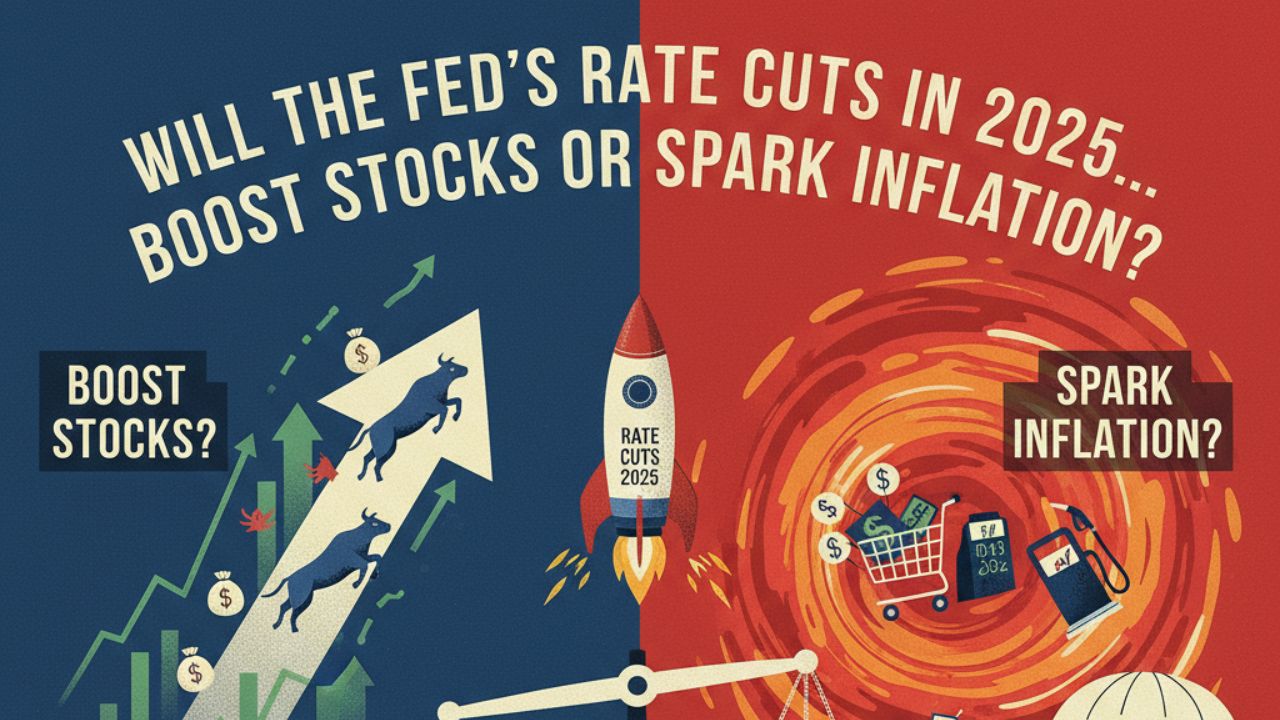
Will the Fedโ€™s Rate Cuts in 2025 Boost Stocks or Spark Inflation?

As the U.S. economy navigates a complex landscape in 2025, all eyes are on the Federal Reserveโ€™s potential interest rate cuts. These decisions could reshape financial markets and personal finances alike. Federal Reserve Chair Jerome Powellโ€™s comments at the Jackson Hole symposium on August 22, 2025, have fueled speculation. Markets are now pricing in an 88.25% chance of a 0.25% rate cut at the Fedโ€™s September meeting.

Investors and analysts on X (formerly Twitter) are divided. Some expect a stock market rally, while others warn of an โ€œeverything bubbleโ€ or resurgent inflation.

So, what does this mean for U.S. financial markets, and how should investors prepare? Letโ€™s break it down.


The Fedโ€™s Dilemma: Balancing Inflation and Employment

The Federal Reserve has kept its benchmark federal funds rate steady at 4.25%โ€“4.5% since December 2024. This level is considered restrictive as it keeps borrowing costs high to control inflation.

  • Inflation Trends: Inflation has come down from its 2022 peak of over 5.5% but remains sticky at 2.7% (Core PCE, May 2025), above the Fedโ€™s 2% target.
  • Labor Market Softening: The July non-farm payrolls report showed just 73,000 jobs added, far below expectations, with earlier months revised lower.

This slowdown has created divisions within the Fed. At the July 2025 meeting, two dissenting members pushed for an immediate 0.25% cut – a rare signal of growing concern about economic weakness.

At Jackson Hole, Powell admitted that โ€œconditions may warrant adjusting our policy stanceโ€ as job market risks rise. However, he remains cautious, citing uncertainties such as President Trumpโ€™s new tariffs, which could lift import costs and fuel inflation.

Also Read – The Very First Post You Should Read to Learn Cryptocurrency


How Rate Cuts Could Impact Financial Markets

1. Stock Market: Surge or Bubble?

Lower rates typically boost stocks by cutting borrowing costs for businesses and encouraging consumer spending. Powellโ€™s August speech triggered a Dow Jones rally of 800 points as optimism spread. Analysts like Ed Yardeni forecast the S&P 500 could reach 6,600 by year-end and 7,500 in 2026 if cuts materialize.

Sectors such as technology, real estate, and consumer discretionary tend to thrive in low-rate environments.

But caution remains. Critics warn of an โ€œeverything bubble,โ€ with stocks, housing, and crypto near record highs. If corporate earnings fail to justify valuations, a sharp correction could follow.

2. Bonds and Fixed Income

A rate cut generally lowers Treasury yields. Following Powellโ€™s remarks, the 2-year Treasury yield fell to 3.71%. While this reduces returns for bondholders, it could make equities more attractive, potentially shifting capital from bonds to stocks.

However, if tariffs fuel inflation, yields could unexpectedly climb, as they did in 2024, creating market uncertainty.

3. Housing and Consumer Borrowing

Lower rates could ease strain in the housing market. 30-year mortgage rates remain high at 6.8% (June 2025), far above the 3% levels of 2021. Even modest cuts could revive homebuying and refinancing activity, boosting real estate and related sectors.

Consumers may also benefit from lower rates on auto loans and personal loans. Yet, credit card rates – averaging 20.13% – are unlikely to see meaningful relief from small Fed cuts.

4. Inflation Risks and Tariffs

Trade policies are a major wildcard. Trumpโ€™s 145% tariffs on Chinese imports could create short-term price spikes. Powell has downplayed these as โ€œone-timeโ€ shocks, but persistent trade tensions could keep prices elevated.

The Fedโ€™s current outlook – only two quarter-point cuts in 2025 – signals caution. Policymakers are wary of easing too much while core inflation is still projected at 2.8% by year-end.


What Investors Should Do?

  1. Diversify Portfolios
    Spread exposure across equities, bonds, and alternative assets like gold or crypto. J.P. Morgan strategists emphasize aligning portfolios with long-term goals.
  2. Focus on Defensive Sectors
    If inflation stays elevated, defensive sectors such as utilities, healthcare, and consumer staples could offer stability.
  3. Track Key Economic Data
    Watch upcoming reports like CPI (September release) and jobs data. These indicators will shape the Fedโ€™s next moves.
  4. Avoid Market Timing
    Experts caution against trying to outsmart the market. Northeastern economist Bob Triest notes that staying disciplined is safer than chasing rate-driven rallies.

The Bottom Line

The Fedโ€™s potential rate cuts in 2025 could lift stocks, ease borrowing costs, and boost consumer confidence. But risks remain – asset bubbles, inflation, and trade tensions could all complicate the outlook.

For now, a September cut looks likely. But the path ahead is uncertain, as the Fed walks a fine line between stabilizing prices and supporting employment.

Investors should brace for volatility, stay diversified, and focus on long-term goals.

This article is for informational purposes only and should not be considered financial advice. Investing in stocks, cryptocurrencies, or other assets involves risks, including the potential loss of principal. Always conduct your own research or consult a qualified financial advisor before making investment decisions. The author and publisher are not responsible for any financial losses incurred from actions based on this article. While efforts have been made to ensure accuracy, economic data and market conditions can change rapidly. The author and publisher do not guarantee the completeness or accuracy of the information and are not liable for any errors or omissions. Always verify data with primary sources before making decisions.

Understanding Gold (XAUUSD) Trading – A Beginnerโ€™s Guide

Gold has been valued by humans for thousands of years. In ancient times, people used it to make jewelry, coins, and symbols of power. Even today, gold is seen as a safe and trusted form of wealth. To many people, gold is not just a metal. It represents security, trust, and financial stability.

But how is the price of gold actually decided? Who decides it? And why does gold continue to hold value even in modern times? Letโ€™s understand this step by step.

Why Gold Has Value?

Gold is valuable because it is rare, durable, and universally accepted. Unlike paper money, gold cannot be printed. Unlike other metals, it does not rust or lose shine. This makes it an excellent store of value.

In addition, gold has cultural and emotional value. People buy it during festivals, weddings, and as gifts. Central banks also keep gold as part of their reserves because it builds trust in the stability of their currency.

So, gold has both practical value (it is limited and lasting) and emotional value (people trust it across cultures and generations).

History of Gold Pricing

The practice of setting a standard gold price started more than 100 years ago. In 1919, a group of five banks in London began meeting daily to agree on a single price for gold. This process was called the London Gold Fixing. At that time, it gave the world one trusted reference price for trading gold.

Over time, the system changed. Instead of a small group of banks, today the London Bullion Market Association (LBMA) manages the official global gold benchmark. The LBMA Gold Price is published twice a day in U.S. dollars, euros, and British pounds. It is widely used by banks, jewelers, investors, and central banks as the reference point for gold pricing.

This history shows how gold pricing moved from private meetings to a transparent and regulated process that the whole world can trust.


Key Institutions and How They Fit Together

The gold market is made up of several important players who together decide how gold is traded and priced:

1. The OTC Market (Over-the-Counter)

Most gold trading happens in the OTC market, which is a global network of banks, dealers, and institutions. There is no single physical marketplace. Instead, large buyers and sellers trade directly with each other.

2. The London Bullion Market Association (LBMA)

LBMA is a key institution that sets the reference price for gold twice a day (known as the LBMA Gold Price). This price is used worldwide as a benchmark.

3. Central Banks

Central banks across the world hold large amounts of gold in their reserves. They buy and sell gold to manage economic stability and to build trust in their currency.

4. Gold Mining Companies

These companies supply freshly mined gold to the market. They play a big role in how much new gold enters circulation every year.

Together, these institutions keep the gold market running and influence how its price is set.


The Primary Source of Gold Price

The primary source of gold pricing is the OTC market, where banks and institutions trade gold directly. Since these are large transactions, the price discovered in OTC trading reflects real market demand and supply.

However, the world needs a standard reference price. That is why the LBMA Gold Price is important. It is published twice daily and acts as a trusted benchmark used by traders, jewelers, and investors around the globe.

The spot price of gold reflects the current rate at which gold is being traded in the market. Reliable sources include:

  • The LBMA website
  • The World Gold Council website
  • Trusted financial platforms like Bloomberg, or Reuters

Factors That Influence the Price of Gold

The price of gold is not fixed. It changes every day depending on global events and economic conditions. Some of the main factors are:

  • Inflation: When the cost of goods rises, people turn to gold as protection for their wealth. This increases demand and pushes the price higher.
  • Interest Rates: When interest rates are low, people prefer to invest in gold instead of bonds or savings accounts, which makes gold more expensive.
  • Geopolitical Events: Wars, conflicts, or global crises make investors nervous. In such times, gold is seen as a safe place to put money, so demand rises.
  • Supply and Demand: If mining output falls or central banks buy more gold, the supply becomes tighter and the price goes up.

Global Gold Supply and Reserves

Gold is limited, and new supply comes mainly from mining. On average, about 3,000โ€“3,500 tonnes of gold are mined every year worldwide.

Apart from newly mined gold, a huge amount is already held in reserves by central banks. According to the World Gold Council, central banks together hold more than 36,000 tonnes of gold.

Countries like the United States, Germany, Italy, and India have some of the largest reserves. These reserves act like financial insurance for nations, protecting them during uncertain times.


With limited annual supply and huge reserves held by central banks, gold will always remain important in the global financial system.

This article is for informational purposes only and should not be considered financial advice. Investing in stocks, cryptocurrencies, or other assets involves risks, including the potential loss of principal. Always conduct your own research or consult a qualified financial advisor before making investment decisions. The author and publisher are not responsible for any financial losses incurred from actions based on this article. While efforts have been made to ensure accuracy, economic data and market conditions can change rapidly. The author and publisher do not guarantee the completeness or accuracy of the information and are not liable for any errors or omissions. Always verify data with primary sources before making decisions.
5 Reasons Opendoor Stock Is Trending Right Now

Manhattan Bridge Capital authorizes up to 100,000 share repurchase programme to address stock price decline and signal confidence.

Opendoor Technologies Inc. (NASDAQ: OPEN) is once again on investorsโ€™ radar, posting significant gains and leading the charge among the dayโ€™s most active stocks. As a trailblazer in the iBuying sector, Opendoorโ€™s recent momentum is grabbing attention – and for good reason.

Latest Market Snapshot

At the time of writing, Opendoor Technologies Inc. (OPEN) is trading at $3.60, up a robust 11.80% for the session. The stock opened at $3.21 and has ranged between $3.13 and $3.71 so far today, climbing from a previous close of $3.22. With a market capitalization near $2.65 billion and todayโ€™s trading volume already topping 199 million shares, investor interest is undeniable.

For the trailing twelve months, Opendoor has reported revenues of $5.18 billion – though the company remains unprofitable, recording a net loss of approximately $305 million (EPS: -$0.43). The stockโ€™s 52-week range of $0.508 to $4.97 underscores its volatility and recent upward momentum.

Also Read – The Very First Post You Should Read to Learn Cryptocurrency

So, whatโ€™s behind this renewed surge in Opendoor shares?

Here are the five key factors every investor should watch:

1. Strong Q3 2024 Earnings Results

Opendoor surpassed expectations in its recent Q3 2024 report, showcasing improved operational efficiency and narrowed losses. Managementโ€™s focus on cost controls and better unit economics is restoring faith in the companyโ€™s long-term model.

2. Housing Market Recovery Signs

Signs of stronger housing demand are emerging, as the Federal Reserve hints at potential interest rate cuts and affordability shows incremental improvements. This macro environment could accelerate home transactions and play directly into Opendoorโ€™s strengths.

3. Technology and AI Advancements

Tech is at the core of Opendoorโ€™s edge. Robust investments in artificial intelligence and machine learning are enhancing pricing accuracy and operational workflows, helping the company make smarter buying decisions and minimize holding costs.

4. Market Share Expansion

Opendoor is pressing its advantage with aggressive expansion into new and existing real estate markets. This broader geographic reach is capturing a greater share of total transaction volume and fueling growth prospects.

5. Institutional Investor Interest

The smart money is paying attention: notable hedge funds and institutional players have increased their positions in Opendoor, signaling professional confidence in the companyโ€™s recovery and future growth trajectory.

This article is for informational purposes only and should not be considered financial advice. Investing in stocks, cryptocurrencies, or other assets involves risks, including the potential loss of principal. Always conduct your own research or consult a qualified financial advisor before making investment decisions. The author and publisher are not responsible for any financial losses incurred from actions based on this article. While efforts have been made to ensure accuracy, economic data and market conditions can change rapidly. The author and publisher do not guarantee the completeness or accuracy of the information and are not liable for any errors or omissions. Always verify data with primary sources before making decisions.

What Are Trading Sessions? – Understand Their Relevance

Trading Sessions Explained

The best time to trade XAU/USD is overwhelmingly during the London/New York overlap (usually 8:00 AM to 12:00 PM ET).

In the world of financial markets, a trading session refers to a specific period of time when markets in a particular geographic region are most active.

Since forex operates on a 24-hour cycle, the sessions follow the sun around the globe – markets open in Asia, then Europe, and finally North America before the cycle begins again.

Also Read – I Created the Best Bitcoin Guide Youโ€™ll Ever Read

The Four Main Global Trading Sessions

There are four major sessions that divide the trading day:

The Sydney Session

The Sydney session takes place in Australia.

It opens the market after the weekend and marks the beginning of the weekly trading cycle. Since it is the first session of the week, activity is usually quieter compared to the other major sessions.

The Tokyo Session

The Tokyo session happens in Japan and also includes other large Asian markets.

This session is especially important for Asian currencies, with the Japanese yen (JPY) being the most active. Traders often watch this time to see how Asian markets set the tone for the day.

The London Session

The London session is based in the United Kingdom and is the busiest of all four sessions.

It sees the largest trading volume and the highest liquidity, making it the center of global forex activity. Because of this, a lot of price movements and trading opportunities occur during these hours.

The New York Session

The New York session runs in the United States and is the second busiest trading session after London.

It is known for strong volatility, especially during the time when it overlaps with the London session. Many important U.S. economic announcements are also released during this period, which can cause major market moves.

Also Read – What is the difference between ICT and SMC?


The Most Important Sessions to Watch

While each session brings opportunities, the overlap periods are where the most action happens.

During overlaps, more traders are active, which increases liquidity, reduces spreads, and fuels stronger movements in price.

London and New York Overlap

This is the prime time for traders everywhere.

With both European and North American markets open, trading volume reaches its peak. Combine this with frequent economic data releases from both regions, and you get fast-moving, highly liquid conditions. If you can only trade a few hours a day, this overlap is often the best choice.

Tokyo and London Overlap

This overlap isnโ€™t as intense as London/New York but is still meaningful.

It bridges the Asian and European sessions, often leading to fresh volatility as traders shift focus from yen-related pairs to European currencies like the GBP and EUR. Pairs such as GBP/JPY or EUR/JPY can be particularly active at this time.


As a new trader, you donโ€™t need to stay awake 24/7 monitoring the markets. Instead, focus your attention on the times of highest liquidity and volatility, particularly the overlap periods.

By concentrating on these sessions, you not only conserve time and energy but also increase your chances of finding profitable opportunities in the market.

Remember, trading is not about being present all the time – itโ€™s about being present at the right time.

This article is for informational purposes only and should not be considered financial advice. Investing in stocks, cryptocurrencies, or other assets involves risks, including the potential loss of principal. Always conduct your own research or consult a qualified financial advisor before making investment decisions. The author and publisher are not responsible for any financial losses incurred from actions based on this article. While efforts have been made to ensure accuracy, economic data and market conditions can change rapidly. The author and publisher do not guarantee the completeness or accuracy of the information and are not liable for any errors or omissions. Always verify data with primary sources before making decisions.
Bullish (BLSH) Stock Price Prediction for 2030 โ€“ What You Must Know

Bullish (BLSH) Stock Price Prediction 2030

Bullish Inc., one of the leading digital assets platforms in the United States, made its public debut on the New York Stock Exchange on August 13, 2025. The IPO was priced at $37 per share, valuing the company at $5.4 billion.

On its first trading day, Bullish (BLSH) stock opened at $90 on the New York Stock Exchange, a 143% surge above its IPO price of $37, reflecting strong investor interest in blockchain-powered financial services. The stock peaked at $118 during the day before closing at $68, a gain of more than 83% from the IPO price.

At the time of writing, BLSH is trading in the post-market session at $70.39, up 3.51% from its regular session close.

Also Read – I Created the Best Bitcoin Guide Youโ€™ll Ever Read

Bullish raised $1.1 billion through the offering of 30 million shares, marking another sign of mainstream adoption in a crypto sector that has recently crossed the $4 trillion mark in total market value.

Following its listing, the companyโ€™s market capitalization moved beyond its IPO valuation, underscoring optimism for future growth. The debut also comes as several other crypto-focused firms, including Gemini and Grayscale, have confidentially filed to go public, signaling a rising wave of digital asset companies entering public markets.

Notably, Bullish acquired cryptocurrency news outlet CoinDesk in 2023, strengthening its industry presence and media influence.

Sector & Industry Analysis

The digital asset and blockchain sector has witnessed significant volatility but also massive expansion opportunities. With over $4 trillion in total market capitalization, the sector has become a serious contender in global finance.

Bullish (BLSH), a key player in the digital assets and blockchain sector, is driving innovation in decentralized finance and institutional trading within the rapidly growing cryptocurrency and financial technology industry. This sector is witnessing a surge of IPOs in 2025.

However, the sector remains sensitive to regulatory risks, security threats, and market cycles. Sudden policy changes or extended bear markets in crypto can heavily impact revenues. Competition is also fierce, with established exchanges, fintech giants, and decentralized platforms all vying for market share.

The Bullish Opportunity

Bullish enters public markets at a pivotal time for the digital assets industry. Institutional adoption is accelerating, regulatory frameworks are slowly becoming clearer, and blockchain technology is increasingly integrated into traditional financial systems. The companyโ€™s core business model revolves around offering secure, high-liquidity trading for digital assets while bridging the gap between decentralized platforms and regulated financial markets.

Also Read – USDC vs. RLUSD vs. USDT โ€“ Key Differences and Why They Matter

Growth drivers include the widespread adoption of tokenized assets, the rise of institutional-grade trading infrastructure, and clearer compliance pathways in major economies. For Bullish, these factors could translate into a growing user base and higher transaction volumes.

The proceeds from the IPO are expected to be used for technology expansion, regulatory licensing, and global market penetration. This positions Bullish to potentially become a dominant player in a market still in its early growth phase.


Bullish Stock Price Forecast for 2030

Predicting an exact price for Bullish in 2030 is impossible, but we can make reasoned scenarios based on current fundamentals and industry trends.

Bullish Case โ€“ If the company captures a significant share of institutional digital asset trading, maintains revenue growth above 20% annually, and avoids regulatory setbacks, the stock could trade between $95 and $120 by 2030.

Base Case โ€“ With steady growth, moderate adoption, and rising competition, a price range of $70 to $85 is more realistic.

Bearish Case โ€“ If regulatory challenges mount or the company struggles to scale, the stock could retreat to $40โ€“$50.


How Investors Should Approach?

Rather than fixating on a specific 2030 price target, investors should track:

  • Quarterly revenue and profitability trends
  • Growth in active users and transaction volumes
  • Progress in securing regulatory licenses in key markets
  • Competitive positioning against major exchanges

The long-term investment case for Bullish will depend on its ability to remain profitable, innovative, and compliant in an evolving industry.

Lessons from the Past – Why Caution Is Necessary?

While Bullishโ€™s IPO performance is encouraging, history offers examples of companies that soared early only to face sharp declines later.

Mega IPOs like Circle (CRCL) and Figma (FIG) have seen their stock prices plummet significantly from their all-time highs, reflecting volatility in high-growth sectors like digital assets and technology.

CRCL stock, once a market favorite, fell more than 48% from its all-time high. Similarly, Figma saw its valuation crash after an initially strong IPO.

These cases illustrate a critical point – fundamentals ultimately drive sustainable price performance, and technical momentum or early hype can quickly fade if earnings and market share fail to grow.

This article is for informational purposes only and should not be considered financial advice. Investing in stocks, cryptocurrencies, or other assets involves risks, including the potential loss of principal. Always conduct your own research or consult a qualified financial advisor before making investment decisions. The author and publisher are not responsible for any financial losses incurred from actions based on this article. While efforts have been made to ensure accuracy, economic data and market conditions can change rapidly. The author and publisher do not guarantee the completeness or accuracy of the information and are not liable for any errors or omissions. Always verify data with primary sources before making decisions.

Margin and Leverage Explained for Beginners

With margin and leverage, you put up a small amount of your own money (the margin) to control a much larger trade position (the full traded value) by borrowing the rest from your broker (the leverage)

Margin is the portion of a tradeโ€™s value you put in as collateral, while Leverage is the facility your broker provides that allows you to control the full value of the trade without putting up the entire amount yourself.

What is Margin in Trading?

Margin is the amount you deposit with a broker or exchange to open a trade. You can think of it as a security deposit. Instead of paying the full value of the trade upfront, you only put in a small percentage of the total value of the trading instrument, and your broker allows you to control the rest.

For example, suppose Bitcoin is trading at $100,000. Your broker might only require you to deposit $5,000 to open a position. This $5,000 is your margin, which you are depositing with your broker.

The word “margin” comes from the Latin word margล, meaning “edge” or “border.” Over time, this evolved to mean “an extra amount” or “a surplus” that is kept in reserve. The term “margin” was applied to trading because it perfectly describes the function of the deposit: it is the cushion or borderline that a trader must maintain to keep a position open. If the value of the trade drops and “eats into” this margin, the broker issues a “margin call,” demanding that you restore the cushion to the required level.

What is Leverage in Trading?

Leverage is the facility your broker offers that lets you control the full value of a trade without having to provide the entire capital yourself.

Using the earlier example, you deposited $5,000 to open a trade for one Bitcoin worth $100,000. Your broker provided the remaining $95,000 to facilitate the trade.

In this scenario:

  • You provided 5% of the total value ($5,000).
  • Your broker provided the remaining 95% ($95,000).

Because your broker helped you control a position 20 times the size of your initial margin ($100,000 รท $5,000 = 20), you are said to be using 20x leverage provided by your broker.

Similarly, if a broker asked you to deposit $10,000 for a $100,000 Bitcoin trade, the broker would cover the remaining $90,000. In this case, you would be using 10x leverage ($100,000 / $10,000 = 10).

Leverage is the multiple of your deposited Margin that shows the Total Value of your trading position.

The calculation uses the full value of the asset, not just the amount of money a broker lends you.

Margin and leverage are directly linked:

Margin ร— Leverage = Total Trade Value

Leverage is the ability to control a much larger trading position than your initial capital would normally allow, using borrowed money from your broker. It is usually expressed as a ratio, such as 10:1 (or 10x) or 100:1 (or 100x).


Bitcoin Example – Price $100,000 with 100x Leverage

Imagine Bitcoin is trading at $100,000 and you want to trade one full Bitcoin. If your brokerโ€™s margin requirement is 1%, you can calculate the margin needed.

That would be $100,000 รท 100 = $1,000.

This means with just $1,000 of your own money, you can control a $100,000 Bitcoin position using 100x leverage ($1000 ร— 100 = 100,000).

If the price of Bitcoin rises by 1% ($1,000), your profit will also be $1,000, which is a 100% gain on your margin. But if the price falls by 1%, you lose $1,000 and your margin is completely wiped out.

This is why high leverage is extremely risky – even a small move against you can lead to liquidation.

Reference Table

Margin RequirementLeverageMargin NeededPrice Move for Liquidation
1%100x$1,0001%
2%50x$2,0002%
5%20x$5,0005%
10%10x$10,00010%

Benefits and Risks

Profit and loss are calculated on the total size of your trade, not just your margin. Any profit you make using leveraged money is yours to keep, but if the trade goes against you, the loss comes out of your margin.

Using margin and leverage allows you to trade larger positions with a smaller amount of money, which can lead to significant profits even with small market movements.

However, the same principle works in reverse. Losses are also magnified, and a highly leveraged trade can be wiped out by even a small unfavorable price move.

This is especially true in volatile markets like cryptocurrencies, where prices can swing by several percent in a matter of minutes.

This article is for informational purposes only and should not be considered financial advice. Investing in stocks, cryptocurrencies, or other assets involves risks, including the potential loss of principal. Always conduct your own research or consult a qualified financial advisor before making investment decisions. The author and publisher are not responsible for any financial losses incurred from actions based on this article. While efforts have been made to ensure accuracy, economic data and market conditions can change rapidly. The author and publisher do not guarantee the completeness or accuracy of the information and are not liable for any errors or omissions. Always verify data with primary sources before making decisions.