U.S. Fed Cuts Rates – Warns of Economic Slowdown – Inflation Remains a Concern

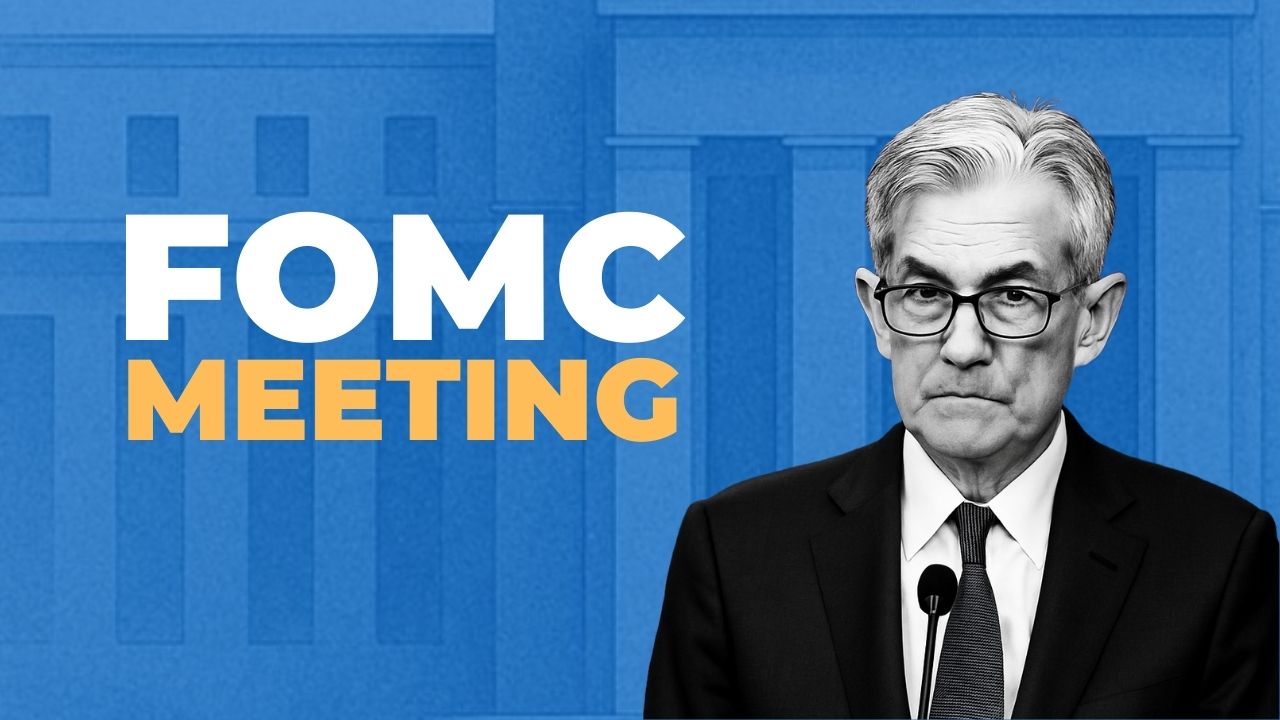
Following the announcement, Fed Chair Jerome Powell will hold a press conference to discuss the decision and the central bank's economic outlook.

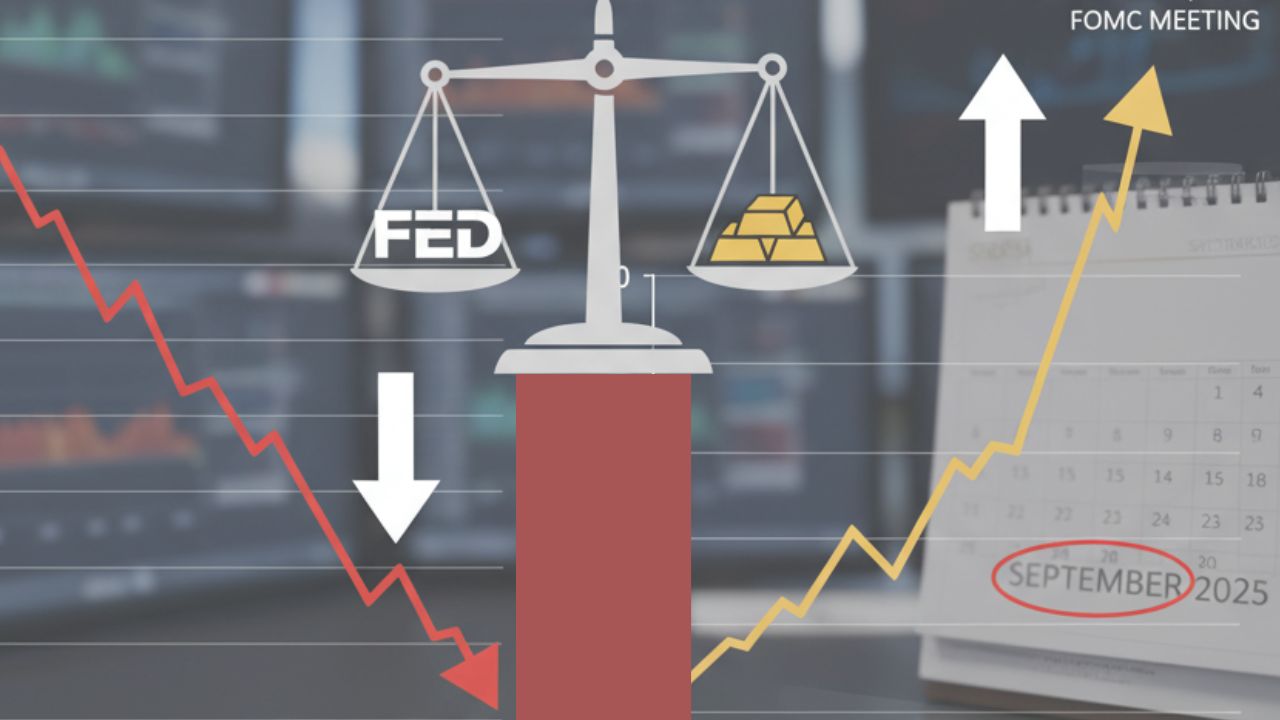
The U.S. Federal Reserveโ€™s Federal Open Market Committee (FOMC) has lowered its target range for the federal funds rate by 25 basis points to 4.00%-4.25%, acknowledging that while inflation remains elevated, growth has cooled and labor market strength is waning. Uncertainty around the economic outlook, especially downside risks to employment, has heightened.

The Fed’s policy is guided by recent economic indicators

  • Consumer Prices (CPI): In August 2025, U.S. inflation (CPI) rose by 0.4% month-over-month, following a 0.2% increase in July. The year-over-year increase clocked in at 2.9%, up from 2.7% in July. Core CPI (excluding food & energy) rose 0.3% month-to-month, and 3.1% year-over-year.
  • Producer Prices (PPI): The PPI for final demand dipped 0.1% in August (seasonally adjusted), compared to a strong July. On a twelve-month basis, PPI rose about 2.6%, while โ€œcoreโ€ measures (excluding food, energy, trade services) rose ~2.8%.
  • Labor Market (NFP): Job gains slowed dramatically in August, with only 22,000 net new non-farm payroll jobs added, well below expectations. The unemployment rate edged up to 4.3%, reflecting the loosening grip of labor market tightness.

What the FOMC Statement Says?

According to the new statement: economic growth moderated in the first half of the year. Job gains have slowed, unemployment rose a bit but remains low, and inflation has persisted above target. The Fed reiterated its dual mandate: pursuing maximum employment and targeting 2% inflation over the longer run. Given the shift in balance of risks – especially the rise in downside risk to employment – it decided to cut the federal funds rate by a quarter point (0.25%) to the 4.00-4.25% range.

The Committee also said it will continue shrinking its holdings of Treasury, agency debt, and mortgage-backed securities. It remains open to further adjustments depending on incoming data, inflation pressures, labor market developments, financial conditions and international factors.

Also Read – Fed Interest Rates vs Gold Prices

Why This Matters?

The rate cut signals the Fedโ€™s view that inflation, while still elevated, is starting to show signs of moderation, especially in wholesale prices (PPI). However, the very weak job growth and rising unemployment warn that the labor market may be cooling faster than desired. The Fed appears to be walking a tightrope: easing policy enough to avoid a sharper slowdown, but not so much as to reignite inflation.

Looking Ahead

The Fed will be closely watching upcoming data points, including next monthโ€™s CPI, PPI, and jobs reports, to gauge whether inflation continues to cool and whether the labor marketโ€™s weakening trend holds. Further rate cuts may be on the table if downside risks intensify, but persistence in inflation or unexpected strength in wages could delay more aggressive easing.

This article is for informational purposes only and should not be considered financial advice. Investing in stocks, cryptocurrencies, or other assets involves risks, including the potential loss of principal. Always conduct your own research or consult a qualified financial advisor before making investment decisions. The author and publisher are not responsible for any financial losses incurred from actions based on this article. While efforts have been made to ensure accuracy, economic data and market conditions can change rapidly. The author and publisher do not guarantee the completeness or accuracy of the information and are not liable for any errors or omissions. Always verify data with primary sources before making decisions.

When Will the Fed Decision on Interest Rates Come?

FOMC meeting september 2025

The Federal Reserve’s Federal Open Market Committee (FOMC) meeting is a pivotal event where policymakers deliberate on monetary policy, primarily focusing on setting the federal funds rate to influence economic growth, inflation, and employment.

This week, the FOMC meeting for September 2025 is underway, drawing intense scrutiny from investors, businesses, and consumers alike. Everyone is waiting for the Fed rate decision because it directly affects borrowing costs for everything from mortgages to business loans, sways stock and bond markets, and shapes the broader economy’s trajectory.

With the fed meeting today and the fed announcement on the horizon, the federal reserve’s move could either stabilize or jolt financial landscapes worldwide.

When is the Fed Meeting and Rate Decision Announced?

The Federal Reserve’s FOMC convenes eight times a year, with each meeting spanning two days to review economic data and policy options. The Fed interest rate decision is typically announced on the second day, immediately following the conclusion of deliberations.

For the September 2025 gathering, the schedule is set for Tuesday, September 16, and Wednesday, September 17. The announcement is expected at 2:00 PM ET, followed by a press conference from Fed Chair Jerome Powell at 2:30 PM ET. This timing allows markets to digest the news in real-time, often leading to immediate volatility.

Recap of Previous FOMC Meetings in 2025

The FOMC’s 2025 meetings so far have been marked by a cautious stance amid persistent inflation pressures and a resilient yet cooling labor market.

In January (January 28-29), the committee held federal reserve interest rates steady at 4.25%-4.50%, citing balanced risks to its dual mandate; markets reacted mildly positively, with the S&P 500 gaining about 1.5% in the following week as investors welcomed the pause after prior hikes.

March (March 18-19) saw another hold on fed interest rates, despite some early-year inflation upticks, with two members dissenting in favor of a cut. The fed decision triggered a brief stock dip of 0.8% but quick recovery, buoyed by strong corporate earnings.

By May (May 6-7), the fed rate remained unchanged, though projections hinted at future easing; equities surged 2.2% post-announcement, reflecting optimism over moderating wage growth.

June’s meeting (June 17-18) reaffirmed the steady fed interest rates amid mixed data, leading to a 1.1% market rally as tech sectors led gains.

Finally, in July (July 29-30), the committee maintained rates at 4.25%-4.50% for the fifth consecutive hold, with two dissents for a cut; the fed decision sparked a 0.5% S&P decline initially due to tariff-related inflation fears, but it rebounded within days on hopes for September action.

Overall, these outcomes highlight the fed’s vigilance on federal reserve interest rates, with market reactions varying from modest dips to gains based on forward guidance.

Is the Fed Going to Cut Rates in September 2025?

We overwhelmingly anticipate a fed rate cut at the September 2025 meeting, with markets pricing in a near-certain 25 basis point reduction to 4.00%-4.25%.

This expectation stems from recent economic indicators signaling a shift in risks. The latest CPI data for August showed a 0.3% monthly increase and 2.9% year-over-year, slightly above target but cooling from prior peaks, easing some inflation worries.

PPI for August edged down 0.1% monthly, with core measures up 2.8% annually, indicating producer prices are stabilizing without aggressive pass-through to consumers.

The NFP jobs report for August added just 22,000 positions – far below expectations – with downward revisions of 911,000 jobs from earlier estimates, pushing unemployment to 4.3% and underscoring labor market softness.

Fed Chair Jerome Powell’s recent comments at the Jackson Hole Symposium further fuel optimism for rate cuts. In his August 22 address, Powell noted the “shifting balance of risks” toward employment concerns over inflation, stating that “with policy in restrictive territory, the baseline outlook… may warrant adjusting our policy stance.” He emphasized tariffs’ potential as a temporary price shock rather than persistent inflation driver, opening the door to easing.

Market Impact of Fed Interest Rate Cuts

a) Stock Markets

Fed rate cuts typically boost equities by lowering borrowing costs for companies, spurring investment, and fostering growth optimism.

b) Crypto Markets

Crypto assets thrive on lower rates due to heightened risk-on sentiment, as investors chase higher yields in speculative arenas.

c) Gold Markets

Gold usually rises when the Fed cuts rates, as lower yields weaken the dollar and enhance its appeal as a non-yielding safe haven.

Also Read – Fed Interest Rates vs Gold Prices

This article is for informational purposes only and should not be considered financial advice. Investing in stocks, cryptocurrencies, or other assets involves risks, including the potential loss of principal. Always conduct your own research or consult a qualified financial advisor before making investment decisions. The author and publisher are not responsible for any financial losses incurred from actions based on this article. While efforts have been made to ensure accuracy, economic data and market conditions can change rapidly. The author and publisher do not guarantee the completeness or accuracy of the information and are not liable for any errors or omissions. Always verify data with primary sources before making decisions.
Gemini Space Station (GEMI) Stock Price Prediction 2030 & 2035

gemini price prediction

Gemini Space Station Inc., trading under the ticker GEMI, was founded in 2014 by Cameron and Tyler Winklevoss. It has grown into one of the most recognized cryptocurrency exchanges and digital asset platforms in the world. \

Also Read – The Very First Post You Should Read to Learn Cryptocurrency

Operating within the broader Financials sector and more specifically under Capital Markets, Digital Assets, and Cryptocurrency Exchange industries, Gemini has made a significant name for itself in the ever-expanding crypto ecosystem. Its headquarters are located at 600 Third Avenue, 2nd Floor, New York, NY 10016. The company currently employs between 600 and 700 people and caters to both retail and institutional clients.

Geminiโ€™s services extend beyond traditional crypto trading. The firm offers custodial solutions, the Gemini Dollar (GUSD) stablecoin, derivatives trading, a crypto credit card, staking facilities, over-the-counter trading, and even an NFT and Web3-focused studio. Its business model has been carefully built around providing a global platform for buying, selling, storing, staking, and trading digital assets, with a strong emphasis on security, regulatory compliance, and institutional-grade infrastructure.

In August 2025, Gemini filed its S-1/A with the U.S. Securities and Exchange Commission after raising $50 million in a private placement backed by Nasdaq.

The company priced its initial public offering at $28 per share, which was above its initial range of $24 to $26. With this, Gemini issued 15.2 million shares, raising $425.6 million and achieving a debut market capitalization of nearly $3.3 billion. On September 12, 2025, Gemini began trading on Nasdaq. Shares opened 32 percent higher at $37.01 and closed the day at $32, which represented a 14 percent gain from the IPO price, while also touching an intraday high of $45.89.

Looking forward, the trajectory of GEMI stock is inherently speculative. Its future will depend on a complex mix of market conditions, adoption rates of cryptocurrencies, regulatory developments across major economies, macroeconomic trends such as interest rates and inflation, as well as broader geopolitical dynamics like U.S. crypto policy. Projections are generally framed by analyzing historical NASDAQ growth, revenue growth rates of peers in the sector, and Geminiโ€™s current financial trajectory. However, the volatile nature of digital assets means that actual outcomes could deviate significantly from expectations.

GEMI Stock Overview

Gemini trades under the ticker GEMI on Nasdaq.

As of September 14, 2025, the companyโ€™s market capitalization stands at approximately $3.8 billion, with shares stabilizing near $32 after the debut. Investors who wish to buy GEMI stock can do so directly on Nasdaq through registered brokers such as Robinhood, Fidelity, or E*TRADE. Trading officially commenced on September 12, 2025, immediately following the IPO.

GEMI Financials

Geminiโ€™s financial performance shows both opportunities and challenges. In 2024, the company reported revenue of $142.2 million, representing a 44.8 percent increase from the previous year.

However, in the first half of 2025, revenue declined 7.7 percent year-over-year to $68.6 million due to a period of market softness. The trailing twelve-month revenue as of June 30, 2025, stood at $136.45 million. Analysts currently project that Gemini could achieve a 35 percent compounded annual growth rate in revenue through 2030. This projection aligns with the averages of crypto industry peers, though Geminiโ€™s smaller scale and recent financial losses temper the estimate. Growth is also expected to be driven by institutional adoption and expansion into the European Union through MiCA licensing.

On the profitability front, Gemini remains challenged. The company reported a net loss of $158.5 million in 2024, which was an improvement from the $319.7 million loss posted in 2023. However, losses deepened in the first half of 2025, reaching $282.5 million. Despite this, the company experienced growth in monthly transacting users, which rose to 523,000 from 497,000 in the prior year. Its lifetime user base has now reached 1.5 million. Liquidity pressures remain evident as Geminiโ€™s cash balance was reported at $42.8 million against a short-term debt load of $680 million, which underlines the financial strain of maintaining aggressive expansion while dealing with volatile market conditions.

Looking toward 2030, revenue is forecast to grow to approximately $1.2 billion if the 35 percent CAGR holds. Profitability is expected to emerge by 2027, with analysts projecting a forward price-to-earnings ratio of about 40x, which is in line with Coinbaseโ€™s valuation metrics. Currently, Geminiโ€™s P/S ratio is estimated at about 28x, which is high following the IPO but could compress to 10x to 12x by 2030 as revenue scales. Based on these fundamentals, the fair value of GEMI shares today falls in the range of $35 to $40, balancing optimism about future growth against the risks of prolonged unprofitability.

Headwinds and Tailwinds

Gemini faces a mix of challenges and opportunities that will influence its long-term performance.

  • The headwinds include regulatory and compliance pressures. The company has faced SEC scrutiny, particularly around its lending program, and while certain issues have been resolved, new rules like the European MiCA regulations could increase operating costs.
    • Financial strain is another concern, as the widening losses in the first half of 2025 highlight the difficulty of managing growth under volatile market conditions. Competition also remains intense, with giants like Binance and Coinbase dominating market share and emerging platforms like Bybit and OKX gaining traction. Additionally, the crypto market itself remains highly volatile. A steep correction in Bitcoin, especially if it falls below $100,000, could severely reduce trading volumes, which remain the primary source of revenue.
  • The tailwinds, however, are equally significant. The ongoing bull market in crypto, driven by Bitcoin surpassing $115,000 and increased ETF inflows, provides a strong foundation for growth. Gemini currently has over $18 billion in assets under custody, and the new MiCA license in Europe opens access to a far larger customer base.
    • Institutional adoption is another major growth lever, with Geminiโ€™s partnerships with Goldman Sachs, Citi, and Morgan Stanley helping to expand its OTC desk and custody business. Futures trading volumes, for example, have been growing by more than 250 percent month-on-month. Product diversification is also creating new revenue streams, with the GUSD stablecoin, staking services, credit card rewards, and NFTs contributing beyond traditional trading fees. The oversubscription of its IPO by more than 20 times further highlights investor confidence. Favorable macroeconomic conditions, including pro-crypto U.S. policies and global DeFi expansion, also provide an encouraging backdrop.

Average Growth in NASDAQ โ€“ CAGR

The NASDAQ Composite has delivered an average compounded annual growth rate of roughly 15 percent over the past decade. This has been supported by the rise of technology stocks, innovation cycles, and extended periods of low interest rates.

For crypto-exposed stocks like GEMI, growth could significantly outpace this historical average, potentially reaching 25 to 35 percent annually due to sector-specific leverage.

GEMI Stock Projection for 2030 and 2035

If GEMI maintains a CAGR of 30 percent, blending NASDAQโ€™s 15 percent baseline with cryptoโ€™s higher growth potential, the company could deliver significant shareholder returns. From the current price of $32, projections indicate that by 2030, shares could trade in the $200 to $250 range, implying a market capitalization between $25 and $30 billion.

In a bullish scenario, the stock might even reach $300, particularly if Gemini secures dominance in decentralized finance.

On the downside, tighter regulations could cap the price closer to $150.

Looking further ahead to 2035, GEMI stock could trade between $700 and $900 per share, implying a market capitalization in the $80 to $100 billion range. This assumes that tokenized assets become a $10 trillion market and Gemini captures a sizable portion of it. However, recessionary cycles or systemic setbacks could limit the upside to about $400 per share.

Peer Growth Comparisons

Peer analysis provides additional perspective. Between 2018 and 2025, major crypto exchanges and trading platforms averaged around 35 percent CAGR.

Coinbase led the way with 50 percent revenue CAGR, while Robinhood achieved 45 percent. Kraken posted 20 percent growth, Binance US 40 percent, eToro 30 percent, and Galaxy Digital 35 percent. Based on these comparisons, Geminiโ€™s projections align well with the sector, although it will need to scale aggressively to match Coinbaseโ€™s scale.

Applying the average peer CAGR of 35 percent to Geminiโ€™s revenue base suggests that revenue could reach $1.2 billion by 2030, valuing the stock at around $220 with a 10x price-to-sales multiple.

By 2035, revenue could scale to $4.9 billion, supporting a stock price around $750 if multiples remain steady.

GEMI Stock Price Prediction 2030

By 2030, Geminiโ€™s stock could trade within a wide range depending on how the industry evolves. The base case suggests a price target of $220.

In a bullish scenario, if revenue growth outpaces expectations and favorable regulations persist, the stock might climb to $280. A more conservative outlook places the price closer to $150. Investors should understand that this forecast assumes annual returns in the range of 30 to 45 percent, supported by revenue expansion, wider adoption of GUSD, and improved profitability.

Market Sentiment and Analysis

Market sentiment for GEMI has been strong since the IPO. The stock was oversubscribed by more than twenty times, and the debut saw an opening surge of over 40 percent, which reflects the broader excitement around crypto-related listings. Discussions on online forums such as Reddit indicate that roughly three-quarters of participants are optimistic about Geminiโ€™s future. Many cite the Winklevoss brand and the companyโ€™s European expansion as reasons for confidence. At the same time, some investors remain concerned about persistent losses and competitive pressures, leading to a minority bearish stance.

Fundamentally, Geminiโ€™s potential lies in a combination of user base growth, product diversification, and improved profitability. Geopolitical factors will also play a role, as favorable regulations could accelerate adoption, while hostile policy environments could significantly cap growth. Overall, the rating among analysts leans toward a buy, with long-term projections pointing to multi-fold returns by 2030.

Comparison with Related IPOs

Geminiโ€™s IPO can also be compared with other recent high-profile crypto-related listings such as Figure Technology Solutions, which debuted on September 11, 2025, at a $5.3 billion valuation.

Figure focuses on blockchain-powered lending and gained 44 percent on its first trading day. While Figure benefits from fintech stability, Geminiโ€™s position as a crypto exchange provides greater leverage to the overall crypto economy.

By 2030, analysts expect Figureโ€™s stock to trade between $150 and $200 per share, while Gemini could achieve higher returns, potentially 1.2 to 1.5 times greater, due to stronger upside volatility in exchanges.

GEMI Stock Price Prediction 2035

By 2035, Geminiโ€™s stock has the potential to reach around $750 under base case assumptions, with the expected range stretching from $500 to as high as $950. This assumes sustained growth in digital assets, widespread adoption of tokenized securities, and Bitcoin trading above $1 million.

The companyโ€™s earnings per share could exceed $15, which when valued at a 40x multiple, would justify a price of around $750. However, systemic rejection of cryptocurrencies or disruptive technological changes could weigh down the outlook significantly.’

Also Read –I Created the Best Bitcoin Guide Youโ€™ll Ever Read

FAQs

Can you buy GEMI stock?

Yes. GEMI trades publicly on Nasdaq and can be purchased through registered brokers.

What is the future price of GEMI stock?

The future price is speculative and depends on Geminiโ€™s fundamentals, economic conditions, and regulatory landscape. The base case target for 2030 is $220.

How does GEMI compare to peers long-term?

While smaller in scale today, Geminiโ€™s custody services and product diversification give it an edge. With consistent growth, it could match the performance trajectory of Coinbase and other leading exchanges.

What risks could derail GEMI projections?

The main risks include prolonged financial losses, regulatory crackdowns, or sharp downturns in the cryptocurrency market. Investors should track volumes and Bitcoin prices closely, as these remain key drivers of Geminiโ€™s revenue.

This article is for informational purposes only and should not be considered financial advice. Investing in stocks, cryptocurrencies, or other assets involves risks, including the potential loss of principal. Always conduct your own research or consult a qualified financial advisor before making investment decisions. The author and publisher are not responsible for any financial losses incurred from actions based on this article. While efforts have been made to ensure accuracy, economic data and market conditions can change rapidly. The author and publisher do not guarantee the completeness or accuracy of the information and are not liable for any errors or omissions. Always verify data with primary sources before making decisions.

Figure Technology Solutions (FIGR) Stock Forecast 2030 and 2035

Figure Technologies went public on September 11, 2025, pricing its IPO at $25 per share and raising $787.5 million. The offering valued the company at $5.3 billion, and shares debuted on Nasdaq under the ticker "FIGR," closing the first day trading over 40% above IPO price.

Figure Technology Solutions, trading under the ticker FIGR on Nasdaq, is a pioneering fintech company leveraging blockchain technology for lending and digital asset marketplaces.

ItemDetails
TickerFIGR
CEOMike Cagney
Founded2018
SectorFinancials
IndustryCredit Services, Fintech, Crypto
IPO DateSeptember 11, 2025
IPO Price$25/share
Valuation$5.3 billion (post-IPO)
PeersSOFI, UPST, LC, AFRM, BlockFi, COIN, HOOD, BLND, PGY, Figure AI
Figure Technologies is a blockchain lender and marketplace operator. Its platform enables consumer and institutional lending, especially home equity loans, by automating and tokenizing those transactions through blockchain.

Founded in 2018 by Mike Cagney, who previously co-founded SoFi, Figure went public on September 11, 2025, raising $787.5 million at an initial public offering price of $25 per share, which valued the company at $5.3 billion. Figure has originated over $16 billion in home equity loans and secured partnerships with more than 160 global institutions, positioning itself as a leader in AI-driven, blockchain-enabled lending.

Also Read – What is Blockchain in Cryptocurrency?

As a newly listed company, Figureโ€™s stock price outlook for 2030 and 2035 depends on market trends, regulatory developments in cryptocurrency, and macroeconomic conditions, including U.S. policies on digital assets. This analysis projects Figureโ€™s growth, identifies key headwinds and tailwinds, and compares it to peers, including Circle Internet Group.

Headwinds for Figure Tech

Figure Technology faces several headwinds that could challenge its growth trajectory. Regulatory uncertainty remains a major factor, as changes in policy can quickly alter profitability and expansion opportunities.

The companyโ€™s elevated revenue valuation, currently around four to six times earnings, could also raise skepticism among investors if growth slows. Competition is intensifying as decentralized finance (DeFi) players and traditional banks continue adopting similar technologies.

Additionally, custody and compliance burdens pose ongoing operational challenges, while sector volatility leaves Figure exposed to sudden market shifts and the potential for execution missteps.

Tailwinds for Figure Tech

Despite these challenges, Figure enjoys strong tailwinds that are helping drive its growth.

U.S. regulatory reforms introduced in 2025, including the GENIUS Act and supportive Trump administration crypto policies, have improved institutional confidence in fintech innovation. Investor appetite for blockchain lending, artificial intelligence-driven automation, and real-world asset tokenization has reached record levels.

Figure has also distinguished itself by processing loans in just ten days compared with an industry average of forty-two days, which has significantly boosted adoption and originations. The companyโ€™s rapid scaling is evident in its $29 million profit in 2025, a sharp turnaround from a $15 million loss in 2024, highlighting robust operational momentum.

Growth in Nasdaq and Fintech Peers

The Nasdaq fintech sector as a whole is projected to maintain a CAGR of 16.2% through 2032, while the global blockchain lending market is expected to grow even faster at 43.65% over the same period.

Peer fintech companies such as SoFi, Upstart, LendingClub, Robinhood, Coinbase, and Affirm historically achieved CAGR ranges of 15% to 29% in revenue during their rapid expansion years. Platforms that integrate artificial intelligence, blockchain, and lending are positioned to benefit the most from this wave of growth.

Also Read – 3 Important Differences Between Cryptography and Blockchain

Five-Year and Ten-Year FIGR Stock and Revenue Outlook

In 2025, Figureโ€™s valuation stood at around $5.3 billion, with projected revenue of approximately $350 million.

Stock Price Prediction – 2030

Assuming a 30% revenue CAGR, which is slightly below the 35% average of peers like SoFi (33%), Upstart (37%), and Affirm (40%), Figureโ€™s revenue could reach approximately $871 million by 2030. If we apply a 12x price-to-sales multiple, consistent with peer averages, this projects a stock price in the range of $120 to $150. Such an outlook implies a 25% to 35% annualized return, significantly outpacing the Nasdaqโ€™s historical 15% CAGR.

In a bullish scenario, the stock could rise as high as $200, supported by favorable regulatory policies and accelerated Web3 adoption.

On the other hand, a bearish case of around $100 is possible if housing markets weaken or if governments introduce restrictive crypto regulations.

Stock Price Prediction – 2035

Looking further ahead, by 2035, Web3 adoption could be more mainstream, opening stronger growth opportunities for Figure.

At a conservative 25% CAGR, revenue could reach around $2.1 billion, while at the higher peer average of 35%, it could grow to $3.8 billion.

Applying a 10x price-to-sales multiple suggests a stock price range of $300 to $400, with the broader forecast falling between $250 and $500, depending on the pace of blockchain adoption.

Also Read – I Created the Best Bitcoin Guide Youโ€™ll Ever Read

How is Circle company different from Figure Technologies?

Circle Internet Group and Figure Technologies are both top fintechs using blockchain, but their focus areas are distinct.ย 

Circleย is a global payments and crypto infrastructure company best known for issuing USD Coin (USDC), a leading stablecoin, and building systems for fast, secure, cross-border transactions. Its core market is digital payments and enabling businesses to use stablecoins securely.

In contrast,ย Figure Technologiesย specializes in blockchain-powered lending, particularly home equity loans, and tokenizing financial assets. Figureโ€™s strength is automating credit origination, asset trading, and capital market processes through blockchain, making lending faster and more transparent.

In short, Circle powers digital payments and stablecoin markets, while Figure makes lending and asset trading easier via blockchain – two different innovation tracks within financial technology.

CompanyFocusCore ProductMarket Position
CirclePaymentsUSDC StablecoinGlobal, infrastructure
FigureLendingHome equity loansAI, blockchain-powered lending

Can you buy FIGR stock?

Yes, you can buy FIGR stock as it is listed on Nasdaq and available for trading through registered brokers.

This article is for informational purposes only and should not be considered financial advice. Investing in stocks, cryptocurrencies, or other assets involves risks, including the potential loss of principal. Always conduct your own research or consult a qualified financial advisor before making investment decisions. The author and publisher are not responsible for any financial losses incurred from actions based on this article. While efforts have been made to ensure accuracy, economic data and market conditions can change rapidly. The author and publisher do not guarantee the completeness or accuracy of the information and are not liable for any errors or omissions. Always verify data with primary sources before making decisions.

When is Gemini IPO Expected to Begin Trading on the Nasdaq?

gemini price prediction

Gemini Space Station, Inc., better known as Gemini, is set to launch its initial public offering on the Nasdaq Global Select Market, aiming to capture attention in the booming cryptocurrency market.

The company had planned to raise up to $433 million by offering approximately 17 million Class A common shares at a recently upsized price range of $24 to $26 per share. However, Bloomberg reported that Gemini Space Station ultimately priced its IPO at $28 per share late Thursday, pushing its valuation to around $3.3 billion.

Founded in 2014 by Cameron and Tyler Winklevoss, Gemini operates as a trusted cryptocurrency exchange and custodian. It currently serves more than 60 countries with services that include spot trading, staking, secure custody, its own stablecoin GUSD, and a crypto rewards credit card. Positioned firmly in the cryptocurrency sector within the broader financial technology industry, Gemini aims to ride the wave of pro-crypto sentiment in 2025 even though it continues to trail Coinbase and other competitors in terms of adoption and product breadth.

Also Read – CRCLโ€™s USDC & FIโ€™s FIUSD โ€“ The Stablecoin Business Model Everyone Should Understand

What Day and Time is Gemini Going Public?

Geminiโ€™s IPO is scheduled to debut today, September 12, 2025, on the Nasdaq under the ticker GEMI.

The shares priced on the evening of September 11, following an investor roadshow that sparked significant demand with reports suggesting more than 20 times oversubscription.

Trading is expected to begin this morning in line with Nasdaqโ€™s standard procedure, shortly after the market opens at 9:30 AM Eastern Time. While the exact moment has not been confirmed, most Nasdaq IPOs launch between 10:00 AM and 11:00 AM.

Recent Crypto IPOs: Listing Time Trends on Nasdaq and NYSE

To better understand when Gemini might actually begin trading, it is useful to look at the recent listing times of other crypto-related and fintech-adjacent companies on the Nasdaq and the New York Stock Exchange.

crypto IPOs in 2025

The 2025 crypto IPO wave has been remarkable, driven by corporate treasury strategies that include Bitcoin, Ethereum, and Solana. Companies holding these assets have often enjoyed a sharp โ€œinitial popโ€ in share prices before profit-taking set in. Backing from large investors such as Digital Currency Group and Galaxy Digital has also played a role in sustaining momentum.

Figure Technologies debuted on the Nasdaq on September 11, 2025, at 10:20 AM Eastern Time. The blockchain lending platform priced at $25 and immediately surged by more than 100 percent to reach a $5.3 billion valuation, reflecting strong investor appetite for tokenized assets.

Also Read – 3 Important Differences Between Cryptography and Blockchain

Earlier in May 2025, eToro, the crypto-friendly social trading platform, opened at 10:15 AM Eastern Time and jumped 43 percent to a $5.4 billion valuation. Around the same time, Galaxy Digital, which uplisted from Toronto, began trading on Nasdaq at 10:30 AM Eastern Time and saw modest early gains backed by institutional confidence.

Bullish, a direct competitor to Gemini backed by Peter Thiel, listed on the New York Stock Exchange on August 13, 2025, and opened at 10:45 AM Eastern Time. Its stock soared intraday by as much as 218 percent before closing the day up 84 percent.

Circle Internet Group, issuer of the USDC stablecoin, went public on June 5, 2025, at 10:10 AM Eastern Time and delivered a stunning first-day surge of 235 percent to an $85 billion valuation.

The average opening time across these listings is close to 10:30 AM Eastern Time. Based on this pattern, it is likely that Gemini stock will open and begin trading around 10:30 AM Eastern Time on September 12, 2025, in line with Nasdaqโ€™s approach to capturing morning market momentum.

IPO Filing and Timeline

Geminiโ€™s journey to the public markets began earlier this year. The company confidentially filed for a U.S. IPO with the Securities and Exchange Commission in March 2025, after first announcing its intentions in February 2025. A public S-1 filing followed on August 15, 2025, providing a detailed look into its operations, financials, and market ambitions.

After launching its roadshow on September 2, immediately after Labor Day, Gemini finalized pricing on the evening of September 11. Shares are scheduled to begin trading on September 12, 2025, on the Nasdaq Global Select Market under the ticker GEMI.

Offering Details

The offering consists of 16.67 million Class A common shares, with a mix of primary shares issued by the company and secondary shares sold by existing stockholders.

Initially, the price range was set between $17 and $19 per share when announced on September 2, which would have raised between $283 million and $317 million.

However, strong investor demand led Gemini to revise the range to $24 to $26 per share on September 9, boosting the potential proceeds to $433 million and lifting the valuation target to as high as $3.08 billion. Bloomberg reported that the company ultimately priced the IPO at $28 per share late Thursday, valuing Gemini Space Station at around $3.3 billion.

The deal also includes a standard 30-day greenshoe option, allowing underwriters to purchase an additional 2.5 million shares.

Gemini Opening Price Prediction – What to Expect?

Investors looking for a Gemini opening price prediction should recognize the factors driving demand. The IPO price range of $24 to $26 could see an immediate premium in the first trades.

Given the scale of oversubscription and enthusiasm for crypto stocks, shares may open in the $35 to $50 range. Comparisons with Bullish and Circle, which delivered enormous first-day pops of 84% and 235% respectively, support the idea that Gemini may enjoy a strong opening.

The Broader Crypto IPO Landscape

The Gemini offering comes during a year that has been transformative for crypto listings more generally. Beyond exchanges, new projects such as Worldcoin have emerged at the intersection of blockchain and artificial intelligence.

Worldcoin, backed by Sam Altman, promotes a โ€œproof of humanโ€ model that uses iris-scanning technology to confirm digital identity while rewarding users with tokens. This concept aligns with the broader vision expressed by BlackRockโ€™s Larry Fink, who has described digital identity as central to the future of asset tokenization. Although Worldcoin remains private for now, public markets have responded to related strategies.

On September 8, 2025, Eightco Holdings, which rebranded as ORBS, saw its stock surge by 3,800 percent after announcing a $250 million Worldcoin treasury plan. This reflects a broader trend in which Solana and Ethereum treasury strategies have recently outperformed those centered on Bitcoin, which has lagged during the latest cycle.

Also Read – I Created the Best Bitcoin Guide Youโ€™ll Ever Read

This article is for informational purposes only and should not be considered financial advice. Investing in stocks, cryptocurrencies, or other assets involves risks, including the potential loss of principal. Always conduct your own research or consult a qualified financial advisor before making investment decisions. The author and publisher are not responsible for any financial losses incurred from actions based on this article. While efforts have been made to ensure accuracy, economic data and market conditions can change rapidly. The author and publisher do not guarantee the completeness or accuracy of the information and are not liable for any errors or omissions. Always verify data with primary sources before making decisions.

U.S. Inflation Rate August 2025 – What the CPI Report Means for the Fed?

cpi release data us august 2025

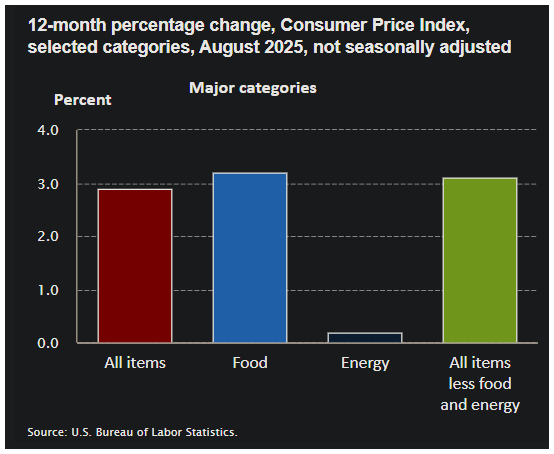
The latest US CPI data for August 2025 from the Bureau of Labor Statistics shows that headline CPI, which tracks changes in the prices of a broad basket of goods and services, rose 0.4 percent in August after a 0.2 percent increase in July, bringing the year-over-year rate to 2.9 percent.

The main contributors were shelter, food, and energy, with gasoline prices seeing a notable 1.9 percent rise.

August Inflation Data Graph 2025 USA

Meanwhile, Core CPI – which excludes the more volatile food and energy components – rose 0.3 percent in August, matching Julyโ€™s pace. On a yearly basis, Core CPI increased 3.1 percent, highlighting that underlying inflationary pressures, particularly from categories like airline fares, used cars, apparel, and new vehicles, remain firm even as some areas such as medical care and recreation eased.

The CPI report today shows that overall inflation pressures remain steady but slightly higher than in July.

As per the Bureau of Labor Statistics, the September 2025 CPI data release is scheduled for October 15, 2025, at 8:30 A.M. Eastern Time. Investors, traders, and policymakers will closely watch it to confirm whether inflation continues to stabilize or re-accelerates.

Also Read – August 2025 PPI Report Explained โ€“ What It Means for Inflation, CPI, and Fed Rate Cuts?


Inflation July 2025 Versus August 2025 USA

The change from July 2025 inflation versus August 2025 USA shows a clear acceleration in the monthly pace of price increases. Julyโ€™s 0.2 percent rise was modest, while August doubled to 0.4 percent.

This indicates that inflation is stabilizing but remains above the Federal Reserveโ€™s target.

CPI Variation from August 2022 to August 2025

From August 2022 to August 2025, U.S. CPI has shown significant variation, reflecting post-pandemic recovery and policy shifts.

In August 2022, headline inflation peaked near 8.3 percent amid supply chain disruptions and energy spikes. By August 2025, it moderated to 2.9 percent, a cumulative decline of about 5.4 percentage points, though still above the Fedโ€™s target.

Core CPI eased from around 6.3 percent in 2022 to 3.1 percent in 2025, a 3.2-point drop, driven by falling energy prices and supply normalization.

Over the three-year period, inflation averaged roughly 4.5 percent annually, with 2022โ€™s surge (9.1 percent peak) contrasting with the 2.7-2.9 percent range in 2024โ€“2025. This cooling trend was influenced by Fed rate hikes and tariff uncertainties, while recent upticks have been tied to external factors like trade policies.


CPI Data and Federal Reserve Rate Cut Debate

Markets are now asking – Will the Fed cut rates in September 2025?

With inflation cooling compared to the highs of 2022 but still running above target, this question has become more urgent. The Federal Reserve is closely monitoring this inflation report alongside jobless claims and wage growth.

Expectations remain strong for a 25 basis-point rate cut at the September FOMC meeting. The probability of a larger 50 basis-point cut has diminished slightly after the hotter-than-expected CPI data today. Still, the broader trend – combined with weakening job data – suggests the Fed is likely to move toward easing.

Also Read – Fed Interest Rates vs Gold Prices โ€“ What to Expect Ahead of the September 2025 FOMC Meeting?


How does CPI affect gold prices?

CPI measures inflation. When inflation is higher, gold often rises because it is seen as a hedge. If the Fed cuts rates after high CPI, gold demand usually increases further.

Does CPI data affect Bitcoin price movements?

CPI affects Bitcoin prices indirectly through monetary policy. When CPI is higher than expected, the Federal Reserve may delay interest rate cuts, which can hurt crypto markets in the short term. On the other hand, when CPI is stable or lower, it increases the chances of rate cuts, making risk assets like Bitcoin more attractive and often pushing prices higher.

What is the effect of CPI on the stock market?

If CPI data is high, stocks may face pressure due to fears of delayed rate cuts. But if inflation is stable and the Fed cuts rates, equities often benefit.

How does CPI make the Fed adjust interest rates?

The Fedโ€™s dual mandate is price stability and employment. CPI data signals whether inflation is near or above the target. Higher inflation can keep rates elevated, while stabilizing or falling inflation encourages cuts.

This article is for informational purposes only and should not be considered financial advice. Investing in stocks, cryptocurrencies, or other assets involves risks, including the potential loss of principal. Always conduct your own research or consult a qualified financial advisor before making investment decisions. The author and publisher are not responsible for any financial losses incurred from actions based on this article. While efforts have been made to ensure accuracy, economic data and market conditions can change rapidly. The author and publisher do not guarantee the completeness or accuracy of the information and are not liable for any errors or omissions. Always verify data with primary sources before making decisions.

Klarna Stock Price Outlook 2030-Comprehensive Forecast and Analysis

klarna stock price prediction, target, forecast, outlook 2030

Klarna, a Swedish fintech pioneer, has been reshaping digital payments since 2005 with its buy now pay later (BNPL) model. Today it operates in 26 countries, serves over 111 million users, and partners with more than 790,000 merchants. Beyond BNPL, Klarna has expanded into digital banking with services like the Klarna Card.

On September 10, 2025, Klarna listed on the New York Stock Exchange (NYSE) under the stock ticker KLAR. Priced at 40 dollars per share, the IPO raised 1.37 billion dollars, valuing the company at 15.1 billion dollars. Shares closed at 45.82 dollars, giving Klarna a current market value of 17.3 billion dollars.

Klarna officially made its Wall Street debut on the New York Stock Exchange at 1:07 PM ET, later than the usual 10โ€“11 AM ET launch window followed by recent blockbuster listings like Circle, Figma, and Bullish.

Once trading kicked off, Klarnaโ€™s stock opened at $52 – roughly 30% above its $40 IPO price – and within hours surged to $57.20, giving early investors a 43% premium over the offering price. The strong debut underscored solid investor appetite, with the shares stabilizing after the initial run-up.

Looking toward 2030, just five years ahead of today, predicting Klarnaโ€™s trajectory is purely speculative. Stock movements depend on current market factors, fundamental factors, geopolitical tailwinds and headwinds, and government policies. While we provide a forward-looking view, investors must remember that if exact predictions were possible, giants like Warren Buffett or BlackRock would generate trillions every year.

Also Read – August 2025 PPI Report Explained โ€“ What It Means for Inflation, CPI, and Fed Rate Cuts?

Klarna Stock Overview

Klarna trades on the NYSE under the ticker KLAR. Its current market value is 17.3 billion dollars as of September 2025.

Investors who want to participate can buy Klarna stock from the secondary market at the NYSE through their registered brokers.

Klarnaโ€™s IPO debut surged 30 percent to 52 dollars before stabilizing, showing strong early demand. Its focus on U.S. growth, AI-driven efficiencies, and financial services diversification fuels optimism for the long run.

Klarna Financials and Valuation

Klarna reported 2.8 billion dollars in revenue for 2024, up 22 percent year on year. Analysts expect Klarna revenue growth projections till 2030 to remain between 18 and 22 percent compounded annually, reaching between 9 and 11 billion dollars.

Klarna also achieved its first annual profit of 21 million dollars in 2024 but reported a 53 million dollar net loss in Q2 2025 due to restructuring.

Klarnaโ€™s earnings per share (EPS) for the trailing twelve months (TTM) stands at -0.30.

The Klarna P/E ratio is unusually high at around 5000x because of thin profits, but by 2030 forward P/E is expected to normalize between 12 and 18x as earnings are projected at 1 to 1.2 billion dollars.

Klarnaโ€™s price to sales ratio is currently 6.2x. By 2030, it is expected to drop to 1.8 to 2.2x, which aligns with fintech peers.

Based on discounted cash flow and peer multiples, the fair price of Klarna as of now is estimated at 44 to 50 dollars per share.

Klarna Stock Price Prediction 2030

Klarna stock price prediction 2030 depends on its ability to scale BNPL, expand banking services, and cut costs through AI.

If revenue continues at 20 percent annual growth and margins stabilize at 8 to 10 percent, analysts expect Klarna stock price target 2030 to be in the range of 130 to 160 dollars per share. This would imply a valuation of 49 to 60 billion dollars.

The base case forecast suggests Klarna stock could reach around 140 dollars by 2030.

In a bull case scenario, where banking expansion lifts take rates above 3 percent, shares could climb to 170 dollars.

In a bear case with tighter regulation and rising delinquency rates, shares may only reach 110 dollars.

Overall Klarna share projection 2030 suggests an upside of 180 to 250 percent compared to todayโ€™s price.

Will Klarna go up or down in 2030?

The outlook leans positive. Klarna benefits from the expected 3.3 trillion dollar global BNPL market and its 26 percent U.S. market share. However, risks such as regulatory costs and higher default rates could weigh on results.

If we talk about the future of Klarna stock, estimates place it between 110 and 170 dollars. However, this is speculative and highly dependent on evolving dynamics.

Also Read – Fed Interest Rates vs Gold Prices โ€“ What to Expect Ahead of the September 2025 FOMC Meeting?

Market Sentiment and Reddit Outlook

What is the sentiment of Klarna stock?

Analysts remain cautious. Reddit Klarna stock discussions are more bullish.

Retail investors highlight Klarnaโ€™s traction in the U.S., cost savings from AI adoption, and potential to become the next PayPal. At the same time, they remain aware of rising delinquencies and regulatory scrutiny.

Overall sentiment trends positive toward 2030.

Peer Comparison

Klarnaโ€™s stock potential becomes clearer when compared to fintech peers. Affirm went public in 2021 at 49 dollars, peaked at 176 dollars, and fell back to 45 dollars by 2025, delivering a negative 5 year return. PayPal, spun off in 2015 at 38 dollars, reached 68 dollars in five years, a gain of 79 percent. Klarnaโ€™s projection of 225 to 300 percent returns by 2030 outpaces PayPalโ€™s early performance and significantly outshines Affirmโ€™s losses, though Klarna carries higher risk.

CompanyIPO PriceYear 5 Price5-Year Return
Klarna (2025 IPO)40N/AN/A
Affirm (2021 IPO)4945 (2025)โ€“8%
PayPal (2015 spin-off)3868 (2020)+79%

Can you buy Klarna stock?

es, Klarna stock under the ticker KLAR is available on the NYSE. Investors can purchase shares through the secondary market using registered brokers.

Is the 2030 forecast reliable?

No. The 2030 outlook is speculative, based on present dynamics like BNPL adoption, revenue growth, global interest rates, and government policies. Stock price dynamics can change even in a single month if headwinds appear.

This article is for informational purposes only and should not be considered financial advice. Investing in stocks, cryptocurrencies, or other assets involves risks, including the potential loss of principal. Always conduct your own research or consult a qualified financial advisor before making investment decisions. The author and publisher are not responsible for any financial losses incurred from actions based on this article. While efforts have been made to ensure accuracy, economic data and market conditions can change rapidly. The author and publisher do not guarantee the completeness or accuracy of the information and are not liable for any errors or omissions. Always verify data with primary sources before making decisions.

Fed Interest Rates vs Gold Prices – What to Expect Ahead of the September 2025 FOMC Meeting?

Does gold go up when interest rates go down?

As the Federal Reserve’s September 2025 FOMC meeting approaches, the market overwhelmingly (about 91%) expects a rate cut, according to the CME FedWatch tool.

This sentiment is driven by recent inflation data, with the Producer Price Index (PPI) showing a slight decline in August and expectations of contained inflation from upcoming Consumer Price Index (CPI) reports.

Also Read – August 2025 PPI Report Explained โ€“ What It Means for Inflation, CPI, and Fed Rate Cuts?

Additionally, softer job data suggest a cooling labor market, reinforcing the narrative for monetary easing. Inflation remains modestly above the Fedโ€™s target but shows signs of moderation, prompting speculation that the Fed will lower rates to support the economy and stabilize inflation pressures.


Why Are Gold and Fed Interest Rates Connected?

Gold and Fed interest rates are closely linked because interest rate decisions affect real returns on investments and economic risk perceptions.

The Federal Reserveโ€™s benchmark interest rate influences the opportunity cost of holding gold, which is a non-yielding asset.

  • When rates rise, yields on bonds and savings become more attractive, often pulling capital away from gold.
  • When rates fall, the opportunity cost of holding gold reduces, making it more appealing.

Moreover, gold traditionally acts as a safe-haven during inflationary and recessionary periods, making Fed policies a key driver of goldโ€™s appeal.


Fed Interest Rates and Gold – The Safe Haven Connection

Gold is considered a safe haven asset because it preserves value when inflation rises, recession fears increase, or monetary policy tightens.

Investors often flock to gold in uncertain economic times when traditional paper assets may lose value.

Gold also acts as:

  • A hedge against dollar depreciation.
  • A shield during geopolitical risks.

Thus, Fed policies that create economic uncertainty or affect inflation expectations strongly impact gold demand and prices.


How Does FED Interest Rate Affect Gold Prices?

(1) How Rate Increments Affect Gold Price?

When the Fed raises interest rates, it signals tighter monetary conditions.

Higher rates generally lead to –

  • Increased yields on bonds and savings accounts, making these interest-bearing assets more attractive versus gold.
  • A stronger U.S. dollar, which tends to lower gold prices since gold is priced in dollars globally.
  • Investors moving money out of non-yielding gold in favor of assets generating income.

Hence, gold prices typically go down when Fed rates go up.

This negative correlation between interest rate hikes and gold price movements is a well-observed market dynamic.

(2) How Rate Cuts Affect Gold Price?

When the Fed cuts interest rates, the environment changes:

  • Lower interest rates reduce the opportunity cost of holding gold since other investments generate less return.
  • Rate cuts often coincide with worries about economic growth or inflation, enhancing gold’s appeal as an inflation hedge.
  • Weaker dollar tendencies usually accompany rate cuts, helping lift dollar-denominated gold prices.

Therefore, gold prices generally go up when Fed rates go down, buoyed by increased investor interest and reduced real yields on bonds.

Also Read – The Very First Post You Should Read to Learn Cryptocurrency


Fed Interest Rate and Gold Price History

YearFed Interest Rate DecisionGold Price Reaction
2007-08Major rate cuts during financial crisisGold surged ~39% over following 24 months
2019Initial rate cuts amid global slowdownGold rose ~26% post-cuts
2020Pandemic emergency cuts to near zeroGold reached record highs (~$2,000+ per ounce)
2022Rapid rate hikes to combat inflationGold fell amid rising yields but recovered on easing signals

Examples:

  • During the 2008 financial crisis, aggressive rate cuts coincided with a strong gold rally as investors sought safety.
  • In 2020โ€™s COVID-19 pandemic, emergency Fed cuts and liquidity boosts pushed gold to historic peaks.
  • The 2022 hawkish Fed tightening cycle initially pressured gold prices down before stabilizing on easing expectations.

This article is for informational purposes only and should not be considered financial advice. Investing in stocks, cryptocurrencies, or other assets involves risks, including the potential loss of principal. Always conduct your own research or consult a qualified financial advisor before making investment decisions. The author and publisher are not responsible for any financial losses incurred from actions based on this article. While efforts have been made to ensure accuracy, economic data and market conditions can change rapidly. The author and publisher do not guarantee the completeness or accuracy of the information and are not liable for any errors or omissions. Always verify data with primary sources before making decisions.
What happens to gold when inflation goes up?

Gold usually increases in price because it is viewed as a hedge against inflation, protecting purchasing power when currency values decline.

Does gold go up in price during a recession?

Yes, gold often rises during recessions because investors seek safe-haven assets amid economic uncertainty and market volatility

What makes gold prices go down?

Gold prices tend to fall when interest rates rise, the U.S. dollar strengthens, or when investor risk appetite grows, drawing money towards stocks and bonds, which provide yields.

August 2025 PPI Report Explained – What It Means for Inflation, CPI, and Fed Rate Cuts?

Producer Price Index (PPI) August 2025: Key Takeaways for Inflation and Fed Policy

The latest U.S. Producer Price Index (PPI) for August 2025 showed weaker-than-expected growth in producer prices, confirming that inflationary pressures continue to ease as the economy slows.

This surprise result comes just ahead of tomorrowโ€™s Consumer Price Index (CPI) release and a pivotal Federal Reserve (Fed) policy meeting, putting the spotlight on potential monetary easing.

Key PPI Results and Market Reaction

The August PPI for final demand fell 0.1% month-on-month, with a 12-month increase of 2.6% – well below the 3.3% forecast.

Core PPI, which excludes food, energy, and trade services, rose 0.3% on the month and 2.8% over the year, showing signs of moderation compared to earlier peaks.

The decline was driven mainly by lower service costs, especially trade margins, while goods prices saw modest gains led by tobacco and select food items.

Markets responded positively – stock futures climbed, while Treasury yields eased as traders priced in looser monetary policy.

Also Read – Should You Go for Klarna IPO?


Implications for the Fed and Interest Rates

August 2025 PPI Weakens, CPI and Fed Rate Cut in Focus

The combination of softer inflation and a weakening economy gives the Fed strong justification to cut rates at its September 16-17 FOMC meeting.

  1. Most market participants expect a 25 basis point cut, while a smaller group sees potential for a 50 bp move.
  2. Expectations are also building for additional cuts later in 2025 as growth and inflation continue to show signs of slowing.

Also Read – Will the Fedโ€™s Rate Cuts in 2025 Boost Stocks or Spark Inflation?

The PPI is often seen as an early signal for the CPI.

If tomorrowโ€™s CPI data also confirms softer inflation, the case for rate cuts will be cemented, likely fueling further rallies in equities and bonds.


CPI Preview and Stock Market Outlook

Consensus forecasts for the August CPI point to a 0.3% MoM and 2.9% YoY rise, with core CPI at 3.1% YoY. While inflation remains above target, it is far from runaway.

Higher food prices may push the headline number up, even as other categories show moderation.

Traders expect heightened volatility around the CPI release and the Fed meeting, as rate expectations and risk sentiment adjust in real time.


Labor Market Weakness Adds Pressure

The U.S. labor market continues to soften, adding urgency to the Fedโ€™s easing path:

  • August saw only 22,000 new jobs, while unemployment climbed to 4.3%, the highest in nearly four years.
  • Wage growth slowed to 3.7% YoY, a sign of reduced worker bargaining power.
  • Benchmark revisions revealed the economy created 911,000 fewer jobs in the year through March 2025 than previously reported – a historic downward adjustment.
  • Job gains are now concentrated in health care, while industries like manufacturing and business services are contracting.

Also Read – What is Nonfarm Payrolls (NFP)? โ€“ Complete Guide for Traders and Investors

The Fed is increasingly concerned that weakening labor momentum could lead to stagnation, reinforcing the case for policy easing.

This article is for informational purposes only and should not be considered financial advice. Investing in stocks, cryptocurrencies, or other assets involves risks, including the potential loss of principal. Always conduct your own research or consult a qualified financial advisor before making investment decisions. The author and publisher are not responsible for any financial losses incurred from actions based on this article. While efforts have been made to ensure accuracy, economic data and market conditions can change rapidly. The author and publisher do not guarantee the completeness or accuracy of the information and are not liable for any errors or omissions. Always verify data with primary sources before making decisions.
When is Klarna IPO Expected to Begin Trading on the NYSE?

Klarna IPO

The initial public offering (IPO) of Klarna, one of the worldโ€™s leading โ€œbuy now, pay laterโ€ (BNPL) fintechs, is set to be among the most anticipated listings of 2025.

On Tuesday, Klarna announced it has raised $1.37 billion in its U.S. IPO, after pricing 34.3 million shares at $40 each, above the initially targeted range of $35 to $37.

This pricing gives the company a valuation of about $15 billion, marking a sharp recovery from its $6.7 billion low in 2022, though still below its $45.6 billion peak in 2021.

The offering includes both new shares and stakes sold by existing investors, setting the stage for Klarnaโ€™s highly awaited U.S. market debut and potentially influencing upcoming high-growth fintech listings.

Also Read – Should You Go for Klarna IPO?

The offering, managed by Goldman Sachs, JPMorgan, and Morgan Stanley, includes both company-issued and shareholder-offered stock. Its timing reflects growing investor demand for innovative digital payment solutions as technology and fintech valuations rebound.

Founded in 2005 in Stockholm, Klarna employs over 5,000 people and operates in 45 countries, serving 111 million active users and nearly 790,000 merchants. Its BNPL model lets consumers split payments into installments or defer purchases interest-free, while merchants benefit from higher order volumes. Revenue streams include merchant commissions, late fees, financing interest, advertising, and AI-driven data licensing.

Klarna competes in the fintech sector, alongside Affirm, Afterpay, and PayPal, with additional offerings like savings accounts and debit cards.


What Time Will Klarna IPO Start Trading?

Klarna is expected to list on the New York Stock Exchange (NYSE) under the ticker โ€œKLARโ€.

Trading is projected to begin on Wednesday, September 10, 2025.

While the NYSE officially opens at 9:30 AM ET, IPOs rarely begin trading at the opening bell. Instead, a Designated Market Maker sets the opening price by balancing pre-market orders, which usually delays the first trade until 10:00-11:00 AM ET.

Also Read – August 2025 PPI Report Explained โ€“ What It Means for Inflation, CPI, and Fed Rate Cuts?

Recent notable IPOs on the NYSE in 2025 illustrate this mid-morning trading pattern:

  1. Figma (FIG): Priced on July 30, 2025, shares began trading around 10:30 AM ET on July 31, soaring over 200% on debut due to strong design software demand.
  2. Circle (CRCL): After pricing on June 4, 2025, trading started at 10:15 AM ET on June 5, with shares jumping 120% amid crypto market enthusiasm.
  3. Venture Global (VG): Listed on March 15, 2025, opening at 10:45 AM ET with a 25% gain in the energy sector.
  4. Omada Health (OMDA): Debuted on June 6, 2025, with trading starting at 10:20 AM ET after raising $150 million in digital health.
  5. Picard Medical (PMI): Began trading on September 2, 2025, around 10:35 AM ET on NYSE American, following a $17 million IPO.

Based on these examples, Klarna shares are expected to begin trading around 11:00 AM ET on September 10, 2025.


Update – Klarna began trading on the New York Stock Exchange on Wednesday, September 10, 2025, at 1:07 PM ET – later than the typical 10-11 AM ET window seen in other major IPOs such as Circle, Figma, and Bullish. The delay may have been due to shifts in trading dynamics.

Klarnaโ€™s shares opened at $52, about 30% above their IPO price of $40, and quickly climbed to an intraday high of $57.20, representing a 43% premium over the offering price.

This article is for informational purposes only and should not be considered financial advice. Investing in stocks, cryptocurrencies, or other assets involves risks, including the potential loss of principal. Always conduct your own research or consult a qualified financial advisor before making investment decisions. The author and publisher are not responsible for any financial losses incurred from actions based on this article. While efforts have been made to ensure accuracy, economic data and market conditions can change rapidly. The author and publisher do not guarantee the completeness or accuracy of the information and are not liable for any errors or omissions. Always verify data with primary sources before making decisions.