
This “Chaddi” Making Company Declares a โ‚น200 Dividend

Page Industries Limited 2025 dividend record date

Pro at manufacturing quality underwear, this company has declared a quite unusual dividend of โ‚น200. Generally, in India, such a high dividend is rarely seen.

The company we are talking about here is Page Industries, the licensee behind Jockey innerwear in India. It declared an interim dividend of โ‚น200 per equity share for the financial year 2024โ€“25 on 15 May 2025. The decision was taken at a board meeting held this afternoon.

Board Meeting and Dividend Approval

The members of the Board of Directors approved a dividend of โ‚น200 per fully paid equity share of face value โ‚น10. So this dividend calculates to be 2000% of the face value, which is huge. The payout is scheduled to be completed on or before June 13, 2025. Shareholders whose names appear on the companyโ€™s register as of the record date will be eligible to receive this interim dividend.

The shares will start trading ex-dividend on June 12, 2025.

Also Read – This Pharma Giant Announces โ‚น475 Dividend

Series of Record Date Revisions

Although the company had already informed its investors about the upcoming dividend along with a pre-decided record date, there were multiple changes made later. Page Industries kept investors informed through separate stock exchange filings:

  • April 18, 2025: The company first proposed May 23 as the record date.
  • April 25, 2025: A revised notice moved the record date to May 21, 2025.
  • May 15, 2025: Todayโ€™s announcement confirmed May 21 as the final record date and also fixed the payment timeline.

The shares will start trading ex-dividend on June 12, 2025.

The payment will be done on or before June 13, 2025.

Dividend History (Last Five Payouts)

PurposeRs.Ex-dateRecord Date
Interim Dividend20021 May 202521/05/2025
Interim Dividend15013 Feb 202513/02/2025
Interim Dividend25014 Nov 202416/11/2024
Interim Dividend30016 Aug 202417/08/2024
Interim Dividend12031 May 202431/05/2024

Though this yearโ€™s โ‚น200 dividend is not the highest-ever dividend amount, the company had paid a dividend of โ‚น300 in August 2024.

Company Profile

Company NamePage Industries Limited
IPO2007
Stock ExchangeBSE, NSE
Market Capโ‚น52,842 Cr
FounderSunder, Nari and Ramesh Genomal
Incorporation1994
HeadquartersBangalore, Karnataka, India
SectorConsumer Discretionary
IndustryGarments & Apparels
Key Products & ServicesManufacture and distribution of innerwear, loungewear and socks under the Jockey brand; licensed Speedo swimwear; casual and sports socks; loungewear and athleisure garments for men, women and children.

Since 1994, Page Industries has held exclusive rights to manufacture and market Jockey innerwear in India and select neighbouring countries. Its product portfolio includes menโ€™s, womenโ€™s, and childrenโ€™s innerwear, along with loungewear and athleisure clothing.

Retail expansion has been another key factor in its growth. Page Industries operates a large network of exclusive brand outlets and shop-in-shop formats across India. Efficient supply chain management and rising consumer demand have also contributed to improved profit margins in recent quarters.

Also Read – Tata Elxsi Announces Record Date for Dividend

Page Industries is a part of the BSE 200 companies. With a market cap of โ‚น53,377 Cr, the company is trading at a P/E of 79. It has generated an ROE of 45.19%.

This Pharma Giant Announces โ‚น475 Dividend

Abbott India Limited Dividend 2025 record date

Abbott India Limited, a leading multinational pharmaceutical powerhouse, has announced a final dividend of โ‚น475 per equity share for the financial year ended March 31, 2025. This hefty payout, subject to shareholder approval at the 81st Annual General Meeting (AGM) on August 13, 2025.

Key Dividend Details:

Through an exchange filing on 15 May 2025, Abbott India Limited has declared a final dividend of โ‚น475 per equity share (on a face value of โ‚น10) for the financial year ended March 31, 2025. This dividend equals 4 750 % of the face value.

The company has set July 25, 2025, as the Record Date for determining
entitlement of Members to Final Dividend. The shares will start trading ex-dividend on July 24..

To be eligible for this payout, shareholders must ensure their names are registered in the companyโ€™s records or reflected as beneficial owners with depositories like NSDL/CDSL by the record date of July 25, 2025.

The dividend will be paid on or after August 18, 2025, following formal approval at the upcoming Annual General Meeting (AGM) scheduled for August 13, 2025.

The dividend yield stands at 1.36%.

Also Read – This โ€œChaddiโ€ Making Company Declares a โ‚น200 Dividend

Abbott India Dividend History

Ex-Date Dividend TypeAmount (โ‚น/share)
19-07-2024Final Dividend410.00
21-07-2023Special Dividend145.00
21-07-2023Final Dividend180.00
02-08-2022Final Dividend145.00
02-08-2022Special Dividend130.00

Abbott India announces its highest-ever final dividend of โ‚น475/share for FY25, surpassing 2024โ€™s โ‚น410. Earlier payouts include โ‚น325/share (2023: โ‚น145 special + โ‚น180 final) and โ‚น275/share (2022: โ‚น130 special + โ‚น145 final). 

With a market capitalisation of around โ‚น64,500 Crores, the shares of Abbott India are currently trading at a P/E of around 48 which is almost equal to the industry average.

Abbott India Limited

The company came up with good numbers in its Q4 FY2025 results. It reported a net profit of โ‚น367 crore, which is a 28% increase. It also reported an 11.5% increase in revenue.

Company Overview

Company NameAbbott India Limited
Stock ExchangeBSE, NSE
Market Capโ‚น64,500 crore (approx. May 2025)
Parent CompanyAbbott Laboratories, USA (founded by Dr. Wallace C. Abbott in 1888)
Incorporation1944
HeadquartersMumbai, Maharashtra, India
SectorHealthcare
IndustryPharmaceuticals

Also Read – Tata Elxsi Announces Record Date for Dividend

Established in 1944 as a subsidiary of Abbott Laboratories (USA), Abbott India is a leader in the Indian Pharmaceutical Market (IPM), with 7 brands in the IPMโ€™s Top 100 and 12 brands dominating their therapeutic categories. The company drives innovation, launching 8 new products in FY24.

While primarily focused on India, the company also serves neighboring markets like Sri Lanka, Nepal, and Bhutan, with exports contributing 2% to annual revenues

Tata Elxsi Announces Record Date for Dividend

tata elxsi dividend 2025 record date

Tata Elxsi Limited has informed stock exchanges about important dates for its 2025 Annual General Meeting (AGM) and dividend payment for the year ended March 31, 2025.

Company Overview:

FounderTata Group
SectorDesign and Technology Services
IndustryAutomotive, Broadcast, Healthcare, Transportation
Market CapApprox. โ‚น1.25 Lakh Crore
IPO Year1995

Tata Elxsi is a leading design and technology provider. The company works on embedded software and digital solutions. Rising demand in its sectors drove strong results in 2024โ€“25. A high dividend shows the board is confident in steady cash flows and wants to reward investors.

Dividend Details

The board has set June 11, 2025, as the record date to decide who will receive the dividend.

Dividend per Shareโ‚น75
Face Value per Shareโ‚น10
Ex-dividend DateJune 10, 2022
Record DateJune 11, 2025
Approval at AGMJune 25, 2025
Expected Payment DateOn or before June 30, 2025

Also Read – This Pharma Giant Announces โ‚น475 Dividend

At its board meeting on April 17, 2025, Tata Elxsi recommended a dividend of โ‚น75 per equity share (face value โ‚น10), which translates to a 750% payout, subject to shareholder approval at the AGM . To determine who qualifies for this dividend, the company has set Wednesday, June 11, 2025, as the record date. Shareholders whose names appear on the companyโ€™s register or in the depositoriesโ€™ records by the close of business that day will be entitled to receive the dividend .

For physical shareholders, the names as per the Register of Members at the end of June 11, 2025, will be eligible . For those holding shares electronically, eligibility will depend on the list of beneficial owners furnished by the depositories as of the same date and time .

Closure of Register of Members
To finalize the list of eligible shareholders and prepare for the AGM, the Register of Members will be closed from June 12, 2025, to June 25, 2025 (both days inclusive). No share transfers will be processed during this period.

Annual General Meeting
The 36th AGM of Tata Elxsi will take place on Wednesday, June 25, 2025, via video conferencing or other audio-visual means. The virtual format allows investors from across India and around the world to attend without the need to travel.

Also Read – Tata Motors Will Finalise Its 2025 Dividend on 20 June

Dividend Payment Timeline
Once shareholders approve the โ‚น75 dividend at the AGM, payments will be made on or before June 30, 2025, after deducting applicable taxes.

Bitcoin Has a Limit, the Dollar Doesn’t โ€” Why This Difference Matters for the Future of Money?

Bullishโ€™s IPO signals cryptoโ€™s mainstream push, with BLSH poised to attract investors seeking exposure to digital assets.

In a world where central banks can expand the money supply through monetary policy, one digital currency stands out for its programmed scarcity: Bitcoin.

There will only ever be 21 million bitcoins in existence โ€” not a single coin more. In comparison, the US dollar has no predetermined cap. The Federal Reserve can increase the money supply when economic conditions suggest it’s necessary. This fundamental difference is prompting many to reconsider conventional views on currency and value.

Bitcoin’s Built-in Scarcity

Bitcoin was created by a pseudonymous figure or group known as Satoshi Nakamoto. From inception, it was designed with scarcity as a core principle, similar to precious metals like gold. As of April 2025, approximately 19.9 million bitcoins have been mined, leaving just 1.1 million remaining to be created. The last bitcoin is projected to enter circulation around the year 2140.

This fixed supply cap is enforced by Bitcoin’s protocol. No central authority, developer team, or mining group can unilaterally change this limit without consensus from the network’s participants, making it resistant to supply manipulation.

While central banks implement various monetary policies, Bitcoin continues on its predetermined path toward its maximum supply. The most recent “halving” event occurred on April 20, 2024, reducing the mining reward to 3.125 bitcoins per block. The next halving is expected in 2028, which will further decrease the reward to 1.5625 bitcoins per block. These scheduled reductions in new supply issuance make Bitcoin increasingly scarce over time, contrasting sharply with traditional currency systems.

Monetary Policy and the Dollar

The US dollar is managed by the Federal Reserve, which adjusts monetary policy in response to economic conditions. The Fed employs various tools including quantitative easing (QE) programs and interest rate adjustments to influence the money supply and maintain economic stability.

During the COVID-19 pandemic, the Fed significantly expanded the money supply through quantitative easing and other measures to prevent economic collapse. In the years since, monetary policy has continued to evolve in response to changing economic conditions, with ongoing efforts to balance growth stimulation against inflation concerns.

It’s important to note that central banks don’t simply “print money” without constraints โ€” they operate within complex economic systems with checks and balances. However, they do retain the ability to expand the money supply without a hard cap, unlike Bitcoin’s fixed limit.

Also Read – 5 Benefits of Cryptocurrency for Governments Around the World

Why Some Are Moving Toward Crypto?

Bitcoin is not the only cryptocurrency with distinctive monetary features. Ethereum, while not having a hard cap like Bitcoin, implemented EIP-1559 which burns a portion of transaction fees, potentially reducing supply growth under certain network conditions.

Here’s why cryptocurrencies have gained traction globally:

  1. Scarcity
    Many cryptocurrencies implement mechanisms to control or limit supply growth, though approaches vary widely between different projects.
  2. Decentralization
    Most cryptocurrencies operate on distributed networks without central control, reducing the risk of unilateral policy changes.
  3. Global Access
    Cryptocurrency transactions can be conducted globally without traditional banking intermediaries, potentially offering faster settlement and 24/7 operation.
  4. Transparency
    Blockchain technology provides public verification of transactions and supply statistics, allowing anyone to audit the system.
  5. Programmability
    Platforms like Ethereum enable smart contracts that automatically execute transactions when predefined conditions are met, creating new possibilities for financial applications.

Real-World Context

Countries experiencing significant currency instability, such as Venezuela, have seen some citizens adopt Bitcoin and other cryptocurrencies as alternative stores of value.

The regulatory landscape continues to evolve:

  • El Salvador adopted Bitcoin as legal tender in 2021
  • Countries including Portugal, Switzerland, and Singapore have developed varying degrees of cryptocurrency regulation
  • Institutional adoption has increased, with companies such as Tesla, MicroStrategy, and Square allocating portions of their treasury reserves to Bitcoin

Different Perspectives

“Bitcoin’s fixed supply model represents a fundamentally different approach to money,” notes economist David Chen. “Traditional currencies prioritize policy flexibility, while Bitcoin emphasizes predictability and resistance to supply expansion.”

This difference highlights the ongoing debate between monetary flexibility and predetermined scarcity in currency design.

Balancing the View

Whether you’re new to digital currencies or an experienced investor, understanding this core distinction is important:

Bitcoin has a programmed maximum supply. The dollar operates with a flexible supply model.

Both approaches have merits and limitations. Central bank flexibility allows response to economic crises but risks potential devaluation. Bitcoin’s fixed supply prevents arbitrary expansion but lacks mechanisms to adjust to economic needs.

As financial systems continue evolving, we may see increasing integration of both traditional and digital currencies, each serving different purposes within the broader economic landscape.

Tata Motors Will Finalise Its 2025 Dividend on 20 June

tata motors dividend 2025 record date

Tata Motors has fixed Friday, June 20, 2025, as the date for its 80th Annual General Meeting (AGM). Shareholders will meet to approve the final dividend for the year ended March 31, 2025. The meeting will also cover routine business matters.

Board Recommends 300% Dividend
At a board meeting held on May 13, 2025, the board of directors recommended a final dividend of โ‚น6.00 per equity share of โ‚น2 each. This works out to 300% of the shareโ€™s face value. The proposal now needs shareholder approval at the AGM. It will be paid to eligible shareholders on or before June 24, 2025.

Recommending vs Finalising a Dividend
When the board recommends a dividend, it is only a proposal. It shows what the directors believe the company can afford to pay. There is no legal obligation until shareholders vote. Finalising a dividend happens after shareholders vote in favour of the proposal at the AGM. Only then does the payout become binding and the company can distribute funds to eligible shareholders.

Also Read – Is ITC Giving a Dividend in 2025? โ€“ Ex-Dividend Date, Record Date, and Financial Results for Q4 FY25

Can a Recommended Dividend Be Cancelled?
Yes, a recommended dividend can be cancelled or changed before it is finalised. If new financial information emergesโ€”such as weakened cash flow or unexpected costsโ€”the board may revise its decision. Until shareholders approve the proposal at the AGM, it is not final.

Record Date, Ex-Dividend Date and Payment Timeline
Tata Motors has not yet stated the record date for its 2025 dividend but has confirmed the payment deadline of on or before June 24, 2025. The board may announce both the ex-dividend date and the record date at the AGM on June 20.

Note: Generally, record dates and ex-dividend dates are announced before the AGM, not at it. Companies often release these dates in advance to give shareholders time to plan their trades and ensure eligibility.

Modern electronic payment systems allow the company to credit accounts quickly once the eligible shareholder list is finalized.

Relation Between Ex-Dividend Date and Record Date
Under Indiaโ€™s T+1 settlement cycle, the ex-dividend date typically falls one business day before the record date.

For example, if the record date is January 15, the ex-dividend date would be January 14. Once the record date is officially declared, shareholders who held shares before the ex-dividend date will be eligible for the payout. Anyone buying shares on or after the ex-dividend date will not receive the dividend, since eligibility is determined based on holdings before the ex-dividend date.

Also Read – 5 Benefits of Cryptocurrency for Governments Around the World

Company Performance and Outlook
Tata Motorsโ€™ Q4 FY25 results showed mixed performance. Consolidated net profit fell 51% year-on-year to โ‚น8,470 crore, down from โ‚น17,407 crore in Q4 FY24. Revenue from operations remained largely flat at around โ‚น1.19 lakh crore, a marginal increase of 0.4% from the previous year.

EBITDA declined by 4.1% to โ‚น16,992 crore, resulting in an EBITDA margin of 14%, down 60 basis points. The passenger vehicles segment delivered moderate growth, while Jaguar Land Rover faced higher costs, affecting overall margins. Commercial vehicles recorded steady volumes, supporting revenue but unable to offset the profit decline.

What is Blockchain in Cryptocurrency?

What Is Blockchain in Cryptocurrency?

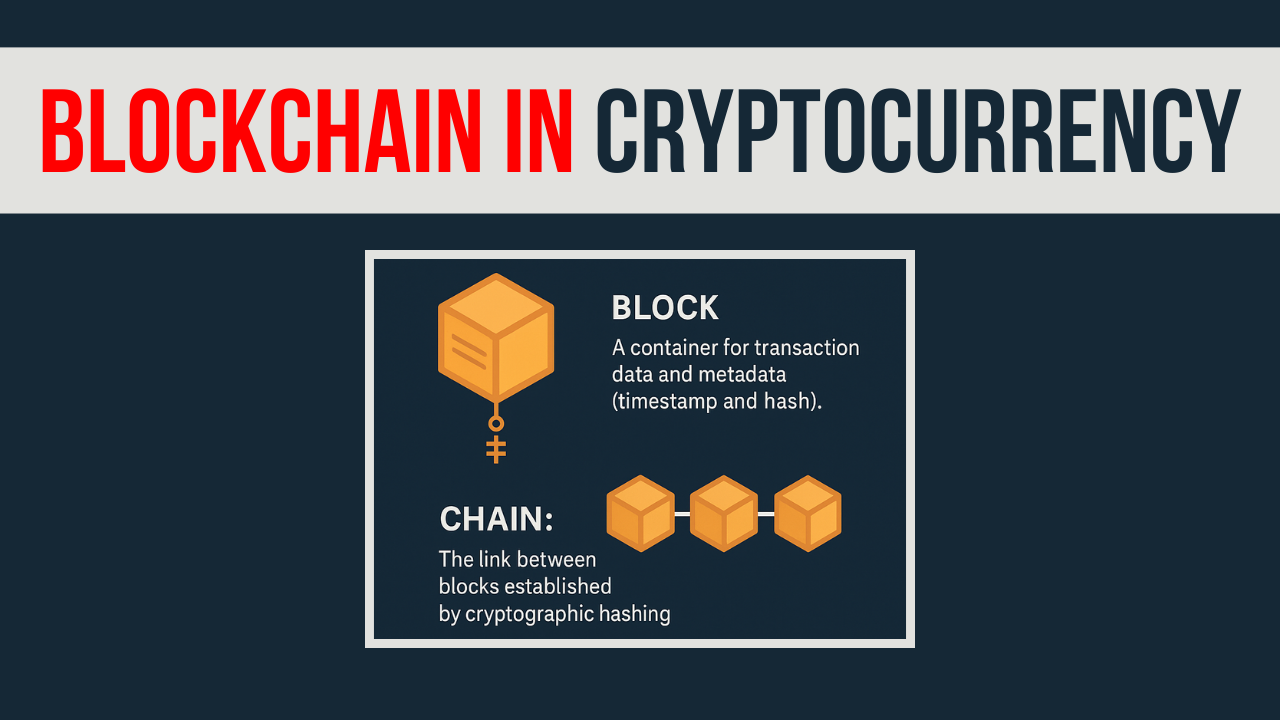
Blockchain is like a shared digital notebook that records all cryptocurrency transactions. No one can change entries alone. In this article we will cover key ideas and keywords such as blockchain how to create, components of blockchain, block chain images, and more.

What Is Blockchain?

Blockchainย is like a shared digital notebook that records transactions securely across many computers (calledย nodes). No single person or company controls it, making itย decentralizedย and tamper-proof.

Blockchain is like a chain of blocks. Each block holds some data. The data can be transactions or contracts. Every block links to the one before it. This link is very strong. It is made by math codes. No one can change a block without breaking the chain. The chain lives on many computers at once. This makes it safe and open.

Blockchain in Cryptocurrency like Bitcoin
Take Bitcoin as an example. Every time someone sends Bitcoin, the transaction goes into a block. The block joins the chain. Once it is there, no one can erase it. This stops a person from spending the same Bitcoin twice. Everyone on the network sees the transaction. This builds trust. It helps stop scams and tricks.

Blockchain ensures every transaction is transparent and permanent.

What Does Decentralization Mean?
Decentralization means no single person is in charge. Many computers share the work. Each computer has a full copy of the chain. If one computer stops, the others keep going. This makes the system strong. It has no single weak point. Public blockchains like Bitcoin are very decentralized. Private blockchains used by companies may have fewer computers. They are less open but still help many users.


Key Components of Blockchain

  1. Block: A digital “page” that stores transaction details (amounts, sender/receiver) and a timestamp.
  2. Chain: Blocks are linked using unique codes (hashes), forming a secure chain. Changing one block breaks the entire chain.
  3. Nodes: Computers worldwide that store copies of the blockchain, ensuring no single point of failure.
  4. Consensus Mechanisms: Rules likeย Proof of Workย (used by Bitcoin) orย Proof of Stakeย that help nodes agree on valid transactions.

How Does Blockchain Work in Cryptocurrency?

  • Step 1: A user initiates a transaction (e.g., sending Bitcoin).
  • Step 2: Nodes verify the transaction using pre-set rules.
  • Step 3: Verified transactions are grouped into aย block.
  • Step 4: The block gets a unique hash and is added to the chain.
  • Step 5: All nodes update their copies of the blockchain.

This process ensures security (no fraud) and transparency (everyone sees the same records).

Also Read – Does Cryptocurrency Have a Future in India?


Where Is Blockchain Stored?

Blockchain isnโ€™t stored in one place. Instead:

  • Every node keeps a full copy.
  • Thereโ€™s no central serverโ€”data is spread globally.

Who Invented Blockchain?

The concept of blockchain technology was introduced in 2008 byย Satoshi Nakamotoย (a person or group) through the Bitcoin whitepaper. Since then, blockchains like Ethereum expanded the technology for uses beyond payments.


Real-World Uses of Blockchain in Cryptocurrency

1. Digital Payments

Blockchain enables fast, low-cost global money transfers without relying on banks or payment processors.

  • Example: Sending Bitcoin from Japan to Brazil takes minutes, with fees as low as a few cents. Traditional methods like bank transfers can take days and charge high fees.
  • How it works: Transactions are verified by nodes worldwide, cutting out middlemen. This is especially useful for migrant workers sending remittances to families.
2. Decentralized Finance (DeFi)

DeFi platforms use blockchain to recreate financial services (loans, savings, trading) without banks.

  • Example: On platforms likeย Aaveย orย Compound, you can:
    • Lend cryptoย and earn interest daily (no bank account needed).
    • Borrow fundsย instantly by using crypto as collateral.
  • Benefits: Open 24/7 to anyone with an internet connection, even in regions with no banks.
3. NFTs & Digital Art

Non-Fungible Tokens (NFTs) use blockchain to prove ownership of unique digital items.

  • Example: Artists sell digital art as NFTs (e.g., Beepleโ€™s $69 million artwork). Buyers get a blockchain certificate that canโ€™t be copied.
  • Use cases:
    • Collectibles: Rare in-game items, virtual land (e.g.,ย Decentraland).
    • Royalties: Artists earn automatic commissions every time their NFT is resold.

Why Is Blockchain Important?

No Middlemen
  • Direct transactions: You can send money, sign contracts, or trade assets directly with others. No banks, lawyers, or brokers are needed.
  • Cost savings: Eliminating intermediaries reduces fees (e.g., sendingย 10,000viaBitcoincostsย 10,000viaBitcoincostsย 1 vs. ~$500 via traditional services).
Security
  • Tamper-proof records: Each block is linked to the previous one using cryptography. To hack a blockchain, youโ€™d need to alterย every copyย onย all nodesโ€”nearly impossible.
  • Example: Bitcoinโ€™s blockchain has never been hacked since 2009.
Transparency
  • Public ledger: Anyone can view all transactions (e.g., explore Bitcoinโ€™s blockchain onย Blockchain.com).
  • Trustless system: You donโ€™t need to trust a bankโ€”verify transactions yourself using the blockchainโ€™s open records.

Latest Developments in Blockchain Technology

Here are the latest developments in blockchain technology, explained in simple language:

  1. Tokenizing Real-World Assets
    Organizations are creating digital tokens that represent ownership in real items such as real estate, art, or gold. This allows more people to invest by buying small shares of valuable assets.
  2. Combining AI with Blockchain
    Artificial intelligence is being used together with blockchain to make systems smarter. For example, AI can detect fraud in transactions or automate tasks on decentralized platforms.
  3. Enhanced Privacy with Zero-Knowledge Proofs
    Zero-knowledge proofs let users prove information without revealing the actual data. This makes blockchain transactions more private and secure.
  4. Central Bank Digital Currencies (CBDCs)
    Some governments are creating their own digital money. For example, the digital rupee can work offline. This helps people make digital payments even without an internet connection.
  5. Eco-Friendly Blockchain Practices
    Blockchain networks are moving from energy-heavy methods to more efficient ones like Proof of Stake. This reduces power use and lowers the carbon footprint.
  6. Modular Blockchain Infrastructure
    Modular blockchains work like building blocks that developers can mix and match. This makes it easier to build custom solutions that are faster and more efficient.
  7. Decentralized Autonomous Organizations (DAOs)
    DAOs are groups that make decisions together without a central leader. They use blockchain to vote and manage projects, offering more transparency and fairness.
  8. Clearer Regulations for Digital Assets
    Governments are developing laws to regulate cryptocurrencies and other digital assets. Better rules help protect users and promote innovation.
  9. Big Tech Embracing Blockchain
    Large companies are adding blockchain features to their services. For example, some are exploring digital payments using stablecoins and improving cross-border transactions.
  10. Blockchain in Gaming and the Metaverse
    Blockchain lets players own and trade in-game items outside the game. This creates real value for virtual goods and new opportunities in online gaming economies.

First Country in the World to Use Blockchain

In April 2016, Georgia became the first nation to use blockchain for a government land registry. Partnering with Bitfury, it used the Bitcoin blockchain to record property titles. This helped ensure transparency and reduced fraud.

By 2017, the project expanded and became a global example. Unlike regular systems, blockchain created tamper-proof records. Although Sweden and Estonia later explored similar ideas, Georgia’s effort in 2016 was the earliest. This step showed how blockchain could improve public systems and inspired other countries to try the same.


Government of Indiaโ€™s Dedicated Blockchain Section

The Government of India has launched a dedicated blockchain portal, blockchain.gov.in, under the Ministry of Electronics & Information Technology (MeitY) and the National Informatics Centre (NIC). The platform, part of the Centre of Excellence (CoE) in Blockchain Technology, hosts nearly 8 million documents across five blockchains, including certificate, property, and drug logistics chains. It features case studies and dashboards showcasing projects like land records and GST enforcement.

It offers Blockchain-as-a-Service (BaaS) to enable businesses and government entities to deploy blockchain solutions efficiently. The portal also gives easy guides about parts of blockchain and offers tutorials for developers. This helps in creating new ideas and building skills for improving online government services and public facilities.

Also Read – 5 Benefits of Cryptocurrency for Governments Around the World


Conclusion

Blockchain is the backbone of cryptocurrency. Itโ€™s a secure, shared digital ledger that eliminates the need for central control. By linking blocks of data across thousands of computers, it ensures trust and transparencyโ€”making it revolutionary for finance, contracts, and beyond.

What is Delta Based Open Interest?

What is Delta Based Open Interest?

In this article, we explain what is delta based open interest and how it helps traders understand real market positions by adjusting open interest with option delta for more informed and confident trading.

Delta-Based Open Interest is the total number of active futures and options contracts after each contract is weighted by its delta.

Open Interest (OI) is the total number of futures and options contracts that are still active. It shows how many positions are open at any time. OI helps traders see how lively the market is. Higher OI means more people are trading and the market has more liquidity.

Why Use a Delta-Based Framework?

Traditional OI counts every contract the same way. But options can behave differently depending on how close their price is to the actual asset price. This is where delta comes in.

  • Delta measures how much an option’s price changes when the underlying asset price moves by one unit.
  • Deltas range from -1 to +1. For a call option, delta is between 0 and +1. For a put option, delta is between -1 and 0.
  • A delta of 0.5 means the option price moves half as much as the underlying asset price.

The Future Equivalent (FutEq) method uses delta to adjust OI. This makes the OI number reflect real risk better.

How Delta-Based OI is Calculated?

  1. Find Each Contractโ€™s Delta
    • For futures, delta is always +1 (or -1 if short).
    • For options, delta depends on how close the optionโ€™s strike price is to the current price.
  2. Multiply OI by Delta
    • Futures contracts count fully.
    • Options count less if their delta is below 1. For example, an at-the-money option with delta 0.5 adds only half a contract to the total.
  3. Add Up the Adjusted Numbers
    • Sum the adjusted open interest for all contracts.
    • This sum is the delta-based Open Interest or FutEq OI.

Advantages of Delta-Based OI

  • Better Risk Assessment
    By using delta, the OI shows how much real exposure traders have to price changes.
  • Fair Position Limits
    Regulators can set safer limits on how many contracts a person or firm can hold.
  • Reduced Market Manipulation
    When limits reflect real risk, it is harder for a few traders to sway the market.

SEBIโ€™s Delta Rule and Position Limits

The Securities and Exchange Board of India (SEBI) has proposed using the delta-based method for setting gross position limits in index options. Limits may be raised to Rs. 10,000 crore using FutEq OI instead of the old notional method. This change aims to keep markets fair and stable.

  • Gross Position Limit is the maximum open exposure a client can have in index futures and options.
  • Under the FutEq system, if your options have lower deltas, you may hold more contacts safely.

Market-Wide Position Limit (MWPL)

Another key concept is Market-Wide Position Limit (MWPL). This cap applies to all traders combined for a single stock.

  • Today MWPL is 20% of a stockโ€™s free-float market value.
  • SEBI plans to lower it to 15% or use 60 times the stockโ€™s average daily volume.
  • If total delta-based OI reaches 95% of MWPL, trading bans start. The ban lifts when OI falls below 80%.

Why It Matters for Traders

  1. Clearer View of Market Activity
    Traders can judge if big players are really exposed or just holding low-risk options.
  2. Better Trading Decisions
    Knowing the true open interest helps traders pick strategies.
  3. Compliance with Rules
    Following delta-based limits avoids penalties for breaking position caps.

Conclusion

Delta-based Open Interest or FutEq OI is a smarter way to measure active futures and options contracts. It looks at how much an optionโ€™s price will move when the underlying asset moves. This method gives a truer picture of market risk. It also helps set fair and effective position limits. As SEBI moves toward using delta-based rules, Indian markets should become safer and more transparent.

The Best TD Easy Trade Promo Codes for 2025 You Can Use Right Now

Pine Script v6 tutorial

TD Easy Trade is a mobile trading app from TD Bank in Canada. It makes buying and selling stocks and ETFs simple and affordable. To help new users get started, TD Easy Trade offers several promo codes. These codes can save you money on fees or even give you bonus cash. In this article, we explain how each TD Easy Trade promo code works and how you can use them to your advantage.


What Is TD Easy Trade?

TD Easy Trade is a mobile app that lets you:

  • Buy and sell Canadian and U.S. stocks
  • Trade partial shares to invest with smaller amounts
  • Access TD ETFs commission-free forever
  • Open noโ€‘fee accounts (Cash, TFSA, RRSP, FHSA)

With its clean design and clear fee structure, the app is perfect for both beginners and experienced traders.


Why Use a Promo Code

A promo code is a short string of letters or numbers that companies give to customers to unlock special deals. When you enter this code during sign-up or checkout, you can get discounts, fee waivers, or bonus rewards.

The terms โ€œpromo codeโ€ and โ€œpromotion codeโ€ mean the same thing. They refer to any code used in marketing campaigns to encourage you to try a product or service by offering you a benefit. You may see both names used, but they work exactly the same way.

Using a promo code for TD Easy Trade can help you:

  1. Save on transfer fees when you move assets from another broker
  2. Earn bonus cash by funding or transferring funds into your account
  3. Enjoy commissionโ€‘free trades without worrying about fees

These offers make it cheaper and easier to begin your investing journey.


Top 3 Best Promo Codes for TD Easy Trade in 2025

1. GETSTARTED: Transfer Fee Reimbursement

  • What it is: Reimburses up to $150 in transfer fees charged by your previous broker.
  • Who qualifies: New or existing Easy Trade clients who open or enroll in a Cash, TFSA, RRSP, or FHSA account and transfer at least $25,000 in assets.
  • How to claim:
    1. Sign up or enroll and enter GETSTARTED during account setup.
    2. Transfer $25,000 or more from another broker.
    3. Provide proof of fees.
    4. Receive up to $150 reimbursement within one month after transfer completion.

This code is ideal if you have a sizable portfolio elsewhere and want to switch without losing money on fees.

2. EASYSTART: $100 Bonus Cash

  • What it is: Earn $100 when you transfer at least $500 into your Easy Trade account.
  • Who qualifies: New or existing TD Easy Trade clients.
  • How to claim:
    1. Open or enroll by the offer deadline and enter EASYSTART.
    2. Transfer $500 or more by the specified date.
    3. Maintain the assets in your account for about six months.
    4. Receive $100 bonus by the end of the offer period.

This offer is perfect for investors who want to start small but still earn rewards.

3. Commissionโ€‘Free First 50 Trades

  • What it is: Your first 50 tradesโ€”both full and partial sharesโ€”are commissionโ€‘free.
  • Details:
    • Full shares trade at $0 for the first 50 trades.
    • Partial shares trade at $0 for the first 50 trades.
    • All TD ETFs always trade at $0 commission.
  • How to claim: No promo code needed. Simply open an account and start trading.

This benefit lets you explore different stocks and ETFs without paying fees.

Also Read – 5 Benefits of Cryptocurrency for Governments Around the World


How to Apply Your TD Easy Trade Promo Code?

Step-by-Step Guide

  1. Download the App
    • Find TD Easy Trade on the App Store or Google Play.
    • Ensure your device meets the app requirements.
  2. Open an Account
    • Choose Cash, TFSA, RRSP, or FHSA.
    • Complete the registration with your personal details.
  3. Enter the Promo Code
    • During signโ€‘up, look for the “Promo Code” field.
    • Type GETSTARTED or EASYSTART, depending on your choice.
  4. Fund or Transfer Assets
    • For GETSTARTED, transfer at least $25,000.
    • For EASYSTART, transfer at least $500.
    • Follow any deadlines and provide proof if required.
  5. Meet the Requirements
    • Hold assets for the required period if using EASYSTART.
    • Submit transfer fee receipts for GETSTARTED.
  6. Receive Your Reward
    • TD deposits reimbursements or bonus cash by the dates specified in the offer terms.

Tips to Maximize Your Reward

  • Read the Offer Terms: Check all deadlines and requirements on TDโ€™s official website.
  • Pick the Right Code: Use GETSTARTED for larger portfolios or EASYSTART for smaller transfers.
  • Combine Offers with Free Trades: After using a code, benefit from your first 50 commissionโ€‘free trades.
  • Trade TD ETFs: Even after free trades end, TD ETFs remain free to trade.
  • Set Calendar Reminders: Note key dates so you donโ€™t miss any deadlines.

Frequently Asked Questions (FAQs)

Q: Can I use both GETSTARTED and EASYSTART?
A: No. Each offer has its own rules. Choose the one that best fits your needs.

Q: Are there any account maintenance fees?
A: No. TD Easy Trade has no account maintenance fees for Cash, TFSA, RRSP, or FHSA accounts.

Q: When will I receive my bonus or reimbursement?
A: GETSTARTED reimbursements arrive within one month after your transfer completes. EASYSTART bonus cash posts after your sixโ€‘month hold period ends.

Q: I already have a TD Direct Investing account. Can I still use these codes?
A: Yes. You can enroll an existing Easy Trade account in the offer, provided you meet the transfer or funding requirements.


Conclusion

Using a TD Easy Trade promo code can help you save on fees or earn bonus cash. Choose GETSTARTED for transfer fee reimbursement or EASYSTART for a $100 bonus. Donโ€™t forget to take advantage of the first 50 commissionโ€‘free trades. Start investing today and make the most of these offers!

Keep visiting this blog post for new updates on TD Easy Trade promo code offers.

Is ITC Giving a Dividend in 2025? โ€“ Ex-Dividend Date, Record Date, and Financial Results for Q4 FY25

ITC LIMITED DIVIDEND 2025 - EX-DIVIDEND DATE, RECORD DATE, PAYMENT DATE

In this article, we will discuss ITC Dividend 2025. We will also talk about the ex-dividend date, record date, and payment date for ITC Dividend 2025. ITC Limited’s dividend history will also be covered. We will look into the recent financial performance of ITC for Q4 FY2025 and explore other important financial metrics. So, let us get started.

About ITC Limited

Stock SymbolBSE: 500875, NSE: ITC
IPO Year1978
Stock ExchangeBSE, NSE
Market Capโ‚น5.12 lakh crore
FounderGovernment of India
Incorporation1910 (as Imperial Tobacco Company of India)
HeadquartersKolkata, West Bengal, India
SectorFMCG, Hotels, Paperboards & Packaging, Agri-Business, Information Technology
IndustryFast-Moving Consumer Goods (FMCG)
SpecializationTobacco products, Branded packaged foods, Stationery, Agri-commodities, IT services

ITC Limited began in 1910 as the Imperial Tobacco Company of India. Over time, it diversified into new businesses like hotels and FMCG. Today, ITC is a leader in cigarettes and has strong brands in foods, stationery, and agri-business.

Headquartered in Kolkata, ITC serves customers across India and in over 90 countries. The company has manufacturing units for cigarettes, packaged foods, paperboards, and agri-products. ITC also runs luxury hotels in India under the ‘Welcomhotel’ brand.

In 2005, ITC entered the paperboards and packaging business, becoming one of the largest in India. It later launched branded packaged foods like ‘Aashirvaad’ atta and ‘Sunfeast’ biscuits. The company expanded into agri-business with farm development programs and retail outlets.

ITCโ€™s IT services arm provides software solutions to global clients. The company focuses on sustainability and has large forest plantations to support its paperboards division. Through its diverse businesses, ITC creates long-term value and steady returns for shareholders.


ITC Dividend 2025 Announcement

In an exchange filing on 8th May 2025, ITC informed investors about the Q4 results for FY 2024-25 and the final audited results for the same period. Along with that, ITC also mentioned the announcement of the ITC Dividend for 2025.

According to an official exchange filing dated 8th May 2025, the ITC Board of Directors will meet on 22nd May 2025 to consider and approve the audited financial results for FY 2024-25 and to recommend the final dividend.

Important Dates for ITC Dividend 2025

  • The ex-dividend date for ITC 2025 dividend is (to be updated).
  • The record date for ITC dividend 2025 is (to be updated).
  • The payment date for ITC dividend for 2025 is (to be updated).

Let us summarise the important dates for ITC Dividend 2025:

Dividend Declaration22 May 2025
Ex-Dividend DateTo be updated
Record DateTo be updated
Payment DateTo be updated

Also Read – Tata Motors Dividend 2025 Announced? โ€“ Record Date, Ex-Dividend Date & More

ITC Dividend History

DateDividend TypeAmount (โ‚น)
12 Feb 2025Interim Dividend6.50
04 Jun 2024Final Dividend7.50
08 Feb 2024Interim Dividend6.25
30 May 2023Final Dividend6.75

As we can see, ITC has consistently rewarded its shareholders with attractive dividends. Despite market challenges, the company maintains a strong dividend culture.

What is the difference between Interim Dividend and Final Dividend?

Interim dividends are paid before the companyโ€™s full-year results are finalized, based on performance in the early part of the financial year. Final dividends are declared after the full-year audited results, approved at the AGM, and reflect the companyโ€™s overall annual performance.

How to Apply for ITC Limited Dividend 2025?

You do not need to apply yourself. Your broker and the company handle everything. Just ensure that your shareholding details and bank information are up to date. Then, on or after [Dividend Payment Date], ITC will directly credit the dividend to your bank account.

ITC Limited Dividend 2025 โ€“ Tax Rules Explained

Since April 2020, dividends are taxable in the hands of shareholders. If your total dividend income exceeds โ‚น5,000 in a year, the company will deduct 10% TDS, unless you submit a lower-tax certificate. You must include all your dividend income when filing your tax return.


5 Benefits of Cryptocurrency for Governments Around the World

Benefits of Cryptocurrency for Governments Globally

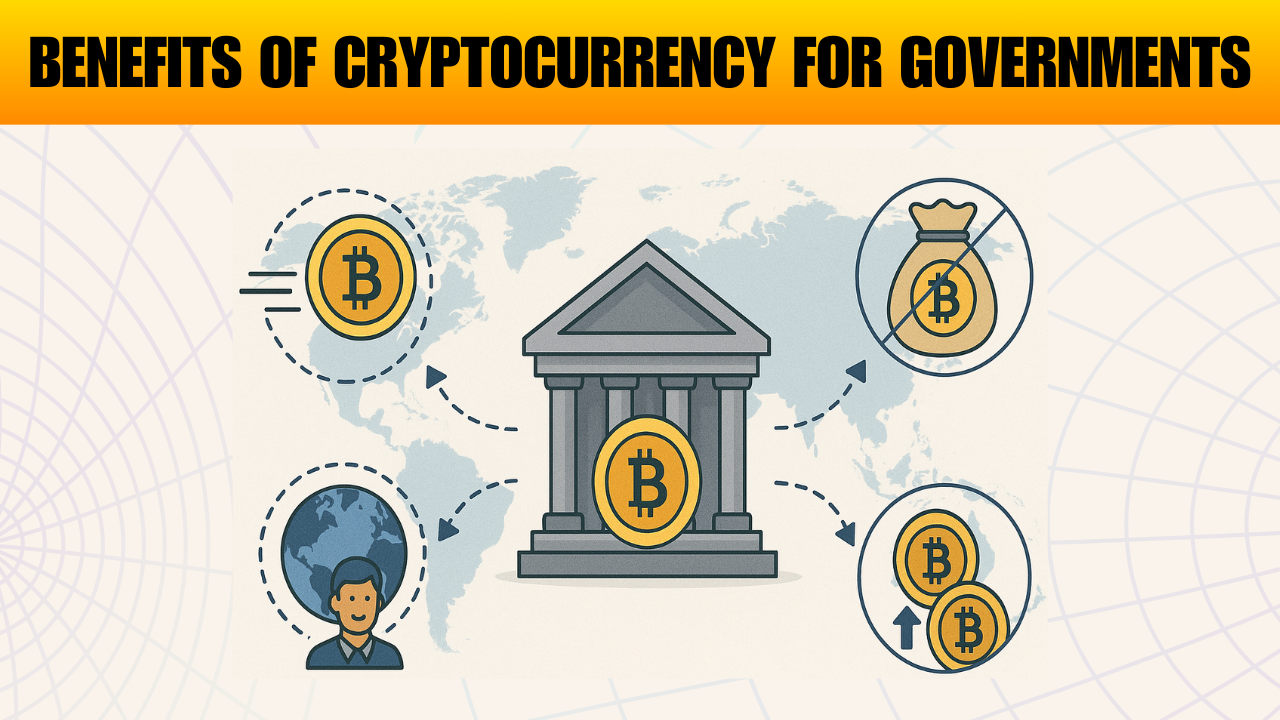
Governments around the world are looking at cryptocurrency and blockchain to improve how they work. From El Salvador using Bitcoin to China testing a digital yuan, these new tools can make public services faster, cheaper, and more secure.

In this article, we look at the top 5 benefits of cryptocurrency for governments around the world that make countries want to use crypto and blockchain. No, we are not going to write a boring essay on the benefits of cryptocurrency for governments. Instead, we will give you crisp and useful information that is helpful for everyone. So let us begin.


Top 5 Benefits of Cryptocurrency for Governments Globally

1. Better Transparency and Less Corruption

5 Benefits of Cryptocurrency for Governments Around the World

How Blockchain Helps
Blockchain is like a shared digital notebook that anyone can check but no one can erase. When governments put spending or contracts on a blockchain, it is easy to see where money goes. This stops people from hiding bad deals or misusing funds.

  • Land Records: In Georgia and Sweden, officials use blockchain to record land ownership. This cuts down on fake papers and long waits.
  • Government Tenders: Ukraineโ€™s ProZorro system tracks public bids on a blockchain. Since 2016, it has saved billions by cutting out secret deals.

How Crypto Helps
If a government pays people or groups with cryptocurrency, the money goes straight to them. There are no extra banks or agents to take fees or cause delays. In places where banks fail or are slow, this can make life easier for everyone.


2. Lower Costs and Faster Services

How Blockchain Helps
Replacing forms and paper with a blockchain can save a lot of work and money. Estonia uses this idea in health care, taxes, and voting. Their system saves more than 1,400 years of work every year.

How Crypto Helps

  • Cutting Cash Expenses: Printing and handling paper money can cost up to 1 percent of a countryโ€™s entire economy each year. A digital currency like Nigeriaโ€™s eNaira can eliminate those costs.
  • Quick Payments: Crypto can move money across borders in minutes instead of days. The Philippines cut remittance fees by half when it added crypto channels.

3. More Growth and Fair Access to Money

How Blockchain Helps
Digital ID systems on blockchains can give people without bank accounts a way to prove who they are. Indiaโ€™s Aadhaar is a good example. This lets people get loans, insurance, or help from the government using just their phone.

How Crypto Helps

  • Saving on Remittances: Countries like El Salvador get almost a quarter of their income from money sent home by workers abroad. Bitcoin cuts out middlemen and keeps more cash in families.
  • Attracting Tech Companies: Places such as Switzerlandโ€™s Crypto Valley and Dubaiโ€™s crypto zone bring in startups and jobs by offering clear rules for blockchain firms.

4. Stronger Security and Independence

How Blockchain Helps
Countries test secure online voting with blockchains in South Korea and Sierra Leone. This can stop hackers from changing results. Russia uses blockchain to guard its energy systems against cyber attacks.

How Crypto Helps

  • Avoiding Sanctions: Nations under trade bans can use crypto to buy and sell goods when banks wonโ€™t help them.
  • Keeping Control: A central bank digital currency (CBDC) like Chinaโ€™s digital yuan lets a country manage its own money supply and cut reliance on big currencies like the US dollar.

Did you know?
Bitcoin is the worldโ€™s first cryptocurrency, launched in 2009 by an unknown person (or group) using the name Satoshi Nakamoto.

5. Leading in Innovation and Competing Globally

How Blockchain Helps
When governments invest in blockchain research, they lead the way. The EUโ€™s European Blockchain Services Infrastructure links 29 countries. It handles things like diplomas and tax forms smoothly across borders.

How Crypto Helps

  • Smart Money: CBDCs can be set up so that stimulus payments expire if not used. They can even collect taxes automatically when you buy something.
  • Green Projects: Bhutan uses its clean power to mine Bitcoin. This approach wins praise from investors who care about the environment.

Challenges Governments Face in Regulating Cryptocurrency and Blockchain Technology

While crypto and blockchain have many advantages, governments still face some serious challenges when trying to use these new tools. These include:

  1. Making Rules and Laws
    Creating fair rules is hard. If rules are too strict, people may stop using crypto. If rules are too loose, it can lead to scams or misuse. Governments also need to follow global rules like KYC (Know Your Customer) and AML (Anti-Money Laundering).
  2. Price Fluctuations and Trust Issues
    Coins like Bitcoin often go up and down in price very quickly. This makes people unsure about using them daily. Some governments are looking into stablecoins or CBDCs that are backed by real money to keep the value steady.
  3. High Energy Use
    Some blockchains need a lot of electricity to run. This can harm the environment. Countries must choose eco-friendly ways like Proof-of-Stake systems or use clean energy for blockchain projects.
  4. Lack of Skilled Workers and Good Tech
    Running a secure and strong blockchain system needs trained people and modern tools. Many public offices do not have enough experts. Training workers and working with private tech firms can help.
  5. Cyber Attacks and Privacy Risks
    Even though blockchains are safe, the apps and websites connected to them can be hacked. Governments need to build strong systems to protect data and keep it private.
  6. Old Systems Donโ€™t Match New Tech
    Many government databases are old and may not work well with blockchain. Making these systems work together takes planning and effort.
  7. People Donโ€™t Understand Crypto Yet
    Many people still donโ€™t know how crypto works. They might be afraid to use it. Governments need to teach the public and create easy apps so more people feel confident using digital money.
  8. Global Conflicts and Cooperation
    As countries build their own digital currencies, problems may come up around who controls data or how cross-border payments are handled. Governments need to work together to avoid conflicts and build shared systems.

Also Read – Crypto Trading โ€“ A Complete Master Guide for Beginners

The Bottom Line

Cryptocurrency and blockchain can change how governments work. They offer clearer budgets, cheaper services, wider access, stronger security, and new ways to lead in tech. Solving these challenges will take time. But the countries that act now can set the pace for global progress. As crypto and blockchain reach more people, they will shape the next era of governance.