Candlesticks Not Showing or Visible in TradingView? – Complete Solution Guide

When candlesticks are not showing or visible in TradingView, the issue is usually straightforward once you know where to look. Whether it is caused by unticked candle settings, hidden objects, an accidental chart type switch, a color clash, or extreme zoom levels, each of these problems can be resolved directly from the chart interface.

If you open a chart and suddenly notice that candlesticks are missing, invisible, or seem to have disappeared, it can be frustrating – especially when you are actively analyzing the market. This is one of the most common TradingView chart problems and is often mistaken for a loading issue or platform bug. In reality, candles not showing on TradingView is usually caused by a few specific settings or visual conflicts that can be fixed within seconds.

This article explains all the major reasons why a TradingView chart is not showing candles and shows you exactly how to unhide candlesticks on TradingView step by step.

Why Candlesticks Disappear on TradingView?

The root cause is rarely a server-side issue. In most cases, the chart is working perfectly, but certain visual settings, chart types, or zoom levels make the candles invisible.

Understanding how TradingView handles chart styles, object visibility, and color settings will help you quickly diagnose and fix the problem.

Also Read – 3 Easy Methods to Hide Candlesticks in TradingView

5 Possible Reasons Why Candlesticks Are Not Showing in TradingView

When candles are not showing or visible in TradingView, the solution is usually simple once you know where to look. Most issues can be fixed directly from the chart interface in just a few seconds.

Before learning how to bring candles back on a candlestick chart, first make sure you are on the correct instrument. For example, in my case, the instrument is BTCUSD.

Below are the five most common reasons candlesticks are not showing on TradingView.

Body, Wick, or Border Accidentally Unticked in Chart Settings

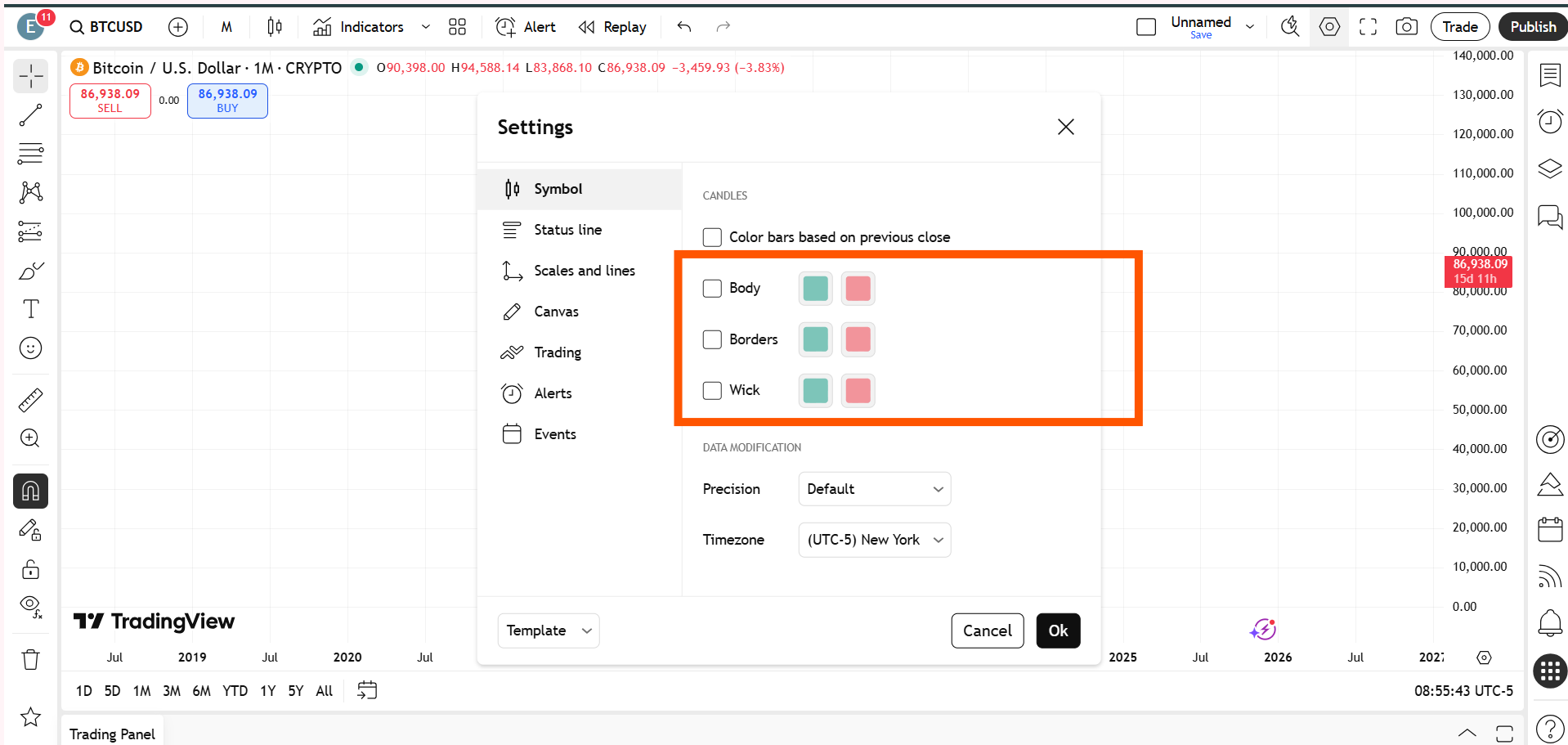
One of the most overlooked reasons for candles not showing on TradingView is related to candle style settings. TradingView allows you to individually control the visibility of the candle body, wick, and border. If the body, wick, or border option is unticked, the candles technically exist on the chart but are not visible.

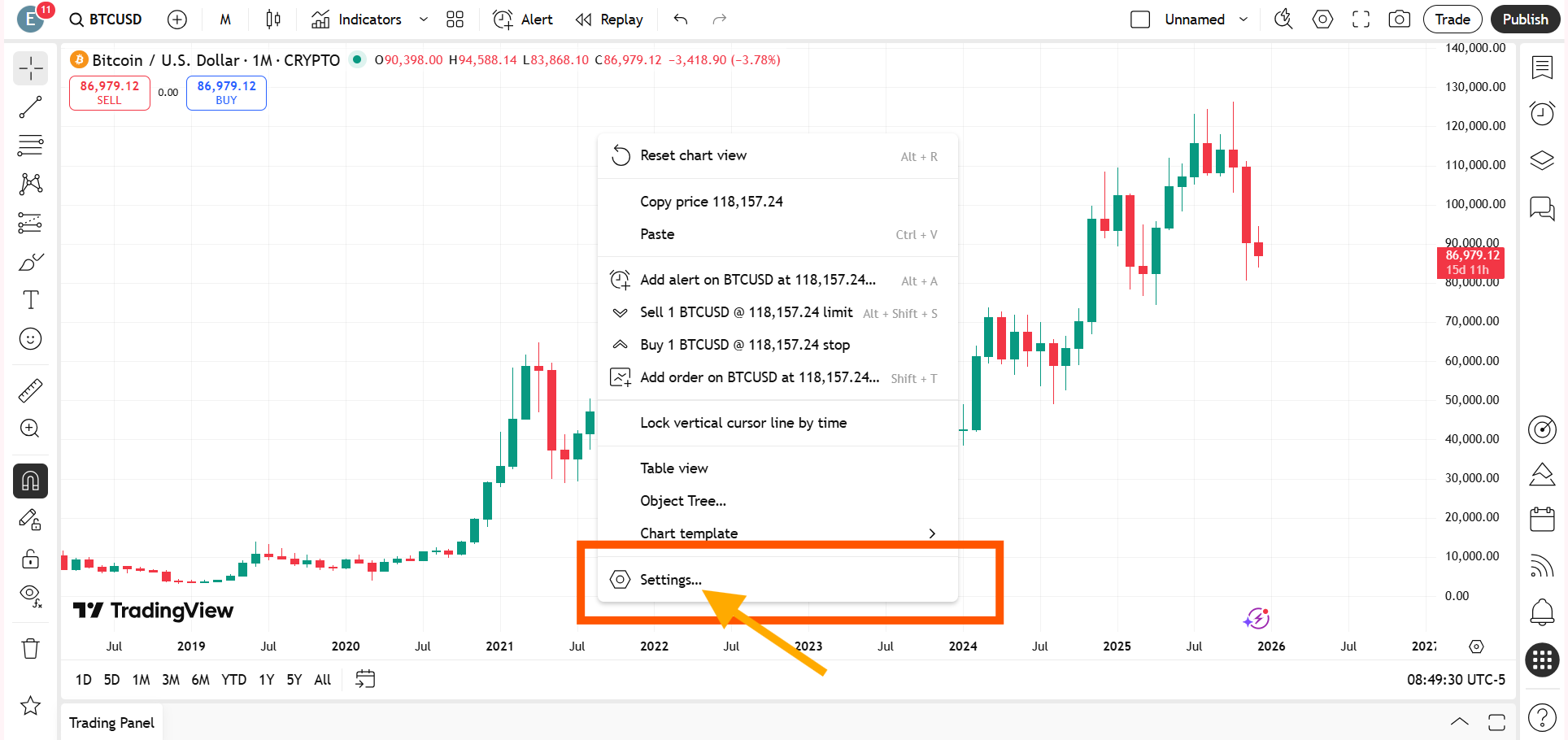
So, right-click on the chart and go to Settings. Within the Symbol option, make sure the body, wick, and border are ticked.
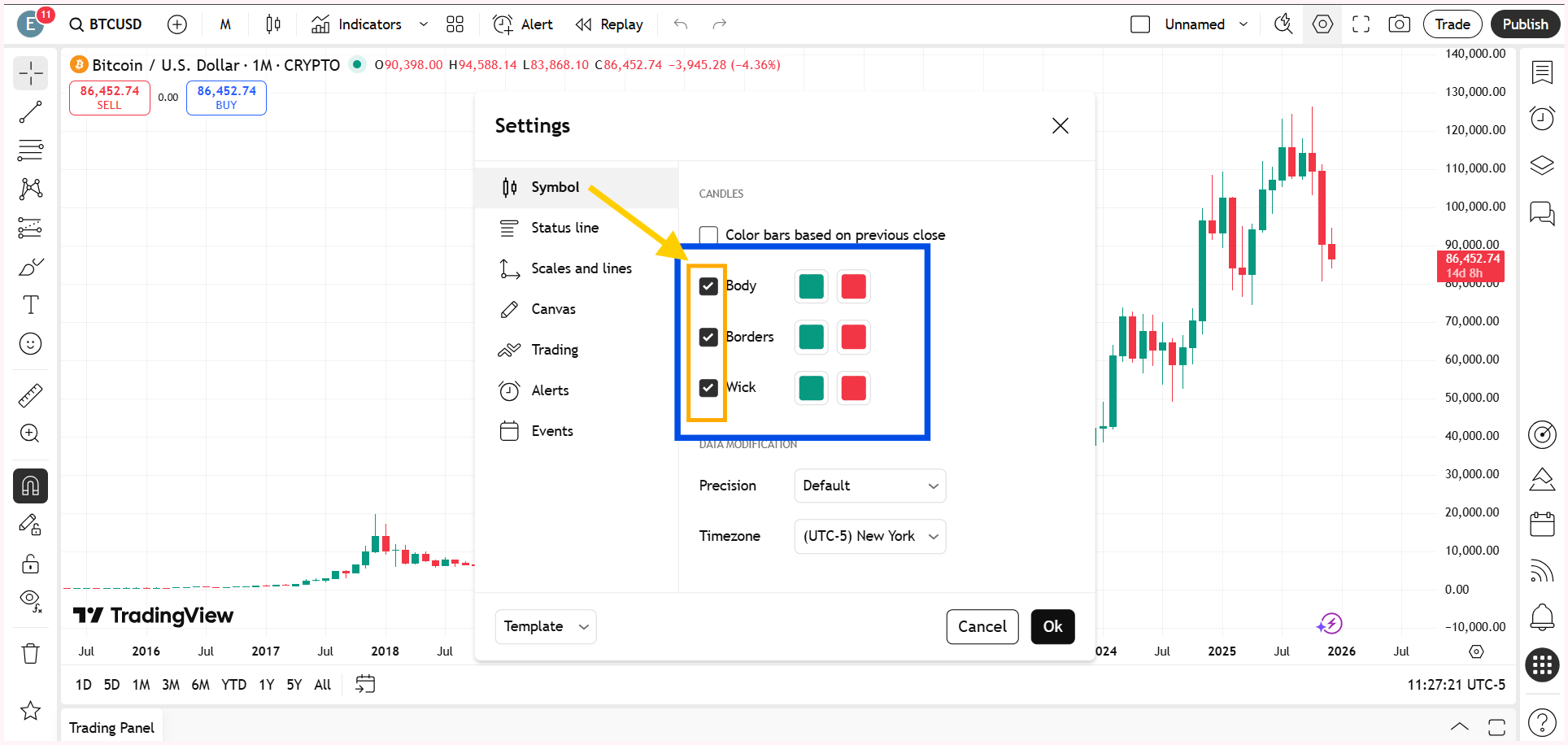
Right-click anywhere on the chart and open Settings. Inside the Symbol section, ensure that the body, wick, and border options are enabled.

Candles Hidden from the Object Tree or Data Window

Another common TradingView chart problem occurs when candle visibility is disabled through the object tree or data window.

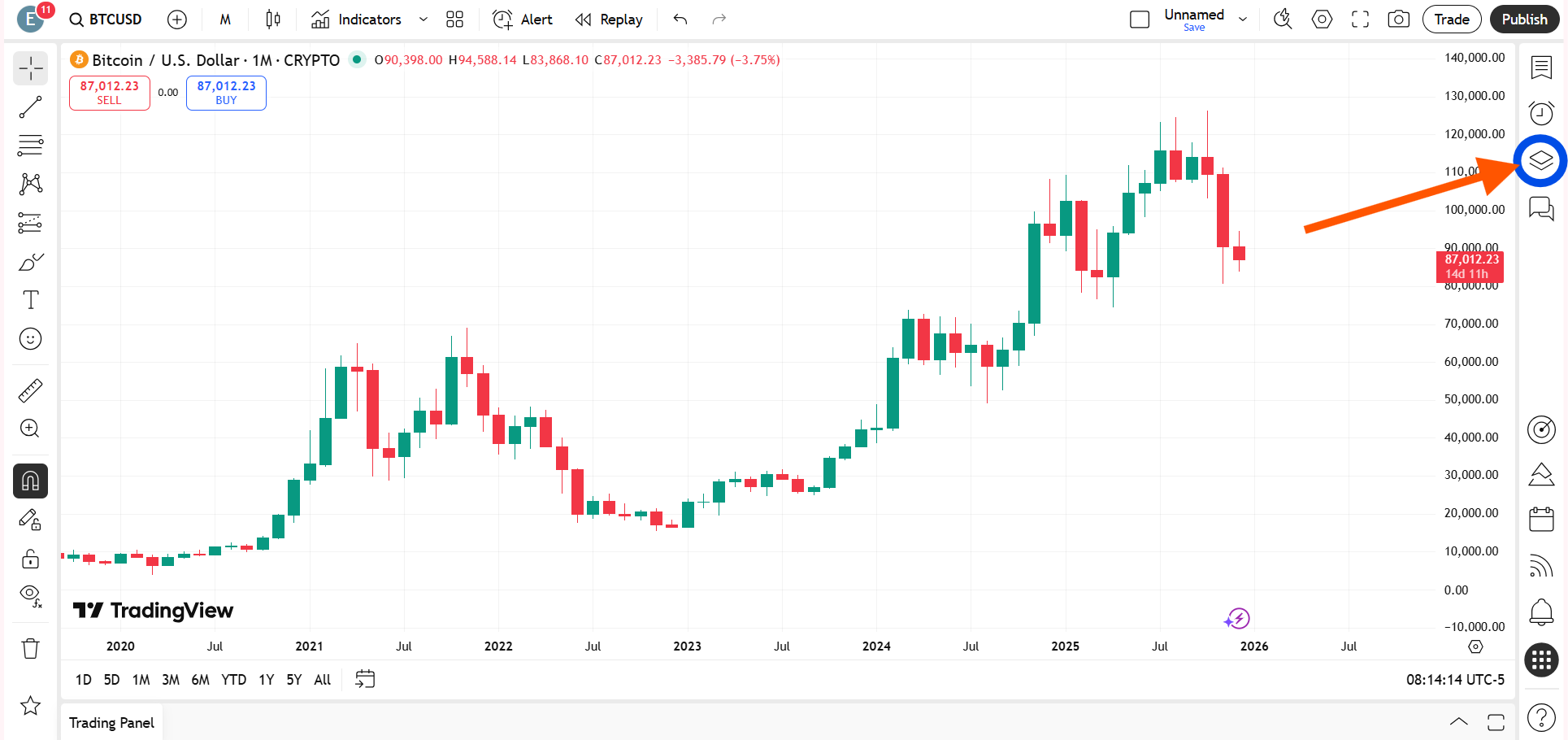
Just click on the Object Tree and Data Window on the right-side toolbar and check whether the eye icon is turned on or off.
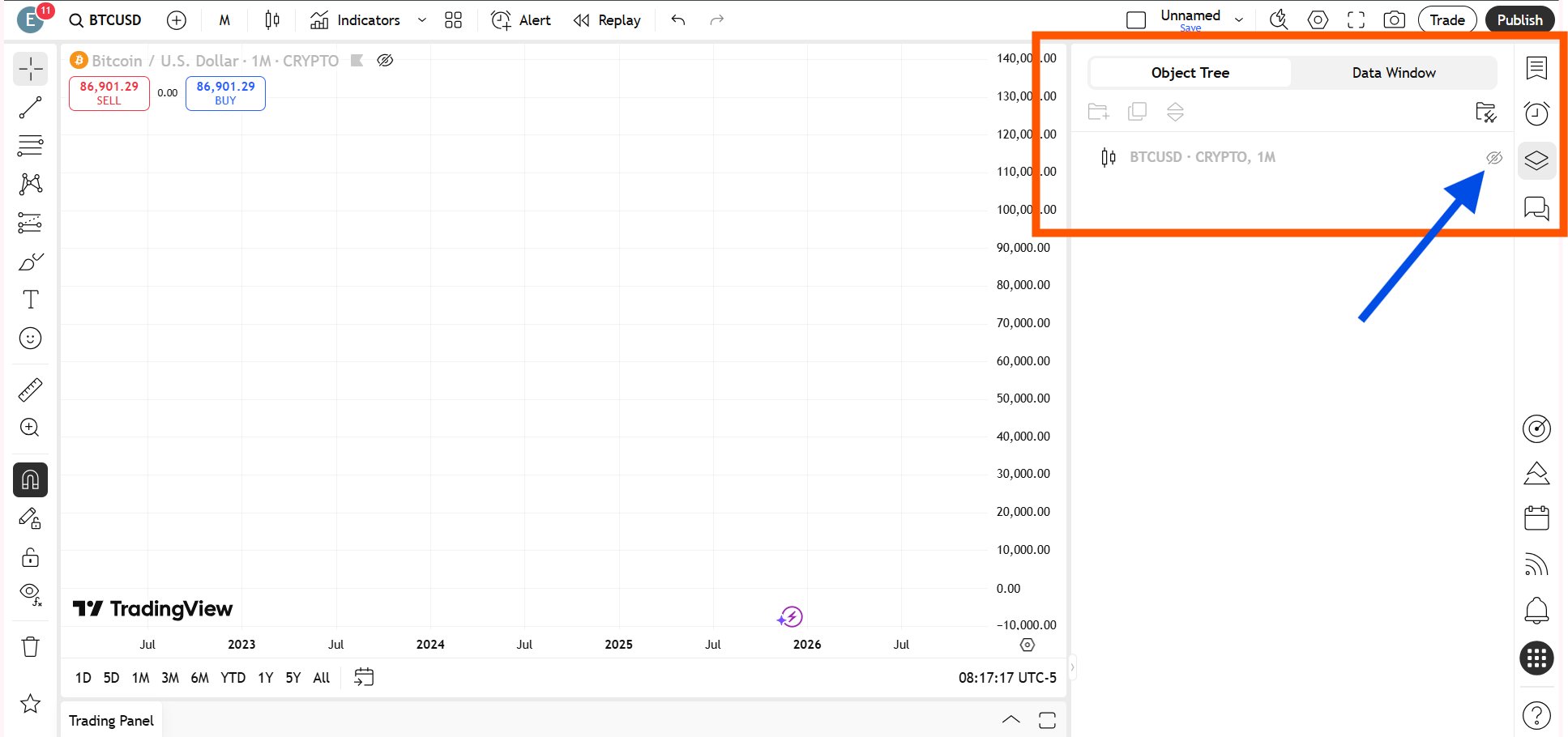
By opening the object tree or data window and turning visibility back on, you can immediately unhide candles on TradingView.

Switched to a Different Chart Type by Mistake

You may have accidentally changed the chart type to something like a line chart, and that is why you are no longer seeing candlesticks.

When the chart type is switched away from candlesticks, the candles do not disappear due to an error; they are simply replaced by another visual format. Switching the chart type back to candlestick instantly brings the candles back onto the chart, restoring the standard price view used for technical analysis.

How to change a line chart to a candlesticks chart on TradingView?

Open your chart on TradingView. Look at the top-left corner of the chart toolbar and click on the Chart Type icon. This icon usually displays the currently selected chart style, such as a line chart.
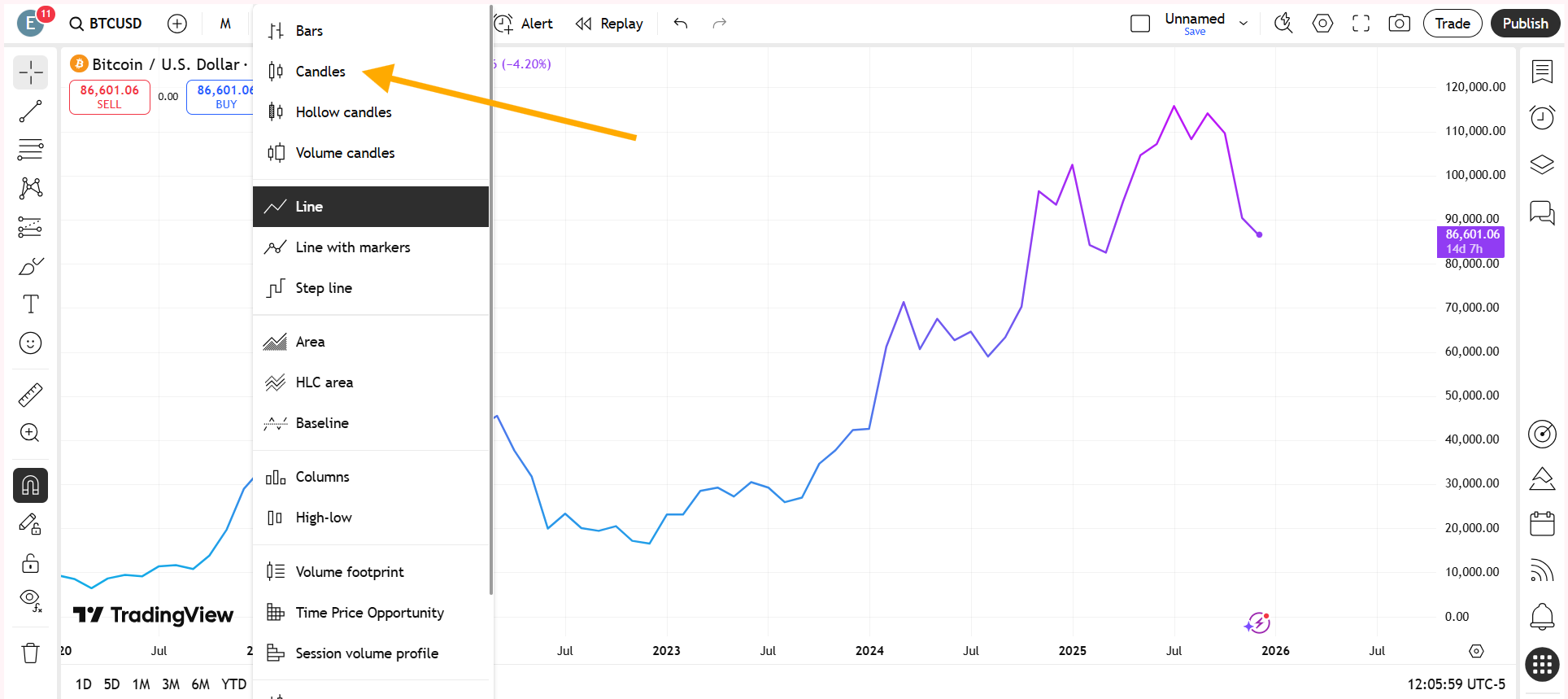
Switching the chart type back to candlestick instantly brings the candles back onto the chart, restoring the standard price view used for technical analysis.

From the dropdown menu, select Candlesticks. Once selected, the chart will instantly switch from a line chart to a candlestick chart.

Chart Background and Candle Color Clash

Sometimes the candles are present but completely blend into the chart background. If the candle color is identical or very close to the background color, the chart appears empty even though data is loaded.

This color clash usually occurs after applying a dark or custom theme or importing chart templates from other users.

Changing either the chart background color or the candle body and wick colors can immediately restore visibility and resolve the issue of candlesticks not showing on TradingView, without any technical troubleshooting.
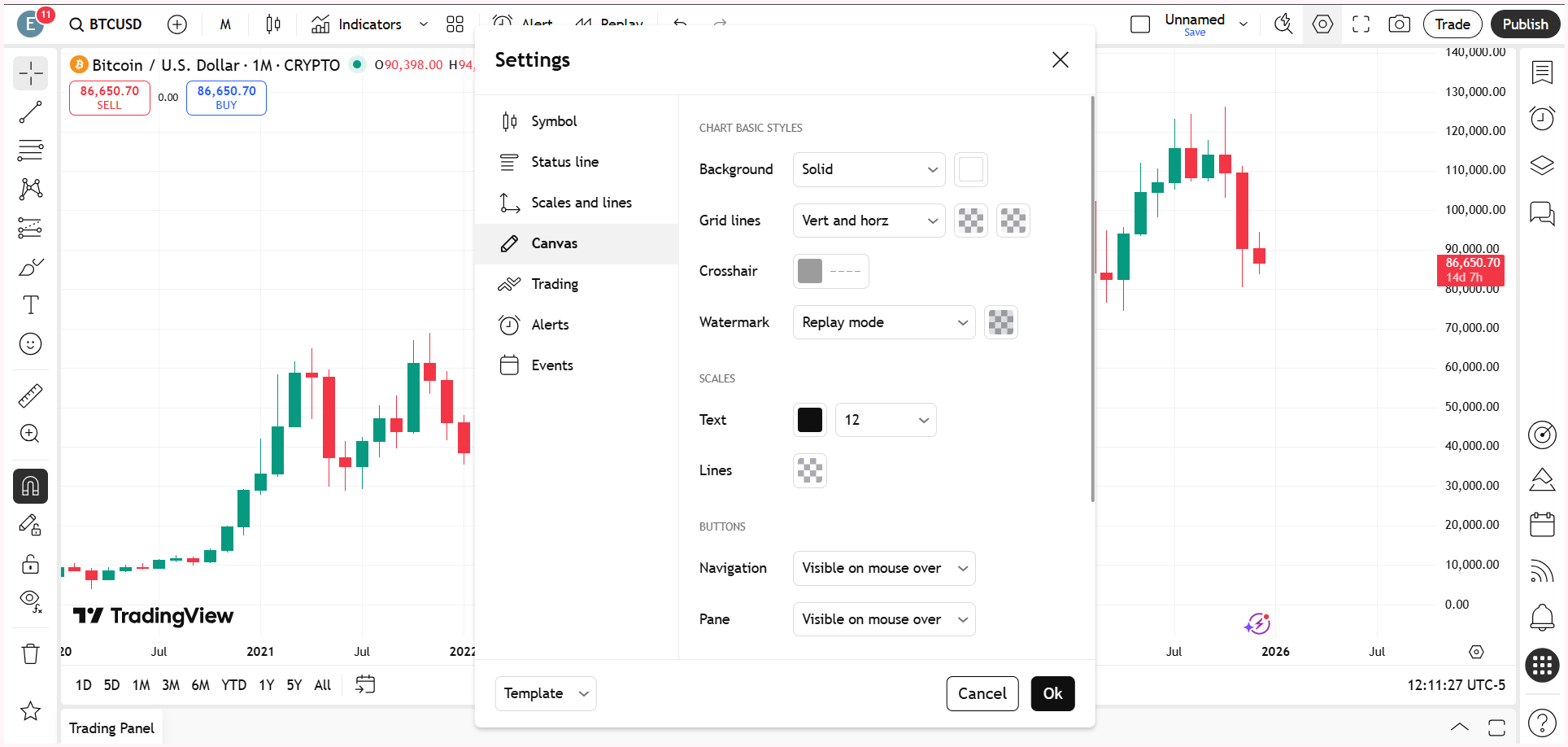
Adjusting either the background color or the candle body and wick colors restores visibility and fixes the TradingView chart not showing issue without any technical troubleshooting.

Also Read – What is the difference between ICT and SMC?

Extreme Zoom Level Hiding Candlesticks

An extreme zoom-in or zoom-out level can also make candlesticks disappear on TradingView. When zoomed out too far, individual candles become too compressed to render clearly. When zoomed in too much, the chart may appear blank because the visible range contains no price data.

Resetting the chart view brings the candlesticks back into view immediately. Alternatively, you can press Alt + R.

This is one of the simplest fixes and should always be checked before assuming a chart loading problem.


Watch the full video below so you donโ€™t miss any important steps.

This article is for informational purposes only and should not be considered financial advice. Investing in stocks, cryptocurrencies, or other assets involves risks, including the potential loss of principal. Always conduct your own research or consult a qualified financial advisor before making investment decisions. The author and publisher are not responsible for any financial losses incurred from actions based on this article. While efforts have been made to ensure accuracy, economic data and market conditions can change rapidly. The author and publisher do not guarantee the completeness or accuracy of the information and are not liable for any errors or omissions. Always verify data with primary sources before making decisions.

Why is My TradingView Chart Not Showing Anything?

When a TradingView chart is not showing, it is usually not a data or server issue. In most cases, the chart is loaded but the candlesticks are hidden due to candle style settings, an accidental chart type change, extreme zoom levels, or visibility being turned off in the object tree or data window. Checking these settings typically restores the chart instantly.

Why is My TradingView Chart Not Loading Properly?

In some cases, a TradingView chart may not load properly due to a temporary technical glitch or a short connectivity issue. This can happen because of browser cache problems, momentary internet interruptions, or brief platform-side delays. When this occurs, simply refreshing the page or reloading the chart usually resolves the issue. If the problem persists, checking your internet connection or reopening the chart in a new tab can help restore normal chart loading on TradingView.
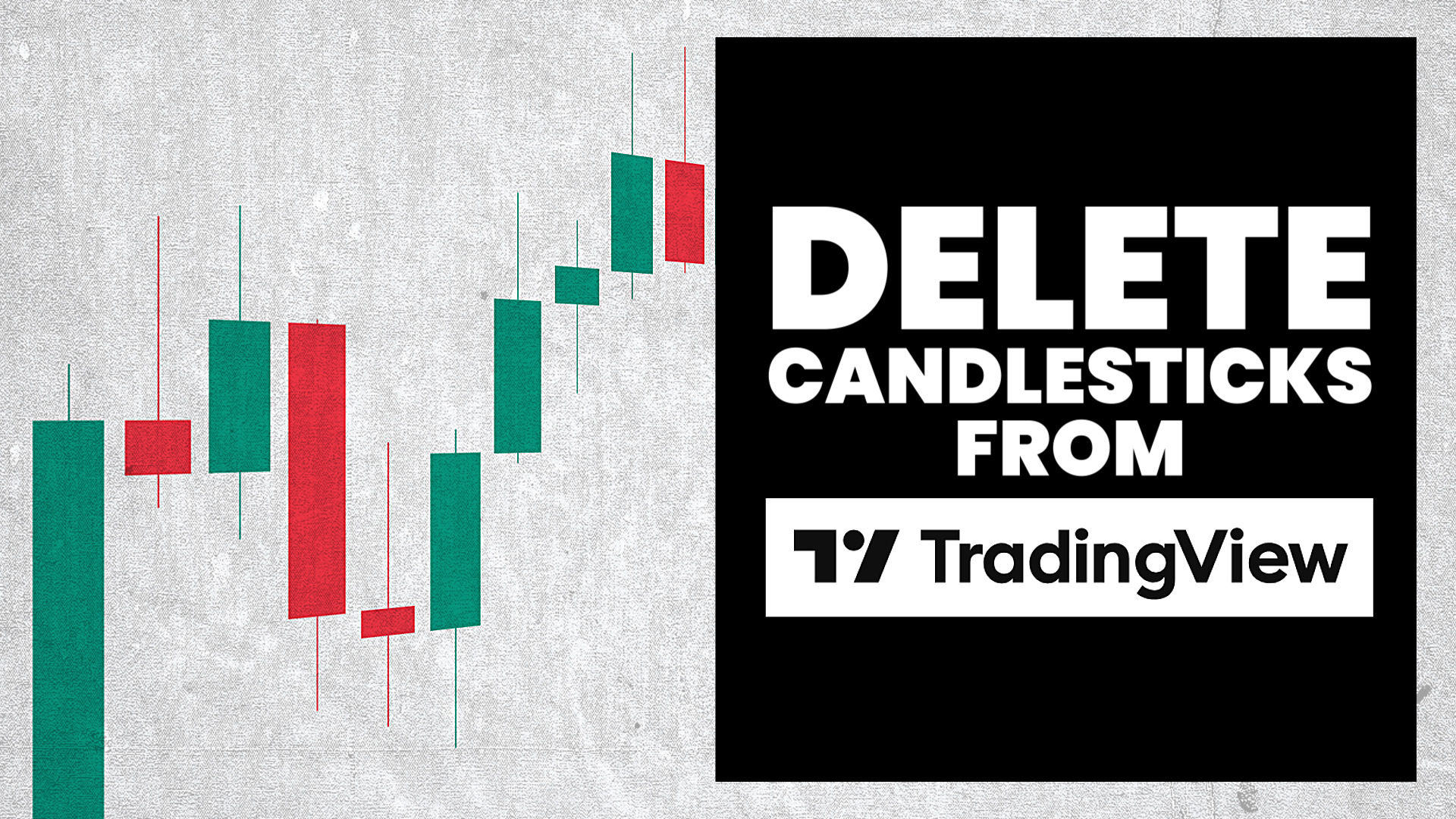
3 Easy Methods to Hide Candlesticks in TradingView

Learn three simple ways to hide candlesticks in TradingView and keep your charts clean, clear, and easy to analyze.

TradingView is one of the most widely used charting platforms among traders and investors. Although candlesticks are the default chart type, there are many situations where traders prefer to hide candlesticks to keep the chart clean and focused.

TradingView does not provide a single dedicated button called โ€œHide Candlesticks,โ€ but there are three simple and effective methods that allow you to remove candlesticks from your chart.

Why Do Traders Hide Candlesticks in TradingView?

Traders often choose to hide candlesticks to reduce visual clutter and keep their charts clean, simple, and easier to read, especially when too much price detail starts to overwhelm the view. Many do this to focus more clearly on indicators such as moving averages, VWAP, or oscillators, where the signal matters more than individual candle movements. Candlesticks are also hidden when traders want to study key price levels, zones, and overall market structure without unnecessary distractions. In drawing-heavy setups filled with trendlines, boxes, or Fibonacci tools, removing candlesticks helps bring clarity to the analysis and allows traders to concentrate on decision-making rather than noise.

Also Read – Candlesticks Not Showing or Visible in TradingView? โ€“ Complete Solution Guide

Method 1: Hide Candlesticks Using Chart Settings in TradingView

This method allows you to completely remove candlesticks by modifying the candlestick appearance settings. It is the most accurate and controlled way to hide candles without changing the chart type.

You need to right-click anywhere on the chart in TradingView to open the chart menu, and then click on Settings from the menu options.

Steps:

  1. You need to right-click anywhere on the TradingView chart to open the chart menu.
  2. You need to click on Settings from the menu options.
  3. You need to open the Symbol tab inside the settings panel.
  4. You need to uncheck the Body option so that the candle body is no longer visible.
  5. You need to uncheck the Wick option so that the candle wicks disappear from the chart.
  6. You need to uncheck the Border option so that the candle outlines are removed.
  7. You need to click OK to apply the changes.
Once the body, wick, and border are turned off, the candlesticks will no longer be visible on the chart.

After disabling the body, wick, and border, the candlesticks will be completely hidden from the chart.

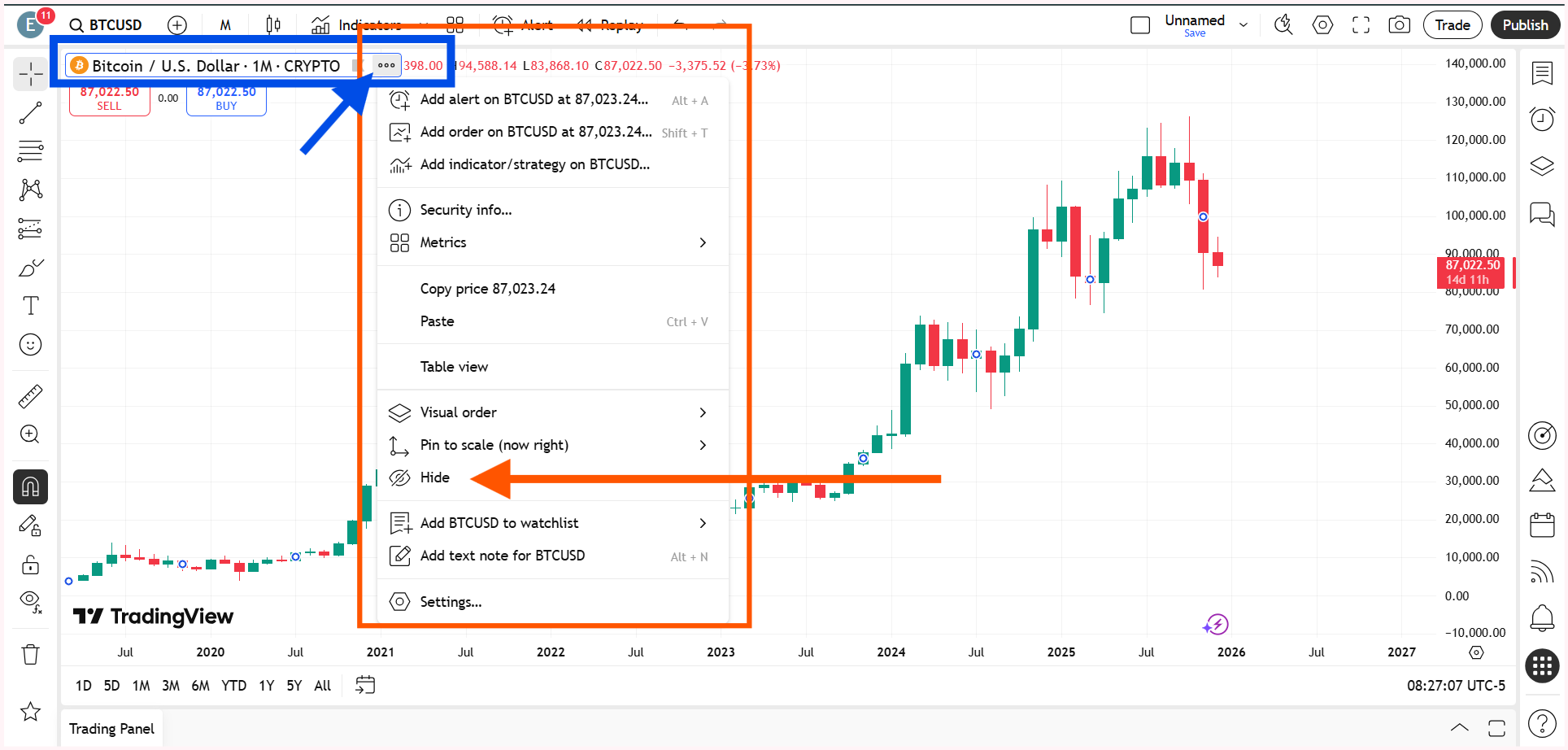
Method 2: Hide Candlesticks from the Top-Left โ€œMoreโ€ Menu

This is the fastest method to hide candlesticks and works directly from the chart interface without opening detailed settings.

As soon as you click Hide symbol, the candlesticks will instantly disappear from the chart.

Steps:

  1. You need to look at the top-left corner of the chart where the symbol name is displayed.
  2. You need to click on the three dots icon, also known as the More options menu.
  3. You need to select Hide Symbol from the dropdown list.

Once you click Hide symbol, the candlesticks will instantly disappear from the chart.

Also Read – What is the difference between ICT and SMC?

Method 3: Hide Candlesticks Using Object Tree and Data Window

This is probably the easiest and fastest way to hide the candlesticks on the chart.

You can access the Object Tree and the Data Window from the right-side toolbar in TradingView.
  1. You need to open the Object Tree & Data Window from the right-side toolbar in TradingView.
  2. You need to locate the main price symbol inside the Object Tree.
  3. You need to click on the eye icon next to the symbol to hide it from the chart.
You need to click on the eye icon next to the symbol inside the Object Tree or the Data Window to hide the candlesticks from the chart.

Alternatively, you can do the same within the Data Window, using the same option the same option on the right-side toolbar in TradingView.

Both options allow you to control the visibility of candlesticks without altering chart layout or indicator settings.


Watch the video below to avoid missing any important steps.

This article is for informational purposes only and should not be considered financial advice. Investing in stocks, cryptocurrencies, or other assets involves risks, including the potential loss of principal. Always conduct your own research or consult a qualified financial advisor before making investment decisions. The author and publisher are not responsible for any financial losses incurred from actions based on this article. While efforts have been made to ensure accuracy, economic data and market conditions can change rapidly. The author and publisher do not guarantee the completeness or accuracy of the information and are not liable for any errors or omissions. Always verify data with primary sources before making decisions.

6 Easy Steps to Run Pine Script v6 in TradingView

TradingView provides its own programming language called Pine Script, which is used to create indicators and strategies prominently. The latest version released by TradingView for Pine Script is version 6, which comes with extra features.

If you’re interested in learning how to build and test your own trading indicators or strategies, Pine Script is the tool for you.

Pine Script is the coding language used in TradingView, one of the most popular charting platforms for traders.

TradingView recently introduced Pine Script version 6, which comes with more features and improvements.

But many beginners ask this common question: “How do I run Pine Script v6 on TradingView?”
Donโ€™t worry. In this article, we will walk you through every step in a simple way. No complicated language. Just clear, beginner-friendly instructions.

What is Pine Script?

Pine Script is a programming language created by TradingView. It is used to create custom indicators, alerts, and strategies on charts.

For example, you can make your own Moving Average, RSI indicator, or even backtest a buy-sell strategy using Pine Script.

Whatโ€™s New in Pine Script v6?

Version 6 of Pine Script includes some major updates:

  • Better performance and speed
  • New built-in functions and features
  • Cleaner and more flexible syntax
  • Easier to write and read code

If you are starting fresh, itโ€™s always good to begin with the latest version.

Step-by-Step Guide to Run Pine Script v6 on TradingView

Letโ€™s now look at the actual steps to run Pine Script v6.

Step 1: Open TradingView

First, visit www.tradingview.com. You can use the free version or sign in with a free account.

Once you’re on the site:

  • Click on โ€œChartโ€ at the top.
  • This will open the TradingView chart screen.
Step 2: Open Pine Editor

At the bottom of your chart screen, you will see a tab named โ€œPine Editor.โ€

  • Click on it to open the Pine Script editor.
  • This is where you can write and run your code.
Step 3: Write or Paste Your Pine Script Code

Now itโ€™s time to enter your Pine Script code.

To use version 6, make sure your script starts with this line:

//@version=6

Letโ€™s look at a very basic example:

//@version=6
indicator("Simple MA", overlay=true)
ma = ta.sma(close, 14)
plot(ma, color=color.orange, title="14-period MA")

This code will create a simple 14-period moving average.

Step 4: Add Script to Chart

Once you have written the script:

  • Click on the โ€œAdd to chartโ€ button (above the editor window).
  • This will apply your custom indicator or strategy to the chart.

If there are no errors, the script will run smoothly, and you will see the result on your chart.

Step 5: Save Your Script

Always remember to save your work.

  • Click on the โ€œSaveโ€ icon.
  • Give your script a name like โ€œMy First Script.โ€

This way, you can come back later and make changes.

Step 6: Fix Any Errors (If Any)

If your script doesnโ€™t run and shows an error:

  • Read the error message below the editor.
  • Double-check your syntax (correct version, brackets, etc.)
  • Use the TradingView Help Center or forums for help if stuck.

Also Read – 5 Best AI Tools for Pine Script to Supercharge Your TradingView Strategies (2025)

The Bottom Line

Running Pine Script v6 in TradingView is not as hard as it sounds. Once you understand the steps, it becomes very simple.

Whether you want to create your own custom indicator or test a trading idea, Pine Script can help you a lot.

Start small. Experiment. And with time, youโ€™ll become more confident in creating your own trading tools.