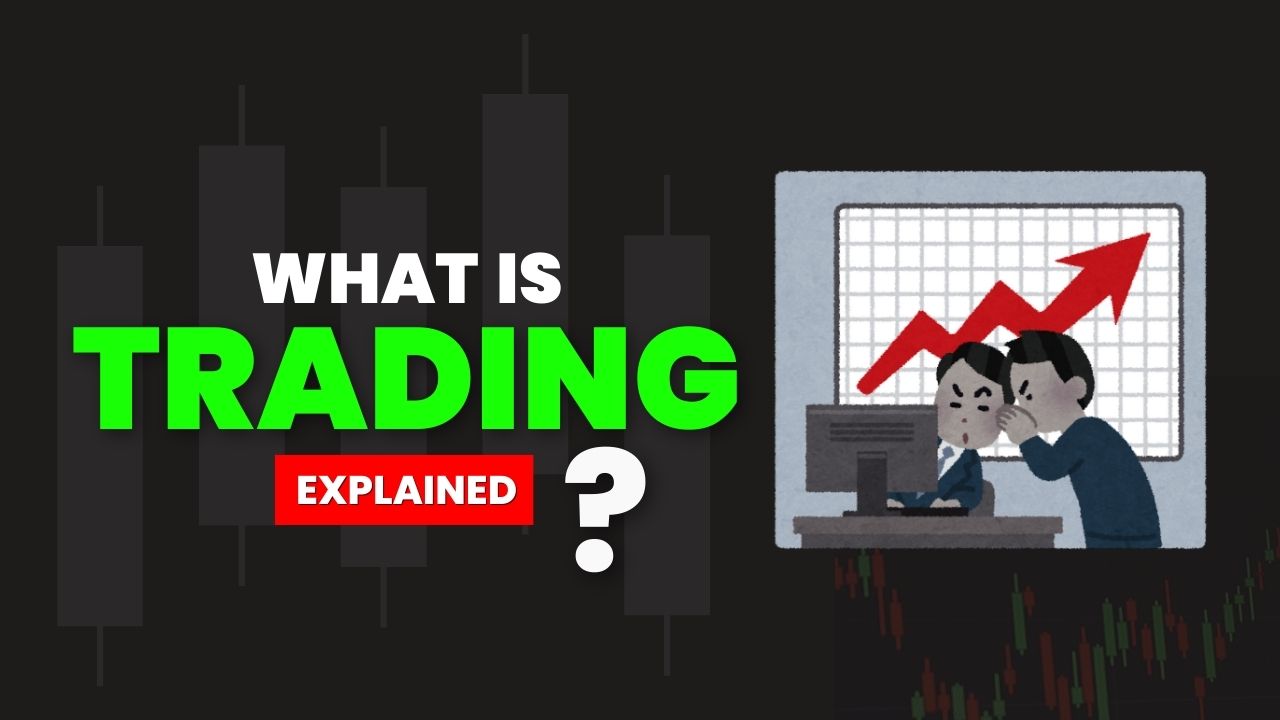
When I started learning about trading, I thought it was just about stocks and candlesticks.
However, as I explored further, I gained a broader, more theoretical understanding.
While trading in financial markets is primarily conducted through charts, real-world trading involves the exchange of physical goods and cash.
Trading is the act of buying and selling goods or assets to make a profit.
Also Read – Why Every Investor is a Trader?
A single buy and sell transaction constitutes one trade, regardless of the quantity of items included in the transaction.
While the primary intent of a trade is to generate profit, in physical markets, it also serves to distribute products.
In the real world, this follows a clear supply chain: production, distribution, and consumption.
In financial markets, trading bridges the gap between companies creating shares and investors purchasing them. The exchange of shares within this ecosystem is what we call trading. Therefore, trading goes far beyond the red and green rectangular structures called candlesticks; those rectangles simply form a price chart of the underlying asset.
While financial trading involves shares and other instruments, real-world trading involves physical goods like bricks, cement, and steel.

Just like in the real world where a businessman buys cement from one city and sells it in another, trading in financial markets follows the same concept. Instead of physical goods, traders buy and sell financial assets like stocks, commodities, currencies, and derivatives. Let’s explore trading in more detail.
Also Read – 3 Important Differences Between Stocks and Shares
Understanding Financial Trading
In the financial world, trading involves buying and selling assets like stocks, commodities, currencies, and derivatives. It happens in financial markets, which connect buyers and sellers.
Types of Trading in the Financial Markets
- Stock Trading – Buying and selling company shares on stock exchanges like the Bombay Stock Exchange, National Stock Exchange, New York Stock Exchange, and FTSE.
- Forex Trading – Trading currencies like USD, INR, and EUR.
- Commodity Trading – Trading physical goods like gold, silver, and crude oil.
- Derivatives Trading – Buying contracts whose value depends on an underlying asset.
- Crypto Trading – Trading digital currencies like Bitcoin and Ethereum.
How Does Trading Work?
Trading happens in organized financial markets where traders place orders through brokers. Prices fluctuate based on supply and demand, economic conditions, and market sentiment.
- Buyer places an order to purchase a stock or asset.
- Seller agrees to sell at a certain price.
- Market executes the transaction, and the asset is exchanged.
Short Notes
| Term | Definition |
|---|---|
| Financial Market | A place where buyers and sellers trade financial assets like stocks, bonds, and commodities. |
| Financial Assets | Investments like stocks, mutual funds, gold, and real estate that generate value over time. |
| Derivatives | Financial contracts whose value is derived from an underlying asset (e.g., futures and options on stocks or commodities). |
Conclusion
Trading is an essential part of both the real and financial world. Whether it’s physical goods like cement or financial assets like stocks, the basic principle remains the same – buy low, sell high or sell high, buy low (in case of short selling).
This article is for informational purposes only and should not be considered financial advice. Investing in stocks, cryptocurrencies, or other assets involves risks, including the potential loss of principal. Always conduct your own research or consult a qualified financial advisor before making investment decisions. The author and publisher are not responsible for any financial losses incurred from actions based on this article. While efforts have been made to ensure accuracy, economic data and market conditions can change rapidly. The author and publisher do not guarantee the completeness or accuracy of the information and are not liable for any errors or omissions. Always verify data with primary sources before making decisions.
With over 3 years of experience in financial markets, we focus on simplifying global and Indian markets through clear, practical insights. Our expertise also extends to the evolving landscape of digital finance, including blockchain, stablecoins, and decentralized finance (DeFi).