In a move that underscores both opportunity and risk in today’s financial markets, UBS AG has filed to issue “Trigger Autocallable Contingent Yield Notes” tied to the stock of Nvidia Corporation (ticker NVDA) – and the timing of the product coincides with Nvidia’s recently reported blow-out third-quarter earnings that show the company remains at the heart of the AI boom.
On November 21, 2025 UBS announced the tranche of structured notes whose payoff will depend on the performance of Nvidia’s common stock. The offering promises a high coupon of approximately 17.01 % per annum, on the condition that predefined stock-performance thresholds are met. If the stock fails to clear certain barriers, investors may receive little or even lose their principal. The product matures on November 27, 2028, unless called early under the “autocall” provisions. Key terms include an initial level of $178.88 for Nvidia’s share price, a coupon barrier set at 100 % of that level on observation dates, and a downside threshold at 70 % of the initial level (roughly $125.22). For minimum investment of 100 notes (each note at $10), investors buy into both the equity-linkage and issuer credit risk of UBS.
Coinciding with this issuance, Nvidia disclosed its fiscal 2026 third‐quarter results, reporting revenue of $57.01 billion – well ahead of analyst estimates – and earnings per share of $1.30. The data-centre segment alone delivered $51.2 billion, up 66 % year-on-year and beating forecasts around $49.3 billion. For the current quarter the company guided revenue of about $65 billion, significantly higher than consensus expectations near $61.6 billion. Nvidia’s gross margin outlook of around 75 % reinforces the company’s profitability in the high-end GPU market.
For UBS, linking a structured note to Nvidia appears to lean into this strength. By tying the product to a company showing both rapid growth and robust demand (especially in the AI infrastructure segment), UBS positions the note as a “high-yield if success” offering. For investors it presents a chance to access equity-linked upside while ostensibly receiving high coupon income.
However, the risks are meaningful. First, the coupon is contingent – it will only be paid if Nvidia’s stock meets or exceeds the barrier level on certain observation dates. If it fails, coupon payments may vanish. Second, on final maturity (if the note is not called), if Nvidia’s stock is below the downside threshold (~70 % of initial level) then investors may suffer a significant principal loss. Third, UBS bears credit risk: as the issuer of the debt, its ability to make payments is tied to its own financial health. Fourth, while the timing aligns with Nvidia’s stellar earnings, past performance does not guarantee future returns; despite the strong quarter, Nvidia and the wider AI theme carry valuation risk and execution risk.
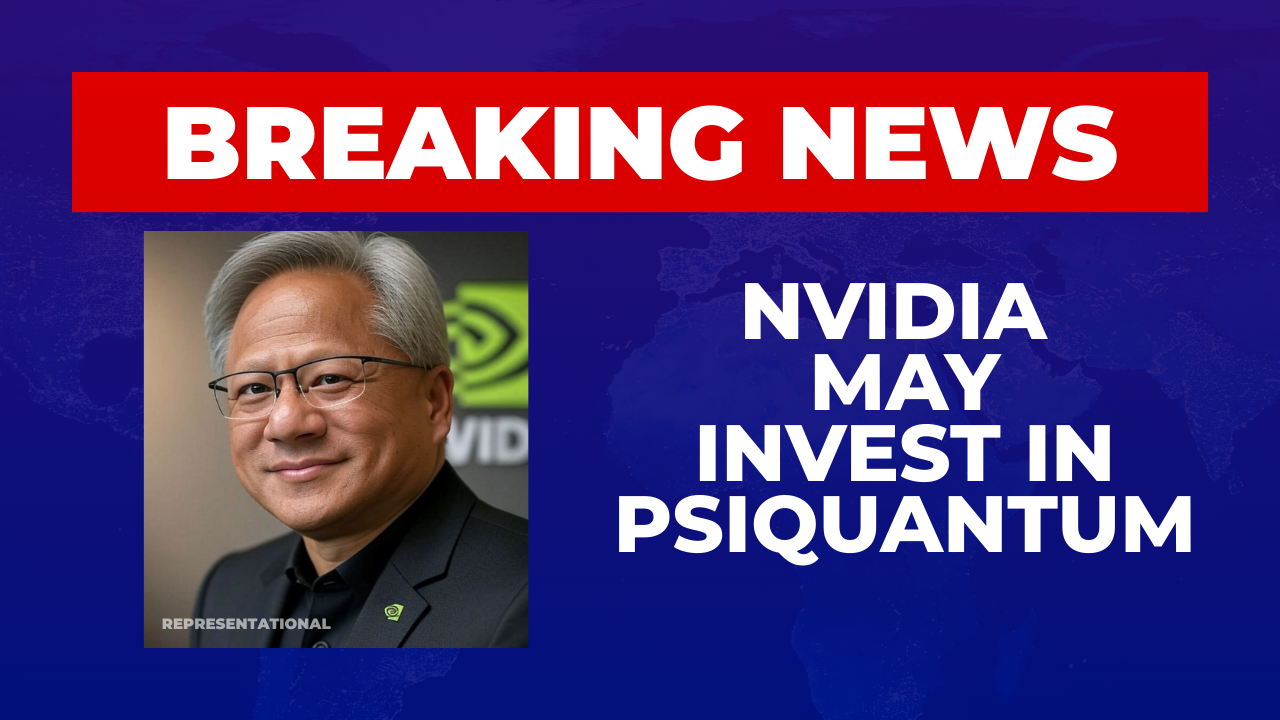
Given Nvidia’s results, the offering may look appealing. Nvidia’s CEO, Jensen Huang, described demand for its latest “Blackwell” architecture and cloud GPUs as “off the charts,” citing a worldwide surge in AI-infrastructure build-out. But investors are also asking whether this very growth could be the foundation of a bubble. Nvidia’s size and expectations are such that small cracks could ripple widely.
This article is for informational purposes only and should not be considered financial advice. Investing in stocks, cryptocurrencies, or other assets involves risks, including the potential loss of principal. Always conduct your own research or consult a qualified financial advisor before making investment decisions. The author and publisher are not responsible for any financial losses incurred from actions based on this article. While efforts have been made to ensure accuracy, economic data and market conditions can change rapidly. The author and publisher do not guarantee the completeness or accuracy of the information and are not liable for any errors or omissions. Always verify data with primary sources before making decisions.